
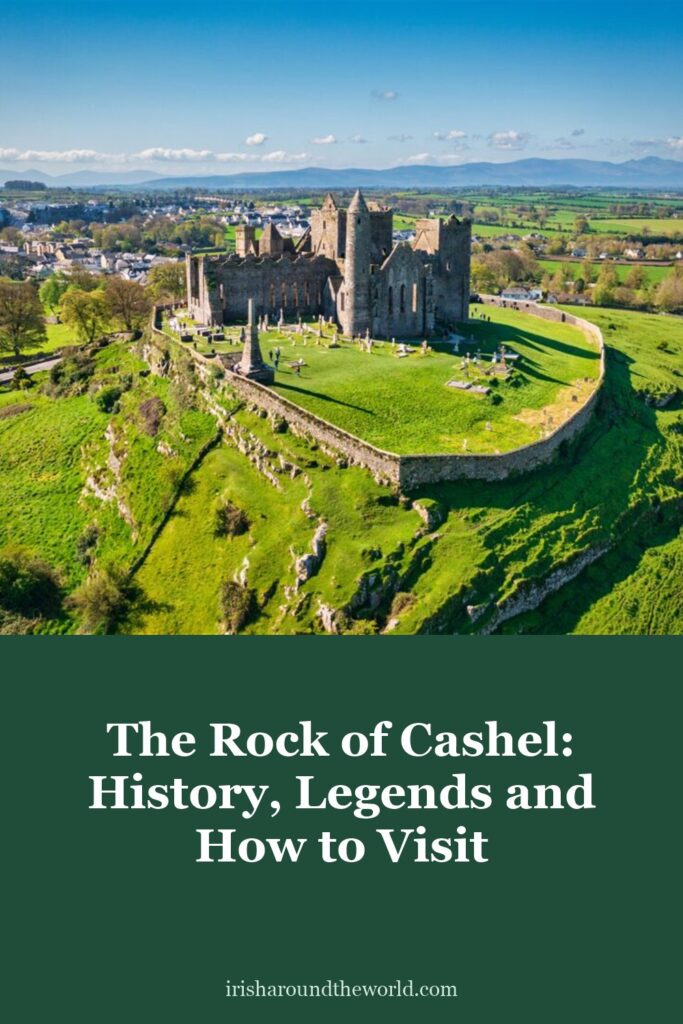
In short: the Rock of Cashel in Co. Tipperary is a limestone hill crowned by a round tower, a roofless 13th-century cathedral and Cormac’s Chapel, with the oldest Romanesque frescoes in Ireland. It was the seat of the kings of Munster. It’s about 1 hour 45 minutes from Dublin by car, and easy to combine with Hore Abbey and Cahir Castle.
This page contains affiliate links. If you book through one, I may earn a small commission at no extra cost to you.
The Rock of Cashel: Ireland’s Ancient Crown Jewel
If there’s one place that embodies the spirit of ancient Ireland, it’s the Rock of Cashel. Perched high above the County Tipperary landscape, this majestic limestone hill crowned with medieval buildings is steeped in history, myth, and legend. From tales of saints and kings to stunning Gothic and Romanesque architecture, the Rock of Cashel is a must-visit for history lovers and travellers alike.
But what makes this place so special? Let’s take a journey through time and uncover the stories hidden within these stone walls.
The History of the Rock of Cashel
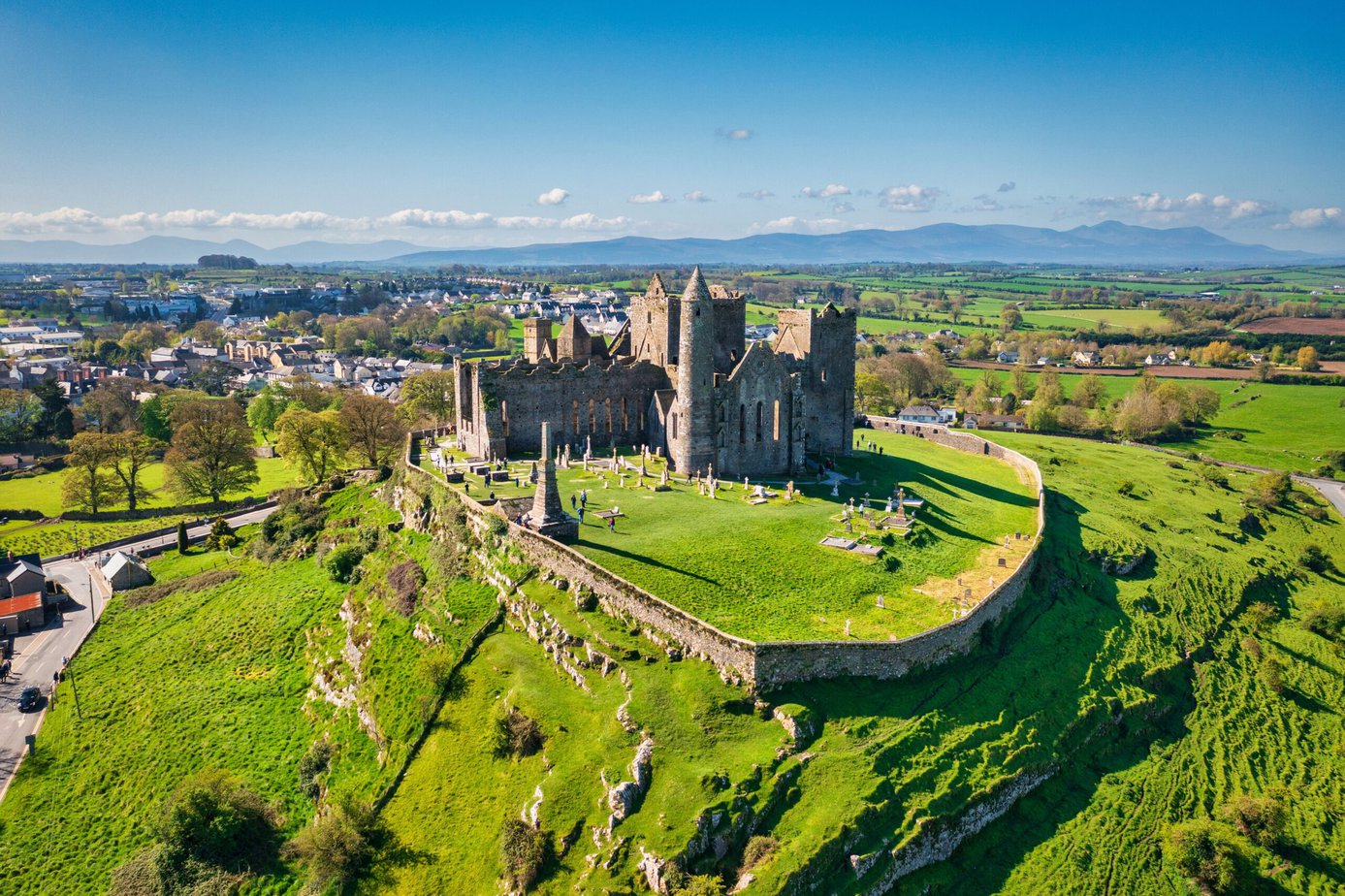
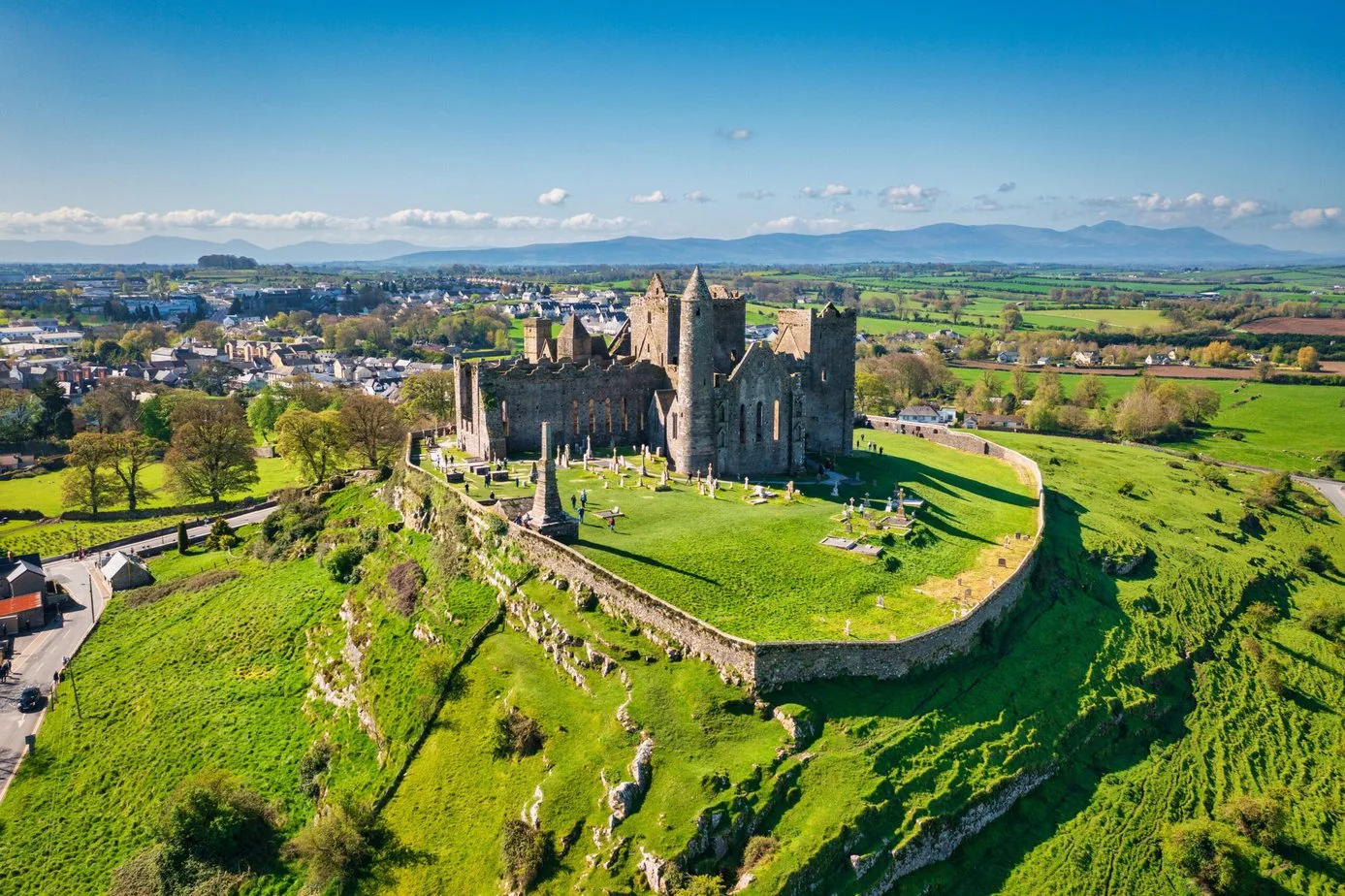
The Rock of Cashel’s history stretches back over 1,000 years, and it served as the seat of the Kings of Munster long before it became a site of Christian worship. According to legend, St. Patrick himself visited the Rock in the 5th century and converted the reigning King of Munster to Christianity. During the ceremony, Patrick accidentally pierced the king’s foot with his staff, yet the king didn’t flinch, thinking it was part of the ritual!
In 1101, the Rock was gifted to the Church and became a significant religious centre. Over the centuries, many of the buildings that still stand today, like the stunning Cathedral of St. Patrick, were constructed, cementing Cashel’s place as one of Ireland’s most important spiritual sites.
What to See at the Rock of Cashel
A visit to the Rock of Cashel is like stepping back in time. Here’s a closer look at the key features of this breathtaking site:
1. Cormac’s Chapel
Dating back to 1134, Cormac’s Chapel is one of the oldest surviving buildings on the Rock and a masterpiece of Romanesque architecture. Built by King Cormac MacCarthy, the chapel is renowned for its intricate stonework and beautifully preserved frescoes, the oldest in Ireland.
Tip: The frescoes are delicate and not always easy to see, but the guides offer great insights into their history.
2. St. Patrick’s Cathedral
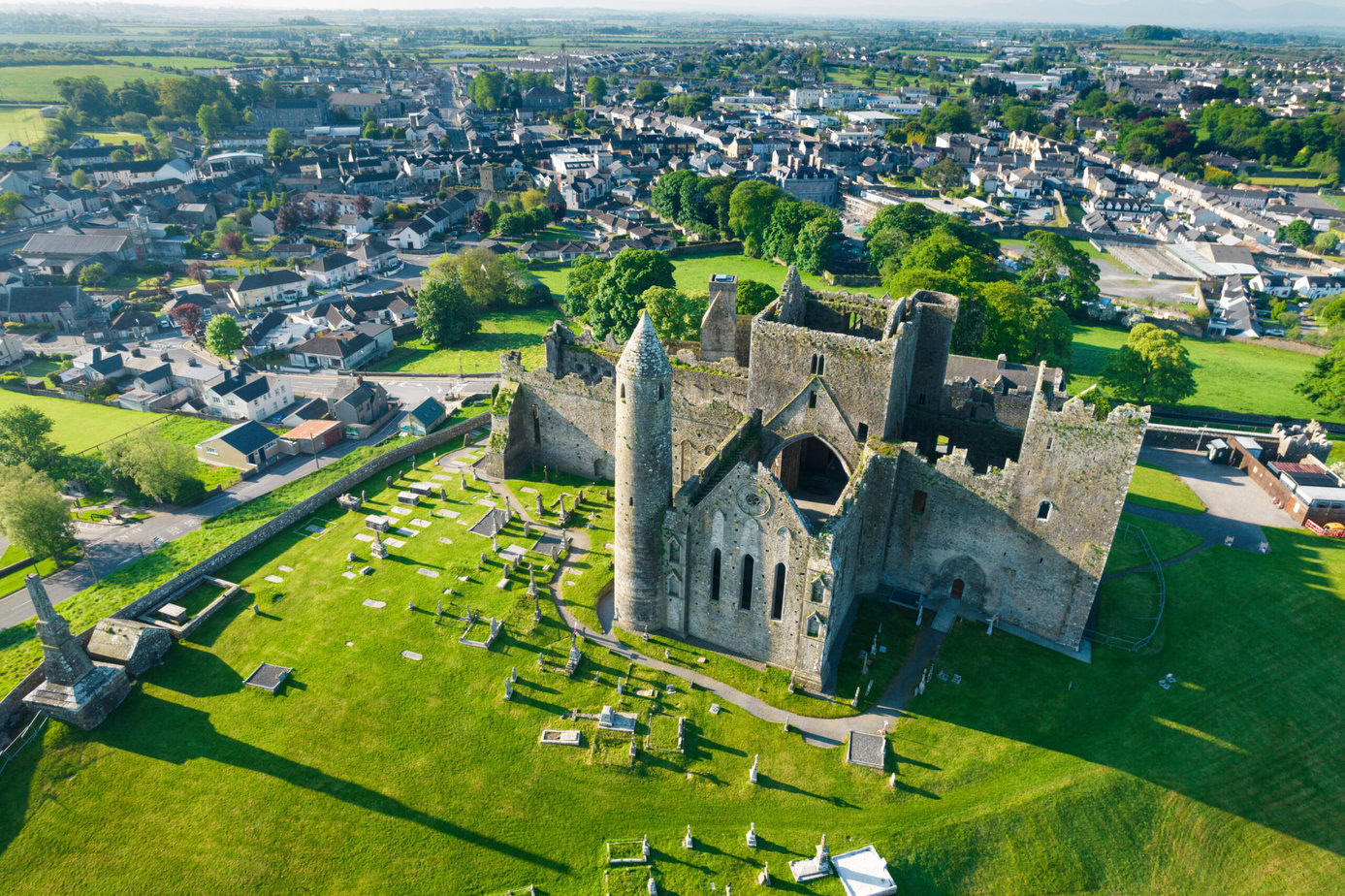
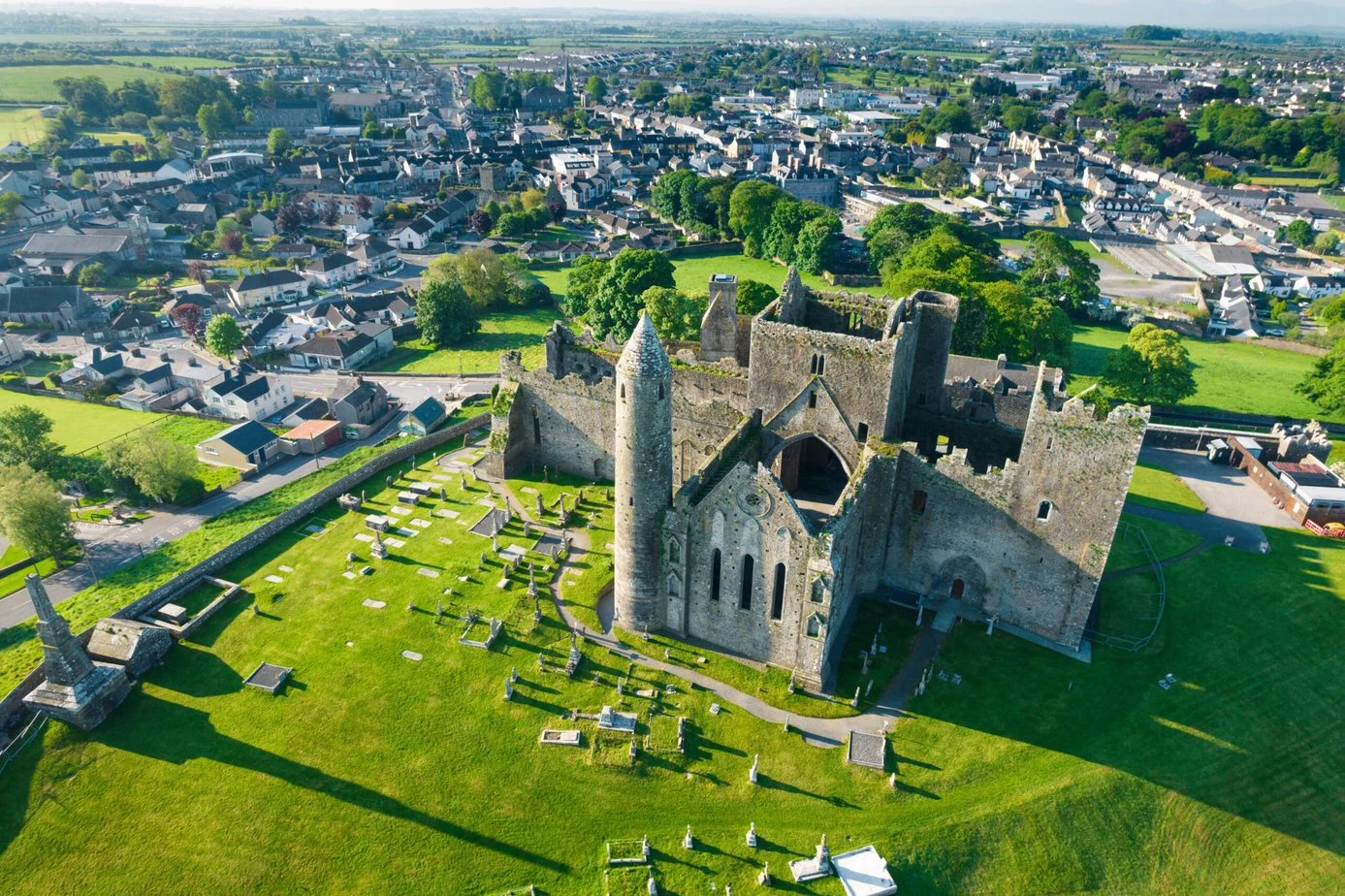
The Gothic-style Cathedral of St. Patrick, built in the 13th century, is the largest structure on the Rock. Though roofless today, it remains imposing and awe-inspiring. Wander through its vast nave and picture the grandeur of the religious ceremonies that once filled this sacred space.
3. The Round Tower
Standing tall at 28 metres (92 feet), the Round Tower is one of the oldest features of the Rock, dating back to around 1100 AD. Built without mortar, it’s a testament to the incredible craftsmanship of the early Christian monks. You can almost imagine a watchful monk at the top, keeping an eye out for approaching Viking raiders.
4. The High Cross and Scully’s Cross
Near the entrance, you’ll find the High Cross, which stands as a symbol of faith and resilience. Nearby, the imposing Scully’s Cross (a 19th-century Celtic cross) adds a touch of more modern heritage to the Rock’s ancient atmosphere.
The Legend of the Rock of Cashel
No visit to the Rock is complete without hearing the legend behind its creation. According to folklore, the Devil himself was banished from a cave in the Slieve Bloom Mountains by St. Patrick. In his rage, the Devil spat out a massive chunk of limestone that flew across the sky and landed in Tipperary, forming the Rock of Cashel.
This story reminds us that, in Ireland, even the landscape itself is shaped by myth and magic.
Why Visit the Rock of Cashel?
Visiting the Rock of Cashel is about more than just admiring ancient stonework, it’s about connecting with Ireland’s rich tapestry of history, faith, and legend. Here’s why the Rock deserves a place on your travel list:
- Unparalleled Views: The Rock sits high above the Tipperary plains, offering panoramic views of the surrounding countryside. On a clear day, you can see for miles!
- Architectural Masterpieces: From Cormac’s Chapel to the Cathedral, the Rock showcases some of the finest medieval architecture in Ireland.
- A Sense of Timelessness: Walking among the ruins, you can almost hear the whispers of kings, monks, and pilgrims who once stood there.
Make the Most of Your Trip: Blarney Castle, Cork, and the Rock of Cashel Tour
If you’re visiting Ireland and want to pack in as much history and beauty as possible, why not combine your trip to the Rock of Cashel with a visit to Blarney Castle and Cork City?
This full-day tour from Dublin offers an unforgettable experience, taking you through some of the most iconic sites in Ireland, including:
- Blarney Castle: Kiss the legendary Blarney Stone and gain the gift of eloquence!
- Cork City: Explore Ireland’s “rebel city” and take in its bustling atmosphere and rich history.
- The Rock of Cashel: End the day by wandering the historic ruins of the Rock and soaking up the panoramic views of the Golden Vale.
This guided tour is ideal for those who want to see Ireland’s highlights without the hassle of planning transportation.
Tips for Visiting the Rock of Cashel
- Opening Hours: The Rock is open year-round, though hours vary slightly between summer and winter.
- Guided Tours: Taking a guided tour like this one is highly recommended, as they bring the history and legends of the Rock to life.
- Combined with Hore Abbey: Just a short walk away, Hore Abbey is a beautiful ruined monastery worth visiting. It’s a peaceful spot that offers stunning views of the Rock of Cashel itself.
Fun Fact: The Connection to Queen Elizabeth II
Did you know that Queen Elizabeth II visited the Rock of Cashel during her historic 2011 trip to Ireland? It was one of the highlights of her tour and a symbolic gesture of peace and reconciliation between Ireland and the UK.
Final Thoughts: A Crown of Kings and Saints
The Rock of Cashel is more than a historic site: it symbolises Ireland’s resilience, beauty, and mysticism. Whether you’re drawn by its history, its legends, or its breathtaking views, one thing is certain: a visit to the Rock will leave you with a deep appreciation for Ireland’s past.
So, the next time you find yourself in County Tipperary, make your way to this ancient hilltop and let its stories unfold before you.
Slán go fóill,
How to get to the Rock of Cashel
- By car: Cashel is just off the M8 between Dublin and Cork, about 1 hour 45 minutes from Dublin and around 1 hour 15 minutes from Cork. It’s also about an hour from Kilkenny. Compare car hire on Discover Cars.
- On a tour: if you’d rather not drive, this Blarney Castle, Rock of Cashel and Cahir Castle tour from Dublin covers three highlights in a day.
What to see nearby
- Hore Abbey: the ruins of a 13th-century Cistercian abbey, in a field just below the Rock. It’s free, and the view back up to the Rock is the best photo spot in Cashel.
- Cahir Castle: one of Ireland’s best-preserved castles, on an island in the River Suir, about 20 minutes’ drive south.
- The Swiss Cottage: a thatched cottage orné just outside Cahir, a charming contrast to the castles.
Where to stay
Cashel is a small town with good guesthouses and hotels within walking distance of the Rock. Stay the night and you can see it lit up after dark. Search places to stay in Cashel on Booking.com.
Rock of Cashel FAQ
How long do you need at the Rock of Cashel?
Allow about an hour for the Rock, or 90 minutes with a guided tour, plus time for a walk down to Hore Abbey.
Is the Rock of Cashel worth visiting?
Yes. It’s one of the most impressive medieval sites in Ireland, and an easy stop on the drive between Dublin and Cork.
Who was crowned at the Rock of Cashel?
It was the seat of the kings of Munster, and Brian Boru is said to have been crowned king of Munster here in 978.
Keep exploring Ireland
Love this? Save it to your Pinterest board for later.
Read next: Irish Round Towers: Bell Towers, Viking Hideouts or Fire Temples? The Real Story
A little bit of Ireland in your inbox every Friday ☘️
The free Weekly Dose of Irish: an Irish joke, a Celtic symbol, an Irish fact, a poem and the week’s best articles in one short email. Join 9,600+ readers.
Free. One short email every Friday. Unsubscribe any time.