
An Irish wake is the custom of watching over the dead, traditionally at home, until the funeral. Neighbours laid out the body, stopped the clocks and opened a window. Keening women lamented, callers got clay pipes and snuff, and the night could bring games. Wakes are quieter now and often held in funeral homes, but the visit, the handshake and “sorry for your trouble” carry on.
The clock on the kitchen wall has stopped. A window stands open on a cold night, the mirror is covered, and in the next room candles burn around a bed. The scene is an Irish farmhouse, more than a century ago.
Neighbours keep arriving. Each kneels for a prayer, shakes hands with the family and is handed a clay pipe. Later there will be crying, and later still, believe it or not, games.
This is the Irish wake. I’ve written about its emigrant offshoot, the American wake. Here’s the original: the old customs, what survives, and what to say when you walk in the door.
Jump to:
- What is an Irish wake?
- Laying out the dead
- Clocks, windows and mirrors
- Keening and the bean chaointe
- Clay pipes and snuff
- Wake games
- The funeral and the month’s mind
- How the wake changed
- What to say at an Irish wake
- RIP.ie and death notices
- The robin and other signs
- November and the Holy Souls
- Irish wake FAQ
- More Irish heritage reading
What is an Irish wake?
A wake is a watch kept over the dead between death and burial. The word comes from an Old English verb meaning to stay awake and keep a vigil, as the Oxford English Dictionary explains, quoted in a 2019 study of keening by Mary Mc Laughlin of the University of Limerick.
In 1841, the London-based writers Mr and Mrs S. C. Hall said a wake usually lasted two days, sometimes three or four, and that watching by the body until burial was seen as a sacred duty.
It was sad and sociable at once, with prayers and keening but also food, drink, stories and games. The folklorist Seán Ó Súilleabháin, author of Irish Wake Amusements (1967), traced the wake’s customs back to an old fear of the dead: the wake honoured them, kept them content and gave them a proper send-off.
One myth to drop: that wakes began because pewter tankards poisoned drinkers into a death-like coma. RIP.ie calls the story likely mythical, and Ó Súilleabháin found accounts of European wakes at least a thousand years old.
Laying out the dead at home
After a death, nobody touched the body for a couple of hours. Then two women, relatives or neighbours, came to prepare it. So says an account from Loughteeog, Co. Laois, in the Schools’ Collection, folklore written down by Irish schoolchildren in 1937 to 1939 (dúchas.ie, © National Folklore Collection, UCD).
They washed the body and dressed it, very often in a brown habit, which the Loughteeog account calls a Carmelite habit. In Dromclogh, Co. Cork, the grave clothes were a brown habit, stockings, gloves, a cap and a white veil, with rosary beads and a crucifix between the joined fingers.
The body lay on a bed, or on a table or bench in the kitchen. A corpse laid out on the kitchen table was “over board”, the author Marion McGarry writes for RTÉ Brainstorm. The Halls described the scene: “Close by it, or upon it, are plates of tobacco and snuff; around it are lighted candles.” Usually, they wrote, some salt was laid on the body too.
Stopping the clocks, opening a window, covering mirrors
The customs, and the reasons given for them, varied from parish to parish.
- Stopping the clock. In Masiness, Co. Donegal, the clock was stopped at the moment of death and left that way through the wake, so callers could see when the person died.
- Opening a window. The Masiness account says it was opened “to let out the soul”. In Cregganbaun, Co. Mayo, it gave the dying person air and let the soul leave the house.
- Covering mirrors. In Ahane, Co. Limerick, families covered the mirror so the dead person would not be seen in it.
- Turning down the chairs. In Ahane, too, chairs were turned down so the dead could no longer use them.
Some of this lasts. RIP.ie’s guide says a wake room usually has its curtains closed and one window open, and the mirror may be covered or turned round.
Keening and the bean chaointe
The sound of the old wake was keening: the caoineadh (KEEN-yuh), a lament sung and wailed over the body, led by a keening woman, the bean chaointe (ban KHEEN-cha).
The Halls, who disapproved of the wake’s excesses, described keening they had witnessed. The women of the house stood either side of the body, swaying, and raised a cry together. Then the lead keener began her verses, and after each one the cry rose again.
Drawing on the scholar Breandán Ó Madagáin, Mc Laughlin describes three parts: a salutation, the verses, and the gol, or cry. The words were largely improvised. The most famous keen to survive is Caoineadh Airt Uí Laoghaire, composed by Eibhlín Dubh Ní Chonaill after her husband was shot dead in 1773.
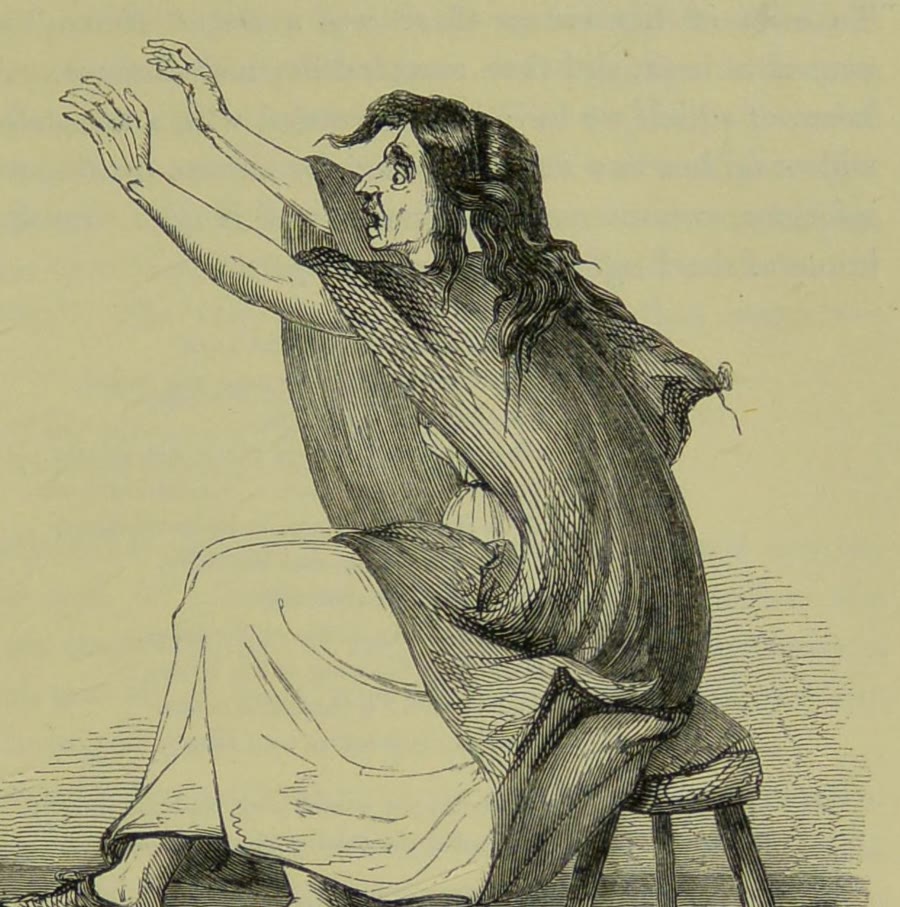
The Ban Caointhe (the keening woman), drawn by J. C. Timbrell from the Halls’ description and engraved by Jackson, from Mr and Mrs S. C. Hall, Ireland: Its Scenery, Character, &c., vol. 1 (first published 1841; Wellcome Collection copy of the 1846 issue, via Internet Archive). Public domain
Keeners were usually paid: anything from a crown to a pound in the 1840s, the Halls wrote, though often just a dinner, some snuff or a glass of whiskey, the Irish Examiner reported in 2016. Folklorists, among them Patricia Lysaght, have long compared the keening woman with the banshee, who cries before a death.
How keening faded
The Catholic Church opposed keening for centuries, and by the early 20th century it was mostly gone, McGarry writes. It held on in places. In Dromclogh in the late 1930s, a few women still keened over the body, though only one of the old keeners was left. In 1956, the American collector Sidney Robertson Cowell heard keening in a wake house on the Aran Islands.
Clay pipes, snuff and the wake table
By 1841, the Halls wrote, the wake feast was mostly tobacco and snuff. In the 1930s, a pupil at Brockagh school, Co. Leitrim, wrote that everyone in the wake house got a pipe and tobacco, took three smokes and said “The Lord have mercy on the dead.”
McGarry notes that even non-smokers took a pull, and that after the funeral the pipes were broken in two and buried. By the late 20th century, cigarettes went round on trays instead, and then the custom faded out altogether.
In Masiness, a plate of snuff went round and everyone took a pinch. In Annacarter, Co. Wicklow, a little dish of it sat on the dead person’s breast.
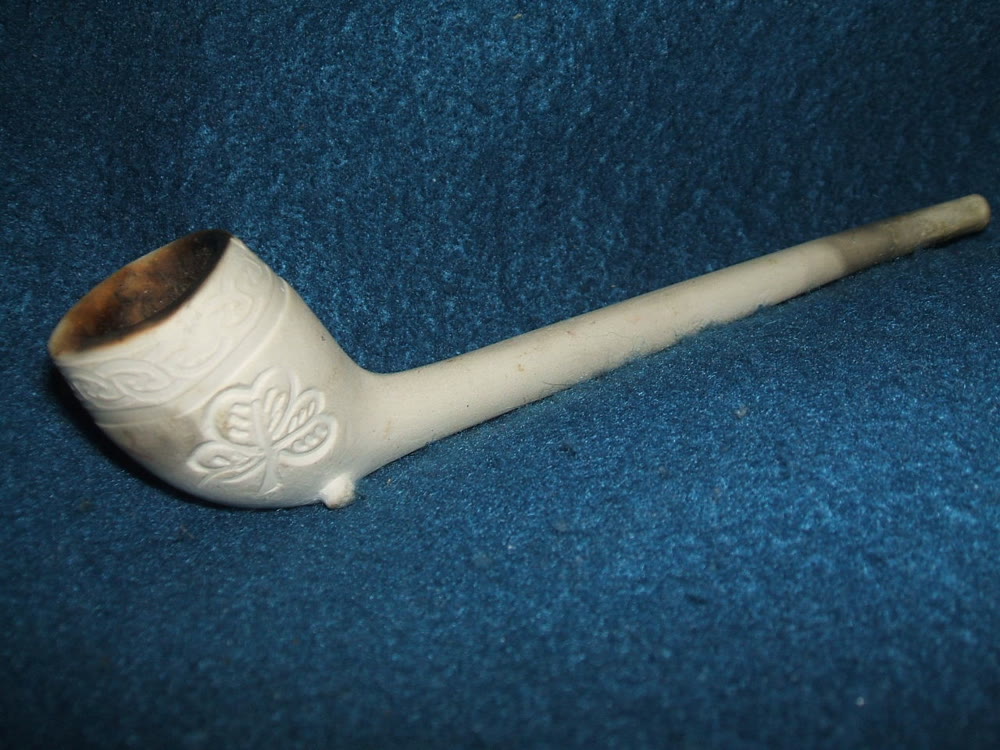
A Knockcroghery clay pipe, or dúidín, photographed in 2007. Photo: ColmCille, public domain, via Wikimedia Commons
Knockcroghery, Co. Roscommon, made clay pipes from the 1700s until June 1921, when Crown forces, apparently acting on bad intelligence, burned the village in a reprisal, the Westmeath Independent recalls. Ethel Kelly brought pipe-making back in the 1990s.
Knockcroghery’s Clay Pipe Museum keeps a 1912 wake provisions list. Such lists, McGarry writes, ran to clay pipes and tobacco, porter (a dark beer) and whiskey, tea and sugar, meat, jam and shop-bought bread.
Wake games and the merry wake
Once the prayers were said, games kept people awake through the long night. Ó Súilleabháin’s book records hundreds of them.
An account from Gowna school, Co. Cavan, describes men sitting in a ring on the kitchen floor, passing a ball of hay with a stone inside under their legs. Guess wrong about who had it, and you got a thump between the shoulders. It was a local version of shuffle the brogue (a brogue is a shoe), remembered from wakes about 50 years earlier.
Other games were rowdier, McGarry writes: feats of strength, pranks, mock weddings and kissing games. Now and then the corpse itself was drawn in, given a pipe or a hand of cards to hold. The fun was skipped altogether for a child, a young mother or father, or a tragic death.
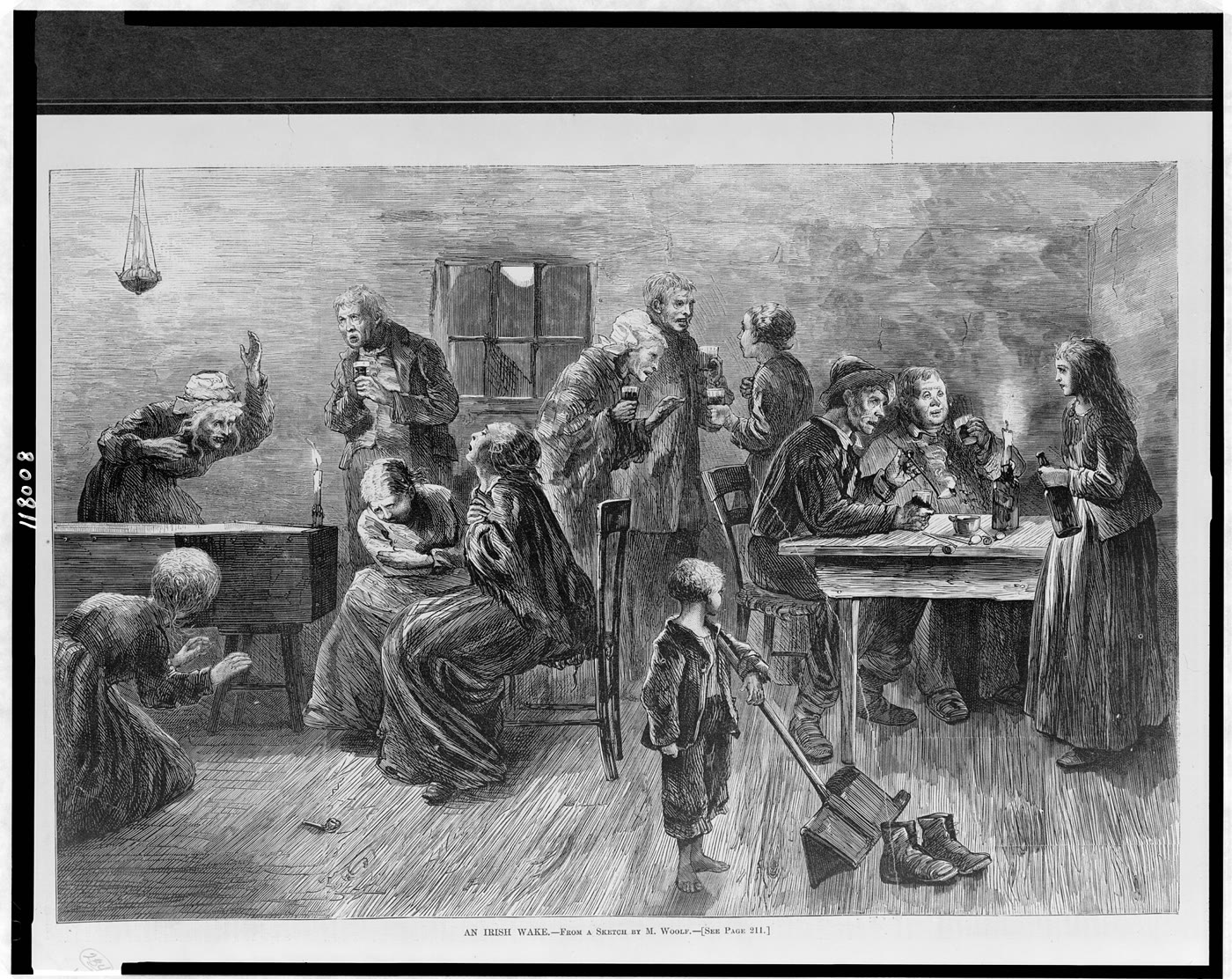
An Irish wake, from a sketch by M. Woolf, as pictured by the American magazine Harper’s Weekly, 15 March 1873. Library of Congress Prints and Photographs Division
The clergy disapproved. From the early 1600s, writes the historian Clodagh Tait, both the Catholic Church and the civil authorities set themselves against wakes and keening. Church synods spoke out against wakes from 1614 onwards, Mc Laughlin notes, and the historian Christopher Shannon, drawing on Ó Súilleabháin, writes that one at Tuam in 1660 singled out keening women, some of them hired. After the Great Famine, many old customs died out.
The funeral and the month’s mind
The wake ended when the coffin left the house. In the Halls’ account it was set on chairs outside the door, in some districts with the candles beside it, until the procession moved off. In Ahane, the funeral could not pass back by the house, and in Carrigtohill, Co. Cork, it took the longest road to the graveyard.
Irish even has a phrase for walking a short way with a funeral, trí choiscéim na trócaire, the three steps of mercy, says Ó Dónaill’s dictionary.
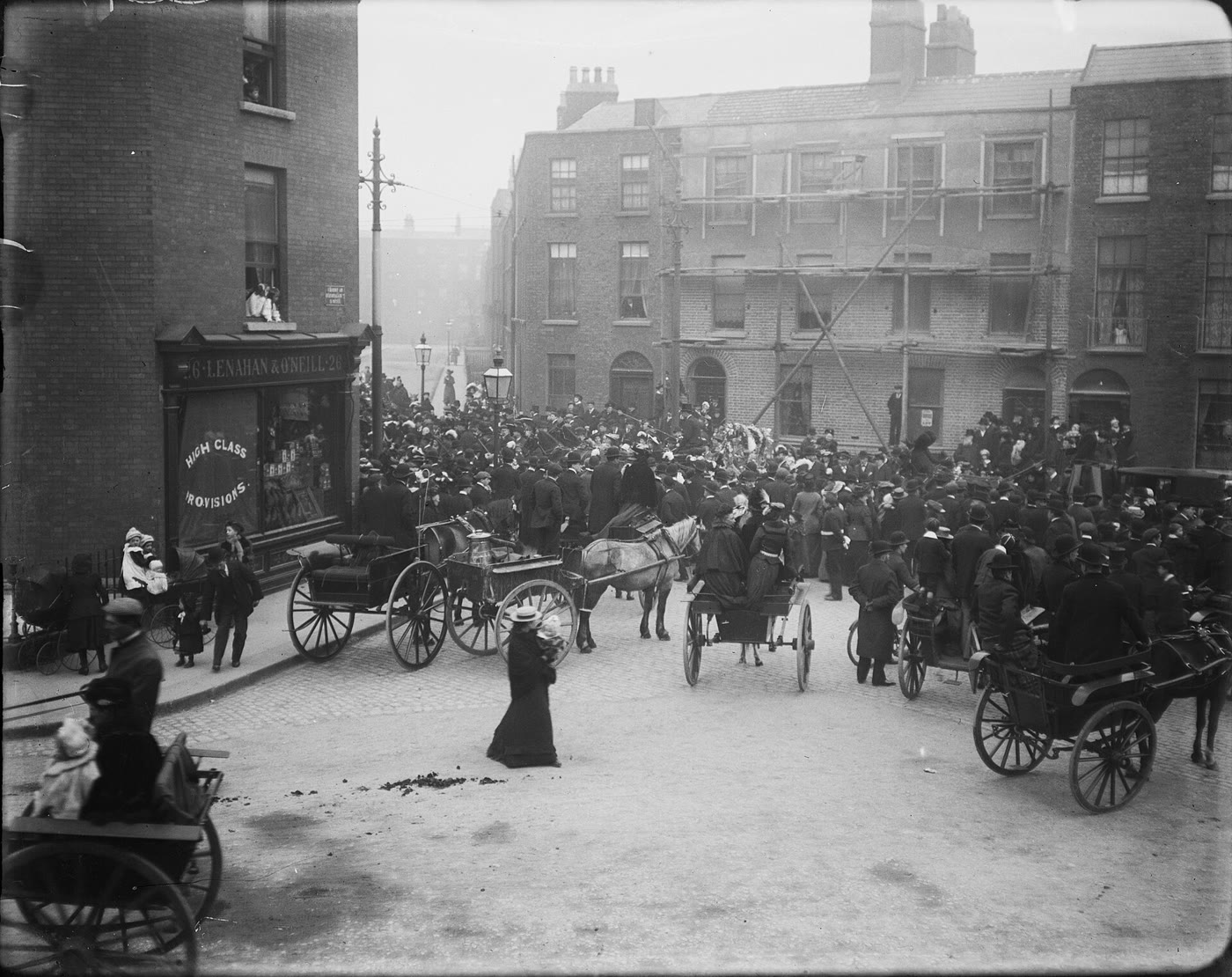
A funeral procession passing along Berkeley Street, Dublin, about 1897 to 1904. Photo: J. J. Clarke, National Library of Ireland (CLAR33)
Many mourners bring a Mass card, showing that a Mass will be offered for the dead. About a month after the death comes the month’s mind, a memorial Mass, and families still announce month’s minds and anniversaries on RIP.ie.
How the wake changed, and what survives
In the late 20th century, many families moved the wake to a funeral home, Mc Laughlin notes, though she sees waking at home making a comeback in rural areas. RIP.ie says the home wake is now rare in the cities but still matters in many country areas.
In spring 2020, Covid ruled out home wakes and open coffins, and from 31 March the government asked that no more than 10 people attend in church or at the graveside. In Ballyferriter, Co. Kerry, the whole parish had already stood, well apart, along the 2 km (1.2-mile) road to the graveyard, the retired Cork doctor Seamus O’Mahony wrote for The BMJ.
What survives? The open coffin and the full house in much of rural Ireland. Tea and sandwiches, and stories and laughter once the prayers are over. And the long queue to shake hands with the family: in Ireland, McGarry notes, you go to funerals for the close relatives of people you know, not only for people you knew yourself.
What to say at an Irish wake
“I’m sorry for your trouble”
These are the classic words, said as you shake each hand. In Mid-Term Break, about coming home to his four-year-old brother’s wake in 1953, Seamus Heaney recalls old men telling him they were “sorry for my trouble”.
The phrase has an Irish twin. Ní maith liom do thrioblóid (nee mah lum duh HRIB-lohj) means, word for word, I don’t like your trouble. Ó Dónaill’s dictionary translates it as “I am sorry for your trouble” and notes it is said to someone bereaved.
Ar dheis Dé go raibh a anam
The best-known Irish blessing for the dead is Ar dheis Dé go raibh a anam (er yesh JAY guh rev uh AN-um): may his soul be at the right hand of God. It’s the Irish “may he rest in peace”. RIP.ie’s guide to condolences in Irish gives the other forms:
- For a man: a anam (uh AN-um), his soul.
- For a woman: a hanam (uh HAN-um), her soul. When a means her, Irish adds h to a word starting with a vowel.
- For more than one: a n-anamacha (uh NAN-um-ukh-uh), their souls.
You’ll also hear Mo chomhbhrón ort agus ar do mhuintir, my condolences to you and your family, and Go ndéana Dia trócaire air (guh NAY-nuh JEE-uh TROH-kar-uh er), may God have mercy on him. For a woman, the last word is uirthi (ER-hee).
Wake etiquette in brief
- Read the notice. “House private” means family and invited guests only. Otherwise, no invitation is needed.
- Pick your time. If you’re not close, RIP.ie suggests calling between 5pm and 8pm.
- Shake hands, say you’re sorry for their trouble, and spend a moment at the coffin.
- Take the tea, stay as long as suits, sign the book, and leave before the removal, when the coffin leaves for the church.
RIP.ie and the Irish death notice
In Ireland, much of the news of a death now travels through RIP.ie, a website set up in Dundalk, Co. Louth, in 2005. Funeral directors post the notices, and anyone can read them free. In one month in late 2024 it had 3.3 million users, the Irish Times reported. Three phrases you’ll see:
- Reposing at: where the body lies for the wake.
- Removal: the coffin leaving for the church.
- No flowers, please: often with donations in lieu to a charity.
The robin and other signs
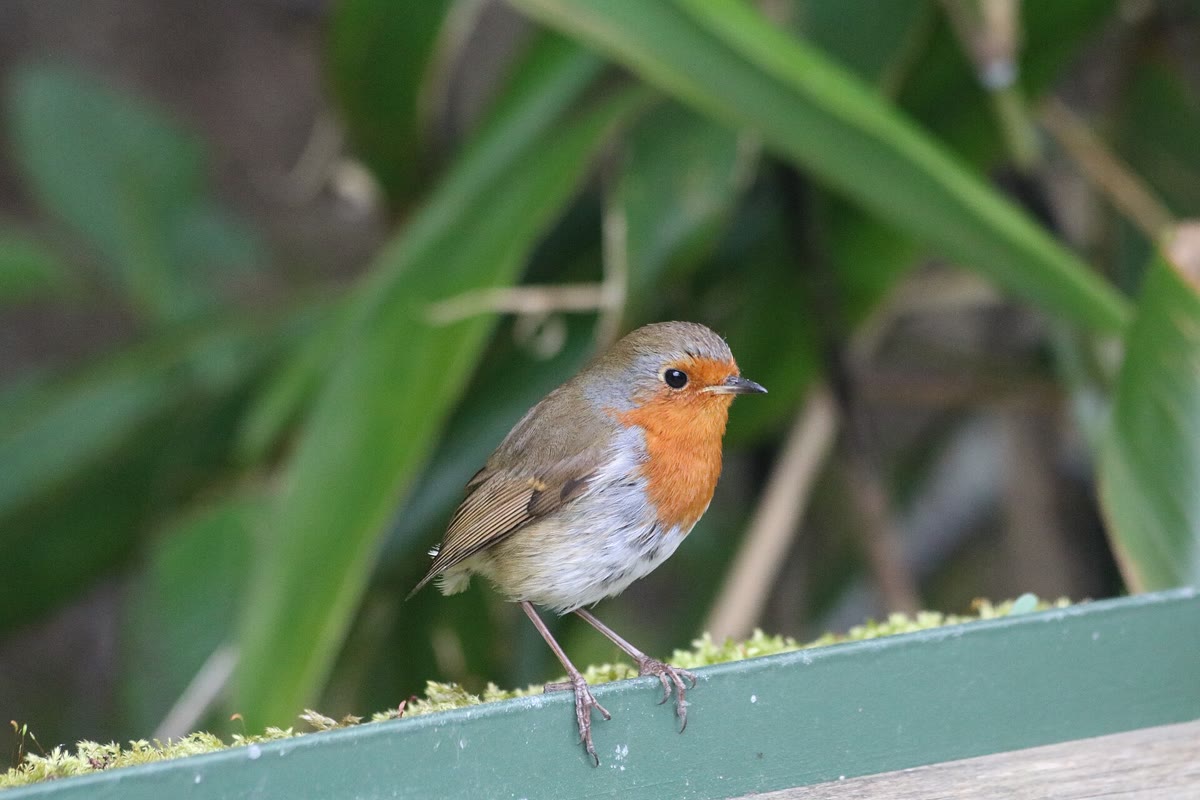
Many people take comfort in the belief that a robin appearing after a death is a sign or message from a loved one. “When robins appear, loved ones are near” runs a popular saying, quoted in the Irish Examiner in 2024. It’s a belief, and the older folklore is darker.
In the 1930s, a girl at Kilbeg school, Co. Meath, wrote that her grandmother called a robin coming into the house a sign of a death in the family. In the Irish Times in 2017, Fiona Gartland noted that belief in parts of Ireland, and that robins were seen as messengers for the dead.
Families also told the bees of a death and draped the hives in black, or the bees would leave, a custom not unique to Ireland, writes Máirtín Mac Con Iomaire of TU Dublin. Far less comforting was the Dullahan and his death coach.
November and the Holy Souls
In Catholic Ireland, November is the month for praying for the dead, opening with All Saints’ Day and All Souls’ Day on 1 and 2 November. Parishes keep a November list of the dead and hold blessings of the graves, the Irish bishops’ conference says.
Older belief went further. In Rathmullan, Co. Donegal, a pupil wrote that on the first night of November the dead came home to the house they were born in, so people swept the floor, built up the fire and set chairs around it. In Gaddyduff, also in Donegal, families left the door unbolted, a light burning and a plate of poundies (mashed potatoes) on the table.
It’s close kin to the old idea that the dead come home at Samhain, as I explain in how the Irish invented Halloween.
Irish wake FAQ
Why did the Irish stop the clocks at a death?
Schools’ Collection accounts say it showed every caller the time of death. Clocks often stayed stopped until after the funeral.
What do you say at an Irish wake?
“I’m sorry for your trouble.” In Irish, Ar dheis Dé go raibh a anam (may his soul be at God’s right hand) for a man, a hanam for a woman, a n-anamacha for more than one.
Do the Irish still have wakes?
Yes. Home wakes are still held in many rural areas, while city families usually use funeral homes. Keening and wake games have all but disappeared, but the visits, tea and handshakes carry on.
Love this? Save it to your Pinterest board for later.
A little bit of Ireland in your inbox every Friday ☘️
The free Weekly Dose of Irish: an Irish joke, a Celtic symbol, an Irish fact, a poem and the week’s best articles in one short email. Join 9,600+ readers.
Free. One short email every Friday. Unsubscribe any time.
More Irish heritage reading
- The American Wake: Ireland’s Farewell for the Living
- What Is a Banshee? Bean Sí Meaning in Irish Folklore
- Caoineadh Airt Uí Laoghaire: The Greatest Lament in the Irish Language
- Top Irish Poem: Mid-Term Break, by Seamus Heaney
- Dullahan: The Irish Headless Horseman and Death Coach
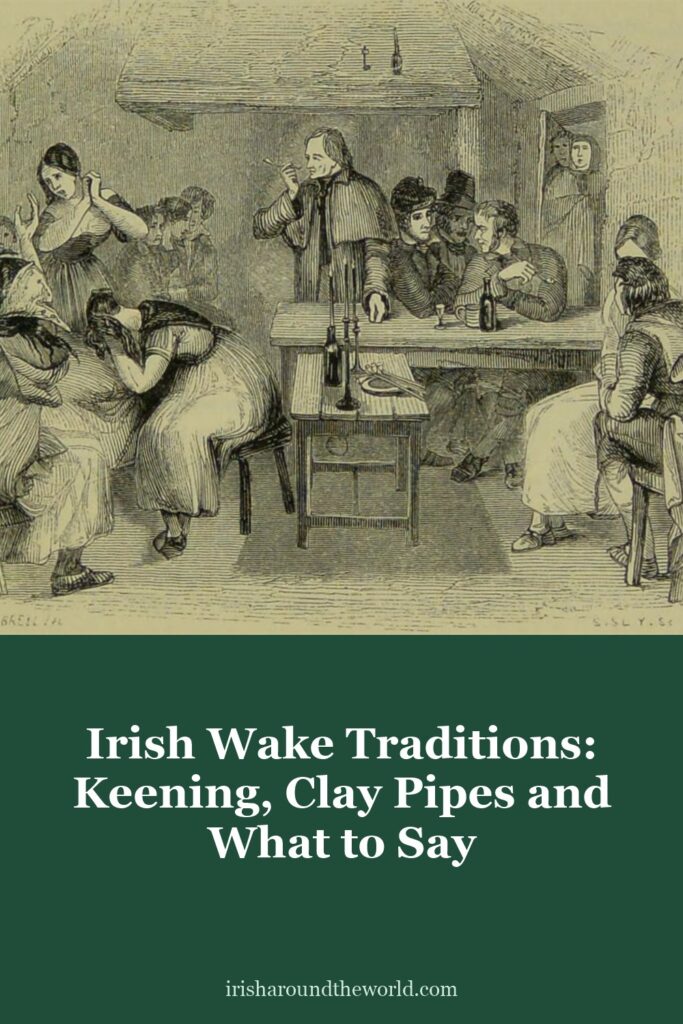
Featured image: The Wake, drawn by J. C. Timbrell and engraved by Sly, from Mr and Mrs S. C. Hall, Ireland: Its Scenery, Character, &c., vol. 1 (first published 1841; Wellcome Collection copy of the 1846 issue, via Internet Archive). Public domain.