Irish inventions that changed the world include the modern submarine (John Philip Holland) and the portable defibrillator (Frank Pantridge). There’s also the Martin-Baker ejector seat and Nicholas Callan’s induction coil. Add the tractor’s three-point linkage (Harry Ferguson), the Beaufort wind scale and cheese and onion crisps (Tayto, 1954). An Irish physicist helped split the atom, and another discovered pulsars. A few famous claims, like the bacon rasher, are myths.
Ask what the Irish invented and you’ll get one of two answers. One is “nothing much”. The other is a list of ten things, half of them slightly wrong. The bacon rasher. Stout. The submarine. The tractor. Each comes with an Irish name attached, and each needs an asterisk.
So this is the long, honest version: 24 inventions and discoveries by people from the island of Ireland. Each has a year, a birthplace where it’s known and a plain verdict. Where somebody got there first, I say so.
I also note who was born in what is now Northern Ireland, and who did their work abroad. Then come the popular claims that don’t stand up. The rasher is in there. Sorry.
Jump to:
- Irish inventions at a glance (table)
- Food, drink and everyday things
- Irish inventions in medicine
- Irish scientists: physics and chemistry
- Weather, earthquakes, maths and the stars
- Engineering, transport and machines
- Not inventions, but worth a mention
- Irish inventions that aren’t quite
- Irish inventions FAQ
- More Irish history and culture
Irish inventions at a glance
Here are all 24 things invented or discovered by Irish people, in the order they appear below. “Now NI” means the place is now in Northern Ireland.
| Invention or discovery | Inventor | Where they were from | Year |
|---|---|---|---|
| Cheese and onion crisps, seasoned in the factory | Joe “Spud” Murphy and Seamus Burke (Tayto) | Dublin | 1954 |
| Guinness brewery (not stout itself) | Arthur Guinness | Celbridge area, Co. Kildare | 1759 |
| Cream cracker | W&R Jacob & Co. | Dublin (firm founded in Waterford) | 1885 |
| Coffey continuous still | Aeneas Coffey | Irish excise officer; probably born in Dublin or Wicklow | 1830 |
| Gregg shorthand | John Robert Gregg | Co. Monaghan; worked in the US | 1888 |
| Injection under the skin with a hollow needle | Francis Rynd | Dublin | 1844 |
| Clofazimine, a leprosy drug | Vincent Barry and team | Cork | 1954 |
| Portable defibrillator | Frank Pantridge, with John Geddes and Alfred Mawhinney | Hillsborough, Co. Down (now NI) | 1965 |
| Boyle’s law | Robert Boyle | Lismore, Co. Waterford; worked in England | 1662 |
| Induction coil | Nicholas Callan | Darver, Co. Louth | 1836 |
| Absolute temperature scale | William Thomson, Lord Kelvin | Belfast (now NI); worked in Glasgow | 1848 |
| Measuring heat absorbed by CO2 and water vapour | John Tyndall | Leighlinbridge, Co. Carlow; worked in London | 1859 |
| Single-plate colour photography (Joly screen) | John Joly | Bracknagh, Co. Offaly | 1894 |
| Splitting the atom with a particle accelerator | Ernest Walton, with John Cockcroft | Dungarvan, Co. Waterford; work done at Cambridge | 1932 |
| Beaufort wind force scale | Francis Beaufort | Navan, Co. Meath | 1806 |
| Controlled seismic experiments; the word “seismology” | Robert Mallet | Dublin | 1846 to 1849 |
| Quaternions (discovery) | William Rowan Hamilton | Dublin | 1843 |
| Pulsars (discovery) | Jocelyn Bell Burnell | Lurgan, Co. Armagh (now NI); work done at Cambridge | 1967 |
| Mirror galvanometer for the Atlantic telegraph | William Thomson, Lord Kelvin | Belfast (now NI); worked in Glasgow | 1858 to 1866 |
| Modern submarine (USS Holland) | John Philip Holland | Liscannor, Co. Clare; worked in the US | 1897 to 1900 |
| Steerable torpedo | Louis Brennan | Castlebar, Co. Mayo; grew up in Australia | 1870s |
| Three-point linkage for tractors | Harry Ferguson | Growell, between Hillsborough and Dromore, Co. Down (now NI) | 1926 (patent) |
| The tank (co-designer) | Walter Gordon Wilson, with William Tritton | Blackrock, Co. Dublin; worked in England | 1916 |
| Martin-Baker ejector seat | James Martin | Near Crossgar, Co. Down (now NI); worked in England | 1946 |
Food, drink and everyday things
Cheese and onion crisps: Tayto (1954)
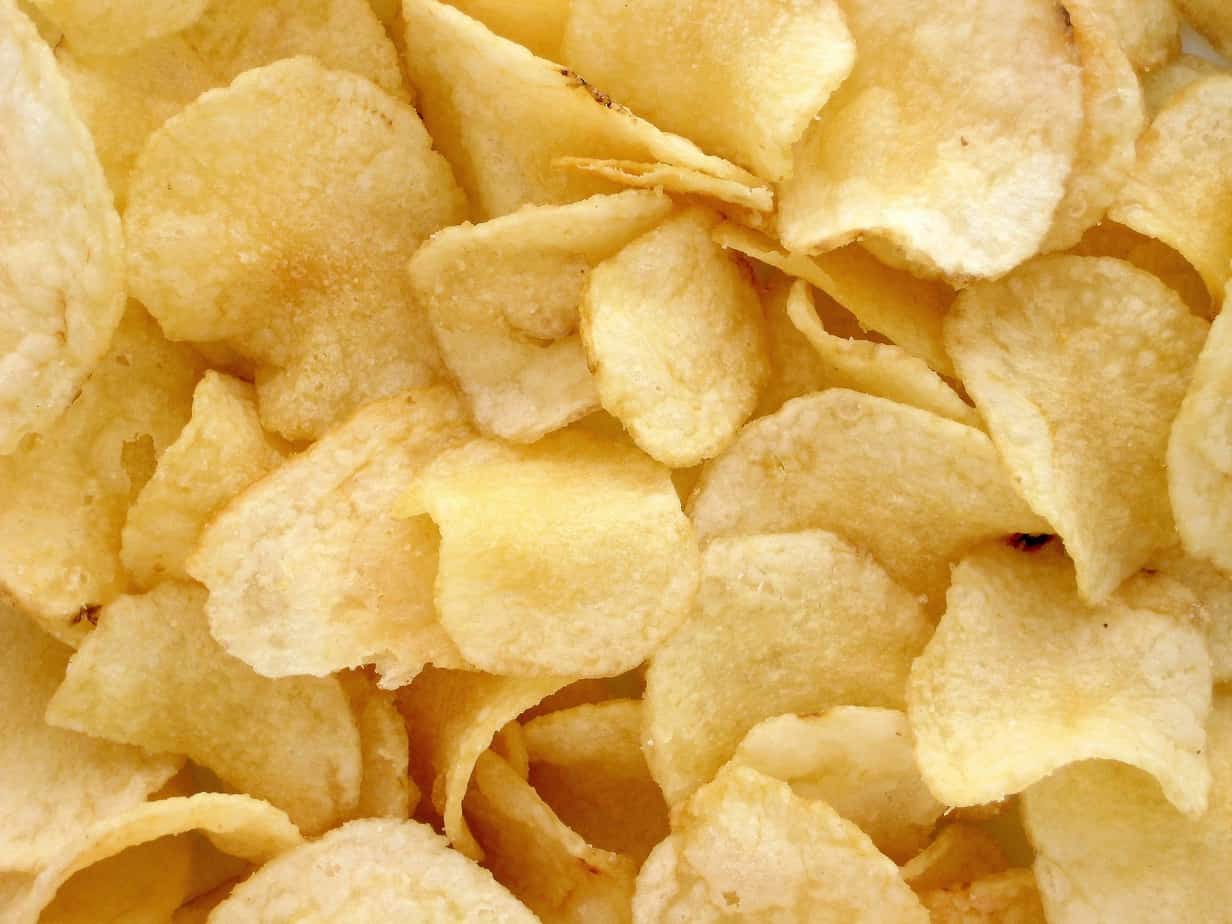
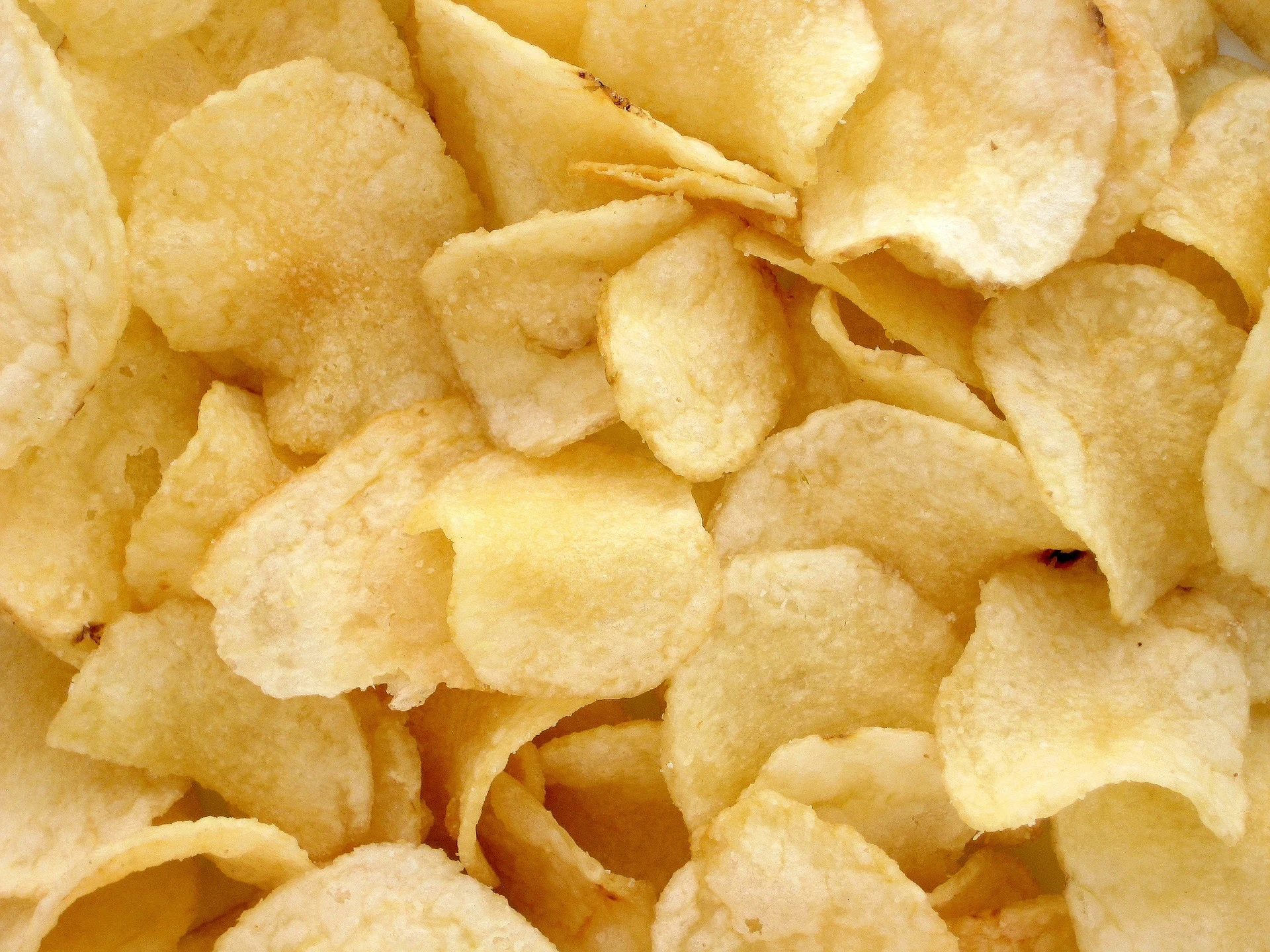
Plain potato crisps, or chips if you’re American. Tayto’s big idea was to season them in the factory.
In early 1950s Ireland, a crisp (a potato chip, to Americans) was plain and pale. You got a twist of salt in the bag to shake on yourself. Joe “Spud” Murphy, a Dubliner born in 1923, thought he could do better.
In 1954 he started Tayto at O’Rahilly Parade, off Moore Street, with eight staff. Working at a kitchen table with his employee Seamus Burke, he came up with cheese and onion, according to the Dictionary of Irish Biography (DIB).
Tayto is widely credited with the first crisps seasoned during production, and Burke deserves a share of that.
The Guinness brewery: Arthur Guinness, not the inventor of stout (1759)
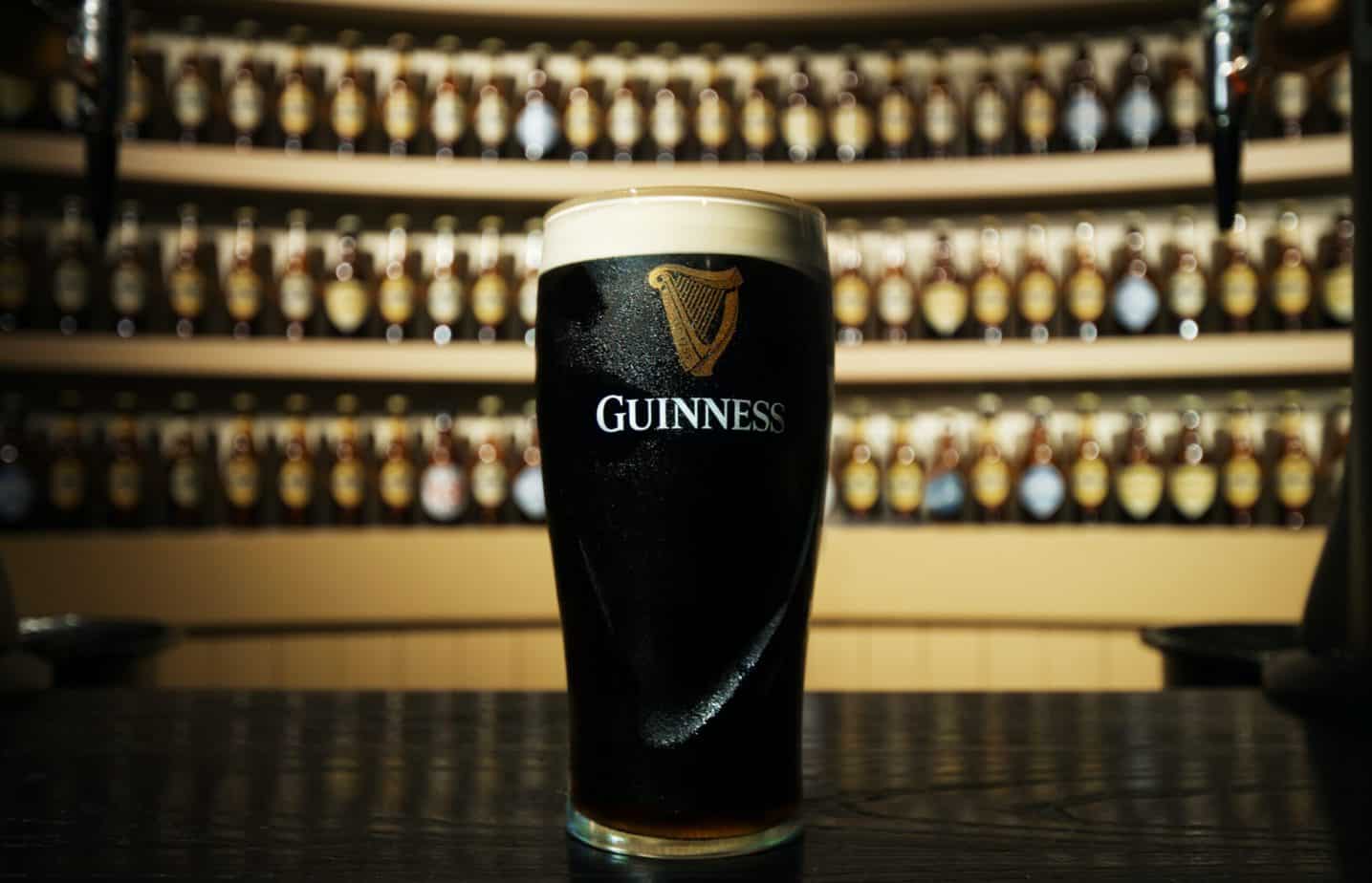
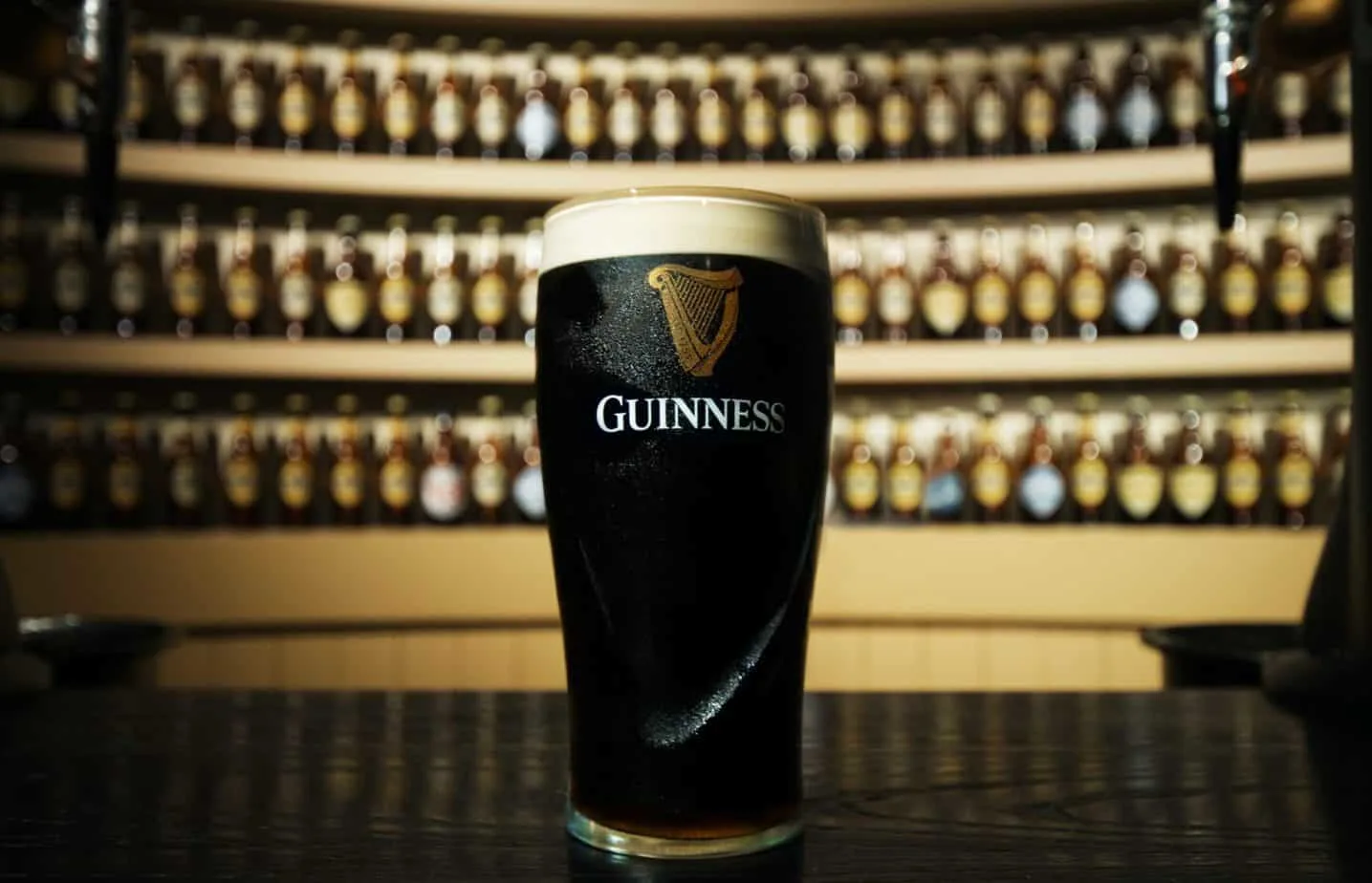
A pint of Guinness. Arthur Guinness founded his Dublin brewery in 1759, but he didn’t invent stout.
On 31 December 1759, Arthur Guinness signed a lease on a disused brewery at St James’s Gate, Dublin. The terms were £45 a year for 9,000 years. Few business plans have been that confident. Arthur came from the Celbridge area of Co. Kildare, says the DIB.
Here’s the asterisk. He didn’t invent stout or porter. Porter was a London beer from the 1720s, and “stout” first meant a stronger porter.
The DIB says Guinness may only have started brewing porter in the 1780s. What he built was the world’s most famous stout brand.
The cream cracker: Jacob’s of Dublin (1885)
In 1885 Jacob’s of Dublin launched the cream cracker, a dry, flaky square made for cheese.
W&R Jacob began in Waterford in 1851 and soon moved to Dublin. Who devised the cracker is muddled. Jacob’s own history credits co-founder William Beale Jacob, who studied cracker making in America. His DIB entry points to his son, George Newsom Jacob, after a US trip.
It was an Irish take on the American cracker, not a world first. The “cream” means the mixture was creamed, not that it contains cream. Think of a flakier saltine with no salt on top.
The popular story that a Joseph Haughton invented it traces to a 2011 baking textbook. Neither Jacob’s own history nor the DIB mentions him.
The Coffey still: continuous distilling (1830)
Aeneas Coffey spent 24 years in the excise service, chasing distillers for their taxes. He finished as acting inspector general. Then he became a distiller himself. Gamekeeper turned poacher.
His 1830 patent still ran continuously. It had two tall columns, the analyser and the rectifier, instead of one copper pot a batch at a time. It was faster and cheaper.
It also made a lighter spirit, and Irish distillers mostly turned their noses up at it. The Scots didn’t, and it helped make blended Scotch possible. It still makes grain whisky, vodka and gin worldwide.
Caveat: Robert Stein of Scotland patented a continuous still a few years earlier, so Coffey’s was the improvement that stuck. His birthplace is uncertain: probably Dublin or Wicklow, possibly Calais in France.
Gregg shorthand: John Robert Gregg (1888)
John Robert Gregg was born at Shantonagh, Co. Monaghan, in 1867, and grew up in Rockcorry. A blow to the head from a teacher damaged his hearing, says the DIB. Later he threw himself into shorthand.
He designed his own system, built from the flowing curves of ordinary handwriting. He published it in Liverpool in 1888, then moved to Boston in 1893 with $30 to his name.
Gregg shorthand became the main shorthand in the United States, learned by millions of secretaries and reporters. If your grandmother took dictation in an American office, there’s a fair chance she wrote Gregg.
Irish inventions in medicine
My short video tells three of the stories on this page: Francis Rynd’s needle, Francis Beaufort’s wind scale and James Martin’s ejector seat.
The hollow needle for injections: Francis Rynd (1844)
On 3 June 1844, a woman named Margaret Cox was at the Meath Hospital in Dublin with facial neuralgia, a savage nerve pain. Her surgeon, Francis Rynd, born in Dublin in 1801, tried something new.
He used a fine hollow tube fitted over a sharp rod, a cannula and trocar, to get under her skin. Then he let a morphine solution run in by gravity. Her pain eased almost at once.
It’s usually credited as the first recorded injection under the skin. But Rynd didn’t invent the hypodermic syringe. His needle had no plunger. The syringe came in 1853, from Alexander Wood in Edinburgh and Charles-Gabriel Pravaz in France.
Clofazimine, a leprosy drug: Vincent Barry (1954)
Vincent Barry, born in Cork in 1908, went looking for a tuberculosis (TB) drug and found something else. His Medical Research Council of Ireland team at Trinity College Dublin first made compound B663 in 1954.
Against TB it disappointed. Against leprosy it worked. The team published clofazimine in 1957, and it was sold as Lamprene from 1969.
In 1981 the World Health Organization made it one of three drugs in its multidrug therapy, which has cured millions. So it’s part of the cure, and a team effort. Barry died in 1975, and the team won the UNESCO Science Prize in 1980.
The portable defibrillator: Frank Pantridge (1965)
Frank Pantridge was a Belfast heart specialist, born in Hillsborough, Co. Down (now Northern Ireland). He saw that many heart attack deaths happened before the patient reached hospital. So he brought the hospital to the patient.
In 1965, with Dr John Geddes and technician Alfred Mawhinney, he built a defibrillator that ran off car batteries. It weighed over 70 kg (more than 150 lb). From January 1966 it rode in a Belfast ambulance, the world’s first mobile coronary care unit.
By 1968 Professor John Anderson had helped shrink it to 3 kg (under 7 lb), using a tiny capacitor made for NASA. Pantridge’s 1967 paper in The Lancet helped spread paramedic care, especially in the US. Caveat: he didn’t invent defibrillation itself, which dates from the 1940s. He made it portable.
Irish scientists: physics and chemistry
Some of these are discoveries rather than inventions. Nobody leaves them off an Irish list, though.
Boyle’s law: Robert Boyle (1662)
Robert Boyle was born at Lismore Castle, Co. Waterford, in 1627, the 14th child of the 1st Earl of Cork. With that many siblings, you’d want a quiet laboratory.
With his assistant Robert Hooke he built an air pump in Oxford. In 1662 he published Boyle’s law: squeeze a gas into half the space and its pressure doubles, if the temperature stays the same.
Caveat: Henry Power and Richard Towneley reached the idea in 1661, and Boyle credited Towneley. In France it’s Mariotte’s law, after Edme Mariotte (1676).
The induction coil: Nicholas Callan (1836)
Father Nicholas Callan, born at Darver, Co. Louth, was a priest and professor of natural philosophy at Maynooth. He liked his electricity big, and built enormous batteries.
In 1836 he wound two coils of wire around an iron core. When he broke the current in the first coil, a much higher voltage leapt out of the second. That’s the induction coil, a forerunner of the step-up transformer.
Caveat: the American Charles Grafton Page built one independently the same year. Heinrich Ruhmkorff later got most of the credit, because Callan’s work was forgotten.
The kelvin scale and absolute zero: Lord Kelvin (1848)
William Thomson was born in Belfast in 1824, in what is now Northern Ireland. The family moved to Glasgow when he was eight, and he stayed, later becoming Lord Kelvin.
In 1848 he proposed an absolute temperature scale that starts at the coldest anything can possibly be. That’s absolute zero: 0 K, or minus 273.15°C (minus 459.67°F). The SI unit of temperature, the kelvin, is named after him.
Heat-trapping gases: John Tyndall (1859)
John Tyndall, from Leighlinbridge, Co. Carlow, worked at the Royal Institution in London. In 1859 he built an apparatus to measure how much radiant heat different gases absorb.
Oxygen and nitrogen let it pass. Water vapour and carbon dioxide soaked it up. That’s the physical basis of the greenhouse effect.
Caveat: the American Eunice Foote showed in 1856 that carbon dioxide warms up more in sunlight, so she deserves a share. Tyndall’s were the first precise measurements.
The Joly colour screen: John Joly (1894)
John Joly was born in 1857 at Hollywood House, Bracknagh, in what was then King’s County and is now Co. Offaly. He worked at Trinity College Dublin.
In 1894 he ruled a glass screen with fine red, green and blue-violet lines, each about a tenth of a millimetre wide. Placed in front of the plate, it let a single photograph record colour.
It’s often called the first successful single-plate colour process. It wasn’t the first colour photograph: James Clerk Maxwell showed one in 1861. Joly’s process was costly and short-lived, and the Lumière brothers’ Autochrome (1907) won the market.
Splitting the atom: Ernest Walton (1932)
Ernest Walton, born in Abbeyside, Dungarvan, Co. Waterford, in 1903, spent years at Cambridge building a machine that might not work. On 14 April 1932, it worked.
With John Cockcroft at the Cavendish Laboratory, he fired protons, sped up across about 700,000 volts, at lithium. The lithium nuclei broke apart. It’s often described as the first experimental check of Einstein’s E=mc2.
They shared the 1951 Nobel Prize in Physics. Caveat: Ernest Rutherford had already broken up nuclei using natural radiation, from 1917. Walton and Cockcroft were first to do it with a particle accelerator.
Weather, earthquakes, maths and the stars
The Beaufort wind force scale: Francis Beaufort (1806)
Around 1800, sailors described the wind any way they liked. One officer’s “stiff breeze” was another’s “fresh gale”. Francis Beaufort, a Royal Navy officer born in Navan, Co. Meath, in 1774, wanted something better.
In January 1806, aboard HMS Woolwich, he wrote in his diary that he’d log the wind on a numbered scale. It had 13 forces, described in words. He revised it in 1807, and later versions judged each force by the sail a warship could carry.
The Royal Navy made it standard in 1838. Caveat: earlier wind scales existed, including John Smeaton’s, so Beaufort standardised rather than invented the idea. Many sites say 1805, but the Met Office has 1806. The shipping forecast still uses it.
Seismology: Robert Mallet (1846 to 1849)
Robert Mallet, a Dublin engineer born in 1810, wanted to know how fast an earthquake travels. Ireland, unhelpfully, doesn’t have many.
His 1846 paper to the Royal Irish Academy argued that earthquakes move through the ground as waves. So in 1849 he buried gunpowder in the sand at Killiney Strand, set it off and timed the shock. It was one of the first controlled seismic experiments.
He coined the word “seismology” and is credited with “epicentre”. He also studied the damage of the 1857 Naples earthquake, using some of the first photographs of an earthquake’s aftermath. He’s often called the father of seismology, though he didn’t invent the seismograph.
Quaternions: William Rowan Hamilton (1843)
On 16 October 1843, William Rowan Hamilton was walking by the Royal Canal in Dublin. The answer to a problem he’d chewed on for years arrived. He scratched it into the stone of Broom Bridge: i2 = j2 = k2 = ijk = -1.
A plaque marks the spot, and mathematicians walk there every year. Hamilton, born in Dublin in 1805, had discovered quaternions, numbers with four parts that can describe turns in three dimensions.
Quaternions now handle 3D rotations in computer graphics, video games and spacecraft navigation. Not bad for a stroll.
Pulsars: Jocelyn Bell Burnell (1967)
In 1967 Jocelyn Bell, a Cambridge PhD student from Lurgan, Co. Armagh (now Northern Ireland), spotted something odd on her chart recorder. It was a radio pulse repeating every 1.3 seconds or so, regular as a clock. It turned out to be a pulsar, a rapidly spinning neutron star.
Her supervisor, Antony Hewish, shared the 1974 Nobel Prize, and she was left out. In 2018 she won the $3 million Special Breakthrough Prize and gave it to the Institute of Physics, to help under-represented students into physics.
Engineering, transport and machines
Cables, submarines, tractors, tanks and a seat that fires you out of a jet. The Irish were busy.
The Atlantic telegraph and mirror galvanometer: Lord Kelvin (1858 to 1866)
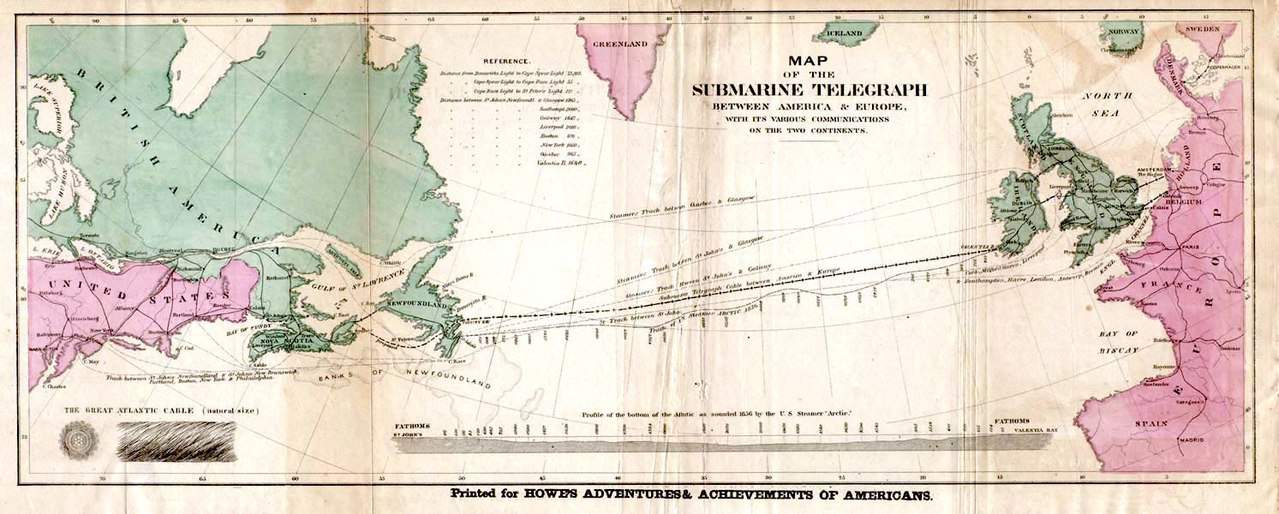
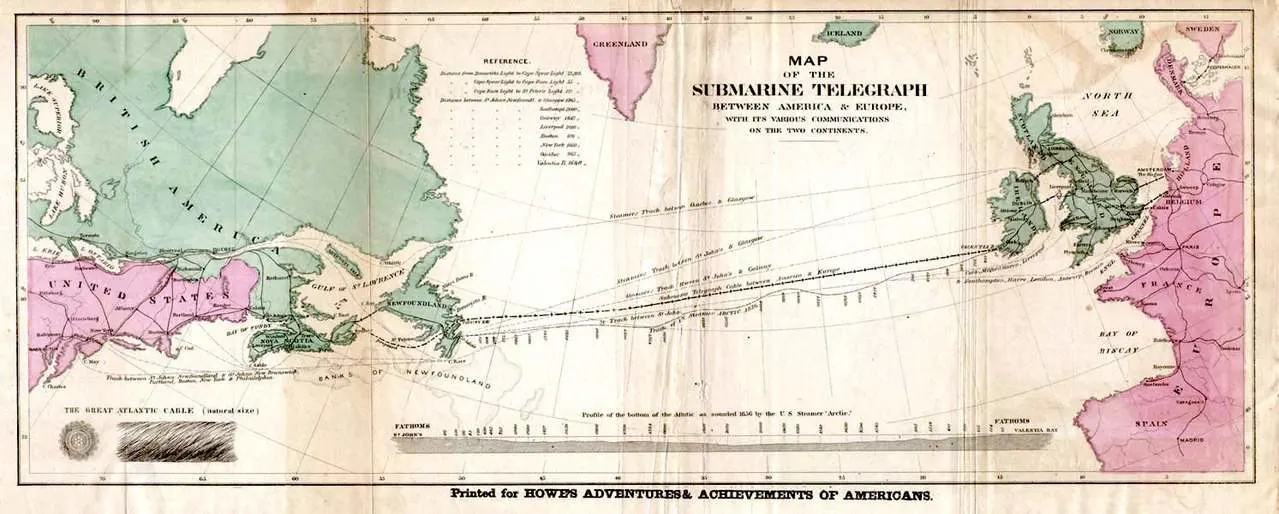
A map of the Atlantic telegraph route from Valentia, Ireland, to Newfoundland, c. 1858, from Henry Howe’s Adventures and Achievements of Americans. Kelvin didn’t invent the cable, but he helped make its signals readable.
In 1858 a telegraph cable was laid across the bed of the Atlantic. It worked faintly for a few weeks, then died. William Thomson, later Lord Kelvin, was the project’s scientific adviser.
His mirror galvanometer, which bounced a spot of light off a tiny mirror, could read the weak signals. In 1866 the Great Eastern laid a lasting cable from Valentia Island, Co. Kerry, to Newfoundland, and Thomson was knighted.
Two corrections to the usual story. It carried telegraph messages in Morse code, not phone calls. Those came by radio in 1927 and by cable in 1956.
And the project was led by the American Cyrus Field. Valentia is now a stop on the Wild Atlantic Way.
The modern submarine: John Philip Holland (1897 to 1900)
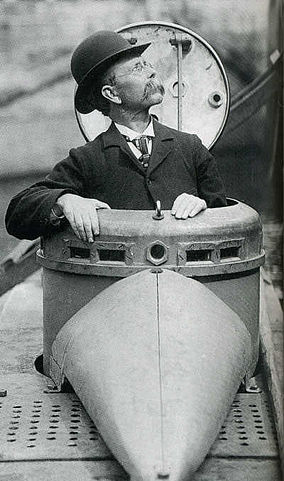
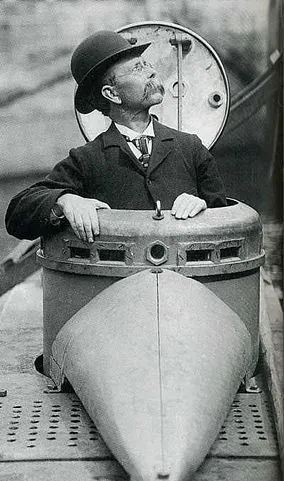
John Philip Holland in the hatch of one of his submarines, around 1898
John Philip Holland, born in Liscannor, Co. Clare, in 1841, was a teacher with a submarine habit. He emigrated to the US in 1873.
Clan na Gael, the Irish-American republican group, paid for his early boats, including the Fenian Ram (1881). They hoped to use them against the British. They never did.
His breakthrough was the Holland VI, launched in 1897. It used a petrol engine on the surface and batteries underwater, the pattern for 20th-century submarines. The US Navy bought it in April 1900 for $150,000 and commissioned it as USS Holland that October.
Caveat: he didn’t invent the submarine. Cornelis Drebbel’s boat (1620s), the American Turtle (1775) and the Confederate Hunley (1864) came first. “Father of the modern submarine” is fair.
The steerable torpedo: Louis Brennan (1870s)
Louis Brennan was born in Castlebar, Co. Mayo, in 1852 and grew up in Melbourne, Australia. In the 1870s he designed a torpedo that could be steered from the shore.
Two thin wires ran back to land. Winding them in spun the propellers, and changing the speed of each wire steered it. It was tested in Australia in 1879, and in 1887 he sold it to the British government for about £110,000.
It’s often called the first practical guided missile, which is fair if you count steering by wire. It wasn’t the first torpedo, though. Robert Whitehead’s self-propelled one (1866) came first, but it couldn’t be steered once fired.
The three-point linkage: Harry Ferguson (1926)
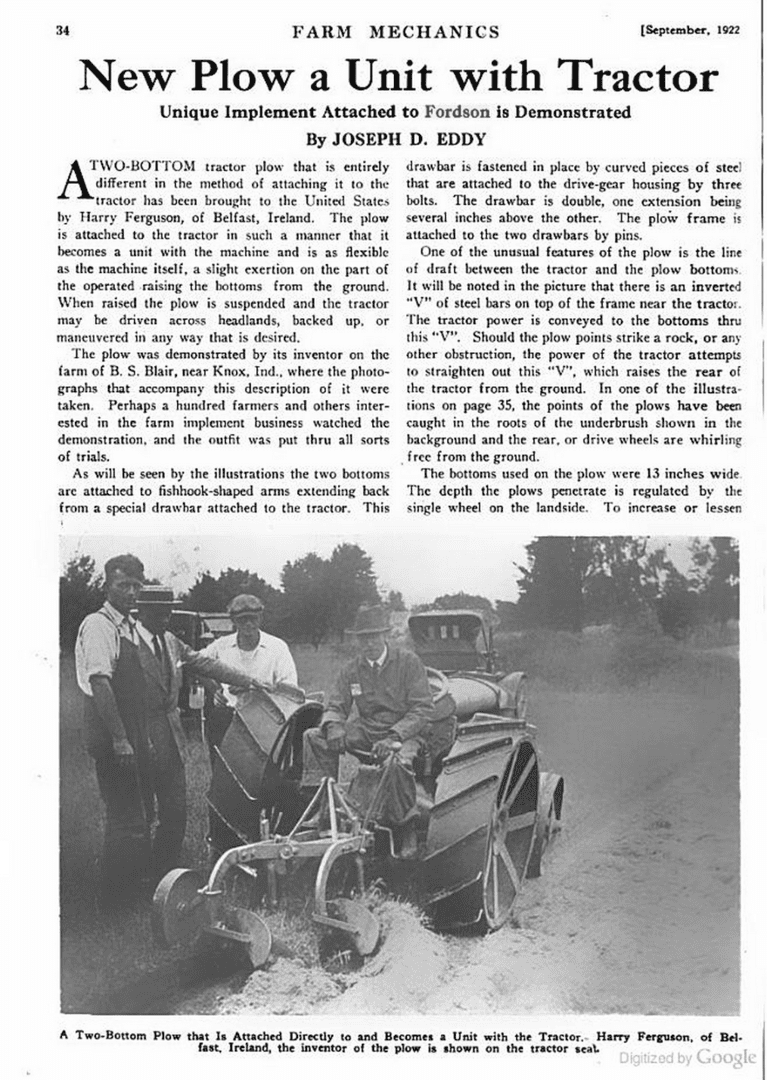
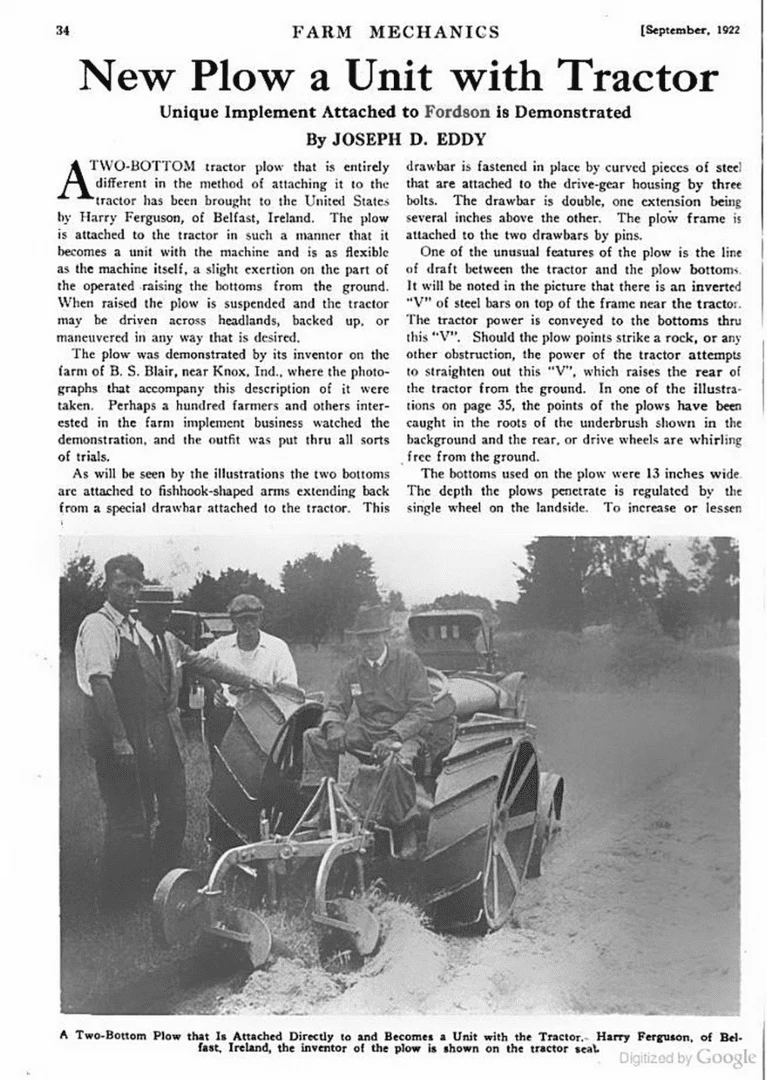
Harry Ferguson on a Fordson tractor in Indiana, showing an early version of the idea behind his three-point linkage. From Farm Mechanics magazine, September 1922.
Harry Ferguson, from Growell, between Hillsborough and Dromore, Co. Down (now Northern Ireland), first made headlines in the air. On 31 December 1909 he flew a monoplane he’d built himself. The DIB calls it the first heavier-than-air flight in Ireland.
His lasting work was on the farm. Early tractors towed ploughs on a hitch and could rear up and flip over backwards. His key patent, for draft control, came in 1926.
The full three-point system arrived on his 1933 “Black Tractor”. It made tractor and implement act as one stable unit, and it’s still the world standard.
He didn’t invent the tractor, which dates from the 1890s. The 1946 TE20, the “little grey Fergie”, made his name.
The tank: Walter Gordon Wilson (1916)
Walter Gordon Wilson, born in Blackrock, Co. Dublin, in 1874, was working for the Landships Committee in the First World War. With William Tritton of Fosters of Lincoln, he designed “Little Willie” and then “Mother”, the rhomboid tank approved for production in February 1916. Tanks first went into battle at the Somme on 15 September 1916.
The DIB calls Wilson the inventor of the tank, but co-inventor is fairer. It was a joint effort, and others had proposed tracked armoured vehicles earlier. After the war he invented the preselector gearbox, used in buses and racing cars.
The ejector seat: James Martin and Martin-Baker (1946)
James Martin, born near Crossgar, Co. Down (now Northern Ireland), in 1893, built aircraft in England with his partner and test pilot, Valentine Baker. In 1942 Baker was killed in a test crash. Martin turned to getting pilots out of failing aircraft alive.
His cartridge-fired seat blasted the pilot clear. On 24 July 1946, Bernard Lynch, a Martin-Baker fitter from near Dunshaughlin, Co. Meath, ejected from a Gloster Meteor at about 8,000 ft (2,400 m).
Caveat: Germany’s Heinkel had ejection seats first, and test pilot Helmut Schenk made the first emergency ejection in January 1942. Martin made the seat reliable and standard. By the company’s count, its seats have saved more than 7,800 aircrew.
Not inventions, but worth a mention
The White House: James Hoban’s design (1792)
James Hoban was born near Callan, Co. Kilkenny, and emigrated to America around 1785. On 17 July 1792 his design won the competition for the President’s House. One losing entry, submitted anonymously, is usually attributed to Thomas Jefferson.
His design is often said to echo Leinster House in Dublin. After the British burned the White House in 1814, Hoban rebuilt it. A design, not an invention, and part of the bigger story of the Irish influence on modern America.
Barmbrack: a Halloween tradition
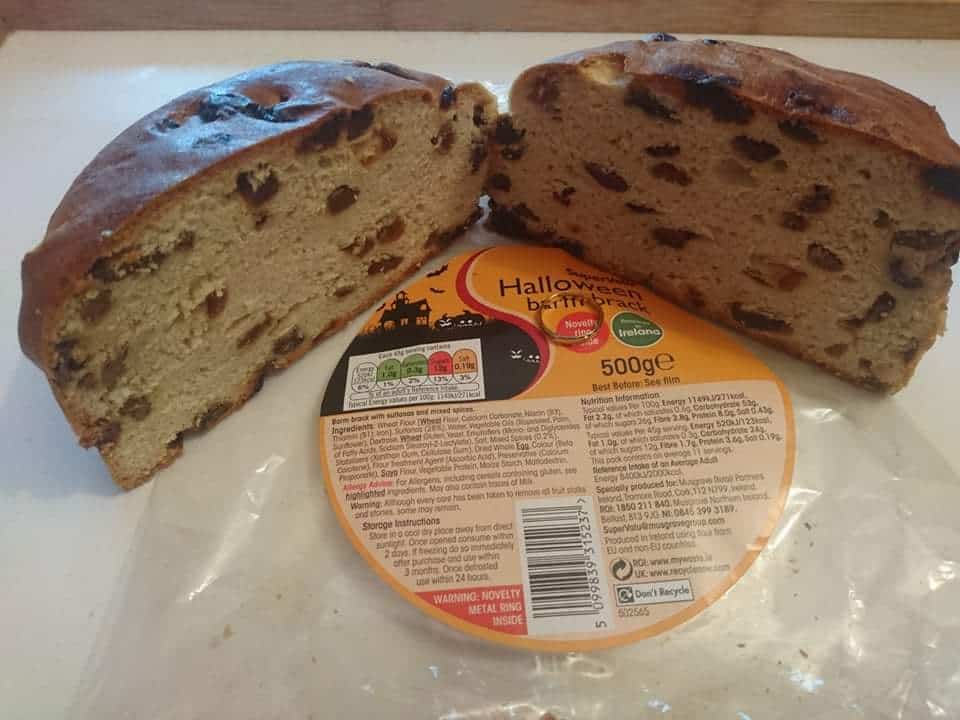
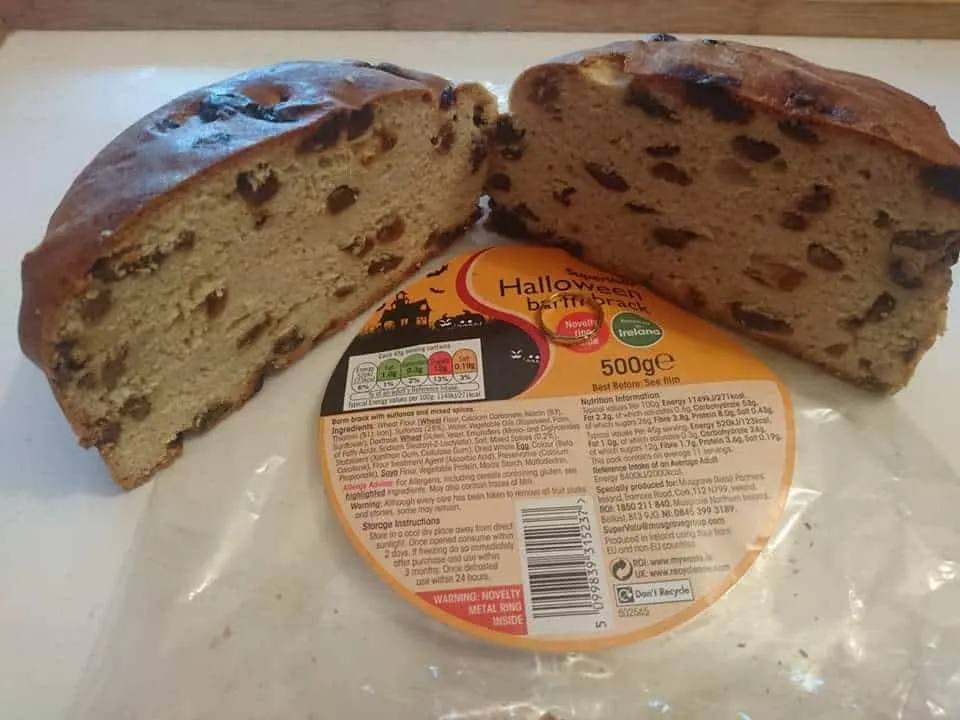
A shop-bought Halloween barmbrack. The label warns about the novelty ring baked inside.
Barmbrack is a tradition, not an invention, and nobody knows who baked the first one. The name usually comes from the Irish bairín breac, “speckled loaf”, for the fruit in it.
At Halloween a ring, a pea, a stick, a scrap of cloth and a coin went inside. Find the ring and you’d be married within the year. Here’s my barmbrack recipe with US cup measures.
Steeplechasing: Buttevant to Doneraile (1752)
As a Cork man, I’ll claim this one. In 1752 two riders named Blake and O’Callaghan raced across country from the church steeple in Buttevant to the one in Doneraile, Co. Cork. It’s remembered as the first steeplechase. For more Cork trivia, see my facts about Cork.
Irish inventions that aren’t quite
Every Irish inventions list has a few of these. Some are half true. Some just got promoted.
The bacon rasher: Henry Denny (myth)

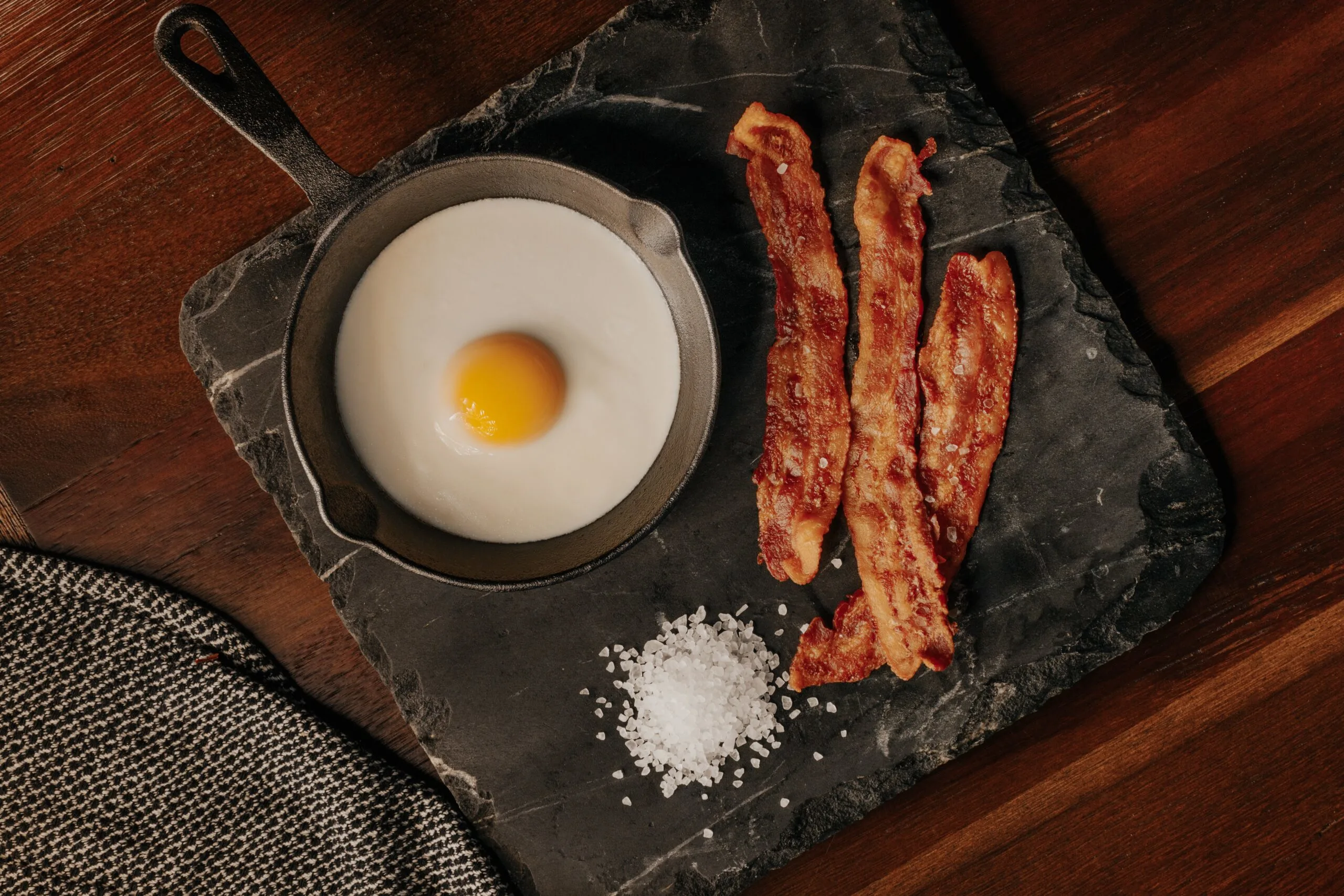
American-style streaky bacon, salt and an egg. Henry Denny’s firm cured pork, but he didn’t invent the rasher.
The claim: Waterford’s Henry Denny invented the rasher in 1820. The problem: Shakespeare mentions “a rasher on the coals” in The Merchant of Venice, around 1596. A rasher is a slice of bacon, usually leaner back bacon in Ireland rather than American streaky strips.
Denny’s firm, Henry Denny & Sons, became a major bacon curer. He’s often credited with dry-salting long flat sides of pork instead of soaking chunks in brine. Nobody has traced that 1820 story to a primary source, though, and one bacon industry writer calls it doubtful.
Denny only began trading in 1820, as a provisions merchant. The firm’s best-documented innovation was ice curing from 1854, patented in 1857, which gave a milder bacon. If you fancy curing your own meat, try my Irish spiced beef recipe.
Drinking chocolate with milk: Hans Sloane (popularised, not invented)
Sir Hans Sloane, born in Killyleagh, Co. Down (now Northern Ireland), was a London physician whose collection founded the British Museum. As a doctor in Jamaica from 1687 to 1689, he tried local cocoa drinks and recommended chocolate mixed with milk.
London apothecaries sold it under his name, and Cadbury later did too. But Jamaicans were already drinking cocoa with milk, so he popularised it rather than invented it. Solid milk chocolate came from Daniel Peter in Switzerland in 1875.
The Guinness Book of Records: Irish-inspired, not Irish-invented (1955)
It started with an argument at a shoot on the North Slob, Co. Wexford, in 1951. Guinness’s managing director, Sir Hugh Beaver, wanted to know Europe’s fastest game bird and couldn’t find the answer in any book.
But Beaver was born in South Africa, and the twins Norris and Ross McWhirter compiled the book in London. The first edition came out in August 1955 and topped the UK bestseller list by Christmas.
The pneumatic tyre, the steam turbine and wi-fi: not Irish-born inventors
John Boyd Dunlop developed his air-filled tyre in Belfast in 1887, for his son’s tricycle. But he was a Scottish-born vet, and his patent was later ruled invalid. Another Scot, Robert William Thomson, had patented air-filled tyres in the 1840s.
Charles Parsons grew up at Birr Castle, Co. Offaly, a son of the Earl of Rosse. But he was born in London in 1854 and invented his steam turbine in England in 1884. And wi-fi’s John O’Sullivan, despite the surname, is an Australian engineer at Australia’s science agency, CSIRO.
Irish inventions FAQ
What did the Irish invent?
The best-known inventions from Ireland and its people include the induction coil, the modern submarine, the tractor’s three-point linkage, the ejector seat and the portable defibrillator. Add cheese and onion crisps, the Beaufort scale and the first recorded injection under the skin. An Irish physicist helped split the atom, and another discovered pulsars.
Who is the most famous Irish inventor?
There’s no official answer, but the usual names are John Philip Holland, Harry Ferguson and James Martin. Submarines, tractor linkages and ejector seats built on their ideas are still in use worldwide.
Who are the most famous Irish scientists?
Robert Boyle, Lord Kelvin, William Rowan Hamilton, John Tyndall, Ernest Walton and Robert Mallet are the classic list. Add Jocelyn Bell Burnell, who discovered pulsars, and Kathleen Lonsdale from Newbridge, Co. Kildare, who proved in 1929 that the benzene ring is flat.
Did an Irishman invent the submarine?
Not the first one. Submarines go back to the 1620s. John Philip Holland from Liscannor, Co. Clare, built the first practical modern submarine, commissioned by the US Navy in 1900.
Did an Irishman invent the tractor?
No, tractors existed from the 1890s. Harry Ferguson of Co. Down developed the three-point linkage, which joins the plough and other tools to the tractor as one unit. His key patent came in 1926.
Did an Irishman invent the hypodermic needle?
Partly. Francis Rynd is credited with the first recorded injection under the skin, in Dublin in 1844, using a hollow needle with no plunger. The syringe came in 1853, from Alexander Wood and Charles-Gabriel Pravaz.
Has an Irish scientist won a Nobel Prize?
Yes. Ernest Walton of Co. Waterford shared the 1951 Nobel Prize in Physics for splitting the atom. William C. Campbell, born in Ramelton, Co. Donegal, shared the 2015 medicine prize for discovering avermectin, which led to the worm drug ivermectin.
More Irish history and culture
- 100+ Remarkable Facts About Ireland
- 21 Mind-Blowing Irish Facts You Never Knew
- The Irish Diaspora: Influence and Impact on Modern America
- English Words From Irish: 27 Examples and the Famous Fakes
- 20+ Facts About Cork, the “Real” Capital of Ireland
- The Great Blasket Island
Love this? Save it to your Pinterest board for later.
A little bit of Ireland in your inbox every Friday ☘️
The free Weekly Dose of Irish: an Irish joke, a Celtic symbol, an Irish fact, a poem and the week’s best articles in one short email. Join 9,600+ readers.
Free. One short email every Friday. Unsubscribe any time.
Mary b.
Friday 16th of September 2022
I had no Idea! Wow. We Irish are a wonder! Glad to know about these inventions. Thanks for the info! I always enjoy your newsletter.
Nancy
Friday 26th of August 2022
A man from Ulster invented chocolate