The two everyday ways to say good luck in Irish are ádh mór (aw MORE), “great luck”, and go n-éirí leat (guh NYE-ree lat), “may it go well with you”. To a group, say go n-éirí libh (guh NYE-ree liv). Beir bua (ber BOO-uh), “take the victory”, is a lovely send-off before a match or a big day. Go n-éirí is the same verb behind “May the road rise up to meet you”, and there it means succeed, not rise.
Someone you love has an exam, an interview or a long journey ahead, and you’d like to wish them luck in Irish.
Irish has plenty of ways to do it, from the two-word ádh mór to old blessings people once said to anyone they found at work.
Here are 30 good luck wishes: 24 in Irish, each with its literal meaning and a plain pronunciation guide, then six popular English “Irish blessings”, each marked genuine or modern. Sounds vary from one part of Ireland to another, so I’ve noted the big differences.
Jump to:
- Good luck in Irish: the quick answer
- Ádh mór: “great luck” (1 and 2)
- Go n-éirí leat: “may it go well with you” (3 and 4)
- More ways to wish someone luck (5 to 8)
- Good luck for exams, the Leaving Cert and new jobs (9 to 13)
- Journeys, new things and match days (14 to 18)
- Traditional blessings for luck and prosperity (19 to 24)
- Good luck blessings in English: genuine or modern? (25 to 30)
- Magpies, horseshoes and the four-leaf clover
- Good luck in Irish FAQ
- More Irish blessings and sayings
Good luck in Irish: the quick answer
| Irish | Say it | Literally | Use it for |
|---|---|---|---|
| Ádh mór! | aw MORE | Great luck! | Anyone, any time |
| Ádh mór ort! | aw MORE urt | Great luck on you! | One person |
| Go n-éirí leat! | guh NYE-ree lat | May it go well with you! | Exams, interviews, tests |
| Go n-éirí libh! | guh NYE-ree liv | May it go well with you all! | A group or a team |
| Beir bua! | ber BOO-uh | Take the victory! | Matches, contests, best wishes |
Foras na Gaeilge’s dictionary, focloir.ie, gives ádh mór, go n-éirí leat and go n-éirí an t-ádh leat for “good luck!”
Ádh mór: “great luck”
Ádh is the Irish word for luck, and mór means big or great.
- Ádh mór! (aw MORE): “great luck!” In Mayo and Donegal, ádh sounds closer to “ah”. In Munster, mór sounds more like “moor”, so you’ll hear aw MOO-ur.
- Ádh mór ort! (aw MORE urt): “great luck on you!” To two or more people, it’s ádh mór oraibh (aw MORE OR-iv, or closer to OR-ee in Connemara).
You’ll often see adh mor online, without accents. The accent, or fada, marks a long vowel, and both words need one.
Go n-éirí leat: “may it go well with you”
- Go n-éirí leat! (guh NYE-ree lat): “may it go well with you”; in plain English, “may you succeed”. Leat has a soft l, a little like “lyat”.
- Go n-éirí libh! (guh NYE-ree liv): the same wish to two or more people. Talking about someone else? Go n-éirí leis (lesh) means good luck to him, and go n-éirí léi (lay) means good luck to her.
The verb is éirigh, rise. Add le (with), though, and it means succeed: Ó Dónaill’s Irish-English dictionary, on teanglann.ie, translates d’éirigh leis as “he succeeded”. So go n-éirí leat is, word for word, “may (it) rise with you”, and in real life, “may it work out for you”.
The same verb hides in what may be the world’s best-known Irish blessing. “May the road rise up to meet you” is a very literal English take on go n-éirí an bóthar leat (number 14), which is really a wish for a good journey. Only that first line comes from Irish, as I explain in the true story of May the road rise up to meet you.
The sound changes across Ireland. In Connacht and Munster, éirí starts with an “eye” sound, and Munster speakers stress the end: guh nye-REE. In Mayo and Ulster you’ll also hear something closer to NAY-ree, and some Ulster speakers say NEE-ree.
Two spelling tips. Go n-éirigh leat is an older spelling; today’s standard is go n-éirí. And the n- isn’t a typo: go adds it before a vowel. Irish drops the hyphen before a capital, as in Tír na nÓg, “the Land of Youth”, so in a headline it’s Go nÉirí Leat.
More ways to wish someone luck
- Go n-éirí an t-ádh leat! (guh NYE-ree un TAW lat): “may luck rise with you”. Ó Dónaill translates it as “good luck attend you”. A good one for a card.
- Guím an t-ádh leat (GEEM un TAW lat): “I wish you luck”. Guigh means pray as well as wish. Ó Dónaill gives this exact phrase as “may good luck go with you”.
- Beir bua! (ber BOO-uh): “take the victory”. Beir means bear or carry off, and bua means victory. Focloir.ie lists it under “best wishes”, and it’s the natural one before a match or contest. In Connemara, bua sounds closer to “boo”.
- Beir bua agus beannacht (ber BOO-uh AH-gus BAN-ukht): “victory and blessing”. Ó Dónaill translates it as “I send you my best wishes”, and it’s a lovely sign-off for a letter or card. Le gach dea-ghuí (leh gokh JA-ghee, with a soft, throaty gh), “with every good wish”, does the same job.
Good luck for exams, the Leaving Cert and new jobs
Every June, Irish families wish their teenagers luck in the Leaving Cert, the exams at the end of secondary school. These phrases work for any test.
- Go n-éirí leat sa scrúdú! (guh NYE-ree lat suh SKROO-doo): “good luck in the exam”. For a whole set of exams, say sna scrúduithe (snuh SKROO-dih-heh). The same verb follows you to the results: focloir.ie gives d’éirigh léi ina scrúdú for “she passed her exam”.
- Go n-éirí leat san Ardteist! (guh NYE-ree lat sun AWRD-chesht): “good luck in the Leaving Cert”. The full name is an Ardteistiméireacht, and Ardteist is the everyday short form, says focloir.ie.
- Go n-éirí leat san agallamh! (guh NYE-ree lat sun AG-uh-luv): “good luck in the interview”.
- Go maire tú do phost nua! (guh MAR-eh too duh FUST NOO-uh): “may you live to enjoy your new job”. Focloir.ie gives it for “good luck with the new job”.
- Gach rath ort amach anseo (gokh RAH urt uh-MOKH un-SHUH): “every success to you from now on”. Focloir.ie offers it for “best wishes for the future”, perfect for a leaving card.
Journeys, new things and match days
- Go n-éirí an bóthar leat (guh NYE-ree un BOH-har lat): “may your journey be a success”. Schoolchildren in Cork and Mayo wrote it down in the late 1930s, several years before the English verse first turns up in print. After a night out, it’s slán abhaile (slawn uh-WAL-yeh), or “safe home”.
- Go maire tú is go gcaithe tú é! (guh MAR-eh too iss guh GAH-heh too AY): “may you live, and may you wear it”, the old good wish for new clothes.
- Ádh éisc ort! (aw AYSHK urt): “fish luck on you”, or as Ó Dónaill puts it, “good luck with the fishing!”
- Ciarraí abú! (KEER-ee uh-BOO): “Kerry forever!” Abú is an interjection meaning “for ever”, and you can put any county or team in front of it: Gaillimh abú (GAL-iv uh-BOO) for Galway.
- Beidh lá eile ag an bPaorach (beh law EL-eh egg un BAY-rukh): “Power will have another day”. A Paorach is one of the Power family, and the proverb is the Irish for better luck next time. Ó Dónaill translates it as “there will come another day, there will be another chance”. My guide to Irish proverbs in Irish has more like it.
Traditional blessings for luck and prosperity
Many traditional good wishes call on God: people wished God’s prosperity on each other, on children, on animals and on work. For a new home, see my Irish house blessings. In the phrases below, Dia (God) is JEE-uh in most places, a little closer to DEE-uh in Munster.
- Bail ó Dhia ort! (bal-yoh YEE-uh urt): “prosperity from God on you”, or simply “God bless you”. You could say it about a fine child too: bail ó Dhia air, “God bless him”.
- Bail ó Dhia ar an obair! (bal-yoh YEE-uh er un OB-ir): “God bless the work”. This was the greeting for anyone you found working, and leaving it out could look like ill will.
- Go gcuire Dia an t-ádh ort (guh GWIR-eh JEE-uh un TAW urt): “may God put luck on you”. Ó Dónaill gives it as “may God prosper you”, and also as “God love you!” A shorter cousin is rath Dé ort (rah JAY urt), “God’s prosperity on you”.
- Go soirbhí Dia duit (guh SER-uh-vee JEE-uh ditch): “may God make things easy for you”. Ó Dónaill translates it as “I wish you godspeed”.
- Nár lagaí Dia thú! (nawr LAG-ee JEE-uh hoo): “may God not weaken you”. Ó Dónaill gives “more power to you!”, the Irish-English cheer for someone doing well. You’ll often see nár laga Dia do lámh, “may God not weaken your hand”; the dictionary spells the verb lagaí.
- Go mbeirimid beo ar an am seo arís (guh MER-im-id byoh er un OWM shuh uh-REESH): “may we be alive at this time again”. Ó Dónaill’s version is “may we live to see this time next year”, and it’s a favourite at New Year. There are more in my Irish New Year blessings and toasts.
Number 20 carried real weight. In Ardpatrick, Co. Limerick, the head teacher, Philip O’Connell, wrote in the 1930s that you should always say “God bless the work”, in Irish or English, and bless people and animals too. As he understood it, people saw a blessing partly as a guard against charms and ill wishes, above all at milking time. When he arrived in 1903, he noted, old people were pleased to hear him use the Irish, and one told him the Irish form had more “virtue” in it. His note is on dúchas.ie.
The churn was another place it mattered. Pupils from Rahans, Co. Mayo, to Derreennalomane, Co. Cork, recorded that anyone who walked in during the churning should take a turn at it and wish “God bless the work”. If they didn’t, the old people believed, the butter might not come.
Good luck blessings in English: genuine or modern?
Search for an Irish good luck blessing and you’ll find hundreds of rhyming verses. Most are sweet. Few are old. The American word historian Barry Popik has traced many of them through old newspapers and books, and my guide to Irish toasts uses his dates too.
- “May the road rise up to meet you.” Genuine first line, modern verse. The opening translates go n-éirí an bóthar leat (number 14). The oldest known printing of the English verse closes a 1945 St Patrick’s Day speech that was reproduced in the US Congressional Record. Its author is unknown.
- “May you be in heaven half an hour before the devil knows you’re dead.” Old, credited to the Irish, but first found in American print. Popik’s earliest examples date from 1869: a book by the temperance lecturer John B. Gough wishes a fortnight in heaven, in an Irish brogue, and a Boston paper offers three weeks as a blessing from the Emerald Isle. The half-hour version first appears in his list in 1998.
- “May the luck of the Irish lead to happiest heights…” Modern. It ends with a highway lined with green lights, which is a clue. Popik’s earliest printing is in a 1976 American book. The phrase itself most likely began in America too: here’s where the luck of the Irish really comes from.
- “May your pockets be heavy and your heart be light…” Modern. A 1986 New York newspaper printed an earlier form that asked for God’s grace, and the version with good luck in it turns up from 1999, says Popik.
- “For each petal on the shamrock, this brings a wish your way…” Modern. Popik’s first printing is a Connecticut newspaper in 1988. The verse also calls a shamrock’s leaves “petals”.
- “May your troubles be less and your blessings be more…” Modern. Popik’s oldest example is from 1991, when a New York Times reporter saw it hanging in a Bronx living room.
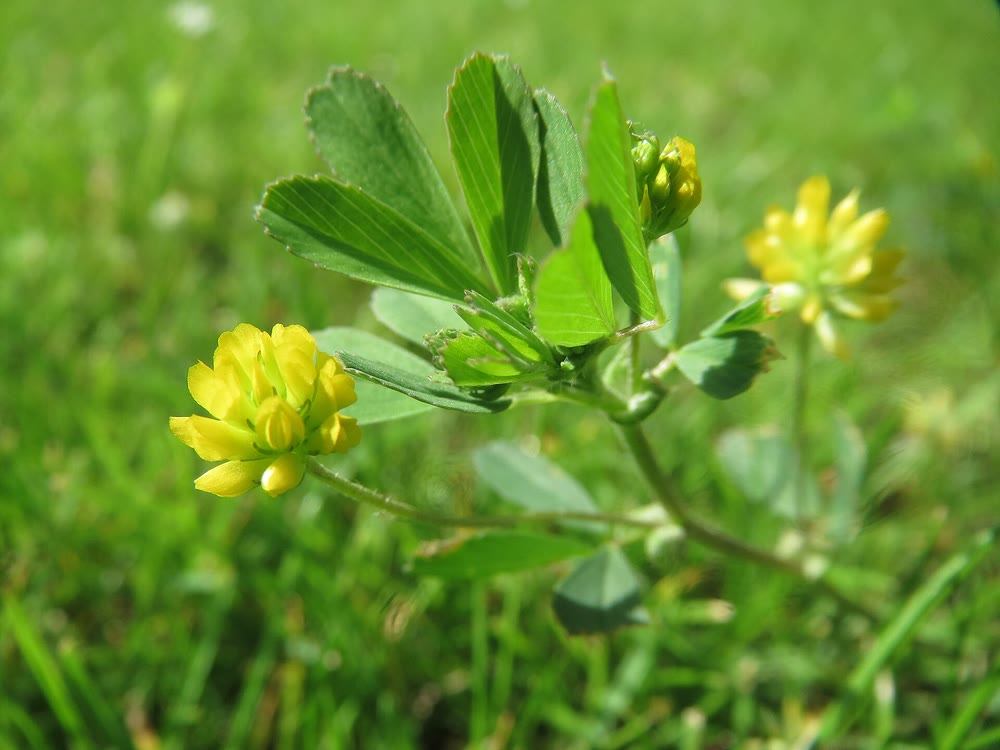
Lesser clover (Trifolium dubium), the plant most often sent in as the real shamrock in a 1988 Irish survey. Photo: AnRo0002, CC0, via Wikimedia Commons
Magpies, horseshoes and the four-leaf clover
Words weren’t the only way to court luck. Three charms come up again and again in the Schools’ Collection, the folklore Irish schoolchildren wrote down in 1937 to 1939. I’ve gathered many more Irish superstitions in a separate guide.
Magpies: one for sorrow
The magpie is snag breac (snag BRAK) in Irish. Many schools recorded one magpie as bad luck and two as good, but not all: a list from Killorglin, Co. Kerry, has it the other way round. In Croom, Co. Limerick, a pupil wrote that the bad luck was broken if two people saw the lone bird together. A Roosky, Co. Roscommon, pupil read the weather in it: when it’s bad, one bird stays on the nest, so a lone magpie in a field means bad weather.
Magpies seem to be fairly recent arrivals. An account of Co. Wexford written in 1682 by Colonel Solomon Richards, a Cromwellian officer, describes fewer than a dozen flying in from England or Wales on an east wind and then spreading through the county. That flock is thought to have come in 1676.
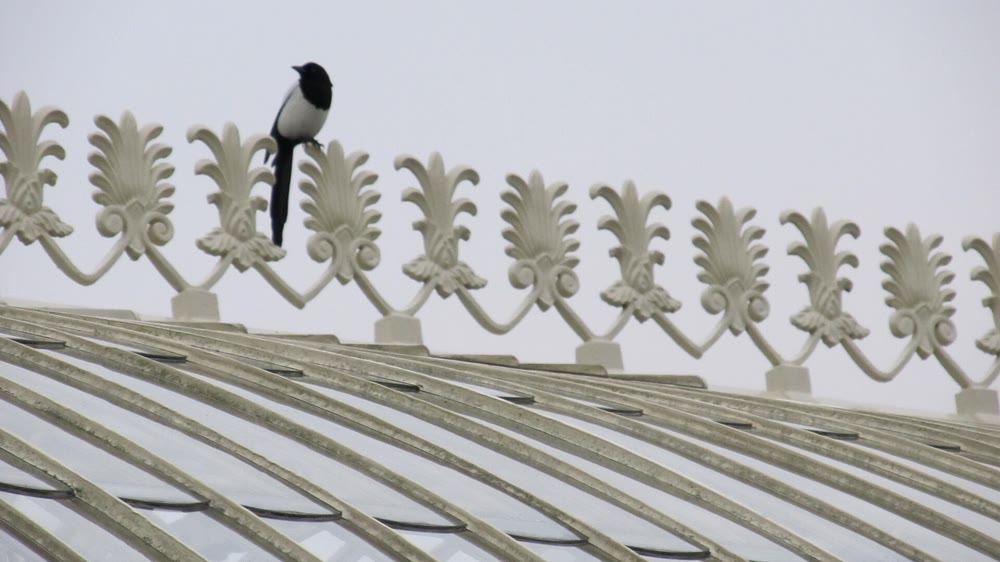
A lone magpie on the ironwork at the National Botanic Gardens, Glasnevin, Dublin. Photo: Robin Van Auken, CC0, via Wikimedia Commons
Horseshoes over the door
A horseshoe is crú capaill (kroo KOP-il). In Ardcath, Co. Meath, a pupil wrote that a horseshoe hung over the door brought luck to the house, and in Lanesborough, Co. Longford, farmers hung one over the byre door for the cattle. A Lanesborough pupil added that the local forges, with their horseshoe-shaped doorways, had a shoe on the door to show it was a forge, and for luck too.
Croom had a finer rule. A shoe found on the road was lucky only if it pointed towards you, as if the horse were walking your way. If it pointed away, your luck was leaving. An ass’s shoe was luckier still, and you should never walk past one. The full list is on dúchas.ie.
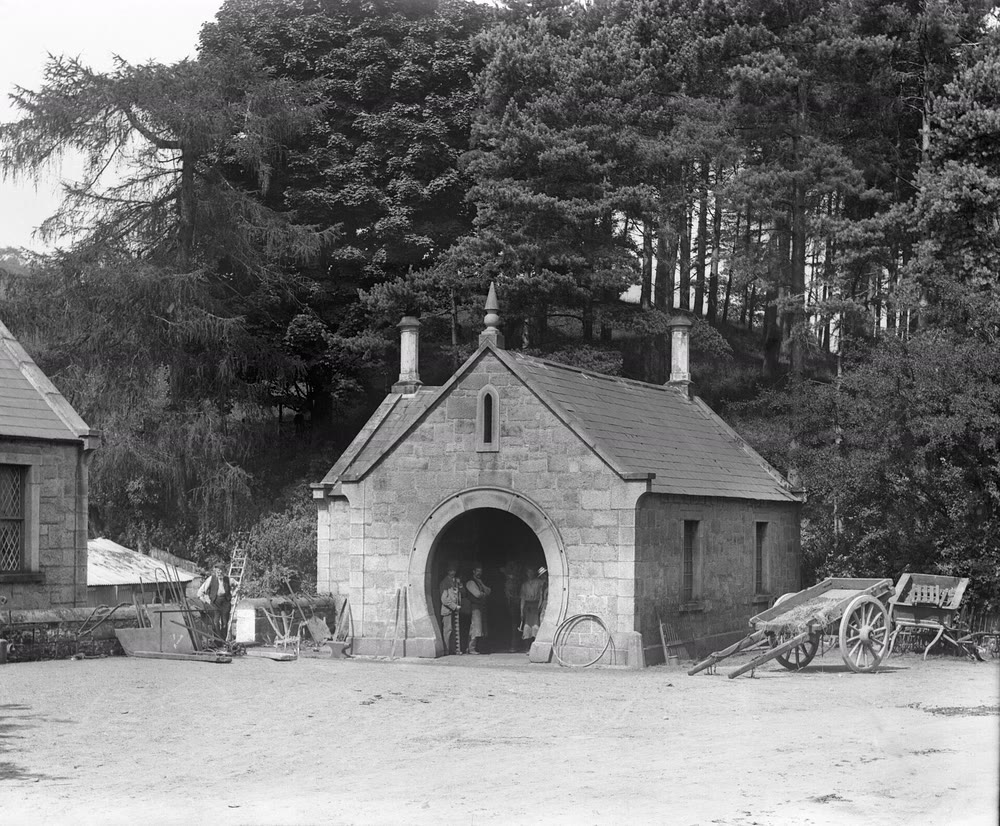
The forge at Enniskerry, Co. Wicklow, built in 1855 with the horseshoe-shaped doorway typical of forges, photographed about 1900 by Robert Augustus Henry L’Estrange. Queensland University of Technology, CC0, via Wikimedia Commons
Shamrock or four-leaf clover?
The plant the Irish wear on St Patrick’s Day is the shamrock, seamróg (SHAM-rohg), and it has three leaves. When E. Charles Nelson of the National Botanic Gardens asked people in 1988 to send in the “real” shamrock, yellow or lesser clover (Trifolium dubium) made up 46 percent of the 243 plants and white clover 35 percent, Smithsonian magazine reports. See my guide to why the shamrock is the symbol of Ireland.
A four-leaf clover is a rare freak leaf, most often found on white clover, and Irish people prized it too. Ó Dónaill calls it seamair Mhuire (SHAM-ir WIR-uh), Mary’s clover, and gives an idiom for a very lucky person: he has it under his belt. Four-leaf clovers count as lucky far beyond Ireland, though. There’s more on the clover and the famous phrase in my guide to the luck of the Irish.
A story recorded in Croom shows its power. A travelling show had a cock that seemed to drag a huge beam of timber around the ring. One man, carrying a load of hay on his back, said it was only a wisp of rushes. The showman bought his hay on the spot, and at once the man saw the beam like everyone else. Hidden in the hay was a four-leaved shamrock.
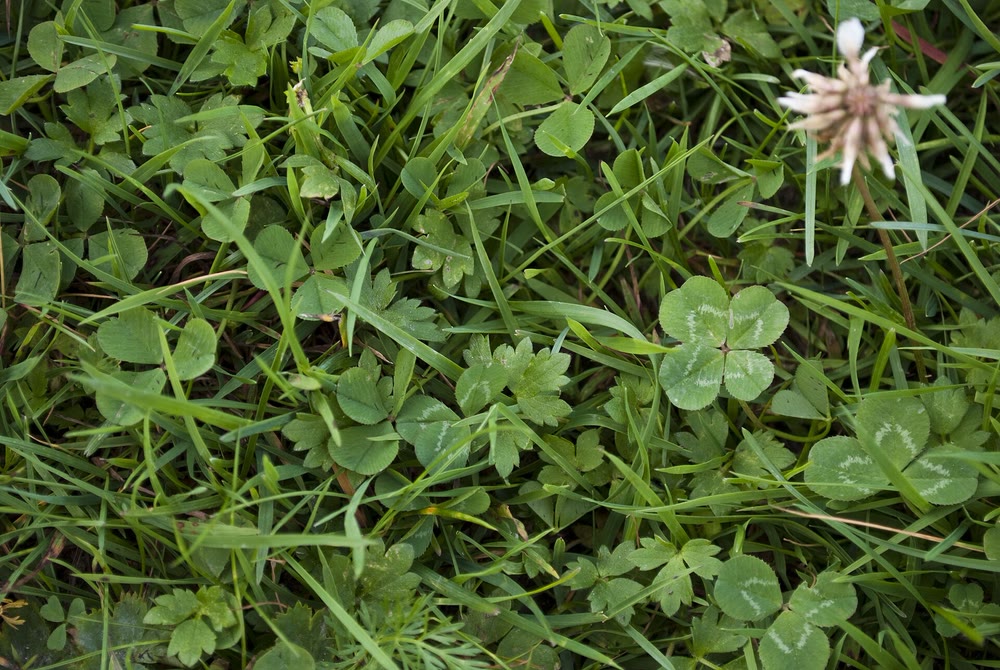
Spot the four-leaf clover: a white clover with four leaflets among ordinary three-leaved ones. Photo: KEBman, public domain, via Wikimedia Commons
Good luck in Irish FAQ
How do you say good luck in Irish?
Ádh mór (aw MORE), “great luck”, or go n-éirí leat (guh NYE-ree lat), “may it go well with you”. Both are everyday Irish.
How do you say good luck to a group in Irish?
Go n-éirí libh (guh NYE-ree liv) or ádh mór oraibh (aw MORE OR-iv). Libh and oraibh are the plural “you” forms of le (with) and ar (on).
What does go n-éirí leat mean literally?
“May (it) rise with you.” On its own éirigh is rise, but with le it means succeed, so the real sense is “may you succeed”.
How do you say good luck in your exams in Irish?
Go n-éirí leat sna scrúduithe (guh NYE-ree lat snuh SKROO-dih-heh). For the Leaving Cert, say go n-éirí leat san Ardteist.
What is the Irish word for lucky?
Ádhúil (AW-ool) or ámharach (AW-wur-ukh). In conversation, people usually say tá an t-ádh ort (taw un TAW urt), “you’re lucky”, literally “the luck is on you”.
How do you reply to ádh mór?
Just say thank you: go raibh maith agat (guh rev MAH ug-ut). Here’s more on how to say thank you in Irish.
Is the four-leaf clover an Irish symbol?
No. The emblem is the three-leaved shamrock, which the Irish government lists with the harp as an official State emblem. Finding a four-leaved one was still counted lucky in Ireland, as in many other countries.
Love this? Save it to your Pinterest board for later.
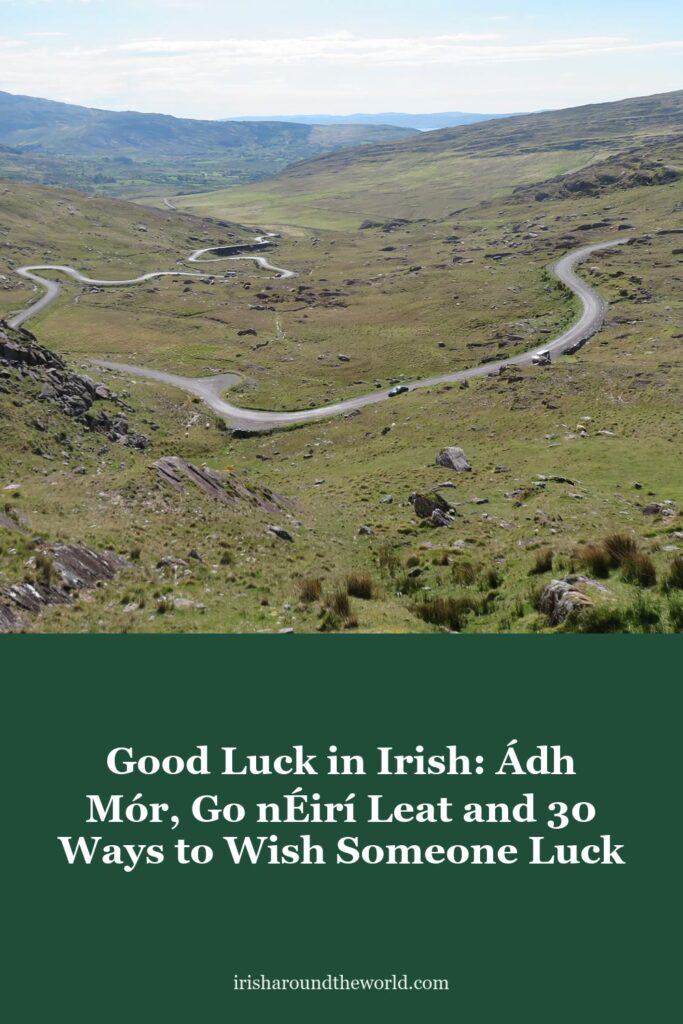
Pin image: The road winding down the south side of the Healy Pass on the Beara Peninsula, Co. Cork. Photo: Gordon Hatton, CC BY-SA 2.0, via Wikimedia Commons (Geograph)
A little bit of Ireland in your inbox every Friday ☘️
The free Weekly Dose of Irish: an Irish joke, a Celtic symbol, an Irish fact, a poem and the week’s best articles in one short email. Join 9,600+ readers.
Free. One short email every Friday. Unsubscribe any time.
More Irish blessings and sayings
- May the Road Rise Up to Meet You: Meaning, Full Blessing and Its Surprising Origin
- The Luck of the Irish: Where the Phrase Really Comes From (And What It Means)
- 63 Irish Toasts for Every Occasion, and Which Ones Are Really Irish
- How to Say Cheers in Irish: Sláinte, Meaning and Pronunciation
- Irish Proverbs in Irish: 57 Seanfhocail With Meanings and How to Say Them
- 25 Irish Greetings and Birthday Wishes (With Pronunciation)
- Irish New Year Blessings and Toasts (and How to Say Happy New Year in Irish)
- Why the Shamrock Is the Symbol of Ireland and St Patrick’s Day
Featured image: The road winding down the south side of the Healy Pass on the Beara Peninsula, Co. Cork. Photo: Gordon Hatton, CC BY-SA 2.0, via Wikimedia Commons (Geograph).