
An Acre of Grass is a late poem by W.B. Yeats, from the years when he lived at Riversdale, his last home, in Rathfarnham, Dublin. It was first printed in April 1938. In four short six-line stanzas, an old man with his pictures, his books and an acre of grass refuses a quiet old age and prays for “an old man’s frenzy”, the burning mind of Timon, Lear, William Blake and Michelangelo. Below are the full public-domain text, what it means, the references explained, themes, structure, key quotes and notes for Leaving Cert English Higher Level in 2027 and 2028.
Most of us picture a peaceful old age the same way: a garden, a few good books, a quiet house and an early night. In An Acre of Grass, W.B. Yeats has all of that. And he decides it isn’t enough.
He was in his seventies, his body was failing, and the poem asks for the opposite of peace. It’s one of the 13 Yeats poems on Leaving Cert English Higher Level for June 2027 and June 2028. For the full list, see my guide to W.B. Yeats for the Leaving Cert.
Jump to:
- An Acre of Grass at a glance
- The poem
- What happens in the poem, stanza by stanza
- Timon, Lear, Blake and Michael Angelo explained
- Riversdale and Yeats’s last years
- Themes
- Imagery, tone and structure
- Exam notes and key quotes
- Yeats in brief
- An Acre of Grass FAQ
- More Yeats reading
An Acre of Grass at a glance
- Poet: William Butler Yeats, 1865 to 1939.
- Written: in Yeats’s last years, when his home was Riversdale in Rathfarnham, where he lived from July 1932 until his death. It’s often dated to 1936, when he was 71, but the first firm date is its appearance in print in April 1938.
- First printed: in the London Mercury magazine in April 1938, then in New Poems, published by the Cuala Press in Dublin in May 1938.
- Form: four stanzas of six lines each (sestets, not quatrains), 24 lines in all, mostly short lines of three beats.
- Exam: Higher Level only, in both circular 0021/2025 (June 2027) and circular 0024/2026 (June 2028). It isn’t on the Ordinary Level list.
The poem
An Acre of Grass
Picture and book remain,
An acre of green grass
For air and exercise,
Now strength of body goes;
Midnight, an old house
Where nothing stirs but a mouse.
My temptation is quiet.
Here at life’s end
Neither loose imagination,
Nor the mill of the mind
Consuming its rag and bone,
Can make the truth known.
Grant me an old man’s frenzy,
Myself must I remake
Till I am Timon and Lear
Or that William Blake
Who beat upon the wall
Till Truth obeyed his call;
A mind Michael Angelo knew
That can pierce the clouds,
Or inspired by frenzy
Shake the dead in their shrouds;
Forgotten else by mankind,
An old man’s eagle mind.
This is the text printed in Last Poems and Plays (London: Macmillan, 1940), page 17, checked word for word against the scan of that book on the Internet Archive. Like many printers of the day, Macmillan set a space before each semicolon; I’ve closed those up and changed nothing else. Your class anthology should read the same, but learn your quotes from the text your teacher uses.
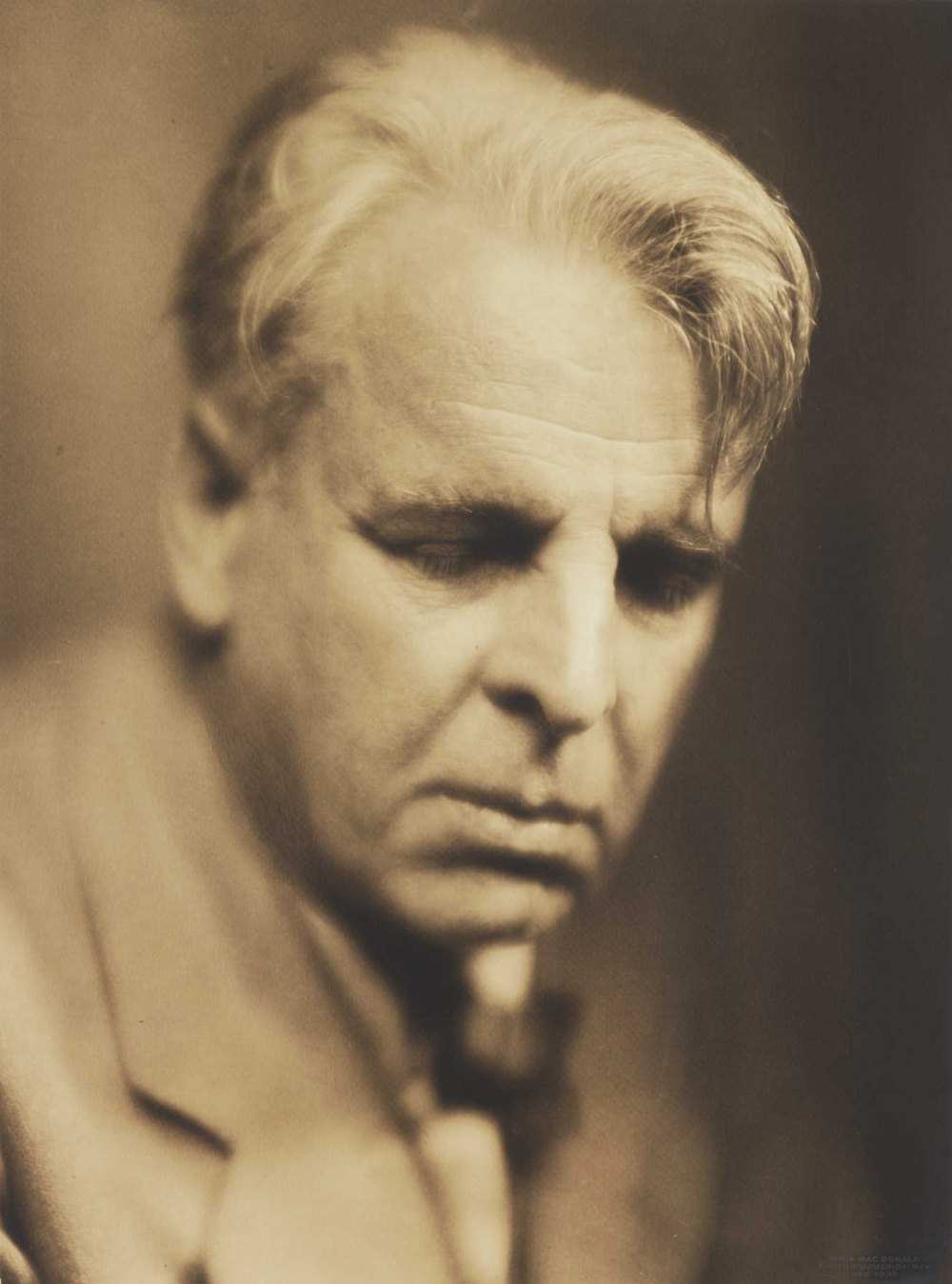
W.B. Yeats photographed by Pirie MacDonald in 1933. National Media Museum. Public domain, via Wikimedia Commons
What happens in the poem, stanza by stanza
Stanza 1: what’s left
The poem opens like an inventory. Pictures and books are still there, and so is a patch of lawn for fresh air and gentle walks, because “strength of body goes”. The stanza ends at midnight in an old house where the only thing moving is a mouse.
Notice how little happens. The verbs are weak (remain, goes, stirs), and the scene is so still it almost feels like a house waiting for a death.
Stanza 2: the temptation
“My temptation is quiet” can be read two ways. The thing tempting him is quiet, a peaceful slide into retirement. And the temptation itself is quiet: it doesn’t shout, it just settles in.
Then comes a blunt admission. “Here at life’s end”, neither free-wheeling imagination nor “the mill of the mind” can reveal the truth. A mill only grinds what it’s fed, and this one is chewing over “rag and bone”, the scraps and leftovers of a lifetime, like a rag-and-bone man’s cart.
Stanza 3: the prayer
Exactly halfway through, the tone changes. “Grant me” is the language of prayer. He asks for “an old man’s frenzy”, a wild, driven energy, and says he must remake himself until he becomes Timon, Lear or William Blake, three figures who refused to grow calm. Blake “beat upon the wall” until Truth gave way.
Look at the capital letter: in stanza 2 it was “the truth”, small t, which neither fancy nor dutiful thinking could reach. Now it’s “Truth” with a capital, and it obeys.
Stanza 4: the eagle mind
The last stanza asks for the kind of mind Michelangelo had, one that can “pierce the clouds” or, driven by frenzy, wake the dead. It ends on the poem’s great phrase: “An old man’s eagle mind”.
“Forgotten else by mankind” is the trickiest line. “Else” means otherwise, and it can be read two ways: without such a mind the old man would be forgotten, or such minds are otherwise forgotten by most people. Both readings point the same way: only this kind of fierce vision lasts.
Timon, Lear, Blake and Michael Angelo explained
Timon and Lear
Both come from Shakespeare. In Timon of Athens, a wealthy, generous Athenian finds, once his creditors close in, that his friends were only after his money. He turns his back on the city, retreats to the woods and becomes a misanthrope, a hater of mankind.
King Lear is an old king who divides his kingdom between his daughters, is turned out by the two who flattered him, and rages through a storm on the heath until he loses his mind. In his madness he begins to see the world, and his own mistakes, more clearly.
What they share is rage. Neither goes gently, and both say harsh truths that calmer men won’t. That’s what Yeats wants: not a sweet old age, but a furious, truth-telling one.
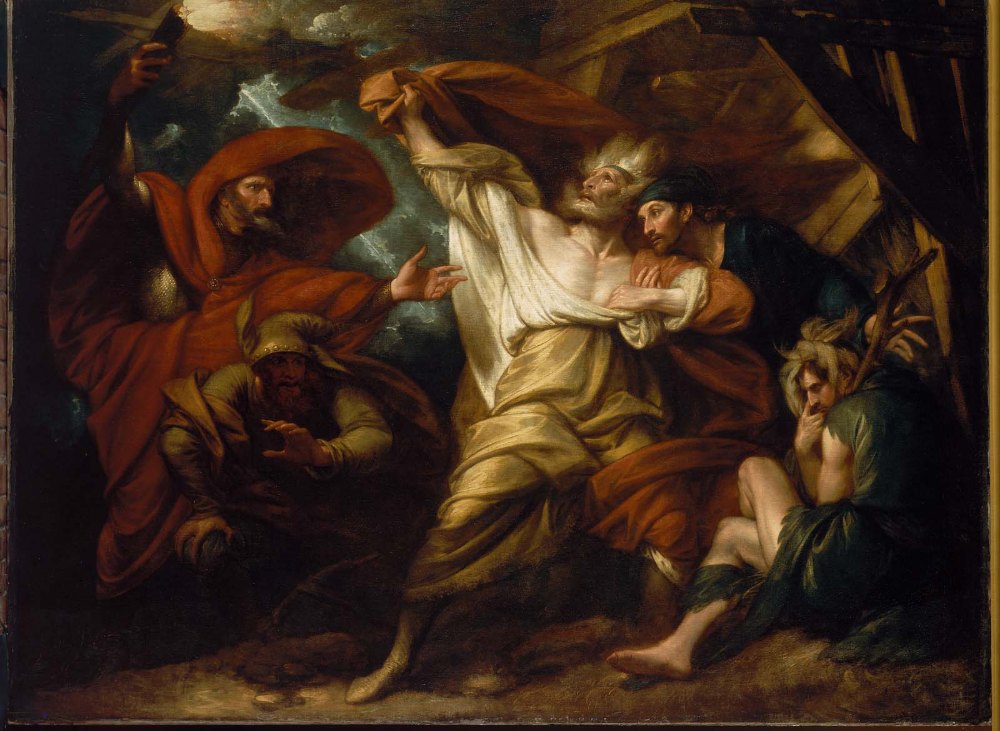
King Lear in the Storm (1788) by Benjamin West, Museum of Fine Arts, Boston. Public domain, via Wikimedia Commons
“That William Blake”
William Blake (1757 to 1827) was a London poet, painter and engraver whose work, he said, came from visions. Yeats knew him well on the page: with Edwin John Ellis he edited and published a three-volume edition of Blake’s works in 1893.
Yeats doesn’t explain the picture of Blake beating “upon the wall”. Read it as a man hammering at a locked door until the truth behind it gives in, which is the opposite of the quiet, grinding mill of stanza 2.
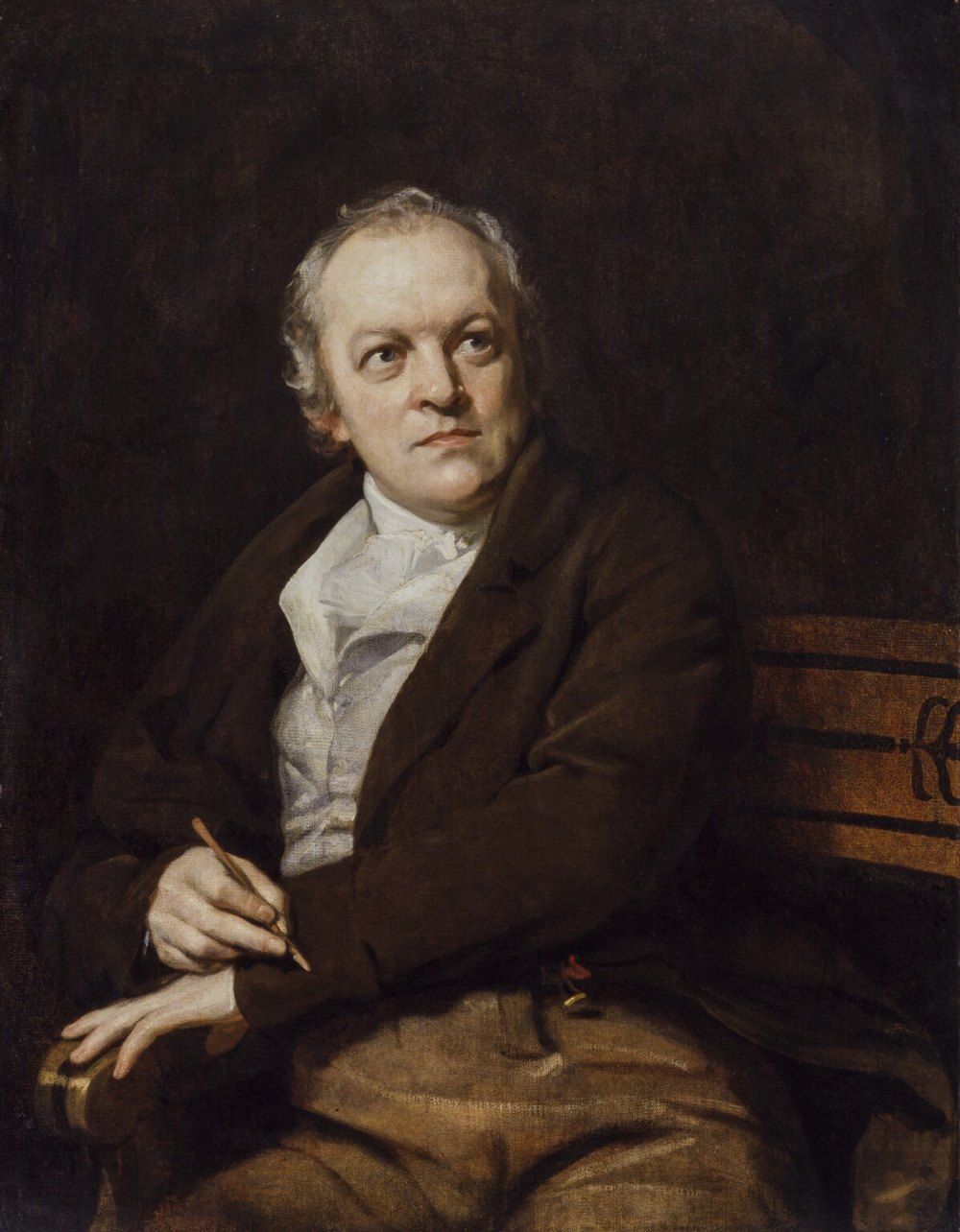
William Blake painted by Thomas Phillips in 1807. National Portrait Gallery, London. Public domain, via Wikimedia Commons
“A mind Michael Angelo knew”
Michael Angelo is an older English form of the name Michelangelo (1475 to 1564), the Italian sculptor, painter and architect. Yeats uses it again in Under Ben Bulben, where “Michael Angelo left a proof / On the Sistine Chapel roof”, and in Long-legged Fly, where the artist lies on his scaffolding in the Pope’s chapel.
The line about shaking “the dead in their shrouds” may have the Sistine Chapel in mind. Michelangelo painted the Last Judgement on its altar wall between 1536 and 1541, in his sixties. In it, as the Vatican Museums describe it, angels blow long trumpets to wake the dead, who rise and take back their bodies. That’s an old man’s art raising the dead.
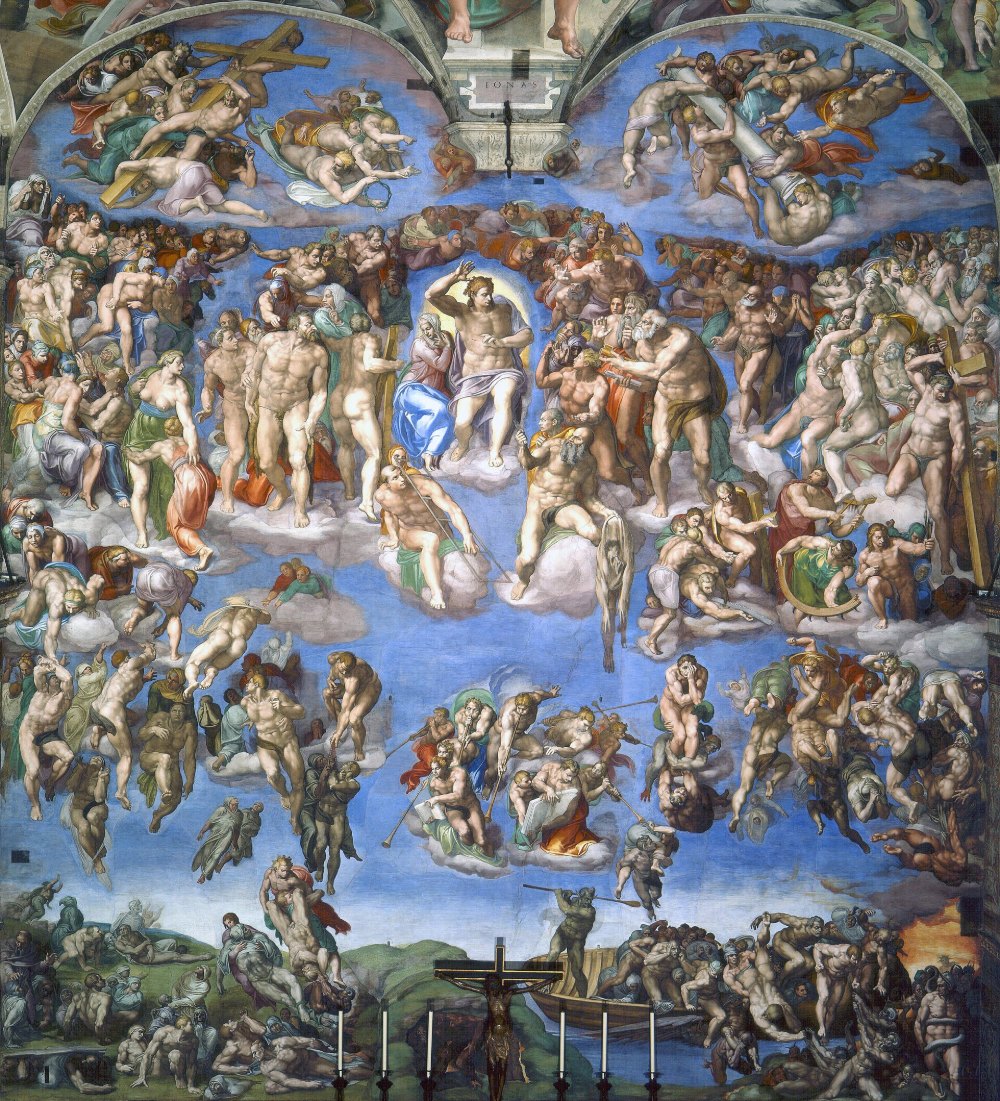
The Last Judgement (1536 to 1541) by Michelangelo, Sistine Chapel, Vatican City. Public domain, via Wikimedia Commons
“An old man’s eagle mind”
The eagle flies highest and sees furthest, so the image fits a mind that can “pierce the clouds”. There may also be an echo of the Bible, where Psalm 103 promises that “thy youth is renewed like the eagle’s” (King James Version). An eagle mind is old, but it isn’t tired.
Riversdale and Yeats’s last years
Lady Gregory, Yeats’s great friend and patron, died at Coole on 22 May 1932. That July, Yeats and his wife George moved to Riversdale in Rathfarnham, a house George had found on the edge of Dublin. The Dictionary of Irish Biography calls it the poet’s last home, and the scholar B.L. Reid, in the Dictionary of Literary Biography, writes that Yeats considered it ideal for his final years.
Readers usually take the “acre of green grass” to be the Riversdale garden, and the poem’s “old house” to be Riversdale itself.
But Yeats’s last years were anything but quiet. In the spring of 1934, aged 68, he had the Steinach operation in London, a so-called rejuvenation procedure, and Reid links it, or the optimism it gave him, to a burst of energy in his writing.
His letters show the same mood. Writing from Riversdale to his friend, the poet Dorothy Wellesley, on 28 November 1936, he said he had told a newspaper editor that almost all his poems were unsuitable for print there because they “came out of rage or lust”. On 9 December he sent her a quatrain that became the poem The Spur. It opens “You think it horrible that lust and rage” and asks what else he has to spur him into song. Another late title says it outright: Why should not Old Men be Mad?
When An Acre of Grass appeared in the London Mercury in April 1938, Wellesley wrote to him on 15 April that she had just received that issue, and she ranked it with his very best work. All of this is in Letters on Poetry from W.B. Yeats to Dorothy Wellesley (1940).
Themes
Old age and the body. The body is fading (“strength of body goes”), and the world has shrunk to a house and a lawn. Yeats doesn’t pretend otherwise.
The temptation of peace. The danger isn’t pain but comfort. A quiet old age would be easy, and for a poet it would be a kind of death.
Creativity and truth. Neither drifting imagination nor dutiful thinking can make “the truth known”. Real vision needs something stronger, which Yeats calls frenzy.
Remaking the self. “Myself must I remake” shows a man who believes he can still change at the end of his life, and must.
Madness as insight. Lear goes mad, Timon is driven to a wild hatred of mankind, and Blake was dismissed as mad by some in his own lifetime. Yeats suggests that this kind of madness sees further than good sense.
Being remembered. The final lines tie that vision to survival: the eagle mind is what stops an old man being “forgotten”.
Imagery, tone and structure
- Small things, then huge ones: stanzas 1 and 2 are full of small domestic images (picture, book, lawn, mouse, a mill, rags and bones). Stanzas 3 and 4 open out to clouds, shrouds, the dead and an eagle.
- The turn: line 13, “Grant me an old man’s frenzy”, is the pivot. The first half describes and admits; the second half prays and demands.
- Tone: flat and still at first, honest and a little weary in stanza 2, then urgent and finally exalted.
- Repetition: “old” appears three times (old house, old man’s frenzy, old man’s eagle mind). The word moves from the house, to a request, to a triumph. “Frenzy” and “mind” are repeated too.
- Word order: “Myself must I remake” flips the normal order to put Myself first, stressing the effort of will.
- Sound: the m sounds of “Midnight” and “mouse”, and the alliteration in “mill of the mind”, give the first half a muffled, enclosed sound.
- Rhyme: each stanza ends on a rhyming couplet (house and mouse, bone and known, wall and call, mankind and mind), and lines 2 and 4 rhyme. In the first two stanzas those rhymes are loose (grass and goes, end and mind); in the last two they’re full rhymes (remake and Blake, clouds and shrouds). The sound tightens as the frenzy arrives.
- Lines: short lines of mostly three beats make the poem feel plain and spoken, closer to a muttered vow than a grand ode.
Exam notes and key quotes
Short, quotable lines make this poem easy to use in an answer. Learn these:
- “Now strength of body goes”: physical decline, stated plainly.
- “Where nothing stirs but a mouse”: stillness, loneliness, life winding down.
- “My temptation is quiet”: the real danger is giving up.
- “Grant me an old man’s frenzy”: the turning point, a prayer for energy.
- “Myself must I remake”: will, self-reinvention, refusal to settle.
- “An old man’s eagle mind”: the triumphant close, age and vision united.
Questions this poem suits: Yeats and old age; the conflict between the failing body and a living mind; his personal, honest voice; his use of imagery and allusion; how he treats the role of the artist.
Good pairings from the course and beyond:
- Sailing to Byzantium (1928): “An aged man is but a paltry thing”, and the answer there is to escape the body into art. In An Acre of Grass he stays put and burns brighter. A strong contrast.
- Under Ben Bulben, sections V and VI: also on the course, and also late Yeats speaking with total confidence about art and death.
- Politics: another prescribed late poem, in which the speaker, wishing he were young again, would rather look at a girl than think about world politics.
- Swift’s Epitaph: Yeats’s version of Swift’s own Latin epitaph, with its “Savage indignation”, a close cousin of the frenzy here.
- The Circus Animals’ Desertion (not on the course): when inspiration fails, he must start again in “the foul rag-and-bone shop of the heart”. Compare the “rag and bone” of stanza 2.
- The Tower and Among School Children (not on the course): earlier, angrier and more rueful looks at “Decrepit age” and the “old scarecrow”.
A sample point: Yeats treats old age not as a time of rest but as a final test of the imagination. In An Acre of Grass the body fails (“strength of body goes”), yet he rejects the “quiet” this invites and prays instead for “an old man’s frenzy”. His models, Lear, Timon and Blake, are figures of fierce, unruly energy, which suggests that for Yeats the gift of age should be intensity, not calm wisdom.
This is an unofficial study guide. Answer the question you’re asked, not the one you prepared, and check your notes with your teacher.
Yeats in brief
William Butler Yeats was born on 13 June 1865 at Sandymount Avenue in Dublin, the eldest child of the painter John Butler Yeats. He grew up between Dublin, London and his mother’s family in Sligo, and became the leading poet and dramatist of the Irish literary revival.
He was appointed a senator of the Irish Free State in December 1922 and won the Nobel Prize for Literature in November 1923, according to the Dictionary of Irish Biography. He left the Senate in 1928 and spent his last Irish years at Riversdale.
Yeats died at Cap-Martin in the south of France on 28 January 1939. He was buried at Roquebrune, and his remains were reburied at Drumcliff, Co. Sligo, in 1948, under Ben Bulben. For more poets of his time and since, see my guide to famous Irish poets.
An Acre of Grass FAQ
What is An Acre of Grass about?
An old man, left with his books, pictures and a small garden as his body weakens, refuses to accept a quiet end. He prays for “an old man’s frenzy”, the fierce, visionary energy of Timon, Lear, Blake and Michelangelo.
When did Yeats write An Acre of Grass?
In his last years, while he was living at Riversdale in Rathfarnham. It’s often dated to 1936, when he was 71. The firm dates are its printing in the London Mercury in April 1938 and in New Poems (Cuala Press) in May 1938.
What does “an old man’s frenzy” mean?
A wild, inspired intensity of mind. Yeats wants the passionate, even mad, energy that he believed lets an artist see the truth, rather than the calm good sense people expect of the old.
Who are Timon and Lear in An Acre of Grass?
Title characters of two Shakespeare tragedies. Timon of Athens turns against mankind when his friends desert him; King Lear goes mad in a storm after his daughters turn him out. Both rage against the world instead of growing quietly old.
How many stanzas are in An Acre of Grass?
Four stanzas of six lines each, 24 lines in all. Each stanza ends on a rhyming couplet.
Is An Acre of Grass on the Leaving Cert?
Yes. It’s on the Higher Level English list of prescribed Yeats poems for June 2027 and June 2028, but not on the Ordinary Level list.
Love this? Save it to your Pinterest board for later.
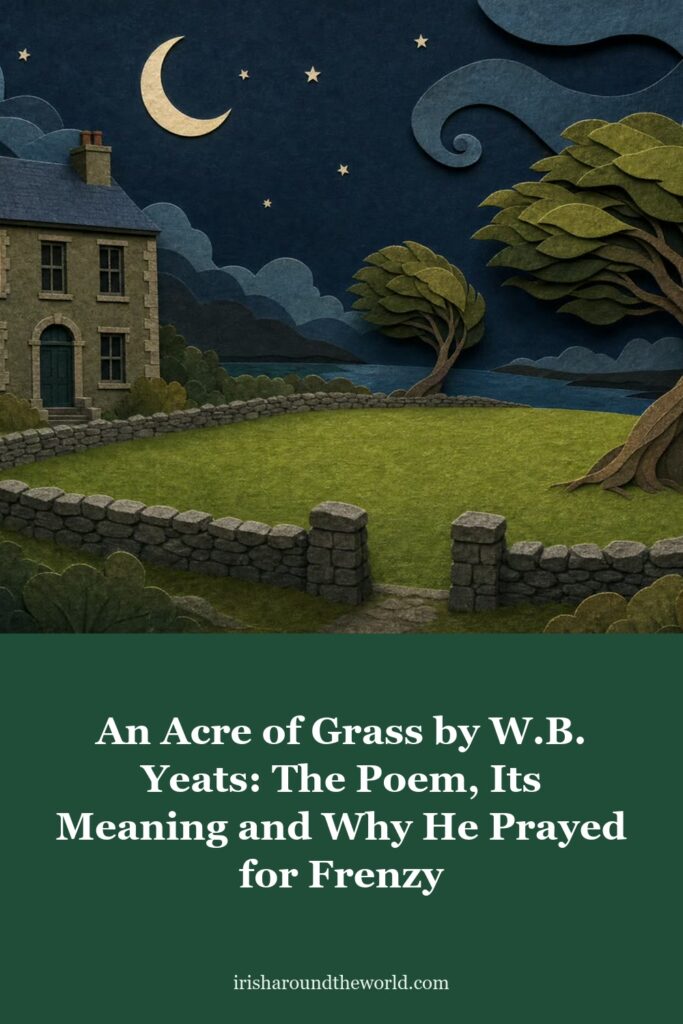
Pin image: an old house at night above its acre of grass, an illustration by Irish Around The World.
A little bit of Ireland in your inbox every Friday ☘️
The free Weekly Dose of Irish: an Irish joke, a Celtic symbol, an Irish fact, a poem and the week’s best articles in one short email. Join 9,600+ readers.
Free. One short email every Friday. Unsubscribe any time.
More Yeats reading
- Yeats Leaving Cert Poems 2027 and 2028: All 13 Poems, With Notes
- Sailing to Byzantium by W.B. Yeats: Meaning and Analysis
- Under Ben Bulben by W.B. Yeats: The Poem That Wrote His Own Epitaph
- The Circus Animals’ Desertion by W.B. Yeats: Meaning and Analysis
- The Tower by W.B. Yeats: Poem and Meaning
- Among School Children by W.B. Yeats: Meaning and Analysis
- Famous Irish Poets: The Greatest of All Time, in Order
Featured image: an old house at night above its acre of grass, an illustration by Irish Around The World.