
This Irish poem “Cúl an Tí” comes in at number 55 on my list of top 100 Irish poems.
It was part of the Irish syllabus in Irish schools for many years. The poem was translated into English by Tony Dermody.
My notes on the poem are below, along with where to read it in full.
Cúl an Tí – Irish Version
Tá Tír na nÓg ar chúl an tí
In Cúl an Tí, the back yard of an ordinary country house becomes Tír na nÓg, the land of youth. Farm animals live there in happy disorder beside a heap of old junk that the poet treats like treasure, and travelling people call by as if they belong there.
It is a playful poem, full of Aesop and his talking animals, but underneath it is a longing for a freer world outside rules and respectability. The back of the house is the side visitors never see, and for Ó Ríordáin that is where the magic is.
It is one of Ó Ríordáin’s best-known poems, and it was on the Irish syllabus in schools for many years, so plenty of readers first met it in the classroom.
You will find the full poem in Seán Ó Ríordáin: Na Dánta (Cló Iar-Chonnacht, 2011), the collected edition of all his poems.
I hope you enjoyed learning about Cúl an Tí.
You can learn more about Seán Ó Ríordáin below:
Who was Seán Ó Ríordáin Irish poet?
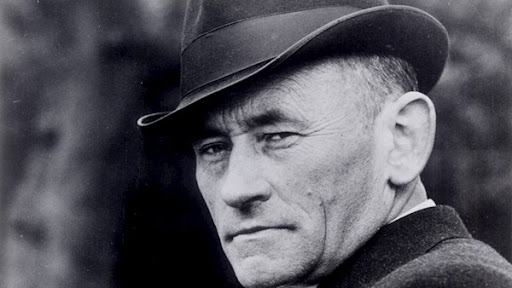
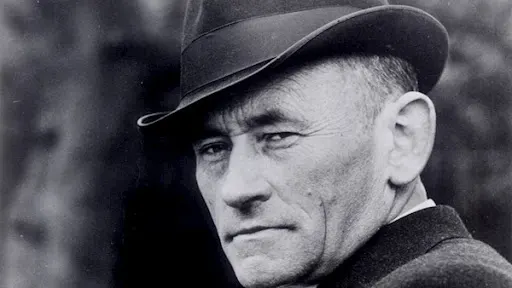
Seán Pádraig Ó Ríordáin (3 December 1916 – 21 February 1977) was born in Baile Mhúirne, County Cork.
English was his first language. His mother spoke English; his father spoke Irish and English. His father’s mother, a native Irish speaker, lived next door. His next-door neighbour on the other side also spoke Irish. It wasn’t long before Ó Ríordáin gained some knowledge of Irish.
Ó Ríordáin published four books: Eireaball Spideoige [A Robin’s Tail] (Sáirséal agus Dill 1952; Sáirséal Ó Marcaigh 1986), Brosna [Kindling] (Sáirséal agus Dill 1964), Línte Liombó [Limbo Lines] (Sáirséal agus Dill 1971), and the posthumous Tar éis mo Bháis [After my Death] (Sáirséal agus Dill, 1978)
As well as writing poetry, he wrote a column in The Irish Times during the latter years of his life in which he spoke vehemently about national affairs.
Ó Ríordáin’s poems have enjoyed constant popularity, due in part to the exposure gained by the inclusion of his work in the standard Irish curriculum.
Eóin Bealtu
Tuesday 30th of August 2022
Always really loved this one. It's one of my favourites. Thanks again for posting it.