
Who Was F.R Higgins?
Well, it seems that they all hung out together around the time of Yeats. Always interesting just how many incredible pieces of work came from Yeats’s era. Frederick Robert Higgins (1896-1941) was born in County Mayo.
A close friend of Austin Clarke and William Butler Yeats, Higgins was elected a foundation member of the Irish Academy of Letters and, in 1935 became a director of the Abbey Theatre. Well-regarded as a poet, he also edited with Yeats a series of broadside ballads for the Cuala Press.
This poem is an overwhelming powerful poem about Higgins’s father, who has passed away. A poem that everyone can associate with. The love for a father and son or daughter is powerful. Enjoy this fantastic Irish poem.
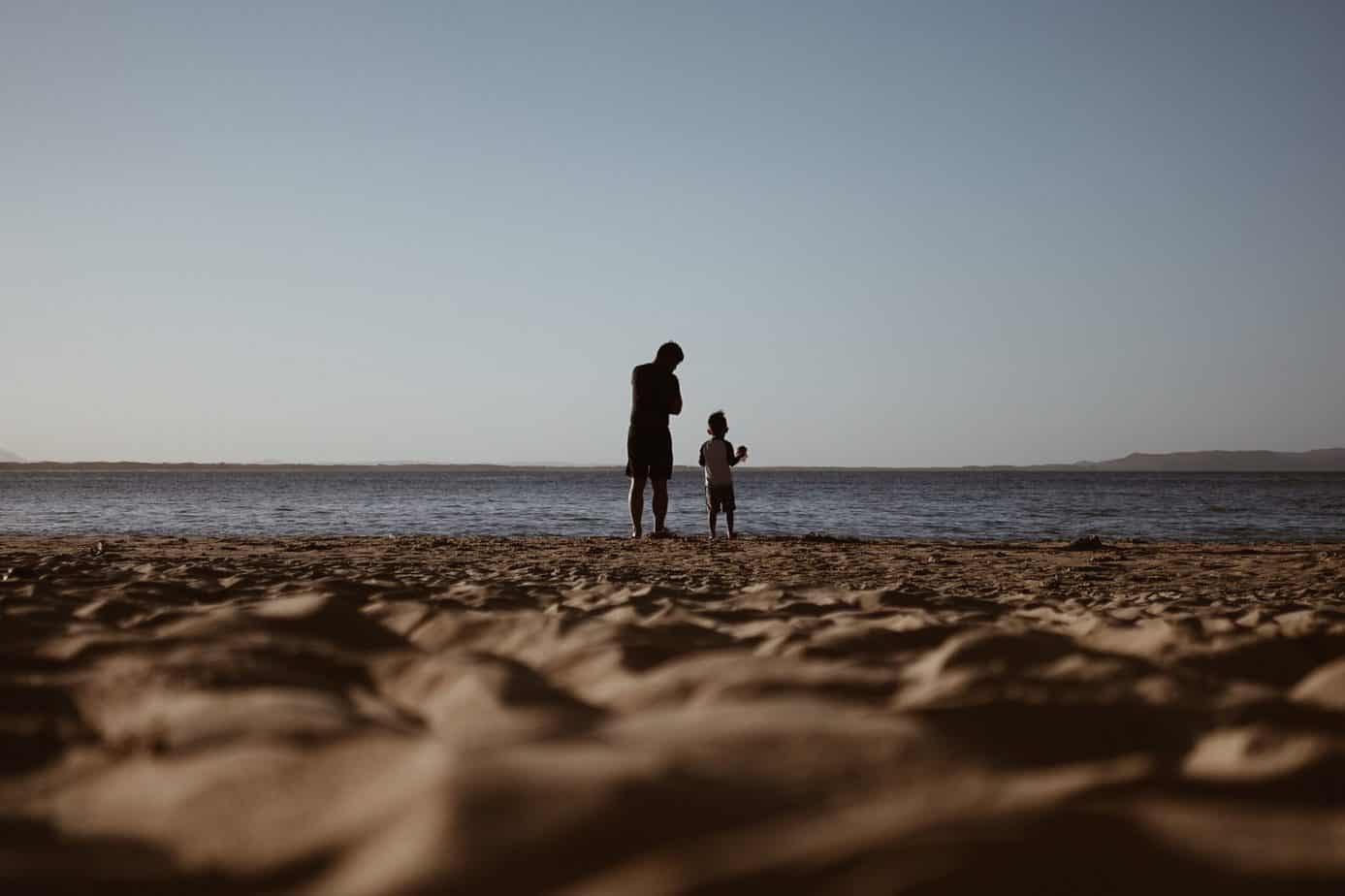

FATHER AND SON
by F. R. Higgins
Only last week, walking the hushed fields
Of our most lovely Meath, now thinned by November,
I came to where the road from Laracor leads
To the Boyne river–that seems more lake than river,
Stretched in uneasy light and stript of reeds.
And walking longside an old weir
Of my people’s, where nothing stirs–only the shadowed
Leaden flight of a heron up the lean air–
I went unmanly with grief, knowing how my father,
Happy though captive in years, walked last with me there.
Yes, happy in Meath with me for a day
He walked, taking stock of herds hid in their own breathing;
And naming colts, gusty as wind, once steered by his hand,
Lightnings winked in the eyes that were half shy in greeting
Old friends–the wild blades, when he gallivanted the land.
For that proud, wayward man now my heart breaks–
Breaks for that man whose mind was a secret eyrie,
Whose kind hand was sole signet of his race,
Who curbed me, scorned my green ways, yet increasingly loved me
Till Death drew its grey blind down his face.
And yet I am pleased that even my reckless ways
Are living shades of his rich calms and passions–
Witnesses for him and for those faint namesakes
With whom now he is one, under yew branches,
Yes, one in a graven silence no bird breaks.
Father and Son: meaning and analysis
What it means
The poet walks alone through the fields of Co. Meath in November, near Laracor (where Jonathan Swift was once rector) and the River Boyne. At an old weir that belonged to his family, a heron lifts off into the “lean air” and grief hits him: the last time he walked here, it was with his father.
The third stanza brings the father back to life. He sizes up the cattle, names the colts he once broke, and greets old friends with eyes “half shy” yet full of lightning. Then the honesty: this was a proud, wayward man who “scorned my green ways”, yet “increasingly loved me” until death drew “its grey blind down his face”.
In the last stanza the son finds comfort. Even his own reckless streak is a “living shade” of his father, and his father now lies with his ancestors under the yew trees, in a silence “no bird breaks”.
Form
Five five-line stanzas with long, loose, conversational lines and half-rhymes (fields and leads, weir and air and there). It reads like someone talking to you as they walk.
Key themes
- Grief: the poet goes “unmanly with grief”, an honest admission for its time.
- Inheritance: the son sees his father living on in himself.
- Landscape and memory: the Meath fields hold the memory of the man.
More Irish poems
- Pádraic Ó Conaire, Gaelic Storyteller by F.R. Higgins
- To My Daughter Betty by Tom Kettle
- Seamus Heaney poems
- Ireland’s top 100 Irish poems
Love this? Save it to your Pinterest board for later.
A little bit of Ireland in your inbox every Friday ☘️
The free Weekly Dose of Irish: an Irish joke, a Celtic symbol, an Irish fact, a poem and the week’s best articles in one short email. Join 9,600+ readers.
Free. One short email every Friday. Unsubscribe any time.
Paul Fournier
Friday 8th of April 2022
A most Wonderful Tribute to a very accomplished man by a respectful son.