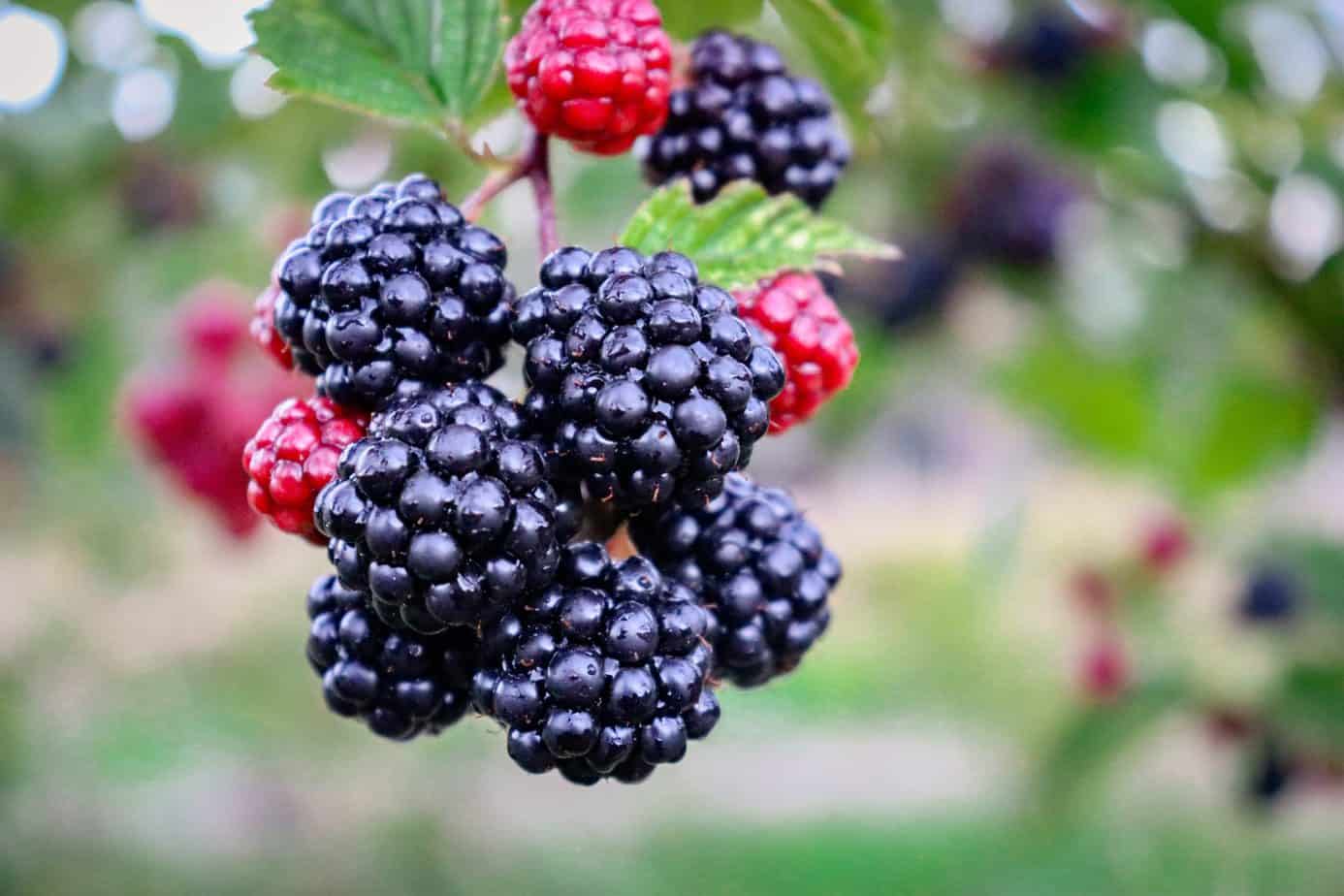
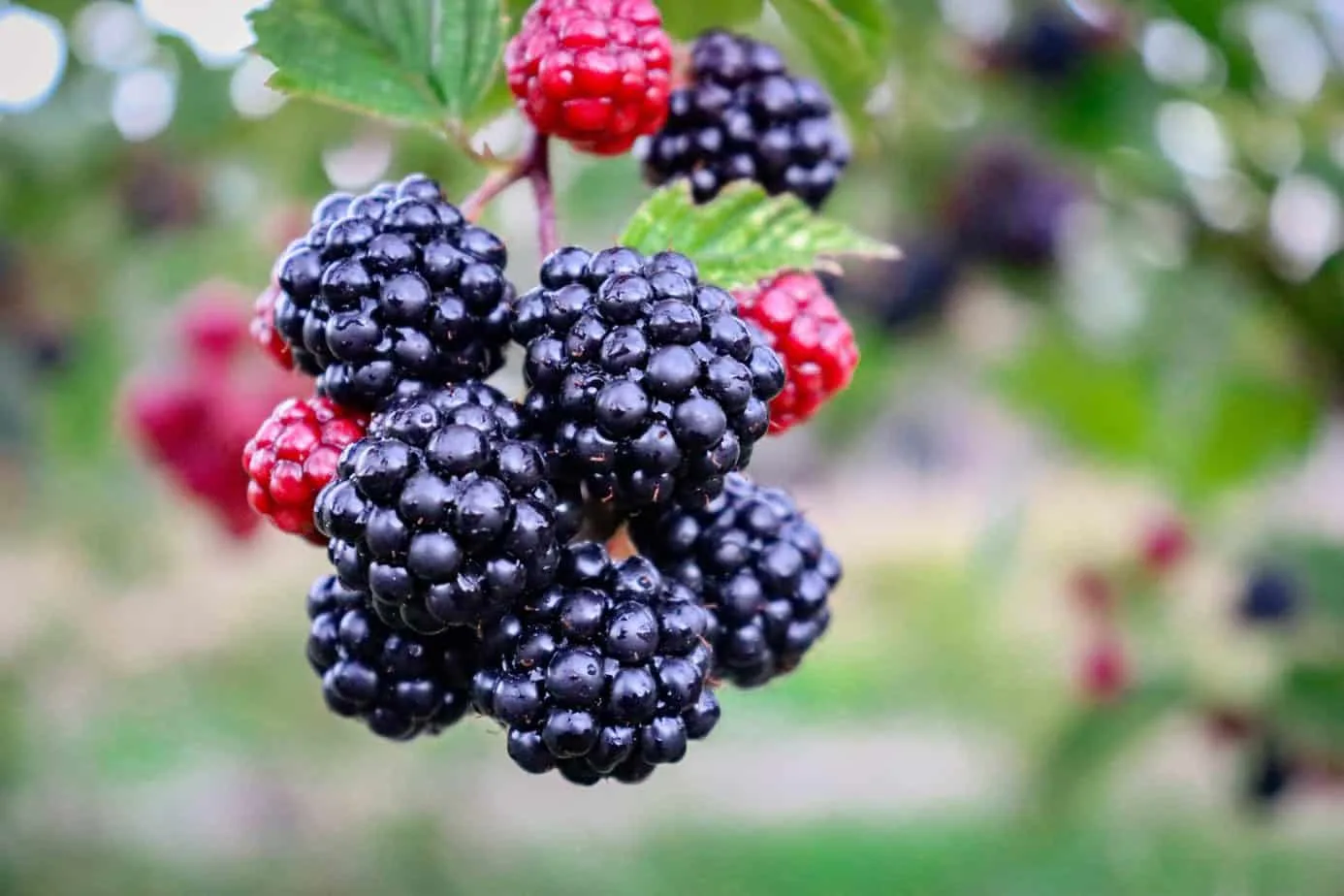
Another week another top Irish poem. The Irish poem Blackberry-Picking comes in at number 47 on the list of top 100 Irish poems.
I think, so far, this is the first Irish poem that I actually managed to find a video of the author reading the poem himself. I have included the video further down the page, just before my notes on the poem. Great to hear Heaney reading the poem. Another fantastic use of imagery. I can almost taste the blackberry.
I also share a new Irish poem every week on my weekly dose of Irish straight to your inbox. You can subscribe here.
Seamus Justin Heaney (13 April 1939 – 30 August 2013) was an Irish poet, playwright and translator.
He received the 1995 Nobel Prize in Literature. Among his best-known works is Death of a Naturalist (1966), his first major published volume.
Heaney was and is still recognised as one of the principal contributors to poetry in Ireland during his lifetime.
American poet Robert Lowell described him as “the most important Irish poet since Yeats“, and many others, including the academic John Sutherland, have said that he was “the greatest poet of our age.”
What is the poem Blackberry-Picking all about?
“Blackberry-Picking” by Seamus Heaney is a poem about the excitement and pleasure of picking ripe blackberries, which serves as a metaphor for desire and fulfilment. However, it also explores the inevitability of disappointment as the berries eventually rot and decay, symbolizing the passage of time and the transient nature of pleasure and life.
In the poem, the speaker recounts the annual ritual of blackberry picking, a childhood activity full of excitement and anticipation. The ripe blackberries are seen as a symbol of desire and pleasure. The speaker describes how they would eagerly pick the berries, and their hands would be stained with the juice of the fruit. This vivid description creates a sense of sensory pleasure and nostalgia.
Blackberry-Picking video, by Seamus Heaney
Blackberry-Picking, by Seamus Heaney
Each year I hoped they’d keep, knew they would not.
Blackberry-Picking comes from Death of a Naturalist, Heaney‘s first collection (Faber, 1966). It is dedicated to Philip Hobsbaum, who ran the Belfast writers’ group where the young Heaney found his feet.
The poem follows a late summer ritual. Once the first berry ripens, a single taste is enough to send the children out across the fields with whatever they can carry. They come home scratched and stained and proud of their haul.
The second half is the letdown. The berries are stored away, and within days they have rotted. The child’s sense of injustice is real, and the adult looking back knows it happened every single year. Heaney fills the poem with rich, bodily language of blood, wine and greed, so it reads as more than a story about fruit. It is about desire, about wanting to hold on to good things, and about learning that nothing sweet lasts for ever.