
Paula Meehan, the Dublin poet born in 1955 who was Ireland Professor of Poetry between 2013 and 2016, is one of eight poets prescribed for Leaving Cert English at Higher Level in 2027 and 2028. The same ten poems are set both years: Buying Winkles, The Pattern, The Statue of the Virgin at Granard Speaks, Cora, Auntie, The Exact Moment I Became a Poet, My Father Perceived as a Vision of St Francis, Hearth Lesson, Prayer for the Children of Longing, Death of a Field and Them Ducks Died for Ireland. Buying Winkles, Hearth Lesson and Prayer for the Children of Longing are on the Ordinary Level list too.
Some poets look at Dublin from a distance. Paula Meehan writes from the dark stairwell and the street corner: a woman selling winkles outside a pub, a mother remaking an old dress late at night, a statue that watched a frightened fifteen-year-old and did nothing.
All ten course poems are in copyright, so I won’t print them. Here’s each in plain English, with themes, key images, an exam angle and where to read it. Doing Irish too? See my guide to the Leaving Cert Irish poems.
Jump to:
- Which Meehan poems are on the course?
- Who is Paula Meehan?
- The ten poems explained
- Themes and style
- How to write about Meehan in the exam
- Paula Meehan poems FAQ
- More Leaving Cert poetry
Which Paula Meehan poems are on the Leaving Cert in 2027 and 2028?
The Department of Education’s circular 0021/2025 sets the prescribed material for June 2027, and the Department of Education and Youth’s circular 0024/2026 does the same for June 2028. Meehan is a Higher Level poet in both, with an identical list.
| Poem | Collection | Level (2027 and 2028) |
|---|---|---|
| Buying Winkles | The Man Who Was Marked by Winter (1991) | Higher and Ordinary |
| The Pattern | The Man Who Was Marked by Winter (1991) | Higher |
| The Statue of the Virgin at Granard Speaks | The Man Who Was Marked by Winter (1991) | Higher |
| My Father Perceived as a Vision of St Francis | Pillow Talk (1994) | Higher |
| The Exact Moment I Became a Poet | Dharmakaya (2000) | Higher |
| Cora, Auntie | Painting Rain (2009) | Higher |
| Hearth Lesson | Painting Rain (2009) | Higher and Ordinary |
| Prayer for the Children of Longing | Painting Rain (2009) | Higher and Ordinary |
| Death of a Field | Painting Rain (2009) | Higher |
| Them Ducks Died for Ireland | Painting Rain (2009) | Higher |
At Higher Level, the circulars expect students to have studied at least six of each poet’s poems. Meehan shares the 2027 list with Bishop, Dickinson, Donne, Kavanagh, Mahon, Rich and Yeats, and the 2028 list with Dickinson, Donne, Heaney, Hopkins, Ní Chuilleanáin, Plath and Yeats. Ordinary Level has 36 poems in all.
Where to read the poems
The circulars name no set book. All ten poems are in Meehan’s As If By Magic: Selected Poems (Dedalus Press, 2020; Wake Forest University Press in North America). Two are online legally: her American publisher posted The Exact Moment I Became a Poet, and Poetry International has Death of a Field.
Who is Paula Meehan?
Born in Dublin in 1955, Meehan was the eldest of six children, says her American publisher. Dublin City University’s honorary doctorate citation places her family among the working people of Gardiner Street. In her teens they moved to a new estate in Finglas. Expelled from secondary school there, she studied for the Inter Cert alone, and after her Leaving Cert went to Trinity College Dublin, then took an MFA in poetry at Eastern Washington University.
Her first collection, Return and No Blame, came out in 1984. The Ireland Chair of Poetry notes that Christy Moore has set her poems to music.
In 2013 she became the sixth Ireland Professor of Poetry, a chair founded after Seamus Heaney’s Nobel Prize, and the second woman to hold it, after Nuala Ní Dhomhnaill. Announcing it, Trinity College Dublin said she was often seen as Dublin’s unofficial poet laureate. Her successor in 2016, Eiléan Ní Chuilleanáin, is on the 2028 course too.
She belongs to Aosdána (roughly EES-daw-nuh; closer to AYS- in Munster), the affiliation of artists elected by their peers. Its name comes from aos dána, which Ó Dónaill’s dictionary glosses as poets. She’s on my list of famous Irish poets.
The ten Paula Meehan poems, explained
1. Buying Winkles (Higher and Ordinary)
What happens: an adult remembers a childhood errand. Her mother gives her sixpence (a tanner, from before Irish money went decimal in 1971) and warns her about strange men. She dashes from the dark stairs, where she imagines ghosts, out into Gardiner Street at night. The winkle seller sits on an orange crate outside the Rosebowl Bar, her buckets on a pram, and shows the girl how to pick a winkle out with a pin.
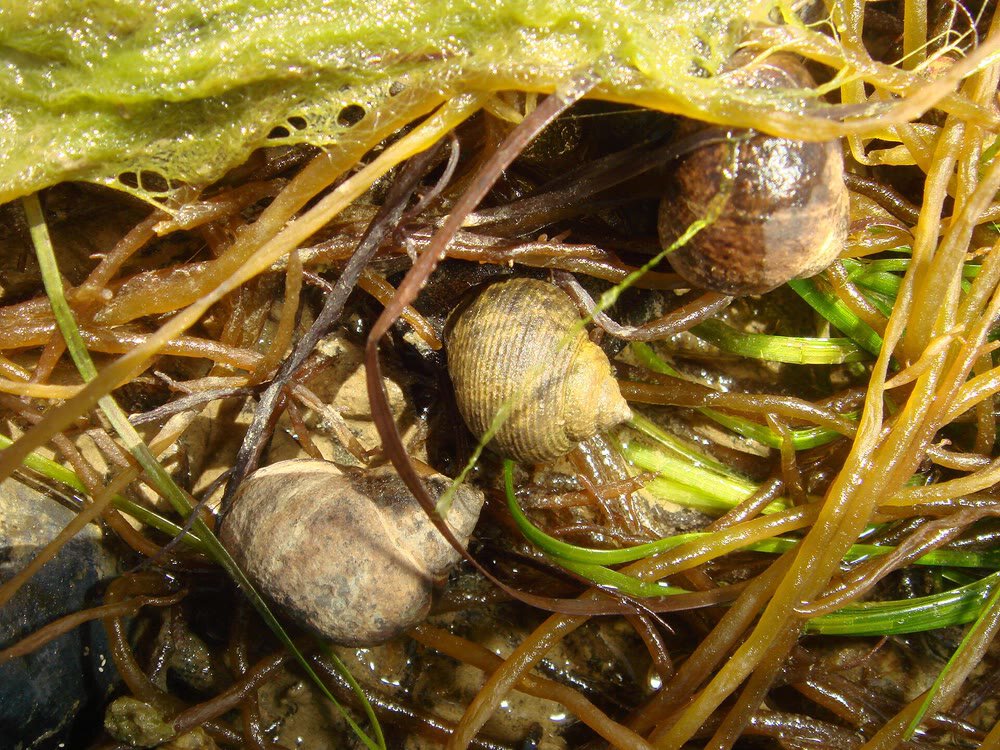
Periwinkles (Littorina littorea), the small sea snails sold as winkles. Photo: Marie-Noelle De Casamajor, Ifremer, CC BY 4.0, via Wikimedia Commons
- Themes: childhood joy in a poor place; community; the women’s street and the men’s pub.
- Images to know: winkles that “glisten blue like little / night skies themselves” (Paula Meehan, Buying Winkles); the pub’s golden mirrors; the newspaper parcels carried home like torches.
- Exam angle: strong on the senses and on place. Winkles are periwinkles, sea snails gathered by hand on the shore, so the treat brings the sea into the city.
2. The Pattern
What happens: Meehan remembers her mother, who died at forty-two while the two were still at war. She pictures her polishing the floor of their flat, then sitting up half the night before school starts back to remake an old lambswool dress, telling as she sews how her own father once scrubbed the make-up off her face. The girl wears the dress as a mark of poverty and dreams of sailing away on the Liffey’s ships. It ends with the mother saying she must teach her daughter to follow a pattern.
- Themes: mother and daughter; regret; poverty and making do; women’s lives repeating.
- Images to know: the shining floor; the remade dress; the girl’s imagination flying like a kite until her mother reels her in.
- Exam angle: the title plays on the mother’s knitting pattern and the pattern of a woman’s life. In the Dublin Review of Books, Eiléan Ní Chuilleanáin called it ironic, since the daughter won’t follow that path, and set it beside Heaney’s Digging.
3. The Statue of the Virgin at Granard Speaks
What happens: a statue of Mary in a grotto in Granard, Co. Longford, speaks the whole poem on a bitter All Souls’ Night. She resents being tied to a story of suffering and longs to live as a real woman. Then she remembers a girl of fifteen who came to the grotto alone, gave birth at her feet and cried out to her. “I did not move” (Paula Meehan, The Statue of the Virgin at Granard Speaks), the statue admits. She ends by praying to the sun.
Background: the poem names no one, but it is read as a response to the death of Ann Lovett, 15, who gave birth beside the Granard grotto on 31 January 1984. Her son was stillborn, and she died in hospital that afternoon, as RTÉ Archives records.
- Themes: the silence of Church and town; shame around women’s bodies; faith against human need.
- Exam angle: a dramatic monologue that lets a silent statue accuse the silence around her. In 2015 it made RTÉ’s A Poem for Ireland shortlist, alongside Mahon’s A Disused Shed in Co. Wexford, Kavanagh’s A Christmas Childhood and the winner, a sonnet from Heaney’s Clearances.
4. Cora, Auntie
What happens: an elegy for the poet’s aunt, who met cancer with morphine and Jameson, laughing at death and terrorising Croydon on her mobility scooter. The poem jumps back to 1961: Cora, nearly 21, stands on the kitchen table while the family’s women stitch red sequins around her white satin dress, weeks before she emigrates to England. For the rest of that year the child hunts stray sequins and keeps them in a tin box.
- Themes: death and the human spirit; the women of a family; emigration; memory and writing.
- Images to know: sequins red as berries and blood on snow, and as the poet’s own red pen; the tin box of glitter.
- Exam angle: the poem ties Cora’s name to a Greek word for a maiden; in Greek myth Kore, the Maiden, was a title of Persephone, carried off to the underworld. Good for myth and for its time-shifting structure.
5. The Exact Moment I Became a Poet
What happens: in 1963 a teacher warns her class of girls to study or they’ll end up working in the sewing factory, where some of their mothers, the poet’s aunt and many neighbours work. What hurt was that phrase, end up, which made honest work sound like failure, though the adult grants the teacher had a point. But the child pictured those women trussed and stuffed like chickens on a factory line, and learned how words can wound.
- Themes: the power of words; class and the dignity of work; the birth of a poet.
- Images to know: the cloud of chalk; women as plucked, stuffed birds; “Words could pluck you” (Paula Meehan, The Exact Moment I Became a Poet).
- Exam angle: short, but it explains why she writes: to give back the dignity that careless words take away.
6. My Father Perceived as a Vision of St Francis
What happens: the grown-up poet, staying again in her parents’ house, is woken at dawn by a neighbour’s horse. She watches her father go out into the frosty garden and sees for the first time that he is old: silver hair, a stoop, a stiff leg. Then birds pour in from every direction, and as he throws crumbs into the air and the sun rises, he becomes a vision of St Francis “in a Finglas garden” (Paula Meehan, My Father Perceived as a Vision of St Francis).
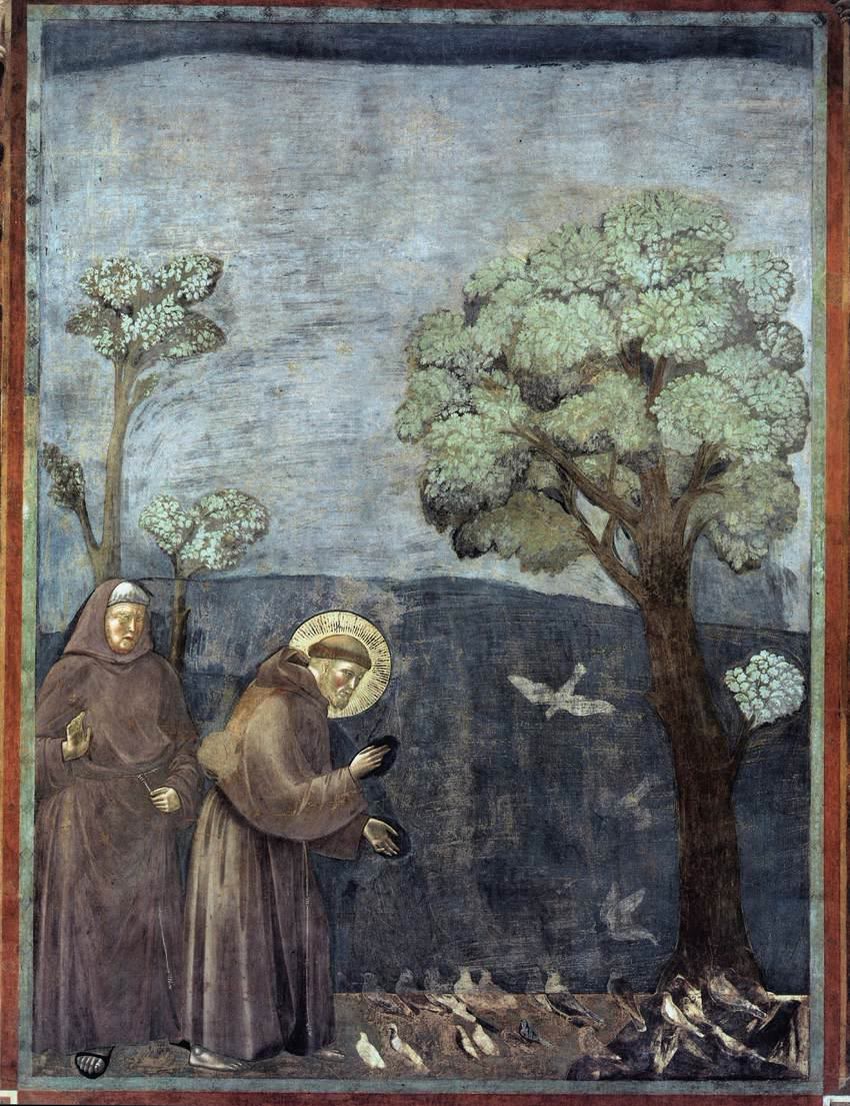
St Francis preaching to the birds, fresco in the Upper Church of the Basilica of San Francesco, Assisi, about 1297 to 1299, formerly attributed to Giotto. Public domain, via Wikimedia Commons
- Themes: seeing a parent anew; ageing; holiness in ordinary life.
- Images to know: the piebald horse; frost on the estate’s roofs; birds from as far as Dubber Cross; the sudden light.
- Exam angle: Francis of Assisi is the saint of animals, famous for preaching to the birds. The change comes in the final lines, a gentle contrast with Hearth Lesson’s rowing father.
7. Hearth Lesson (Higher and Ordinary)
What happens: two sayings about money bring back a scene: the child hunched at the fireside in the family’s flat on Seán MacDermott Street while her parents row. She casts them as Zeus and Hera, the quarrelling king and queen of the Greek gods, raising the stakes like poker players while the insults fly over her head like tennis balls. The root of it is money. One teatime her mother smooths out the wages and throws the lot into the fire. “It’s not enough” (Paula Meehan, Hearth Lesson), she says.
- Themes: poverty; marriage and conflict; a child caught in the middle.
- Images to know: Zeus’s thunderbolts; the tennis match; the notes burning blue, pink and green.
- Exam angle: myth, poker talk, sport and Dublin speech make the row funny and painful at once. The title plays on hearth and heart: the centre of the home teaches a hard lesson.
8. Prayer for the Children of Longing (Higher and Ordinary)
What happens: a note printed with the poem says the north inner-city community commissioned it for the lighting of the Buckingham Street Christmas tree, in memory of local young people lost to drugs. The speaker asks the great tree from a northern forest for the stillness of snow, so the city can hear its lost children. Then it lists what the streets did to them, and asks that their names live on in wind, river and prayer.
Background: in December 1996, The Irish Times reported a tree-lighting on Buckingham Street, off Gardiner Street, with over 50 stars for local victims of heroin.
- Themes: grief and community; the heroin crisis; the city as home and destroyer; hope.
- Images to know: the tree “Here at the heart of the city” (Paula Meehan, Prayer for the Children of Longing); ice and snow; the list of what the streets did.
- Exam angle: a public poem made to be read aloud, so talk about repetition and its litany-like rhythm.
9. Death of a Field
What happens: a field dies the morning a council notice for a housing estate goes up. The poem mourns its wild flowers and the hiding places of teenage first smokes and fumbles, then swaps each lost plant for a household cleaning product in a long list. The poet vows to cross it barefoot by moonlight before it survives only on an architect’s screen.
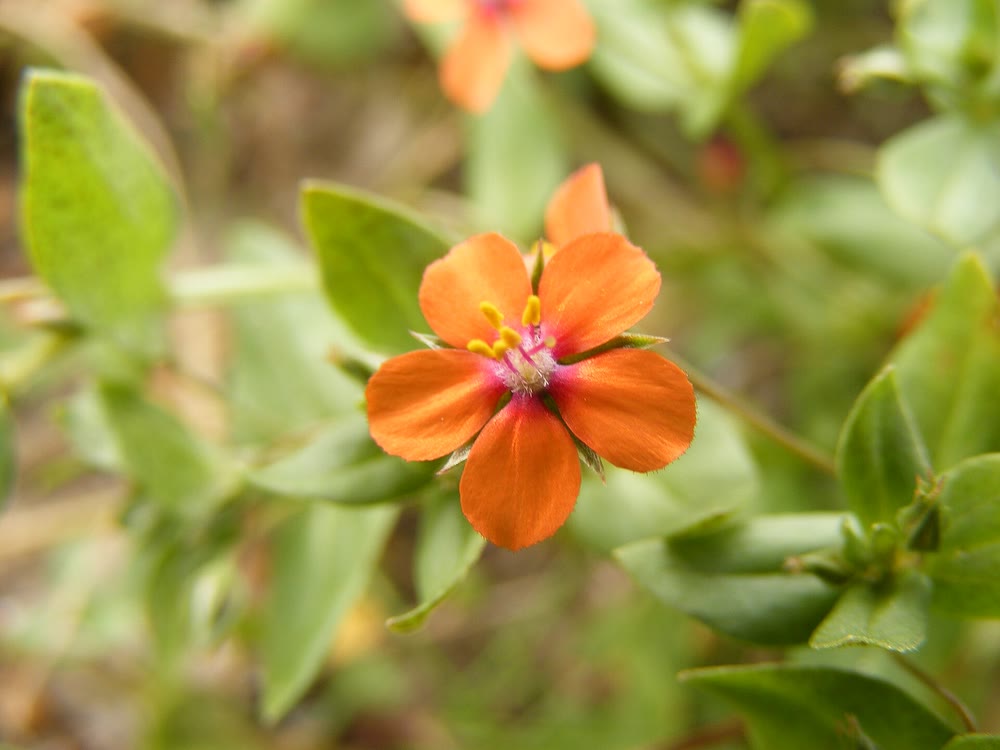
Scarlet pimpernel (Anagallis arvensis), one of the wild flowers named in Death of a Field. Photo: Teun Spaans, CC BY 2.5, via Wikimedia Commons
Background: in a 2008 interview with Wake Forest University Press, Meehan said the field was a small coastal meadow behind her house, a breathing space for nearby estates. Dublin City University’s citation places it near Baldoyle.
- Themes: nature and loss; development and greed; consumerism; memory.
- Images to know: the scarlet pimpernel that is really orange; the plants-against-products list; the moonlit walk.
- Exam angle: brilliant for ecology and structure, because the list does the arguing.
10. Them Ducks Died for Ireland
What happens: the title is pure Dublin speech. Under it sits a line from the park superintendent’s 1916 report listing what the Rising cost St Stephen’s Green: dead waterfowl, broken seats, ruined shrubs. Looking out over the Green, the speaker recalls the Countess, Constance Markievicz, Michael Mallin’s second in command there in 1916, then salutes “the ones who pick up the pieces” (Paula Meehan, Them Ducks Died for Ireland): stretcher-bearers and nurses who barely make the history books.
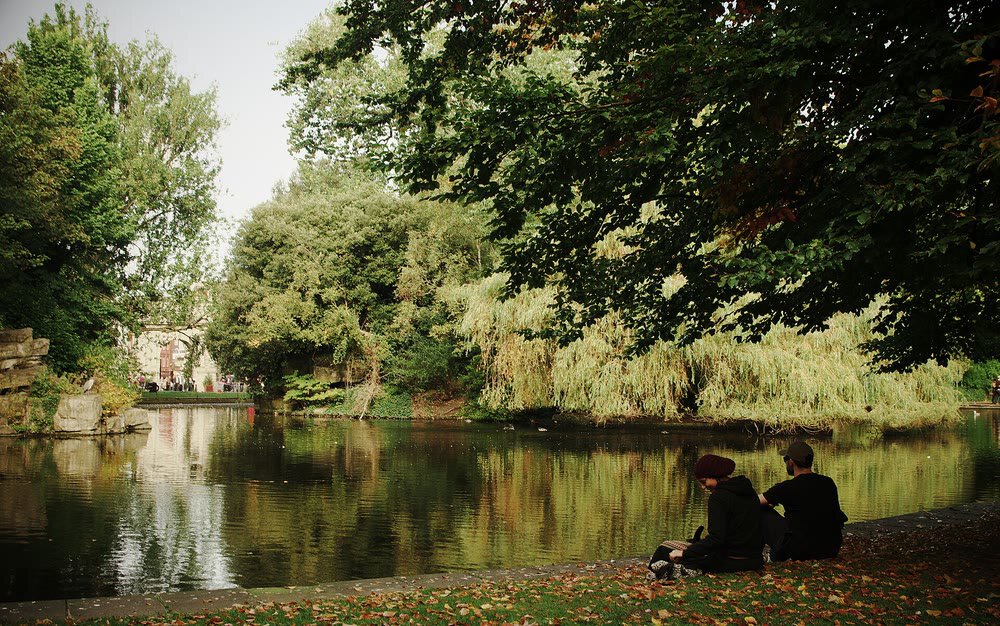
The pond in St Stephen’s Green, Dublin, in autumn. Photo: Rob Hurson, CC BY-SA 4.0, via Wikimedia Commons
Background: it belongs to Six Sycamores, a sequence the Office of Public Works commissioned under its Per Cent for Art scheme for buildings on the Green, first published in 2004. A story retold in The Irish Times says the shooting paused daily so the park keeper, James Kearney, could feed the ducks. More in my Easter Rising guide.
- Themes: history and commemoration; heroes against ordinary people; nature outlasting war.
- Exam angle: 14 lines, the shape of a sonnet, with grand language under a cheeky title. Compare Yeats’s Easter, 1916 or his poem for Eva Gore-Booth and Con Markiewicz, both on the course.
Paula Meehan’s themes and style
- Dublin, street by street: real places shape people.
- Women’s lives: mothers, aunts, the winkle seller, the girl at Granard.
- Childhood seen by an adult: Ní Chuilleanáin noted how often her poems revisit earlier moments from later in life.
- Poverty and dignity: the sixpence, the remade dress, the burnt wages, the sewing factory.
- Social justice: the drugs crisis, a girl left alone, the forgotten nurses of 1916.
- Nature and faith: the field and the birds; sharp about the Church’s silence, yet drawn to prayer and ritual.
For style, look at her mix of Dublin speech and lyrical images; stories that turn at the end; voice, from dramatic monologue to a child’s eye seen in hindsight; lists and litanies; and myth and religion as frames.
How to write about Paula Meehan in the exam
Nobody can predict the paper. Meehan came up at Higher Level in 2023, when, The Irish Times reported, the question asked how her vibrant, forceful language challenges oppressive forces. She appeared again in 2026, says the Institute of Education.
- Know at least six poems well; seven or eight give you choice.
- Expect a statement to discuss, as in every 2026 poetry question, said the Institute. Prepare four or five big ideas, each backed by two or three poems.
- Group the poems: family (The Pattern, Hearth Lesson, St Francis, Cora, Auntie); childhood and the city (Buying Winkles, The Exact Moment I Became a Poet); society and injustice (Granard, Prayer for the Children of Longing); history and nature (Them Ducks Died for Ireland, Death of a Field).
- Show how, not just what: name a technique for each point and quote briefly.
- Ordinary Level: know your Meehan poems in detail: what happens, the feelings, a favourite image.
Doing Kavanagh in 2027? Pair A Christmas Childhood with Buying Winkles, Shancoduff with Death of a Field, and The Hospital with St Francis. Heaney returns in 2028: see my guide to Seamus Heaney’s poems.
Paula Meehan poems FAQ
Is Paula Meehan on the Leaving Cert in 2027 and 2028?
Yes, at Higher Level in both years, with the same ten poems.
Which Paula Meehan poems are on Ordinary Level?
Buying Winkles, Hearth Lesson and Prayer for the Children of Longing, in 2027 and 2028.
What is Buying Winkles about?
A girl is sent out at night with sixpence to buy winkles from a woman sitting outside a pub. It’s a happy memory of childhood and community in a poor part of Dublin.
Is The Statue of the Virgin at Granard Speaks about Ann Lovett?
It doesn’t name her, but it’s widely read as a response to the death of Ann Lovett, 15, after she gave birth alone at the Granard grotto in January 1984. Maureen Kennelly wrote in The Irish Times in 2015 that for many of her younger classmates, the poem was their introduction to the tragedy.
Love this? Save it to your Pinterest board for later.
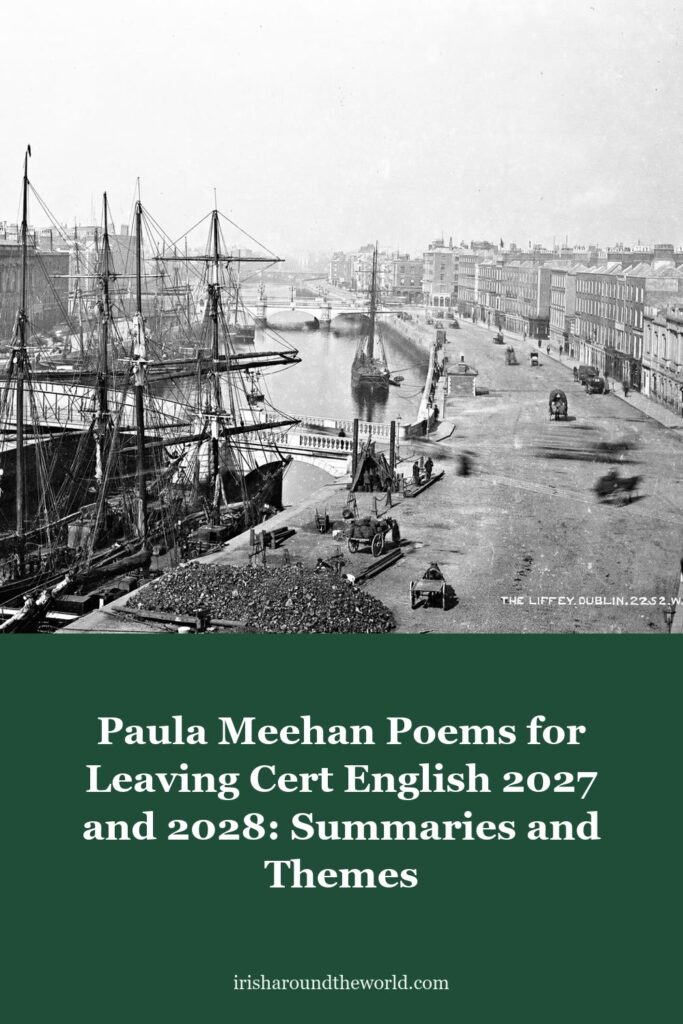
Pin image: Sailing ships moored on the River Liffey in Dublin, probably in the 1880s. Photo: Robert French, Lawrence Collection, National Library of Ireland. No known copyright restrictions, via Wikimedia Commons
A little bit of Ireland in your inbox every Friday ☘️
The free Weekly Dose of Irish: an Irish joke, a Celtic symbol, an Irish fact, a poem and the week’s best articles in one short email. Join 9,600+ readers.
Free. One short email every Friday. Unsubscribe any time.
More Leaving Cert poetry
- Leaving Cert Irish Poems 2027 and 2028: The Full List, Explained
- Shancoduff by Patrick Kavanagh
- The Hospital by Patrick Kavanagh
- A Christmas Childhood by Patrick Kavanagh: Poem and Meaning
- A Disused Shed in Co Wexford by Derek Mahon: Meaning and Analysis
- Easter, 1916 by W.B. Yeats: Meaning and Analysis
- The Easter Rising: The 1916 Rebellion That Failed, Then Changed Ireland
- 12 Best Seamus Heaney Poems Everyone Should Read
- Digging by Seamus Heaney: Meaning and Analysis of the Poem
- Clearances by Seamus Heaney: His Sonnets for His Mother
- Famous Irish Poets: The Greatest of All Time, in Order
Featured image: Sailing ships moored on the River Liffey in Dublin, probably in the 1880s. Photo: Robert French, Lawrence Collection, National Library of Ireland. No known copyright restrictions, via Wikimedia Commons.