
I am back with another fantastic top Irish poem. This week we see yet another poem from the great Patrick Kavanagh. You might be thinking you have seen me mention him quite often, and you would be correct.
Patrick Kavanagh appears in the top 100 Irish poems list 14 times!
This week it is the lovely Irish poem titled “Spraying the Potatoes.” Patrick Kavanagh was born in a rural area of County Monaghan, a northern county in the Irish province of Ulster. His father was a shoemaker who also owned a small farm.
It was known that he often despised Dublin and would regularly return to the farm to escape. He also hated the way the city people viewed rural people. And one could argue that this still exists in the present day.
The thing I like most about this poem is its simplicity and imagery. You could say he is a bit of a wordsmith.
He does a great job of explaining just what life was like at exactly that time.
Enjoy this lovely Irish poem. .
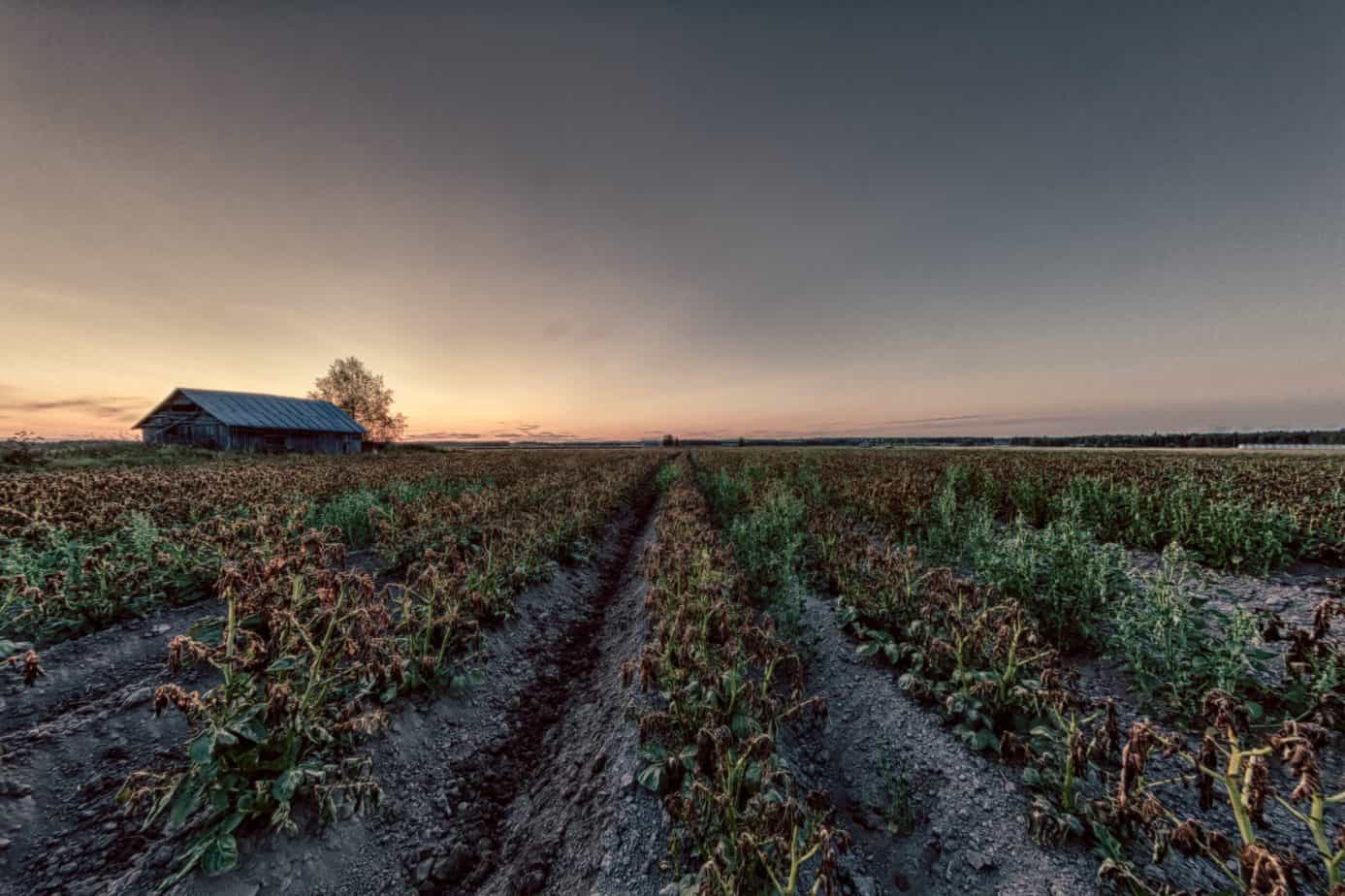
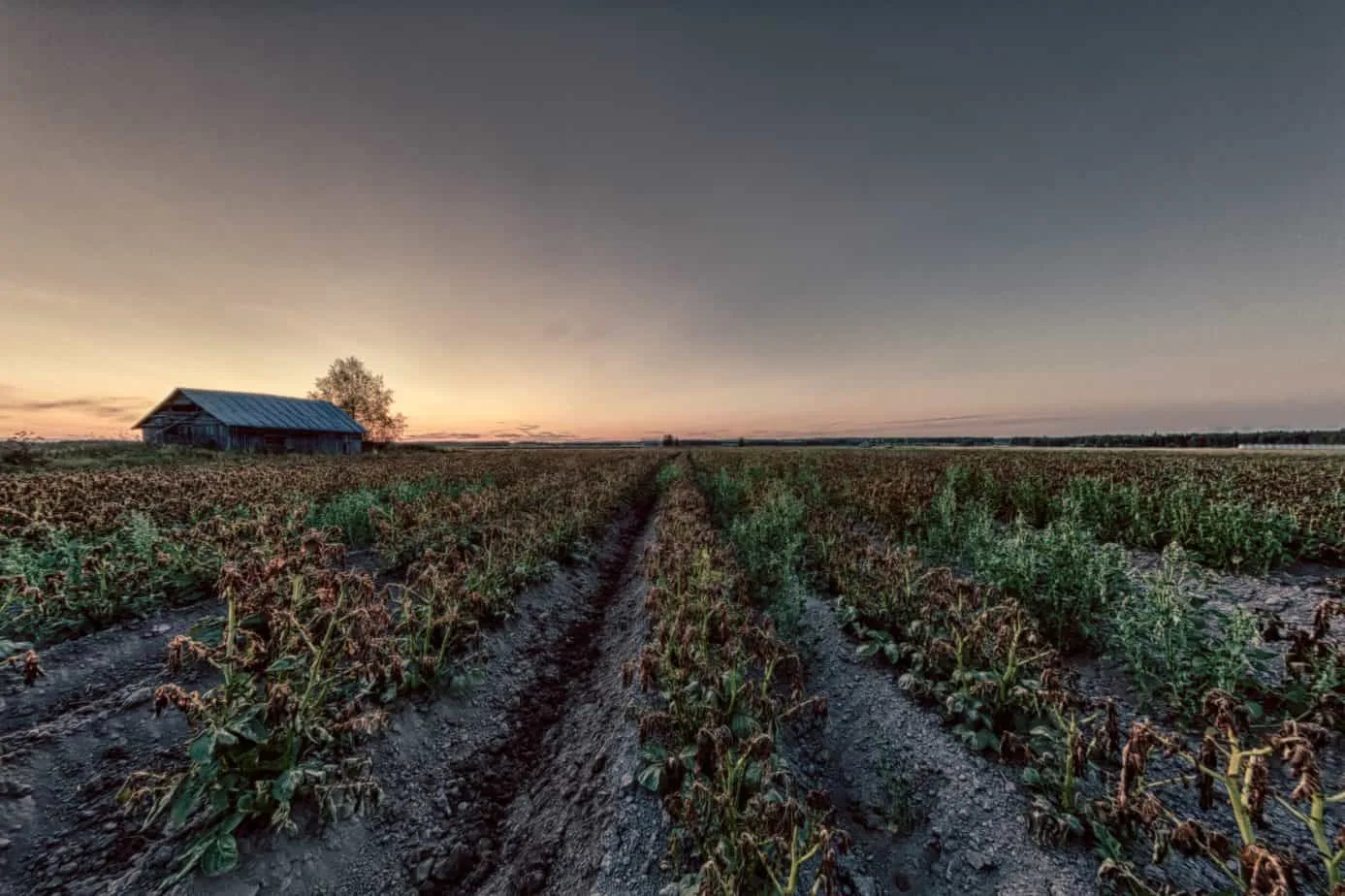
Spraying the Potatoes
The axle-roll of a rut-locked cart / Broke the burnt stick of noon in two.
Spraying the Potatoes is set on a small farm, the kind Kavanagh grew up on in Co. Monaghan, on a hot summer day. He is out with a knapsack sprayer, dosing the crop with copper spray to keep off blight. He names the flowers, the weeds and the potato varieties around him with a farmer’s eye for detail, and the whole field seems to shimmer in the heat.
An old man passes by and stops for a chat, and in that small meeting Kavanagh finds something as rich as any grand subject. Youth and age sit side by side, and the old man’s memories of his own young days hang over the scene.
The poem ends by insisting that a poet rooted in the potato fields has lost nothing. The farm, its smells and its labour are material enough for poetry. It was Kavanagh’s first poem in The Irish Times, in 1940, and Brian O’Nolan, soon to be better known as Flann O’Brien, made fun of it on the letters page. The poem has long since had the last laugh.
The full poem is not published online by an authorised source. You will find it in Patrick Kavanagh’s Collected Poems, edited by Antoinette Quinn (Allen Lane/Penguin).
Patrick Kavanagh 1904 – 1967