Politics is a 12-line poem W.B. Yeats wrote in May 1938, at the age of 72. Under an epigraph from the German novelist Thomas Mann, which says politics is where human destiny now shows what it means, an old man asks how he can keep his mind on Roman, Russian or Spanish politics with a girl standing nearby. He grants that the experts may be right about war, then wishes he were young again with her in his arms. Yeats placed it last among the poems in Last Poems and Two Plays (Cuala Press, 1939). It’s on Leaving Cert English Higher Level for 2027 and 2028.
In March 1938 an American poet published an essay that praised the “public” language of Yeats’s poetry but, as Yeats read it, said he had never turned that language on politics. Yeats answered with a poem, sent from his home in Dublin.
That answer is Politics, one of the shortest poems on the Higher Level course and the last of the 13 Yeats poems on the official list. For the whole course, see my guide to Yeats’s Leaving Cert poems for 2027 and 2028.
Jump to:
- Politics at a glance
- Politics: the full poem
- What happens in the poem
- The story behind it: an essay, a quotation and a letter
- Rome, Russia and Spain in 1938
- Themes
- Imagery, tone and structure
- Why Politics comes last
- Exam notes: key quotes and angles
- Yeats in 1938: the last year
- Politics FAQ
- More Yeats reading
Politics at a glance
- Poet: William Butler Yeats, 1865 to 1939.
- Written: May 1938. Yeats sent the first version to the poet Dorothy Wellesley with a letter dated 24 May 1938.
- In print: in magazines during his last weeks, including The Atlantic Monthly for January 1939, the month he died.
- Collected: Last Poems and Two Plays (Cuala Press, Dublin, July 1939), as the last poem before the two plays.
- Form: one stanza of 12 lines, mostly longer and shorter lines taking turns, with rhymes on the even lines.
- Exam: Higher Level only. It’s the 13th and last Yeats poem prescribed for June 2027 in circular 0021/2025 and for June 2028 in circular 0024/2026. It isn’t on the Ordinary Level list.
Politics: the full poem
This is the text printed on page 82 of Last Poems & Plays (Macmillan, London, 1940), checked word for word against the page image of the scan on the Internet Archive. The only changes here: straight quotation marks, no space before the question mark and exclamation mark, and Mann’s name on its own line (the book prints it after a dash, in small capitals).
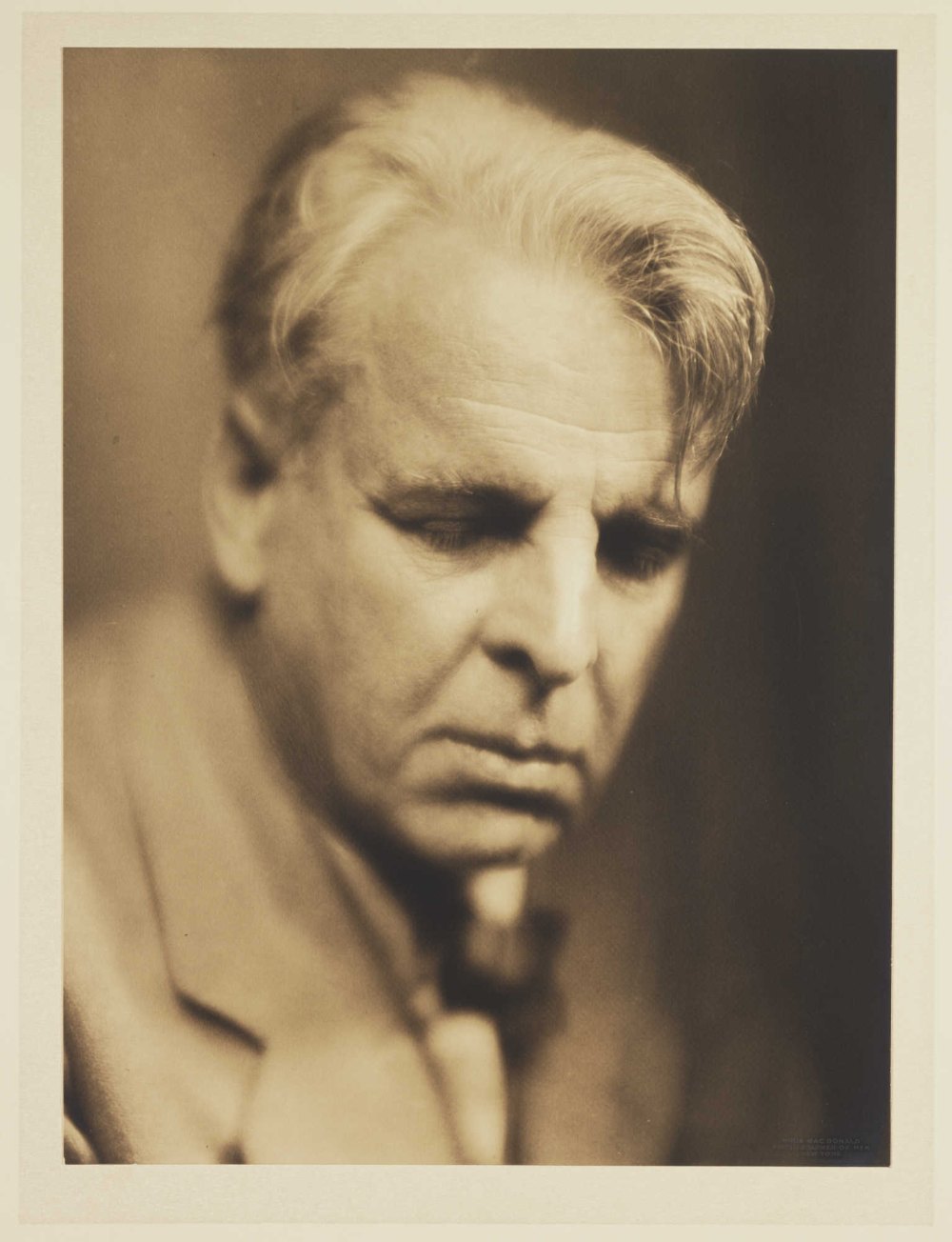
W.B. Yeats in 1932, photographed by Pirie MacDonald. National Media Museum, no known copyright restrictions, via Wikimedia Commons
Politics
‘In our time the destiny of man presents its meaning in political terms.’
Thomas Mann
How can I, that girl standing there,
My attention fix
On Roman or on Russian
Or on Spanish politics?
Yet here’s a travelled man that knows
What he talks about,
And there’s a politician
That has read and thought,
And maybe what they say is true
Of war and war’s alarms,
But O that I were young again
And held her in my arms!
Printings differ in small ways. The Atlantic Monthly in January 1939 had “meanings” in the epigraph, the American spelling “traveled”, a comma after “politics”, a full stop after “thought” and a plain full stop, not an exclamation mark, at the very end. Your class anthology may follow a later edition, so quote its punctuation, not ours.
What happens in the poem
Lines 1 to 4: the question
The speaker asks how he can be expected to concentrate on Italian, Soviet or Spanish politics with “that girl standing there”. The grammar is old-fashioned. The phrase works like “with that girl standing there”, and “My attention fix” flips the usual word order so the rhyme lands on “fix” and “politics”.
It’s a question, not a claim: he never says politics don’t matter, only that he can’t make himself attend to them.
Lines 5 to 8: the experts
Two men are talking nearby: a well-travelled man who knows his subject, and a politician who has read and thought. Yeats is fair to them, though there’s a hint of comedy in how neatly he sums them up.
Lines 9 and 10: the concession
Maybe, he admits, what they say about war is true. In May 1938 that was no idle phrase: Spain’s civil war was nearly two years old.
Lines 11 and 12: the turn
Then the poem swerves. “But O” lifts it into a cry, and the last line is about touch, not ideas. The wish can’t come true, and that’s the sting: he’s an old man, and the poem ends on what age has taken from him.
The story behind it: an essay, a quotation and a letter
The essay was “Public Speech and Private Speech in Poetry” by the American poet Archibald MacLeish, printed in the Yale Review in March 1938.
Yeats described it in a letter to Dorothy Wellesley, written at Riversdale, his home in Rathfarnham, Dublin, on 24 May 1938. It was the only article about his work in years, he said, that hadn’t bored him. It praised his language as “public”, a word he hadn’t thought of but now wanted. Then, as he summed it up, it argued that his age and his relation to Ireland had kept him from turning that public language on what the essay saw as the proper public subject: politics.
“The enclosed little poem is my reply,” Yeats wrote. He added that it was “not a real incident, but a moment of meditation”. By his own account, then, the scene is imagined. In a postscript he said the poem was partly a comment on someone’s panic-stricken talk; the published letters leave the name out.
Where the Mann quotation came from
Thomas Mann (1875 to 1955), the German novelist who won the Nobel Prize in Literature in 1929, moved to Switzerland soon after the Nazis took power in 1933 and later became an American citizen. Don Share, writing in 2013 as senior editor of Poetry magazine, says Yeats took the Mann sentence from MacLeish’s essay.
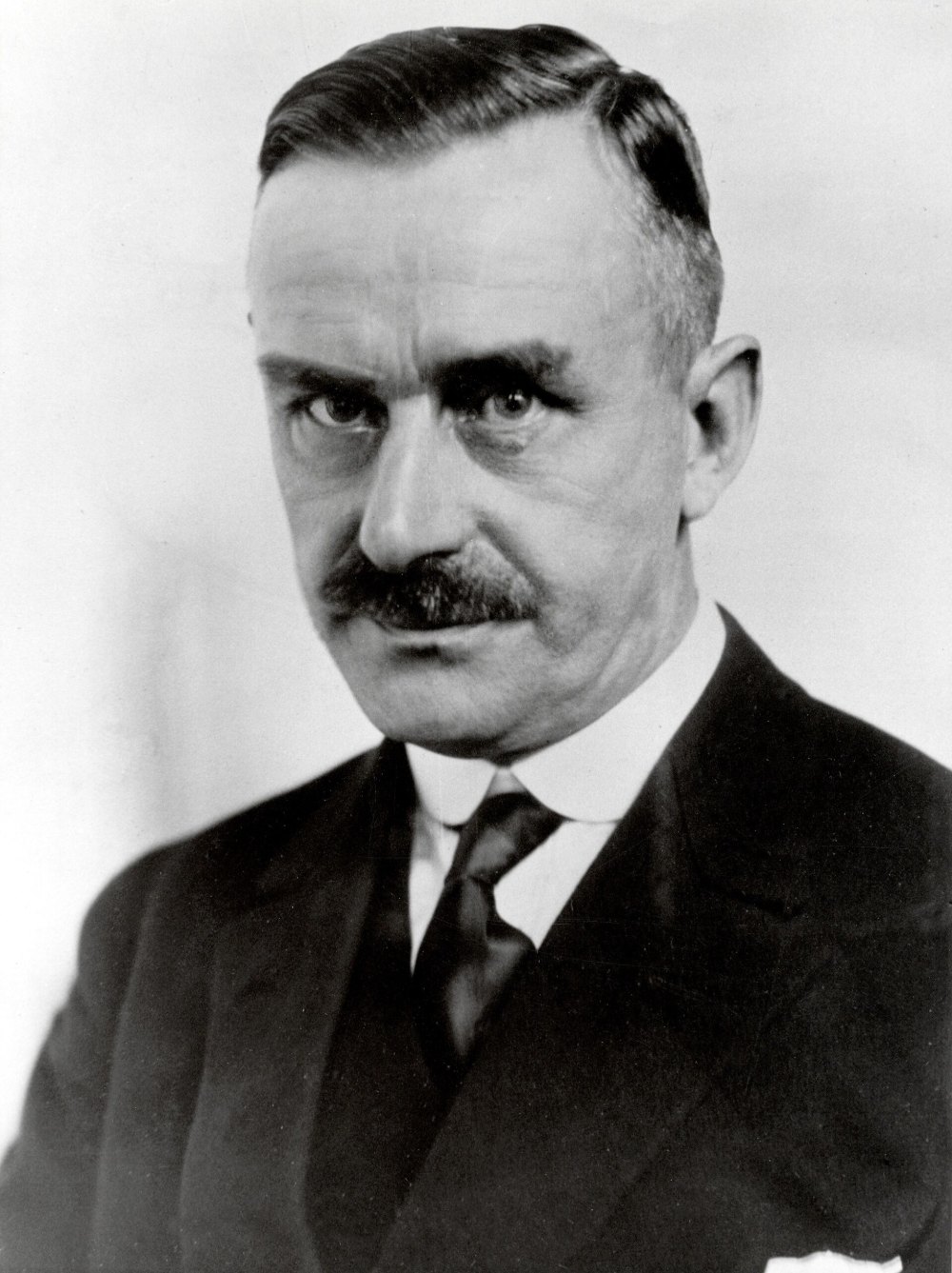
Thomas Mann around 1930, photographer unknown. Spaarnestad Photo, public domain, via Wikimedia Commons
The poem never argues with Mann’s grand claim. It simply shows one old man for whom something else matters more.
How the poem changed
Yeats’s letters, published as Letters on Poetry from W.B. Yeats to Dorothy Wellesley (1940), show the poem being sharpened. The version he sent on 24 May began with a girl beside a window, and the speaker couldn’t fix his mind on “their analysis of things / That benumb mankind”. That’s abstract and a little stiff.
In June he sent “a better version”, headed The Theme in the printed letters. Now the countries had names, Roman, Russian and Spanish, and the opening was a plain statement that a girl was standing there. In the final text that statement became the question that opens the poem. The politician who “has read and thought” survived every draft.
For the exam: naming real countries makes the crisis concrete, and the question form dramatises the speaker’s helplessness.
Rome, Russia and Spain in 1938
When Yeats wrote the poem, Rome stood for Benito Mussolini’s Fascist Italy and Russia for Joseph Stalin’s Soviet Union. Spain had been at war with itself since July 1936, when an army coup against the Republican government turned into a civil war.
Italy and Nazi Germany backed the Nationalists with soldiers, tanks and aircraft. The Soviet Union backed the Republicans with weapons and supplies, and foreign volunteers fought for the Republic in the International Brigades. Nationalist troops entered Madrid on 28 March 1939, two months after Yeats died.
Germany isn’t named in the poem, and the poem takes no side in any of these conflicts: its point is that the speaker can’t bring himself to take one.
Louis MacNeice faced the same news very differently, writing Autumn Journal between August and December 1938, with Munich and the war in Spain running through it.
Yeats and politics
The poem gets sharper once you know Yeats was anything but unpolitical. He had written Easter, 1916 and September 1913, and he served as a senator in the new Irish state from 1922 to 1928.
His views in the 1930s are still debated. The Dictionary of Irish Biography says that in 1933 he was drawn to the Blueshirts, a short-lived movement it describes as resembling fascism, and offered them his support. It adds that On the Boiler, a pamphlet he finished in 1938 and which came out after his death, gave voice to an elitist dread of mass society and a wish for population control.
So the speaker’s distraction comes from a man who had thought hard about politics all his life. Whether the ending is wise, evasive or both is exactly what a good answer can weigh up.
Themes
Age and lost youth. Yeats was 72 when he wrote the poem, and its last wish is to be young again. Old age haunts his late work, from the “aged man” as “a paltry thing” in Sailing to Byzantium to the “absurdity” he rails at in The Tower.
Private life against public life. One girl is set against three nations, and the girl wins. MacLeish wanted public speech on public matters; Yeats replies in public speech about a private longing. That’s the joke at the heart of the poem.
Love and desire. The body has the last word. The Dictionary of Irish Biography notes how frankly his late poems and plays dealt with sexual desire, and Politics ends on a physical wish, to hold her.
The poet’s freedom. Mann’s sentence and MacLeish’s essay both imply a duty to write about politics, and the poem quietly refuses it.
Doubt and honesty. “Maybe” matters: admitting the experts might be right stops the poem being merely dismissive.
Imagery, tone and structure
- One image: the girl, and she isn’t described at all. No hair, no eyes, no clothes. Everything else in the poem is talk, which makes her silent presence stronger.
- Title and epigraph: the title promises politics and the epigraph promises a serious argument. The poem delivers a love wish. That gap is the poem’s irony.
- Tone: wry, self-mocking and courteous, then wistful and rueful. Never angry.
- Syntax: just two sentences. A four-line question, then one long sentence chained together by “Yet”, “And”, “And” and “But”. The chain piles up reasons to care, and the last “But” knocks them down.
- Metre and rhyme: longer lines of about four beats mostly take turns with shorter ones of two or three, loosely like a ballad, and the even lines rhyme: fix and politics, about and thought (a half rhyme), alarms and arms. In his letter Yeats said every good ballad uses public language, so the ballad-like form fits his reply.
- The last rhyme: “arms” sits inside “alarms”. War’s alarms and her arms are one sound apart, which sums up the whole choice.
- An old echo: Don Share notes that the ending recalls Western Wind, an anonymous English lyric from the early 1500s whose lover longs to hold his love again, a poem MacLeish quoted in the same essay. Mary FitzGerald, Share reports, reads it as Yeats placing himself at the end of the English lyric tradition.
Why Politics comes last
Politics was in print before Yeats died. The Atlantic Monthly carried it in January 1939, after The Man and the Echo and The Circus Animals’ Desertion.
Yeats also drew up a list of contents for his next Cuala Press book. The scholar A. Norman Jeffares, citing Curtis Bradford, gives that list: it opens with Under Ben Bulben, and its poems end with The Man and the Echo, The Circus Animals’ Desertion and Politics, followed by two plays. Bradford says Last Poems and Two Plays kept the order Yeats intended when the Cuala Press, run by his sister Elizabeth Corbet Yeats, published it in July 1939 in an edition of 500 copies.
So the book begins with Under Ben Bulben, where Yeats speaks like a prophet and writes his own epitaph, and its poems end with an old man wishing he were young. Public voice first, private voice last.
Politics comes straight after The Circus Animals’ Desertion, where the old poet can’t find a theme and ends up in the rag and bone shop of the heart. Read together, the two poems make a pair: the heart is all that’s left, and here it is, wanting the girl.
Not every edition kept that order. Macmillan’s Last Poems & Plays (London, 1940) put Politics before The Man and the Echo, Cuchulain Comforted, The Black Tower and Under Ben Bulben, and editors have argued about the order ever since. Nor was Politics the last thing Yeats wrote: the Dictionary of Irish Biography says he finished the play The Death of Cuchulain on his deathbed.
Exam notes: key quotes and angles
Key quotes
- “How can I, that girl standing there, / My attention fix”: the opening question, the inverted word order, distraction as an argument.
- “Yet here’s a travelled man that knows / What he talks about”: fairness to the experts, with a hint of comedy.
- “And maybe what they say is true / Of war and war’s alarms”: the concession, and the shadow of war over Europe.
- “But O that I were young again / And held her in my arms!”: the turn, longing, age, the body.
Angles an answer could take
- Yeats and public life: trace his changing attitude across the course, from contempt in September 1913, to awe and doubt in Easter, 1916, to horror at civil war in The Stare’s Nest by My Window, to the sisters’ politics weighed against their youth in In Memory of Eva Gore-Booth and Con Markiewicz, to this final refusal.
- Old age: pair Politics with An Acre of Grass, where the old poet asks for “an old man’s frenzy” so he can remake himself. Politics asks for something simpler and more impossible: to be young again. Sailing to Byzantium and The Wild Swans at Coole also fit here.
- Style: late Yeats writes in plain, spoken English. Politics is a short, clear example, and its question form links to the questions in Easter, 1916 and The Second Coming.
- Personal response: is the ending honest or a dodge? Readers have long disagreed. Either view works if you argue it from the words on the page.
One caution: The Circus Animals’ Desertion helps you understand Politics, but it isn’t on the 2027 or 2028 list, so build your answer on the prescribed poems. This is an unofficial study guide; check details with your teacher.
Yeats in 1938: the last year
Born in Dublin on 13 June 1865, Yeats won the Nobel Prize for Literature in 1923. In July 1932 the family moved to Riversdale in Rathfarnham, his last home.
He spent January to mid-March 1938 in the south of France, went back in November and never saw Ireland again. He died at the Hôtel Idéal-Séjour, Cap-Martin, on 28 January 1939 and was buried at Roquebrune. In 1948 his remains were brought home to Drumcliff churchyard in Co. Sligo, under the words he had chosen in Under Ben Bulben.
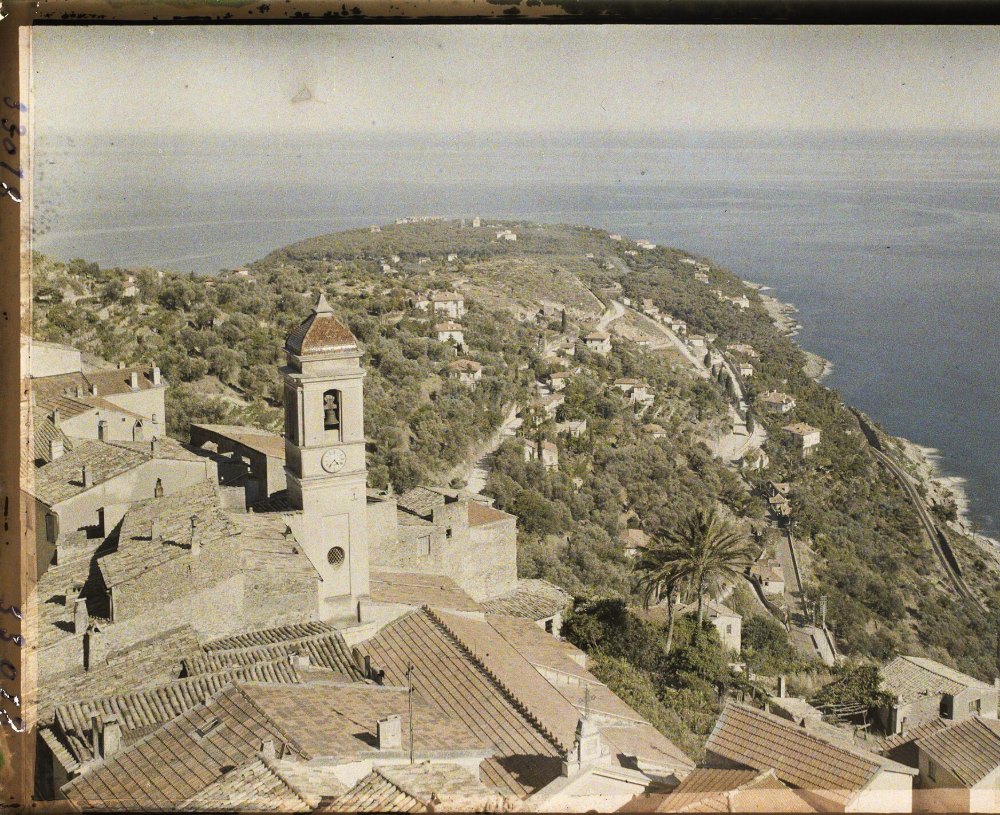
Cap Martin seen from the village of Roquebrune, an autochrome by Auguste Léon, 25 July 1922. Musée départemental Albert-Kahn, CC0, via Wikimedia Commons
For his place among Ireland’s poets, see my guide to famous Irish poets.
Politics FAQ
What is the poem Politics by Yeats about?
An old man who can’t concentrate on European politics because a girl is standing nearby. He admits the experts may be right about war, but he longs to be young again and hold her. It was Yeats’s reply to an essay that wanted his poetry to take on politics.
When did Yeats write Politics?
In May 1938, when he was 72. He sent a first version to Dorothy Wellesley on 24 May and a revised one in June. It was in print in The Atlantic Monthly by January 1939.
Who is the girl in Politics?
Nobody knows, and she may not have existed: Yeats told Wellesley the poem was not a real incident but a moment of meditation. Read her as the pull of youth and desire.
What does the Thomas Mann quote at the start of Politics mean?
It says that in modern times the meaning of human life shows itself through politics. Yeats sets it at the top of the poem, then lets an old man’s longing quietly push back against it.
Is Politics Yeats’s last poem?
It’s the last poem in the order Yeats chose for Last Poems and Two Plays (Cuala Press, 1939), so it’s often read as his final word. It isn’t the last thing he wrote. The 1940 Macmillan edition dates The Black Tower 21 January 1939, a week before he died, and he finished a play, The Death of Cuchulain, on his deathbed.
Is Politics on the Leaving Cert?
Yes, for Higher Level English in June 2027 and June 2028, as one of 13 Yeats poems. It isn’t on the Ordinary Level list.
Love this? Save it to your Pinterest board for later.
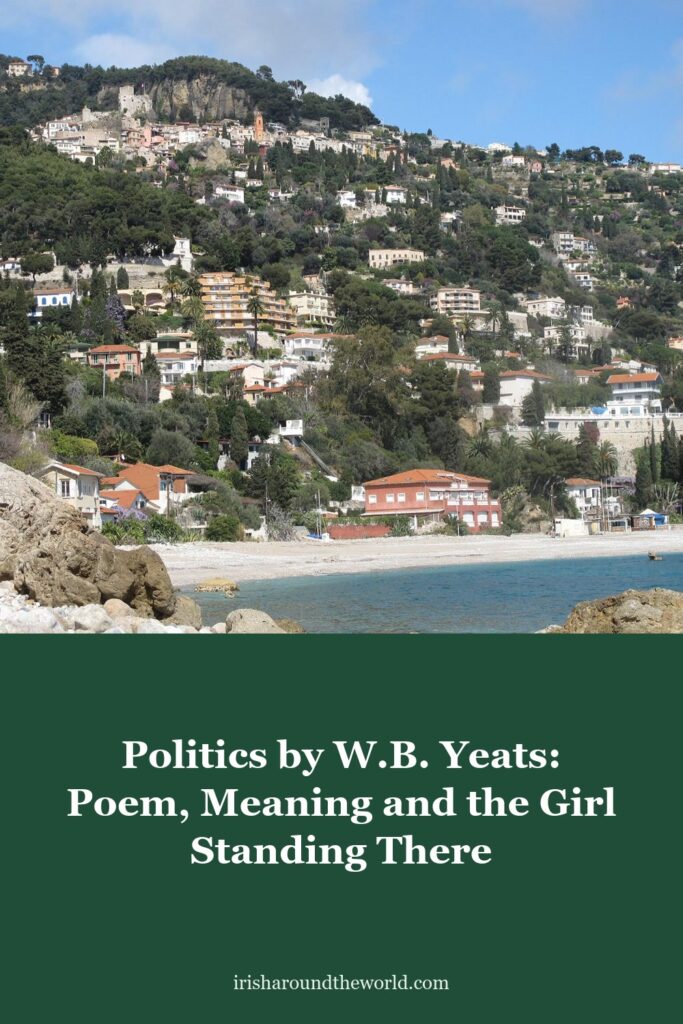
Pin image: The hill village of Roquebrune, where Yeats was first buried in 1939. Photo: Tangopaso, public domain, via Wikimedia Commons
A little bit of Ireland in your inbox every Friday ☘️
The free Weekly Dose of Irish: an Irish joke, a Celtic symbol, an Irish fact, a poem and the week’s best articles in one short email. Join 9,600+ readers.
Free. One short email every Friday. Unsubscribe any time.
More Yeats reading
- Yeats Leaving Cert Poems 2027 and 2028: All 13 Poems, With Notes
- An Acre of Grass by W.B. Yeats
- The Circus Animals’ Desertion by W.B. Yeats: Meaning and Analysis
- Under Ben Bulben by W.B. Yeats: The Poem That Wrote His Own Epitaph
- Sailing to Byzantium by W.B. Yeats: Meaning and Analysis
- The Tower by W.B. Yeats: Poem and Meaning
- Autumn Journal by Louis MacNeice: Poem and Meaning
Featured image: The hill village of Roquebrune, where Yeats was first buried in 1939, with its castle and church above the sea. Photo: Tangopaso, public domain, via Wikimedia Commons.