
Well, this week from my list of top 100 Irish poems I picked number 23 titled “The Great Hunger”.
Keep in mind I know very little about Irish poetry and I am far from an expert. I am featuring a new Irish poem every week in my weekly dose of Irish. Subscribe here.
Some interesting facts about the poem: The Great Hunger by Patrick Kavanagh
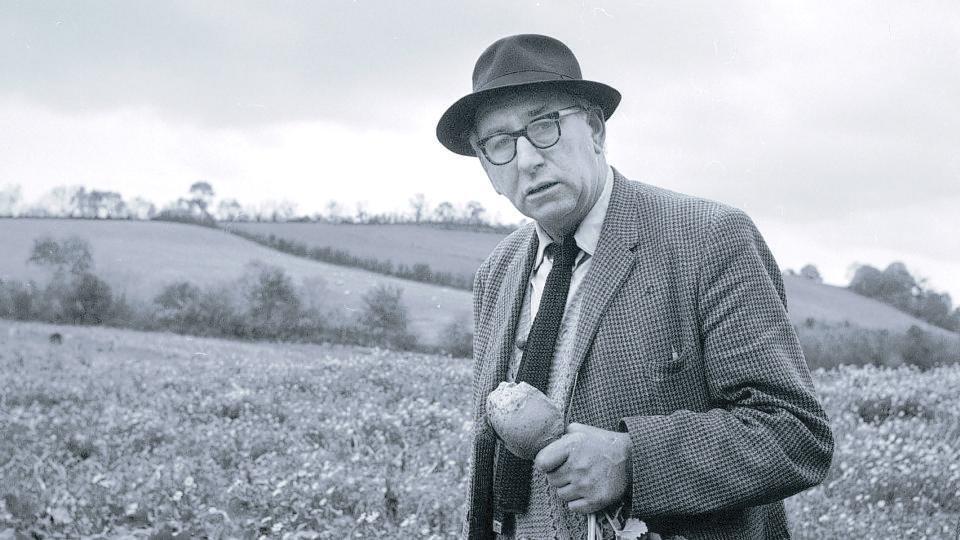
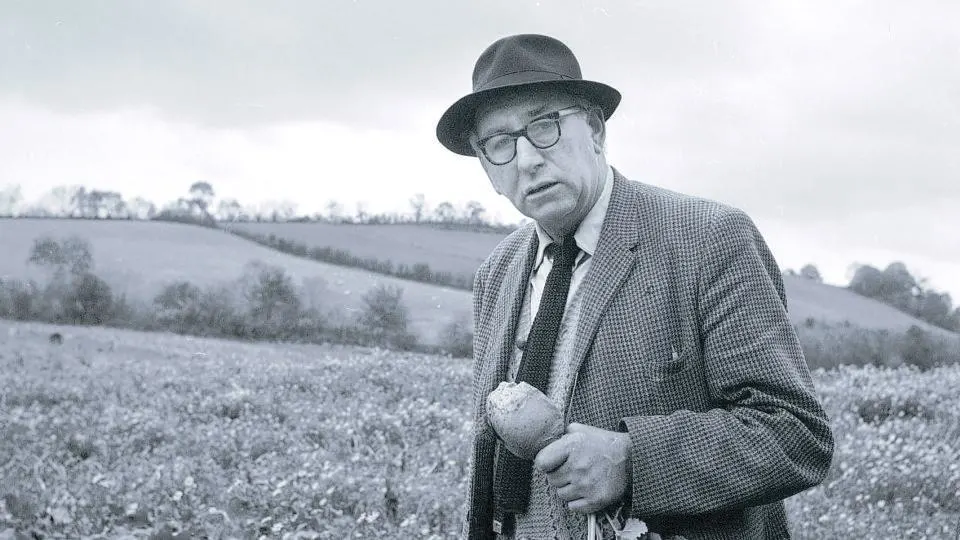
- The poem is over 756 lines and divided into 14 sections
- The poem, whose title nods to the Great Famine of the 1840s in Ireland, examines the life of Patrick Maguire who is an unmarried peasant farmer tied to his small acreage.nbsp;
- The Irish Potato Famine, also known as the Great Hunger, began in 1845 when a fungus-like organism called Phytophthora infestans spread rapidly throughout Ireland.
- The infestation ruined up to one-half of the potato crop that year, and about three-quarters of the crop over the next seven years.
- It decimated Ireland’s population, which stood at about 8.5 million on the eve of the Famine. It is estimated that the Famine caused about 1 million deaths between 1845 and 1851 either from starvation or hunger-related disease.
- The poem is set in rural Ireland
A line from Part I of The Great Hunger by Patrick Kavanagh
Clay is the word and clay is the flesh
The Great Hunger is a long poem of about 750 lines in fourteen sections. Part of it appeared in the London magazine Horizon in 1942, on the recommendation of John Betjeman, and the full poem was printed in a limited edition of 250 copies by the Cuala Press in Dublin later that year. It was collected again in A Soul for Sale (Macmillan, 1947).
It follows Patrick Maguire, a small farmer in south Monaghan, across decades of his life. He stays on the land with his hard, controlling mother and his sister, puts off marriage again and again, and watches his chances of love slip away while the farming year, Sunday Mass and nights of cards roll round. The famous opening line echoes the start of Saint John’s Gospel, putting the clay of the fields where the Word should be.
Despite the title, the poem is not about the Famine of the 1840s. The hunger here is emotional, sexual and spiritual: a life starved by poverty, strict religion and fear. Kavanagh wrote it as an answer to the romantic picture of the Irish peasant painted by the writers of the Literary Revival, and he knew this world first hand, having farmed in Inniskeen until his mid thirties.
Many critics rank it among the great Irish poems of the twentieth century, though Kavanagh himself later felt it was too bleak and lacked the comedy he came to value. It is best read slowly, one section at a time.
The full poem is not published online by an authorised source. You will find it in A Soul for Sale (Macmillan, 1947) and in Patrick Kavanagh: Collected Poems, edited by Antoinette Quinn (Allen Lane, 2004; Penguin Modern Classics).
Well that is an incredible poem! If you do read it to the end, I would love to hear your thoughts on “The Great Hunger” and what you felt it meant.nbsp;
Be sure to comment below and join my weekly dose of Irish where I will be sharing a new Irish poem every week.