
Irish superstitions, piseoga (roughly PISH-oh-guh) in Irish, are the old rules for keeping bad luck away: never kill a robin, salute a lone magpie, give nothing away on May Day, leave the lone hawthorn alone and let a dark-haired man in first at New Year. The 40 below were recorded by Irish schoolchildren in 1937 to 1939, by Lady Wilde in 1887, or both. Each is marked old Irish, shared with Britain, or a later import.
If your grandmother wouldn’t have hawthorn blossom in the house, or turned the coins in her pocket at a new moon, she was keeping rules Irish country families lived by for generations.
Halloween is when these beliefs come out to play, so here are 40, grouped by theme, every one from an old Irish source, not a meme.
Jump to:
- What is a piseog? Where these beliefs come from
- Death and wakes (1 to 6)
- Birds: robins, magpies and a bird in the house (7 to 12)
- Luck and money (13 to 19)
- May Eve and May Day (20 to 25)
- Halloween (26 to 29)
- Weddings (30 to 34)
- New Year (35 to 38)
- Hawthorns and fairy trees (39 and 40)
- The four-leaf clover and the luck of the Irish
- Irish superstitions FAQ
- More Irish folklore reading
What is a piseog? Where these beliefs come from
The Irish for a superstition is piseog (PISH-ohg in Connacht and Ulster, pish-OHG in Munster), plural piseoga. Ó Dónaill’s dictionary gives two meanings: a charm or spell, and superstitious practices. In Irish English it’s pishogue; 1930s pupils also wrote pishrogs and pisreoga, a variant the dictionary lists. You’ll see piseóg online, but the dictionary spelling has no fada.
The main source is the Schools’ Collection on dúchas.ie: in 1937 to 1939, pupils across the 26 counties wrote down what their parents and neighbours believed, for the Irish Folklore Commission. One Wexford school’s list takes in spilt salt, broken mirrors and lucky horseshoes.
The other is Ancient Legends, Mystic Charms and Superstitions of Ireland (1887) by Lady Wilde, Oscar Wilde’s mother, who wrote poetry as Speranza. She said most of it came from country people, in Irish or Irish-English, and feared that emigration to America would soon make such a collection impossible. Read her for the beliefs she recorded rather than her theories on where they came from, such as tracing May Day to the god Baal.
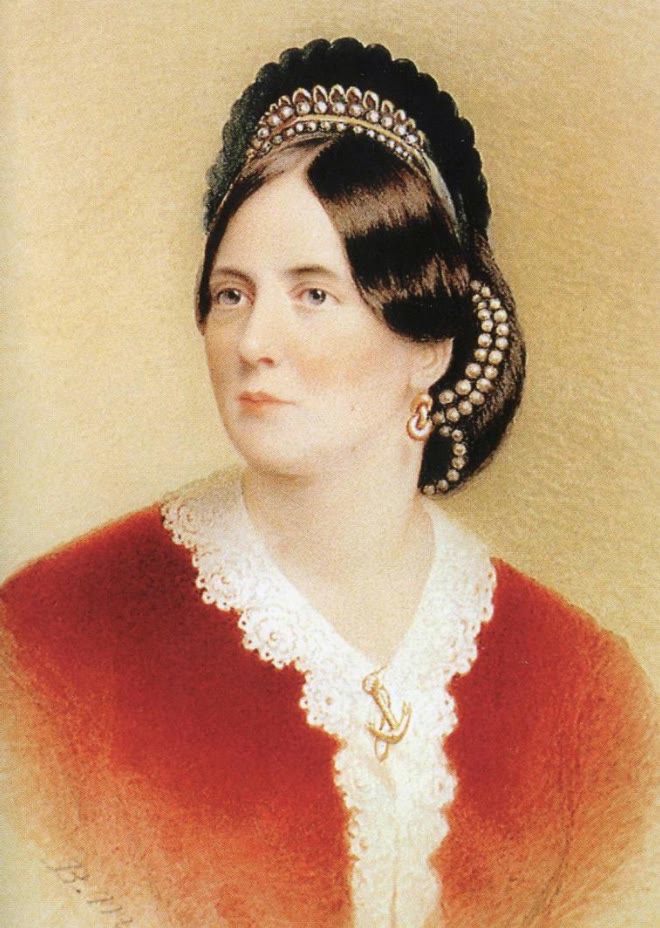
Lady Wilde (Speranza) in 1864, watercolour by Bernard Mulrenin. Public domain, via Wikimedia Commons
Each belief carries a label, checked for Britain against John Brand’s Observations on the Popular Antiquities of Great Britain (1853 to 1855 edition):
- Old Irish: widely recorded in Ireland, in a form of its own.
- Shared: recorded in much the same form in Britain, or in the ancient world, at least as early.
- Import: reached Ireland late, from outside.
Death and wakes
A death in the house came with many rules. Here are six; there’s far more in my guide to Irish wake traditions, and the banshee has a page of her own.
- A howling dog means a death. In Kilmallock, Co. Limerick, a dog howling opposite a house at midnight meant someone inside would soon die; Mohill, Co. Leitrim, agreed. Shared: in England, too, a dog howling at night warned of death for the sick (Brand).
- Stop the clocks and cover the mirrors. Pupils in Twomilehouse, Co. Kildare, recorded both. In Cuilmore, Co. Mayo, the fire was put out too, and the doors and windows thrown open. Shared: in Orkney, families covered every looking-glass when someone died (Brand).
- Open a window to let the soul out. In Drumacoon, Co. Monaghan, the window was opened at the death so the soul could go, and a Wexford town school warned against kneeling in the doorway and blocking its path. Old Irish.
- Keep wild birds’ feathers out of the deathbed. The Cuilmore account warns that a dying man laid on wild birds’ feathers would have a hard death. Shared: English sources said the same of pigeons’ feathers by 1710 (Brand).
- Never take a short cut with a coffin. Pupils in Drumacoon warned against it, Lady Wilde called it disrespectful to the dead, and on the islands she heard the dead would lie uneasy in the coffin. Old Irish.
- Meet a funeral? Walk three steps with it. Lady Wilde lists failing to turn back three steps with a passing funeral among the omens of evil. Old Irish.
Birds: robins, magpies and a bird in the house
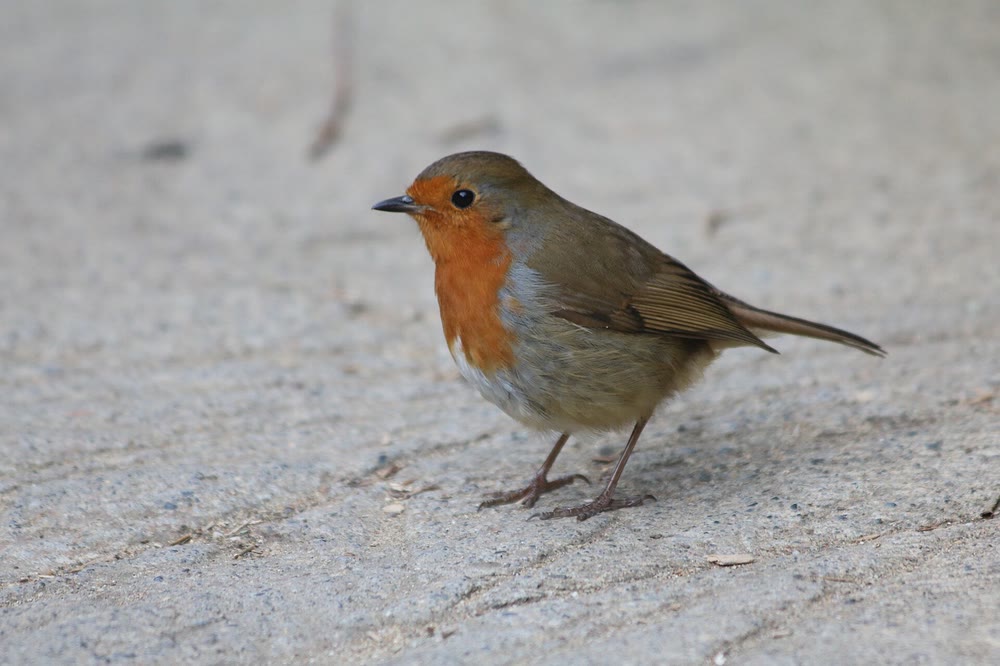
- Never kill a robin. The robin, spideog (roughly SPID-yohg), was God’s own bird. Lady Wilde heard that it pulled a thorn from Christ’s brow at the crucifixion, and the blood stained its breast red; Newmarket, Co. Cork, told a similar story. In Newcastle, Co. Galway, a cat that killed a robin could pay with its own life. Old Irish, with British cousins: Francis Grose called it extremely unlucky in England (Brand).
- A bird in the house means a death. In Balla, Co. Mayo, a bird flying indoors was a death sign, and on Achill a robin coming in meant the same. But in Carrowmore, Co. Donegal, a robin indoors usually brought hopeful news; there it was the wren that foretold a death. Old Irish.
- Salute a lone magpie. Lady Wilde’s rhyme runs “One for sorrow, two for mirth, three for marriage, four for a birth,” and a school in Crappagh, Co. Monaghan, said the magpie mocked Christ on the cross. Many people still salute a lone magpie to turn the luck. Import, made Irish: Robert Payne found no magpies in Ireland in 1589, and the first flock is believed to have blown into Co. Wexford in 1676, says The Irish News. Lady Wilde thought the bird had no Irish name, but Ó Dónaill gives snag breac (snag BRAK).
- Have money on you for the first cuckoo. In Ballycarra, Co. Mayo, coins on you when you first heard the cuckoo, cuach (KOO-ukh), meant money all year; facing a graveyard meant death within the year. In Gortacloona, Co. Cork, hearing it first with your right ear promised a lucky year. Shared: in England an empty pocket at the first cuckoo was unlucky (Brand).
- Leave the wagtail alone. Lady Wilde called the water wagtail one of Satan’s birds, holding three drops of blood from the devil, yet unlucky to kill. Pupils in Bunclody, Co. Wexford, knew the same three drops. Old Irish.
- A cock crowing at night foretells a death. In Carrowmore, a cock crowing after sunset caused real alarm. In Borris-in-Ossory, Co. Laois, a cock that came in the door, turned and crowed out of it meant a death in the house. Old Irish.
Luck and money
- An itchy palm means money. In Croom, Co. Limerick, an itchy left palm meant money coming and the right a handshake, and you rubbed it on wood to make sure. In Castleisland, Co. Kerry, the right meant money going out. Shared: in 17th-century England, John Melton’s Astrologaster gave the money to the right palm (Brand).
- Turn your money at the new moon. In Kilmallock, Co. Limerick, you turned the coins in your pocket at your first sight of a new moon, blessed it three times and spat on the money. In Aghnamullen, Co. Monaghan, looking at a new moon through glass was unlucky. Shared: Brand notes the same window rule in Britain.
- Give back a luck penny. In Croom, when money left a house, say for cattle sold, the owner got a small coin back so the luck stayed behind. In Bunclody, if money fell while being handed over, both people said “Luck between us.” Old Irish.
- Don’t meet a redhead first thing. Lady Wilde lists meeting a red-haired man, or a woman in a red petticoat, first thing in the morning among bad omens. On Achill, meeting a red-haired woman on the way to the fair meant you wouldn’t sell your cow. Old Irish, and hard luck on redheads.
- A horseshoe keeps evil out. Pupils in Cahersherkin, Co. Clare, said finding a horseshoe on the road was lucky if its nails were turned up towards you, and one nailed to the door kept evil away. Shared: horseshoes were nailed over English thresholds against witches (Brand).
- Spilt salt goes over your left shoulder. In Bunclody, the pinch thrown over the left shoulder kept the fairies away. Shared: spilt salt was a bad omen in 17th-century England (Brand), but the fairies are an Irish twist.
- A broken mirror brings seven years’ bad luck. Pupils in Croom and Bunclody both recorded it. Shared: Brand counts a broken looking-glass very unlucky in England too.
May Eve and May Day
May Day and November Eve were the old Irish year’s two great festivals, Lady Wilde says, and on May Eve, Oíche Bhealtaine (roughly EE-ha VYAL-tin-uh), the fairies were at their most powerful. The fear was always that someone would steal your luck, your milk or your butter for the year.
- Don’t be the first chimney smoking. In Moneyduff, Co. Leitrim, nobody lit the fire on May morning until a neighbour’s smoke was rising, because an ill-wishing woman could take the first smoker’s butter with a rope or twine and a few words. Clondrohid, Co. Cork, kept the same rule. Old Irish.
- Give away no milk, fire or salt. Lady Wilde called these three sacred: hand them out on May Day and the year’s luck went with them. In Kilcorney, Co. Cork, a neighbour who called on May morning wanting a live coal was always refused, in case the coal took the butter with it. Old Irish.
- Strew May flowers at the door, but never bring them in. In Moneyduff, May flowers were thrown at the house and outhouse doors after sunset on May Eve, but never carried inside. Lady Wilde says primroses scattered at the door kept the fairies out. Old Irish.
- Be first at the well. In Moneyduff, families rose at four or five on May morning to be first at the well, so nobody could take their butter, and two neighbours arriving together might fight until others made peace. Old Irish.
- Wash your face in May dew. In Louth, girls bathed their faces in May morning dew to be beautiful; in Cloonanure, Co. Sligo, it stopped you tanning that year. Shared: on 28 May 1667, Samuel Pepys’s wife went to Woolwich to gather May dew for her face (Brand quotes his diary).
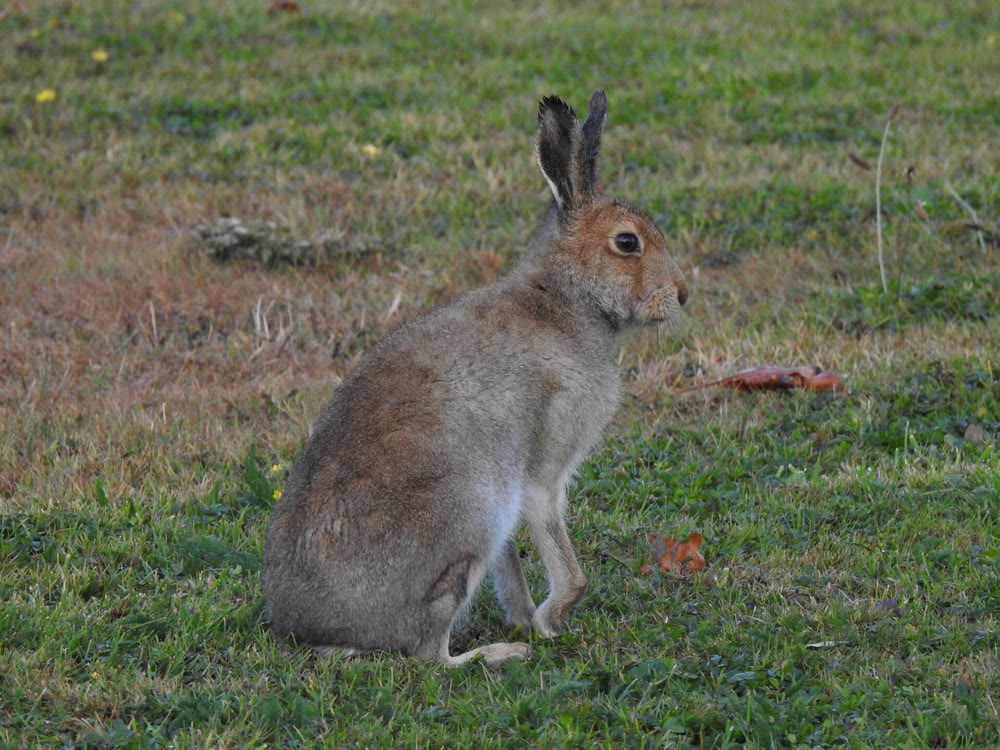
- A hare on May morning may be a witch. Lady Wilde says hares seen on May morning were taken for witches, who put on that shape to get at the cattle. She tells of a hare wounded one morning whose blood trail led to a cabin, where the county’s greatest witch sat holding her side. More in my guide to Irish witches. Old Irish.
Halloween: the night the dead came home
Halloween, Oíche Shamhna (EE-ha HOW-na), was the eve of Samhain, when the dead were believed to walk.
- Leave food out for the dead. On November Eve, Lady Wilde says, food was left out for the wandering dead; if it vanished, the spirits had taken it. In Duleek, Co. Meath, a dish of colcannon was set on the swept hearthstone for any dead relatives who called. Old Irish.
- Don’t throw out water that night. In Coolronan, Co. Meath, pupils wrote that the souls were as thick as blades of grass on Halloween, so nobody threw water out in case it landed on them. Old Irish.
- Don’t eat blackberries after Halloween. A Faythe school pupil in Wexford town wrote in 1938 that after November night the púca has spat on the blackberries, and he may carry off any child who eats them for a wild night ride on his back. More in my guide to the Púca. Old Irish.
- Don’t look round at footsteps. Lady Wilde warns that on November Eve you should never look round at footsteps behind you: the dead are walking, and their look could kill. Old Irish.
Weddings
There’s more in my guide to Irish wedding traditions, including the Shrovetide rush before Lent.
- Marry in May and you’ll rue the day. In Ballyfinnane, Co. Kerry, May, June and July were all unlucky, and Shrovetide was the main wedding season. Shared, and ancient: Ovid recorded the Roman saying “mense malas Maio nubere volgus ait”, that women who marry in May fare badly, because May held the Lemuria, a festival of the restless dead.
- Happy is the bride the sun shines on. Lady Wilde gives the full saying: “Happy is the bride that the sun shines on; But blessed is the corpse that the rain rains on.” Rain meant the bride would weep all year. Two Roscommon schools knew versions too. Shared: Robert Herrick’s English wedding poem of 1648 has “Bless’d is the bride on whom the sun doth shine.”
- A wedding must not meet a funeral. Pupils in Bunclody recorded that it was bad luck for a wedding party to meet a funeral along the way. Old Irish.
- First out of the chapel is first to die. In Mountplunkett, Co. Roscommon, the bride’s parents told her to let her husband leave the chapel ahead of her, and his parents gave him the same advice, because whoever left first would die first. Old Irish.
- Throw an old shoe for luck. In Toberdan, Co. Roscommon, an old shoe was thrown after the bride, and in Bunclody an old boot went after the wedding car. Shared: Brand records old shoes thrown after Manx brides and grooms, and after anyone setting out in England.
New Year
New Year’s Day is Lá Caille (law KAL-yuh) in Irish, and it set the pattern for the year. For the bread banged on the door on New Year’s Eve, see my Irish New Year traditions.
- Let a dark-haired man in first. In Clonmacnoise, Co. Offaly, the luckiest first visitor on New Year’s Day was a black-haired man, though any man would do; a woman first was bad luck, a black cat lucky. Shared: on the Isle of Man the first-foot had to be dark (Brand).
- Nothing goes out of the house. Pupils in Ballycarra, Co. Mayo, said ashes and dirty water had to stay indoors on New Year’s Day, or your luck went out with them. Shared: Brand records the same rule in Britain.
- Pay out nothing on Handsel Monday. In Cloyne, Co. Cork, nobody paid money out on Handsel Monday, the year’s first Monday, for fear of paying out all year. Lady Wilde gives the same rule. Shared with Scotland, where Handsel Monday brought small gifts and merrymaking (Brand).
- As New Year’s Day goes, so goes the year. Pupils in Clonmacnoise warned that if you borrowed, cried or told a lie that day, you’d be at it all year. Old Irish.
Hawthorns and fairy trees
The whitethorn or hawthorn, sceach gheal (shkyakh YAL), belonged to the fairies. There’s more, including the Latoon bush, in my guide to fairy forts and fairy trees.
- Never cut a lone bush. Pupils in Smithborough, Co. Monaghan, explained that a lone bush is a big whitethorn standing alone, away from any hedge, and nobody would cut it or even break a branch off. In Aghacashel, Co. Leitrim, a “returned Yankee” who laughed at the old talk cut one down, fell sick the next day and died about a month later, or so the story goes. Old Irish.
- Never bring hawthorn blossom indoors. In Drumacoon, Co. Monaghan, hawthorn was never let into the house. But in Ganty, Co. Galway, the head of the house cut a whitethorn branch on May morning and hung it under a kitchen rafter until the next May. Old Irish, but one parish’s bad luck was another’s blessing.
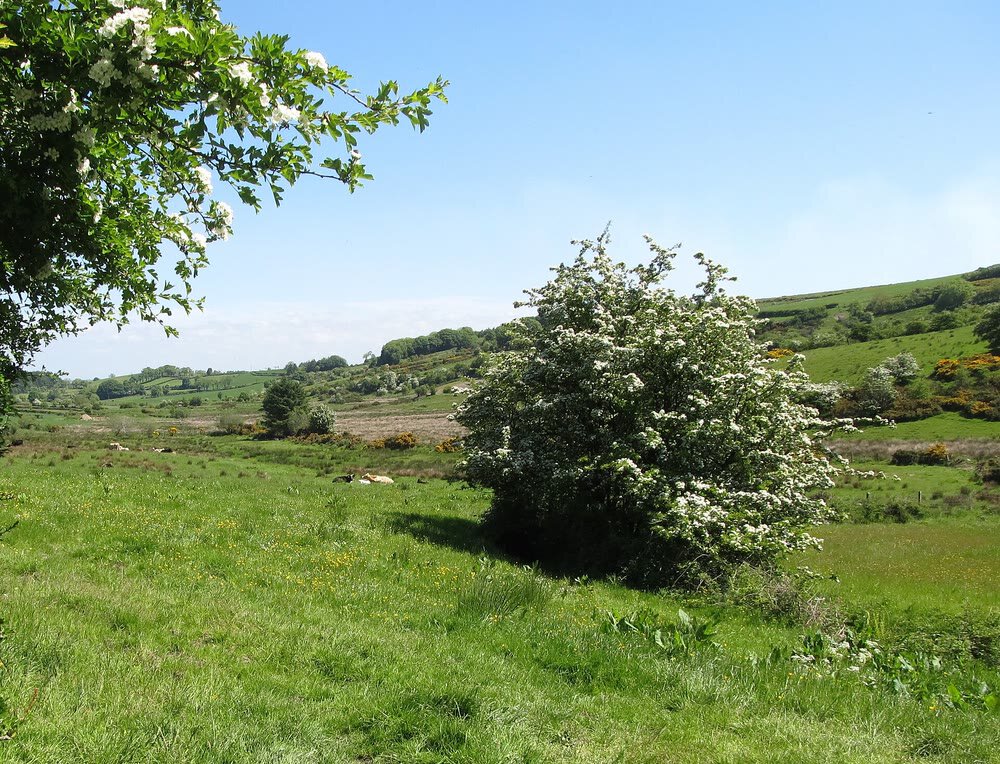
A hawthorn in blossom in the Upper Creggan Valley, Co. Armagh. Photo: Eric Jones, CC BY-SA 2.0, via Wikimedia Commons (Geograph)
The four-leaf clover and the luck of the Irish
- The four-leaf clover. Ireland’s emblem is the three-leaved shamrock. Lady Wilde did record that a four-leaved shamrock, carried in secret, brought luck at gambling and racing and kept witchcraft off. But it was never an Irish monopoly: “lucky four-leav’d grass” turns up in Herrick’s English poem of 1648. Shared.
- The luck of the Irish. The phrase most likely grew up in America during the 1800s mining rushes, and it wasn’t always a compliment. See my piece on the luck of the Irish.
Irish superstitions FAQ
Is it bad luck to kill a robin in Ireland?
Yes. It was one of the unluckiest things you could do, because the robin’s red breast was said to come from Christ’s blood.
Why do Irish people salute magpies?
A lone magpie means sorrow, so people greet it to turn the luck. In most versions of the rhyme, two mean joy or mirth.
What are Irish superstitions about death?
A howling dog, a bird flying indoors or a cock crowing at night warned of a death. Afterwards, clocks were stopped, mirrors covered and a window opened for the soul.
What are some Irish Halloween superstitions?
Leave food out for the dead, throw no water out that night, eat no blackberries after November Eve, and never look round at footsteps behind you.
Is it unlucky to cut down a hawthorn tree in Ireland?
Yes, especially a lone hawthorn in a field. These were fairy trees, and stories of illness or death after cutting one were told in many places.
Love this? Save it to your Pinterest board for later.
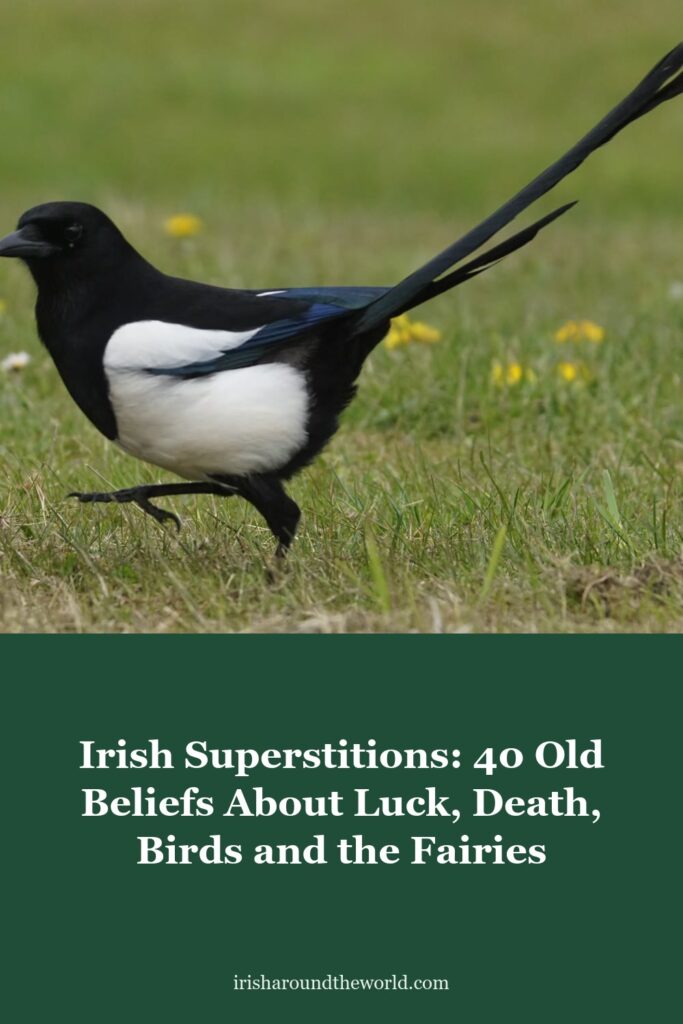
Pin image: One for sorrow: a magpie at Musselburgh Lagoons, Scotland. Photo: Mike Pennington, CC BY-SA 2.0, via Wikimedia Commons (Geograph)
A little bit of Ireland in your inbox every Friday ☘️
The free Weekly Dose of Irish: an Irish joke, a Celtic symbol, an Irish fact, a poem and the week’s best articles in one short email. Join 9,600+ readers.
Free. One short email every Friday. Unsubscribe any time.
More Irish folklore reading
- Irish Wake and Funeral Traditions: Keening, Clay Pipes and What to Say
- Fairy Forts and Fairy Trees: The Irish Places You Never Disturb
- The Púca: Ireland’s Shape-Shifter and Why You Never Eat Blackberries After Halloween
- Samhain: The Night the Fairy Mounds Opened and How It Became Halloween
- Irish New Year Traditions: Bread at the Door, First Footing and More
- What Is a Banshee? The Wailing Woman of Irish Folklore and the Families She Follows
Featured image: One for sorrow: a magpie at Musselburgh Lagoons, Scotland. Photo: Mike Pennington, CC BY-SA 2.0, via Wikimedia Commons (Geograph).