
Samhain (say it SOW-in) is the old Irish festival that began winter on 1 November, with Oíche Shamhna, 31 October, as its big night. In modern Irish, Samhain also means November. Medieval tales set feasts and Otherworld adventures at Samhain, when the fairy mounds stood open. All Saints’ and All Souls’ days settled on top of it, and its customs grew into Halloween. Whether it was ever a “Celtic new year” is still argued over.
It’s Samhain night at Cruachan, the royal seat of Connacht. Two captives were hanged the day before, and King Ailill offers a prize to anyone who’ll go out in the dark and tie a withe, a band of twisted twigs, around a hanged man’s foot.
One man after another tries and hurries straight back in. Then Nera takes him up on it, for the king’s own gold-hilted sword. Out at the gallows, the dead man starts talking to him.
That’s the opening of Echtra Nerai (the Adventure of Nera), and it’s the best way into Samhain. My guide to how the Irish invented Halloween covers the turnips, the barmbrack and the festivals. This one goes further back: the word, the medieval stories, the “Celtic new year” and “thin veil” ideas, and Samhain today.
Jump to:
- What is Samhain?
- Samhain in the medieval Irish tales
- Was Samhain really the Celtic new year?
- The “thin veil”: an old idea in newer words
- All Saints, All Souls and the Irish Church
- What the Schools’ Collection remembered
- How Samhain became Halloween
- Samhain today
- Samhain FAQ
- More Irish Halloween and mythology reading
What is Samhain?
Samhain is the Irish word for November and for the ancient festival on its first day, as Ó Dónaill’s Irish-English dictionary records.
So mí na Samhna (mee na SOW-na) is November, Lá Samhna (law SOW-na) is its first day, and Oíche Shamhna (EE-ha HOW-na) is Halloween. Sean-Samhain, Old Samhain, is 12 November, the old-style date.
Say Samhain as SOW-in, with the SOW rhyming with “cow”. The mh isn’t an m sound; it blends into the “ow”. There’s more in my guide to saying Happy Halloween in Irish.
Medieval glossators explained the name as sam-fuin, “summer’s end”. Several modern linguists connect it instead with an ancient Celtic word meaning “assembly”, which suits a festival of gatherings. And the UCD historian Elva Johnston notes that the early Irish saw Samhain to Bealtaine, November to May, as storytelling season.
Samhain in the medieval Irish tales
Nobody left an eyewitness account of a pagan Samhain. What survives are stories written down by Christian scholars, some perhaps composed in the 900s; the oldest manuscript, Lebor na hUidre (the Book of the Dun Cow), was probably written at Clonmacnoise around 1100. They aren’t history, but they show what medieval writers believed Samhain was like.
Six days of feasting and boasting
Serglige Con Culainn, the Wasting Sickness of Cú Chulainn, opens with the men of Ulster at their yearly Samhain gathering on the plain of Muirthemne, in today’s Co. Louth. In A. H. Leahy’s 1905 translation it ran from three days before Samhain to three days after, with sports, markets and feasting, and the storyteller claims the Samhain festival of his own day grew from it.
Each warrior carried the tongue-tips of enemies he’d killed in a pouch and took a turn to boast. Some padded the count with animal tongues, but a liar’s own sword was said to turn against him.
That Samhain, two birds joined by a red-gold chain fly over the lake. Cú Chulainn, who has never missed a cast, misses twice. He falls asleep against a stone pillar, dreams that two Otherworld women are horsewhipping him, and lies sick for most of a year.
The Feast of Tara
Several medieval sagas put the Feast of Tara at Samhain, notes Hannah Mac Auliffe, a Trinity College Dublin researcher, on RTÉ Brainstorm. Geoffrey Keating, writing in the 1630s, says Ireland’s nobles and learned men met there every third year at Samhain to make laws and approve the records, with six days of feasting around it.
Treat this with care. Keating wrote over a thousand years after the events, and the Annals of Ulster, which record Feasts of Tara in the 400s and 500s, never give the season. My Hill of Tara guide has more, and Keating’s Tlachtga fire is in my Halloween guide.
The night the mounds stood open
Kuno Meyer’s 1889 translation of Echtra Nerai puts “Halloween” wherever the Irish has Samain. Mac Auliffe notes that scholars date the tale to the 10th century.
Nera ties the withe, and the hanged man begs to be carried somewhere for a drink. The first house is ringed by fire, the second by water. In the third he drinks, spits the last mouthful over the people inside, and they die.
Back at Cruachan, the fort is burning and a war band is carrying off the heads of his people. Nera follows them into the cave of Cruachan (most place it at Oweynagat, Rathcroghan, in Co. Roscommon) and finds himself inside the síd, the fairy mound (sí, said “shee”, in modern Irish).
He stays, carrying firewood to the king, and takes a wife there. She tells him the burning was a vision that will come true next Samhain unless he warns his people.
Home again, he finds everyone still around the same cauldron, though he seemed to be away three days. As proof he brings wild garlic, primroses and golden fern: summer plants at the start of winter.
The fairy attack can only come at Samhain, his wife explains, because, in Meyer’s words, “the fairy-mounds of Erinn are always opened about Halloween”. So at the next Samhain the men of Connacht strike first and plunder the mound. Nera stays inside with his fairy family and, the tale says, won’t come out until Doomsday.
The Boyhood Deeds of Finn, dated to the 12th century, has the same idea. Suitors court Éle in her fairy mound every Samhain, when the mounds stand open and nothing inside can be hidden, and each loses one of his people to an unseen killer. Later, young Fionn mac Cumhaill watches two mounds open around him on Samhain night, a great fire blazing in each.
More stories set at Samhain
- Stingy Jack: The Irishman Who Tricked the Devil and Gave the Jack-o’-Lantern Its Name
- Bram Stoker: The Bedridden Dublin Boy Who Grew Up to Write Dracula
- Colcannon Recipe: The Irish Halloween Mash That Hides Your Fortune
- Irish Halloween Games: Snap Apple, Burning Nuts and the Old Spells to See Your Future Spouse
- The swan lovers: in Aislinge Óenguso, the Dream of Óengus, the Dagda’s son finds Cáer, the girl of his dreams, as a swan among three fifties of swans on Loch Bél Dracon at Samhain. He becomes a swan too, and they fly to the Brú on the Boyne, singing everyone to sleep for three days. That, the tale says, is why Óengus later backed Ailill and Medb in the Táin.
- The Dagda and the Morrígan: in Cath Maige Tuired, the Dagda meets the Morrígan around the Samhain of the great battle, at a river usually identified as the Unshin in Co. Sligo. They sleep together, and she promises to destroy Indech, king of the Fomorians.
- Aillén the burner: in Acallam na Senórach, the Colloquy of the Elders (late 1100s), Aillén lulls Tara to sleep with music every Samhain and burns it, until the boy Fionn stays awake and kills him. I tell the full story in the Salmon of Knowledge.
Was Samhain really the Celtic new year?
Almost every Halloween article says so, but the evidence is thin.
The idea owes most to the Welsh scholar John Rhys, in Celtic Folklore (1901), and his best evidence was Manx. On the Isle of Man, Hollantide (Samhain, kept there on 12 November) was when farm tenancies ended and servants moved to new places. Kelly’s Manx dictionary said the mummers called 1 November New Year’s Day, and an old man at Kirk Michael told Rhys that older people had too.
James Frazer took it up in The Golden Bough, adding a Samhain fire that relit every hearth in Ireland and all that Halloween fortune-telling, which he felt belonged at the start of a year. Even he only inferred it “with some probability”.
For: Julius Caesar wrote that the Gauls counted time by nights, so that “the day follows the night” (W. A. McDevitte’s translation); perhaps the year, too, began with its dark half. Tochmarc Emire, the Wooing of Emer, splits the year into summer, from Bealtaine, and winter, from Samhain. And linguists link Samhain’s name to a month called SAMON on the Gaulish Coligny calendar, a bronze tablet from Roman-era France.
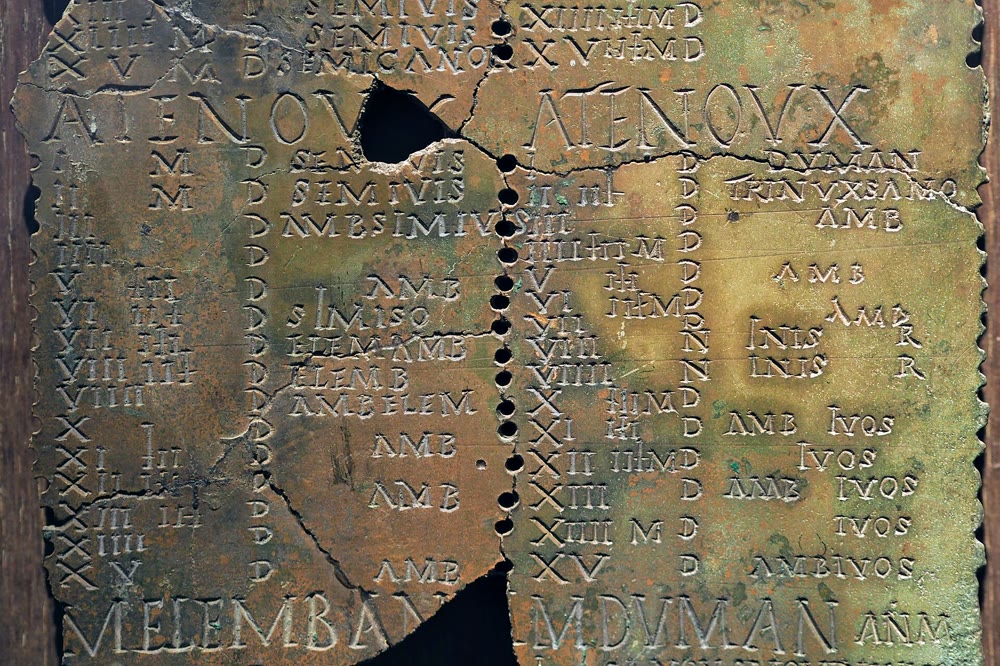
Detail of the Coligny calendar, Lugdunum museum, Lyon. Photo: Gozitano, CC BY-SA 4.0, via Wikimedia Commons
Against: none of the medieval Irish texts in this article calls Samhain the start of the year (Tochmarc Emire makes it the start of winter), and the Electronic Dictionary of the Irish Language gives samain no “new year” sense. Rhys’s Manx evidence is from the 1800s. The Coligny calendar is a grid of days, not a festival description, and the Lugdunum museum in Lyon says some of its notes are still untranslated. The historian Ronald Hutton, in The Stations of the Sun (1996), is among the sceptics.
So: possible, not proven. Call Samhain the start of winter and you’re on solid ground.
The “thin veil”: an old idea in newer words
Today you’ll often hear that the veil between the worlds is thin at Samhain; even the Púca Festival’s programme says so.
The medieval tales here never mention a veil. Their picture is more physical: the mounds stand open and their people come out. In Elva Johnston’s phrase, this world and the supernatural one “bled into each other” at Samhain.
So the idea of the two worlds coming close is genuinely old. The veil is a later way of putting it.
All Saints, All Souls and the Irish Church
The 1 November date has a murky history. The 1907 Catholic Encyclopedia credits Pope Gregory III (731 to 741), who consecrated a chapel in St Peter’s in Rome to all the saints; the 1911 Encyclopaedia Britannica calls the origin “somewhat doubtful”. What’s certain is that in 835 the Frankish emperor Louis the Pious, at Pope Gregory IV’s request, made 1 November All Saints a holy day across his empire.
Ireland’s own church calendars show the feast meeting Samhain, as Elva Johnston explains on UCD Library’s heritage blog:
- Martyrology of Tallaght, about 830: the earliest surviving Irish calendar of saints, though its only copy has lost the page covering 1 November.
- Félire Óengusso, soon after: Óengus’s verse calendar treats samain, 1 November, as a day crowded with saints. But both texts also keep 20 April as a feast of all Europe’s saints, if anything the weightier date.
- Martyrology of Gorman, before about 1170: the April feast has gone. 31 October is the Eve of All Saints, and 1 November is the venerable day of samain, the day of all the saints of heaven.
So did the Church put All Saints on 1 November to smother Samhain? Possibly, but nobody has proved it. The Irish calendars show something slower: three centuries of folding Samhain and the saints together.
All Souls’ Day on 2 November, for praying for the dead, came later. Odilo, abbot of Cluny (died 1048), had his monasteries keep it, and it spread from there.
What the Schools’ Collection remembered
From 1937 to 1939, schoolchildren across the 26 counties of today’s Republic recorded their elders’ customs for the Irish Folklore Commission. Their accounts, now on dúchas.ie, often see Samhain night through the lens of All Souls.
The souls come home
- Monknewtown, Co. Meath: nobody emptied water outside once it was dark on November night, a pupil’s mother remembered, in case it landed on the good people, the fairies. At bedtime the hearth was swept, a little fire left in the grate and a crock of spring water set on the floor for the souls.
- Windgap, Co. Kilkenny: on All Souls’ Night families lit candles for the poor souls, built up the fire and set chairs around the hearth so the souls could sit in comfort.
- Burren, Co. Cork: nobody went out after dark on All Souls’ Night, for fear of the fairies. The Poor Souls were believed to leave Purgatory that night, asking their friends for prayers.
Leaving the door unlocked, or laying a place at the table for dead relatives, may go back to ancient ancestor veneration, suggests the UCC folklorist Dr Jenny Butler.
Reading the future
- Nuts on the fire: in Glantane, Co. Cork, two nuts were named for a couple and set in the embers. If they hopped together, a wedding was coming; if they flew apart, it never would.
- A snail in the flour: in Monaseed, Co. Wexford, a girl left a snail on a plate of flour overnight, hoping it would trace her future husband’s initials.
- An apple at midnight: in Tallow, Co. Waterford, girls ate an apple before a mirror at midnight to glimpse the man they’d marry. Others dripped molten lead through a key’s handle into water and read letters in the shapes.
- Covered mirrors: in Clonmel, Co. Tipperary, people once covered every mirror in the house, in case the family ghost appeared in one.
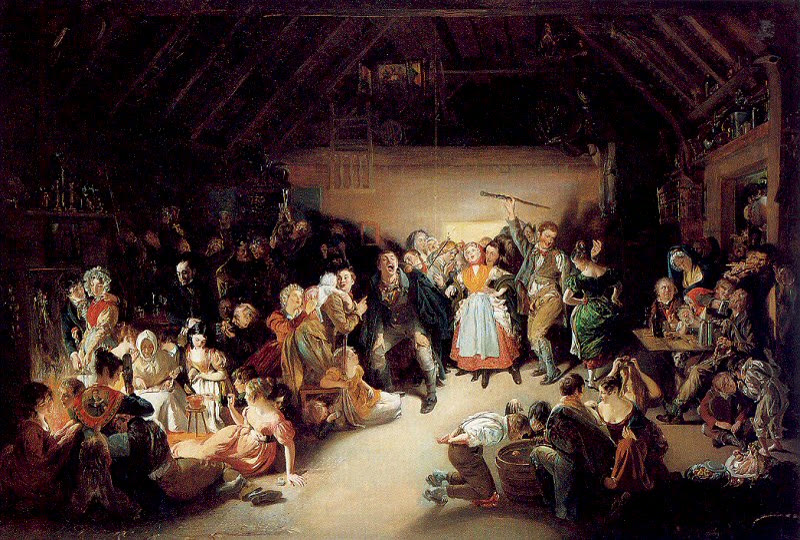
Snap-Apple Night by Daniel Maclise, 1833, painted after a Halloween party in Blarney, Co. Cork. Public domain, via Wikimedia Commons
Daniel Maclise painted Snap-Apple Night after a Blarney Halloween party in 1832. The verse printed with it at its first exhibition mentions melting lead and burning nuts, the games the Tallow and Glantane pupils described a century later.
The ring in a barmbrack is a survivor of all this. And a pupil in Killadoon, Co. Mayo, wrote that the fairies smear the blackberries on November’s night, so nobody eats them after. Elsewhere the púca gets the blame.
How Samhain became Halloween
Halloween is three layers on one night: Samhain, with its gatherings and Otherworld stories; All Saints and All Souls, with their prayers, candles and wandering souls; and the house customs of food, fire, games and fortunes. In English the night became All Hallows’ Eve, then Hallowe’en; in Irish it’s still Oíche Shamhna. Emigrants carried the whole bundle to America in the 1800s.
Samhain today
The best-known Samhain festival in Ireland today is the Púca Festival, started by Fáilte Ireland in 2019 and now shared between Trim and Athboy in Co. Meath. In 2026 it runs from Thursday 29 October to Sunday 1 November. Times can change, so check pucafestival.com before you go.
- Púca Procession: Friday 30 October, 6pm, in Trim. Free.
- Lighting of the Samhain Fire: Saturday 31 October, from 5.30pm, on the Fairgreen in Athboy. Free and unticketed (subject to licence), with fire performers, stories and Kíla playing live. The festival says the flame honours those who have gone before.
- Hill of Ward tours: guided walks on Tlachtga each festival day, with a bus from Athboy Rugby Club, €27.50 on Discover Ireland. The listing calls Samhain the Celtic new year; take that with a pinch of salt.
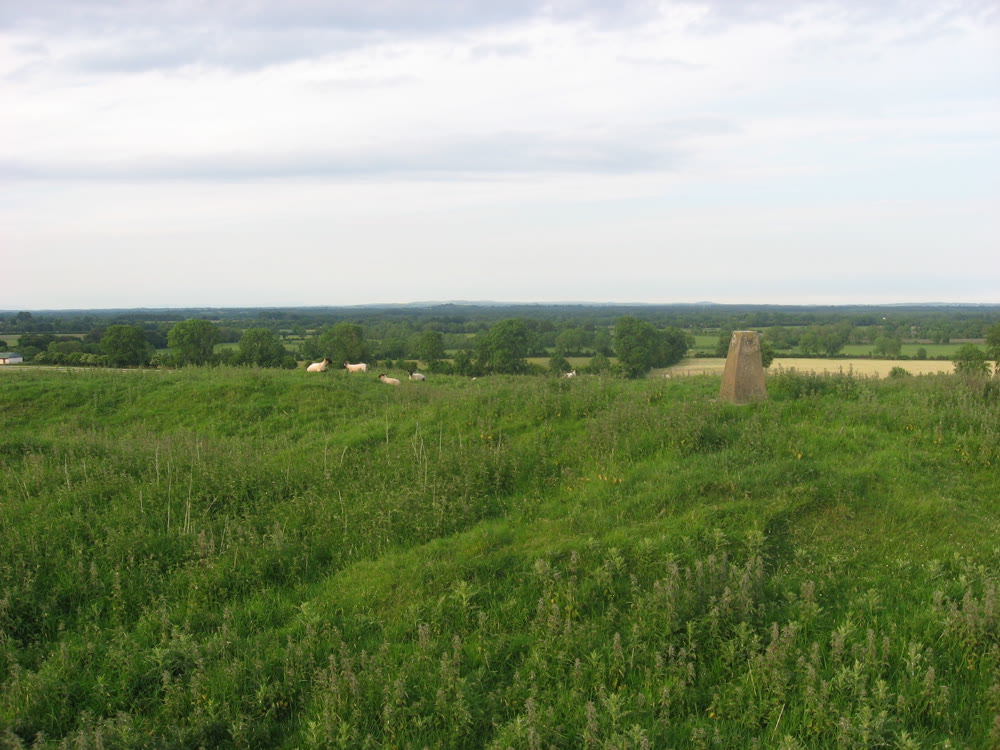
The Hill of Ward, Tlachtga, near Athboy, Co. Meath. Photo: Kieran Campbell, CC BY-SA 2.0, via Wikimedia Commons
Ireland’s modern Pagans keep Samhain too. Dr Jenny Butler of University College Cork, who wrote the first ethnographic study of contemporary Irish Paganism, says honouring the dead, from distant ancestors to recent losses, matters especially to Pagans at Samhain. Her short piece The Otherworld at Samhain is a good start.
Samhain FAQ
How do you pronounce Samhain?
SOW-in, rhyming with “cow-in”. In parts of Connacht it can sound like SOWN or SAV-in, and in Donegal like SOW-wen.
When is Samhain in 2026?
Samhain falls on Sunday 1 November 2026, and Oíche Shamhna on Saturday 31 October.
Was Samhain a festival of the dead?
Not clearly, in the oldest sources. The medieval tales are mostly about feasts, assemblies and fairy mounds, though Nera’s talking corpse shows the dead weren’t far away. The strong link with the dead comes through All Souls and later folk custom.
Is Samhain the same as Halloween?
Not quite. Samhain is the older Irish festival of 1 November; Halloween grew from it, mixed with All Saints, All Souls and centuries of folk custom.
Love this? Save it to your Pinterest board for later.
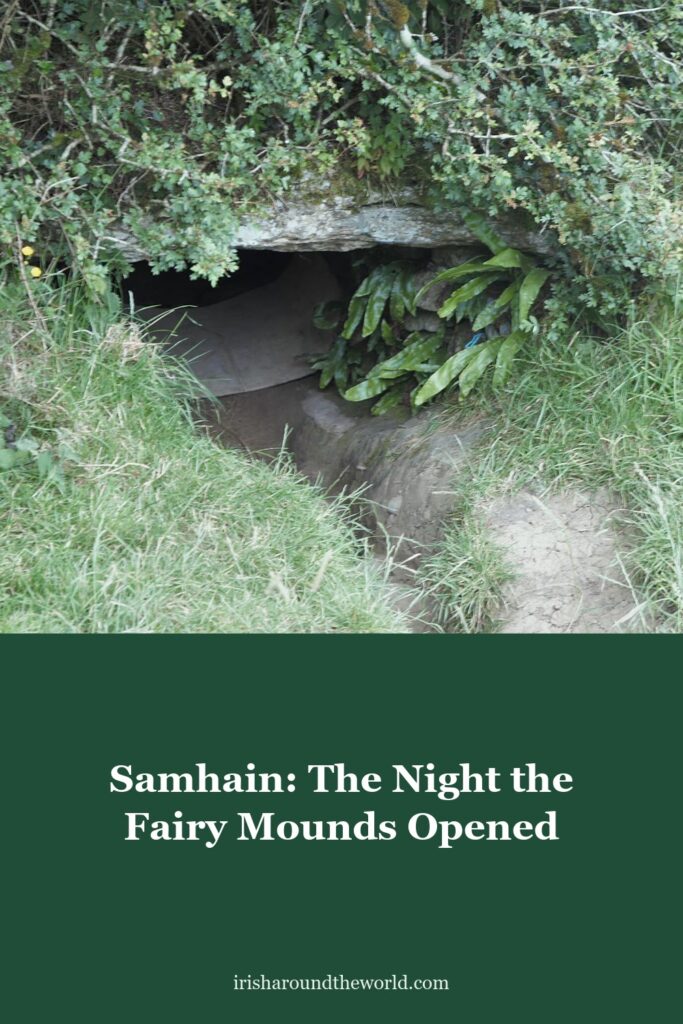
Pin image: Adapted from a photo by Gillaween, CC BY-SA 4.0, via Wikimedia Commons.
A little bit of Ireland in your inbox every Friday ☘️
The free Weekly Dose of Irish: an Irish joke, a Celtic symbol, an Irish fact, a poem and the week’s best articles in one short email. Join 9,600+ readers.
Free. One short email every Friday. Unsubscribe any time.
More Irish Halloween and mythology reading
- How the Irish Invented Halloween: Samhain, Turnip Lanterns, Barmbrack and the Best Festivals in Ireland
- Happy Halloween in Irish: Oíche Shamhna Shona (Plus 35 Spooky Irish Words)
- The Púca: Ireland’s Shape-Shifter and Why You Never Eat Blackberries After Halloween
- Fairy Forts and Fairy Trees: The Irish Places You Never Disturb
- The Salmon of Knowledge: How One Burnt Thumb Made Fionn mac Cumhaill a Legend
- Barmbrack Recipe: The Irish Halloween Bread That Predicts Your Future
Featured image: The entrance to Oweynagat, the cave of Cruachan, at Rathcroghan, Co. Roscommon. Photo: Gillaween, CC BY-SA 4.0, via Wikimedia Commons.