The Great Famine, also called the Irish Potato Famine, or An Gorta Mór (un GOR-tuh MORE) in Irish, struck Ireland from 1845 to 1852. Potato blight, Phytophthora infestans, destroyed the main food of at least three million of the poorest people, again and again. About one million died, mostly of hunger-related disease, and over a million emigrated, rising to about two million by 1855. The British government’s response is still argued over.
At the end of 1845, Ireland had more people than ever before or since: about 8.5 million. Within six years, about one in four had died or emigrated. For many families in America, Britain, Canada and Australia, this is where the story overseas begins.
My piece on the American wake tells of the farewell night before an emigrant left. This guide covers the disaster, its debates and how to trace a Famine-era ancestor.
Jump to:
- What was the Great Famine?
- Why the potato failed
- How the government responded
- The evictions
- Was food exported?
- Emigration and coffin ships
- Famine, Great Hunger or An Gorta Mór?
- Was the Famine a genocide?
- Famine memorials
- Tracing Famine-era ancestors
- Great Famine FAQ
- More Irish heritage reading
What was the Great Famine?
The Great Famine, or Irish Potato Famine, was the disaster that followed when potato blight repeatedly wiped out the main food of Ireland’s rural poor from 1845. Hunger, disease, eviction and mass emigration lasted until about 1852. Ireland was then part of the United Kingdom, ruled from London.
The Famine in numbers
- Population: about 8.5 million at the end of 1845, on an estimate by economists Phelim Boyle and Cormac Ó Gráda. The 1851 census counted 6.55 million.
- Deaths: about one million, the usual figure, though some estimates reach about 1.1 million.
- Emigration: about 1 to 1.3 million during the Famine years, and about two million by 1855, writes historian Matthew Lynch.
- Evictions: about half a million people, on one moderate estimate.
Even in the 1920s, Ireland had only half its pre-Famine population, Britannica notes.
How people died
Most victims died of disease rather than starvation itself. Historian Laurence Geary lists fever (typhus and relapsing fever, spread by lice), dysentery, tuberculosis, smallpox and, in children, measles. Cholera added to the toll in 1848 and 1849.
The very young and very old, and the poor of the west and south, suffered most. 1847, the worst year, is remembered as Black ’47.
Why the potato failed
Potato blight, Phytophthora infestans
Blight is caused by Phytophthora infestans, a fungus-like water mould that rots the leaves, then the tubers. It thrives in mild, damp weather.
It was new to Europe. First noticed in the eastern United States in 1843, it reached Belgium by June 1845 and Ireland by late August, according to the Atlas of the Great Irish Famine. In 2013, DNA from old herbarium specimens showed that the 1840s outbreak came from one strain, now called HERB-1.
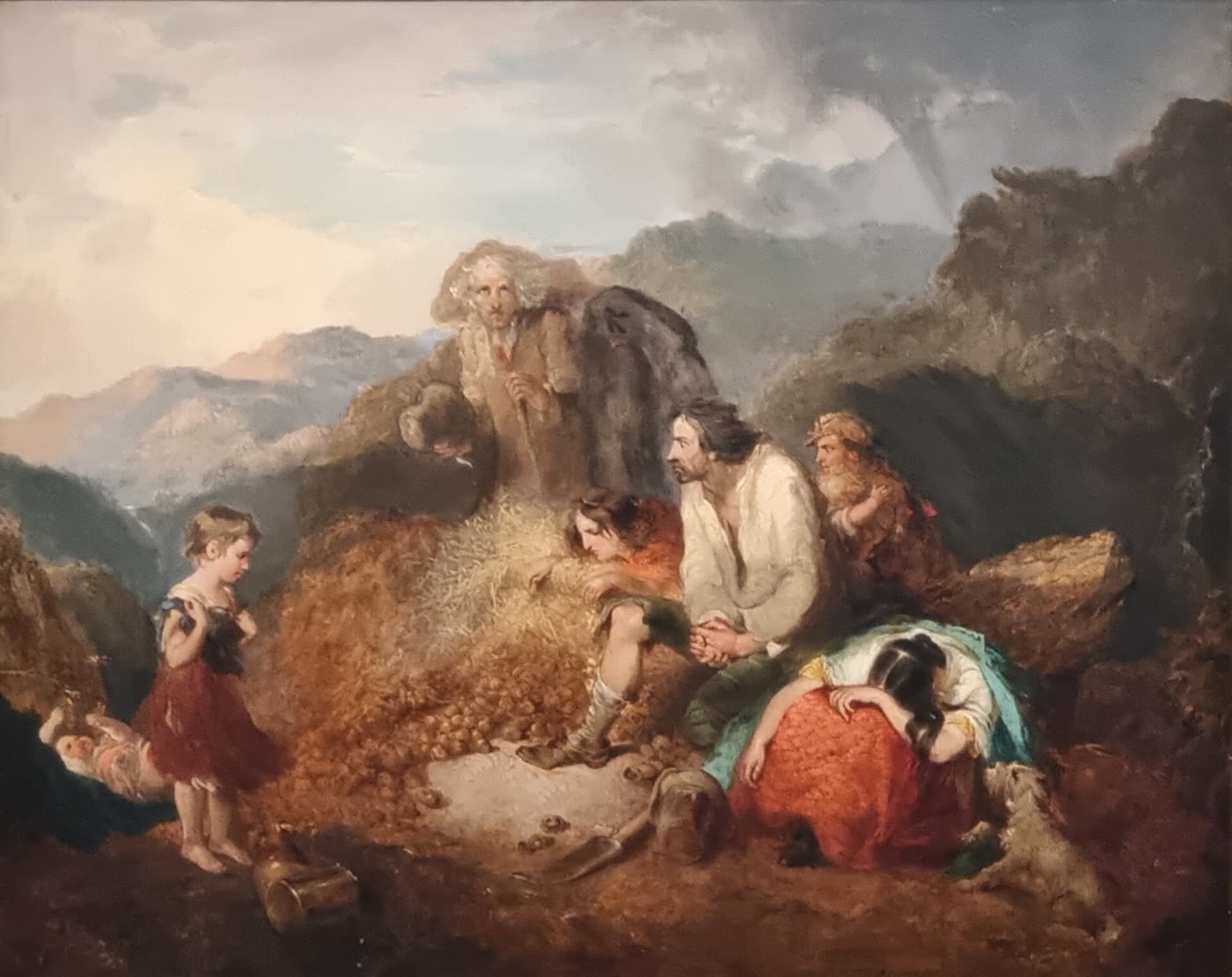
Daniel MacDonald, An Irish Peasant Family Discovering the Blight of Their Store, 1847. National Folklore Collection, UCD. Photo: Léna, CC BY-SA 4.0, via Wikimedia Commons
A people living on potatoes
By 1845, at least three million people relied mainly on the potato, writes historian Matthew Lynch. Most were landless labourers and cottiers, who rented a cabin and a patch of potato ground.
Britannica estimates a typical cottier family ate about 8 pounds of potatoes per person a day. Many grew one heavy-cropping variety, the Lumper, which proved highly vulnerable to blight.
Failure after failure
- 1845: the blight came late, and up to a third of the crop was lost.
- 1846: it struck early, ruining over three-quarters of the crop and the seed for next year.
- 1847: the blight eased, but few potatoes had been planted.
- 1848 and 1849: it came back.
How the government responded
Historians broadly agree that London’s response fell far short. They argue about why.
Peel’s maize, 1845 to 1846
Prime Minister Sir Robert Peel set up a Relief Commission in November 1845 and secretly bought £100,000 worth of maize, or Indian corn, from America. The first cargo reached Cork in February 1846, and depots sold it at cost to hold prices down.
People nicknamed the hard yellow grain Peel’s brimstone, and if undercooked it caused painful stomach trouble. Still, few died of hunger that first season. Peel then pushed through repeal of the Corn Laws, the tariffs on imported grain. It did little for Ireland and split his party. He resigned in June 1846.
Public works, 1846 to 1847
Lord John Russell’s Whig government took over as the 1846 crop collapsed. It left food supply to the market and relied on public works, such as road building, paid at low piece rates.
By March 1847, over 700,000 people were on the works, writes Peter Gray of Queen’s University Belfast. That winter, food prices soared, wages fell behind and fever swept the work gangs.
Soup kitchens, 1847
In February 1847, Parliament passed the Temporary Relief Act, or Soup Kitchen Act, to feed people directly. Public works wound down from March, but red tape and landlord resistance held up many kitchens until June. By July, over three million were getting daily rations, mostly a stirabout (porridge) of maize and rice.
It was the Famine’s most effective relief. But in August and September 1847, with a new harvest in, the government closed the kitchens and treated the Famine as over. It wasn’t.
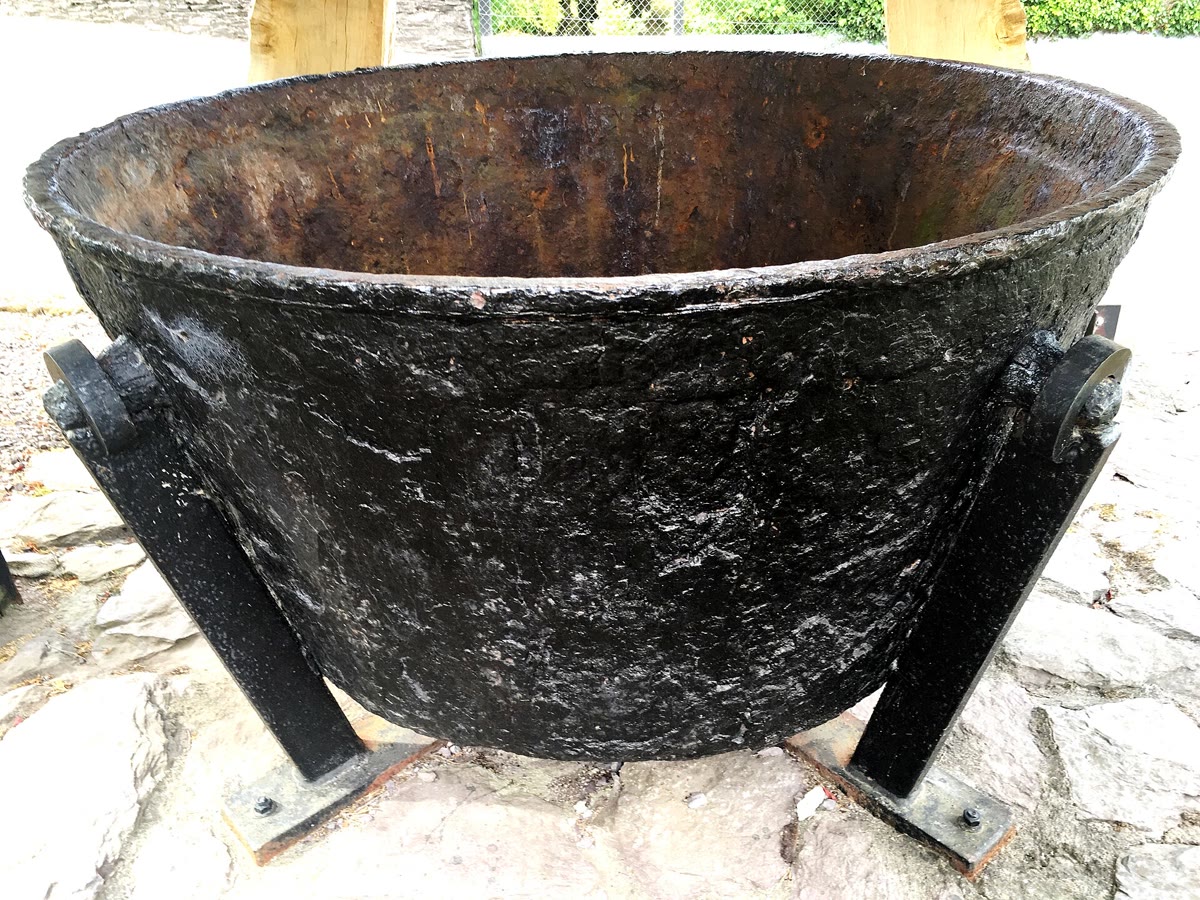
The Coolmountain Famine soup pot, Ballingeary, Co. Cork. Photo: Osioni, CC BY-SA 4.0, via Wikimedia Commons
The Poor Law and the Gregory clause
From autumn 1847, relief fell on the Irish Poor Law, funded by local rates (property taxes) on Irish landlords and farmers.
The Poor Law Amendment Act of June 1847 had a Gregory clause, named after William Gregory, MP for Dublin. Anyone holding more than a quarter of an acre got no relief until they gave up the rest. In practice, landlords often demanded the whole holding, house included.
Ireland’s 130 workhouses were packed and full of fever. Over 200,000 people died inside them, at least one in five of all Famine deaths.
Charles Trevelyan
Charles Trevelyan, the Treasury’s most senior civil servant, ran relief from 1845 to 1847. The song The Fields of Athenry helped make his the name most linked with the Famine.
He was tireless, rigid and preoccupied with fraud, and believed Irish property should carry the cost. In The Irish Crisis (1848), he wrote that Ireland’s “root of social evil” had been “laid bare by a direct stroke of an all-wise and all-merciful Providence”.
Historian Enda Delaney credits him with the soup kitchens but judges that his relief fell far short, and that using the disaster to remake Irish society was inhumane.
Help from abroad
In March 1847, the Choctaw Nation, itself driven out on the Trail of Tears in the 1830s, sent $170. That month, Congress also lent the warship USS Jamestown, which reached Cork with relief supplies on 12 April.
The evictions
Evictions surged from late 1847 and peaked in 1850, historian Ciarán Ó Murchadha writes. Rents had collapsed, poor rates had soared, and on the smallest holdings the landlord paid the whole rate. Clearing tenants cut the bill.
Some half a million people were permanently evicted. In Co. Clare, about one person in ten lost house and land between 1849 and 1854. Cabins were knocked down so families couldn’t return.
In December 1849, the Illustrated London News told of Bridget O’Donnel, put out over unpaid rent while she lay sick with fever. Neighbours carried her out as the house was pulled down. Her baby was stillborn, and her 13-year-old son died of hunger.
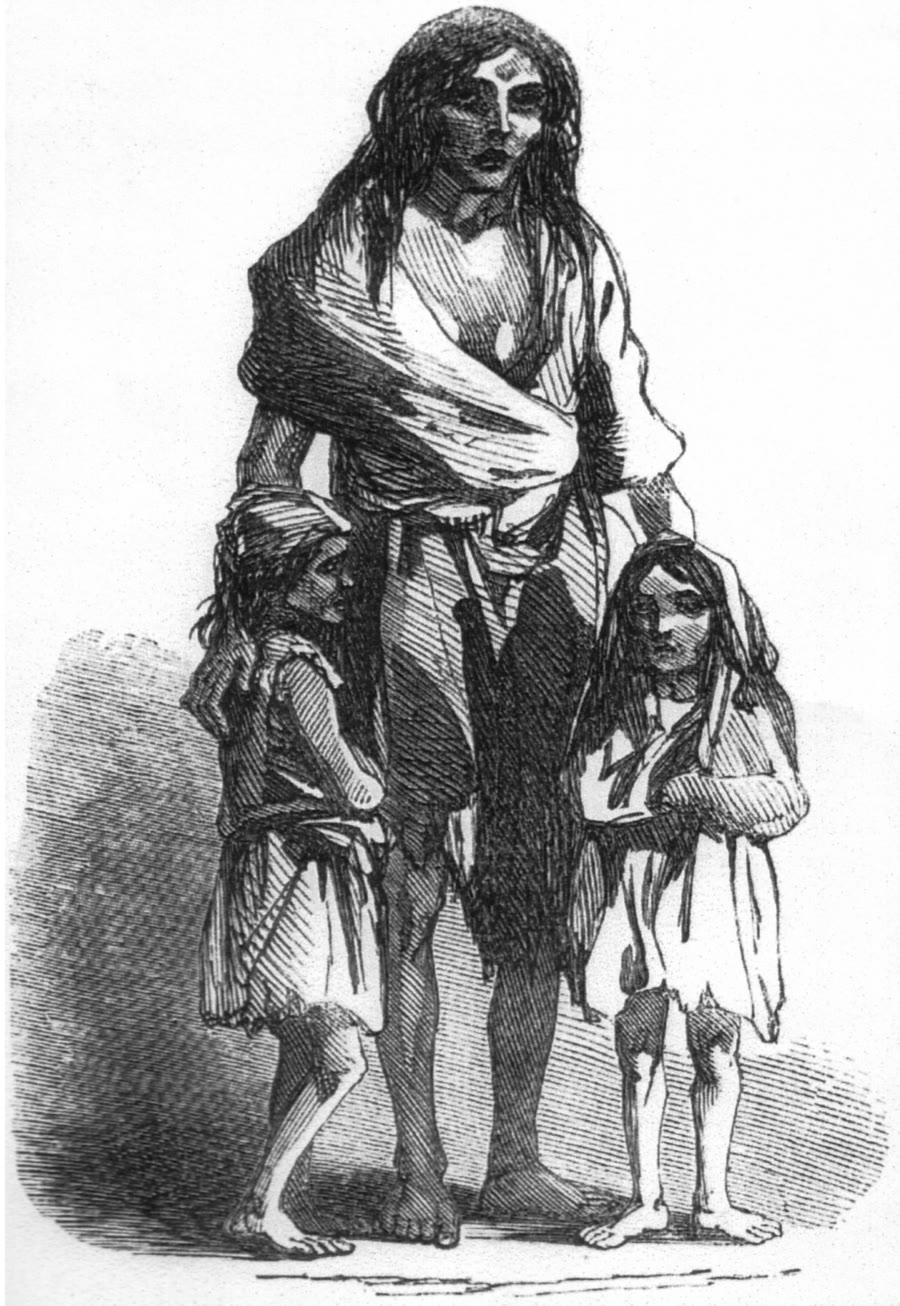
Bridget O’Donnel and her children. Illustrated London News, 22 December 1849. Public domain, via Wikimedia Commons
Was food exported during the Famine?
Yes. How much that mattered is fiercely argued.
What left Ireland
Christine Kinealy’s research in British port records, published in History Ireland, found that in 1847 almost 4,000 ships carried grain, livestock, butter, porter and more from Ireland to Bristol, Glasgow, Liverpool and London, some from hard-hit ports such as Westport and Tralee.
Irish city corporations called for the ports to be closed, a traditional step in hungry years. Peel and Russell, both free traders, refused.
Why historians disagree
Peter Gray notes that grain exported in 1846 and 1847 equalled only about a tenth, in food value, of what the blight destroyed, and that imports were roughly double the exports by volume. Keeping every grain at home would not alone have ended the Famine. Kinealy counters that official returns undercounted exports, and that grain was only part of the trade.
Where they agree
Both describe a “starvation gap” in the winter of 1846 to 1847, before big imports arrived. Gray judges that keeping the exported grain in Ireland that winter would probably have saved many thousands of lives.
Emigration and the coffin ships
Many emigrants crossed first to Britain, the cheapest route. Others sailed for North America or Australia. From 1845 to 1855, over 900,000 Irish people landed in New York alone.
The coffin ships
Coffin ships were overcrowded, disease-ridden emigrant ships. The worst crossings were to Canada in 1847. Nearly 100,000 people sailed for Canada that year, most fleeing the Famine, and more than 5,000 are buried on Grosse Île, the quarantine island near Quebec City, says Parks Canada. Gray estimates that up to one in five on that route died at sea or soon after landing.
Not every ship was a coffin ship. Raymond Cohn’s study of 1,077 immigrant ships of all nationalities reaching New York between 1836 and 1853 found about 10 deaths per 1,000 passengers for each month at sea, and more in 1849.
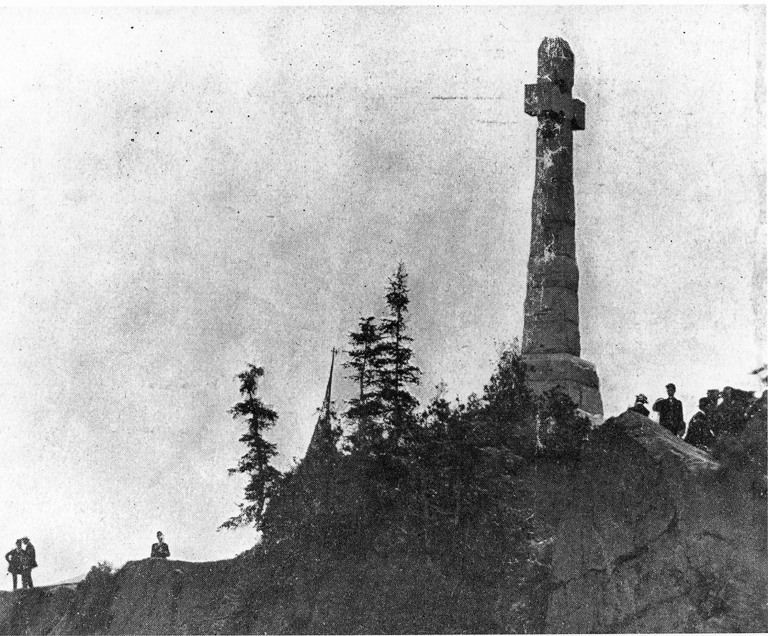
Monument to the Irish immigrant victims of typhus, Grosse Île, Quebec, about 1910. Notman Photographic Archives, McCord Museum (MP-0000.1255.9)
Famine orphans in Australia
From 1848 to 1850, Colonial Secretary Earl Grey’s scheme sent 4,114 young women and girls from Irish workhouses to Australia, most of whom had lost at least one parent. Of these, 2,253 landed in Sydney.
Many Famine arrivals in America met hostility, as my piece on No Irish Need Apply shows, yet they helped shape Irish America.
Famine, Great Hunger or An Gorta Mór?
There’s no single right name. In Irish it’s An Gorta Mór, and Ó Dónaill’s Irish-English Dictionary gives gorta as both hunger and famine. It also records An Drochshaol (un DRUKH-heel), the bad times, as a name for the Famine.
In Ireland, people usually say the Famine. In America, the Irish Potato Famine is common. Many prefer the Great Hunger, as Philadelphia’s Irish Memorial does, because famine can suggest there was simply no food, while Ireland kept producing and exporting it.
Economic historians such as Ó Gráda add that food really did run short, above all in 1846 to 1847.
Patrick Kavanagh’s poem The Great Hunger (1942) is about a frustrated bachelor farmer, not the Famine.
Was the Famine a genocide?
This is the hardest question. It’s still argued in public, but most Famine historians reject the label while condemning the government’s response.
The case made for genocide
The charge predates the word genocide, coined in 1944. In his 1861 book The Last Conquest of Ireland (Perhaps), nationalist John Mitchel wrote: “The Almighty, indeed, sent the potato blight, but the English created the famine.”
The writer Tim Pat Coogan, in The Famine Plot (2012), argues that British policy meets the UN Genocide Convention’s definition. Supporters point to the exports, the evictions and the early end of the soup kitchens.
They also quote Lord Clarendon, the Crown’s viceroy in Ireland, who in April 1849 urged Russell to seek more money, doubting any other European legislature would ignore such suffering “or coldly persist in a policy of extermination”.
The case against
The key test is intent: under the 1948 UN Convention, genocide requires intent to destroy a group. Debating Coogan on BBC Northern Ireland radio, economic historian Liam Kennedy argued the record shows misguided policy, not intent, citing some three-quarters of a million people on public works and three million fed by soup kitchens.
Mark McGowan, in Genocide Studies International (2017), spreads the blame wider: landlords, merchants, local officials, an outdated land system and reliance on one crop. Peter Gray, a sharp critic of the government, blames a dogmatic belief that Irish property should pay, not a plan to destroy.
Where that leaves us
In 1997, a message from Prime Minister Tony Blair, read at a Famine commemoration in Co. Cork, said those who governed in London “failed their people”. New York’s education law lists “the mass starvation in Ireland from 1845 to 1850” alongside genocide, slavery and the Holocaust for human rights teaching. Myth 19 in my Irish myths debunked covers the blight-alone idea.
Famine memorials
- Dublin: Rowan Gillespie’s bronze figures, Famine (1997), on Custom House Quay.
- Strokestown, Co. Roscommon: the National Famine Museum. The 165 km (about 100-mile) National Famine Way follows 1,490 tenants who walked from there to Dublin in 1847, bound for Canada.
- New York: Brian Tolle’s Irish Hunger Memorial in Battery Park City (2002), built around a stone cottage from Attymass, Co. Mayo.
- Boston: Robert Shure’s Irish Famine Memorial at Washington and School Streets, dedicated in 1998.
- Philadelphia: Glenna Goodacre’s Irish Memorial (2003), with 35 bronze figures, temporarily at 109 Spruce Street during I-95 works.
- Grosse Île, Quebec: the quarantine island and its 1909 Celtic cross.
- Sydney: the Australian Monument to the Great Irish Famine at Hyde Park Barracks (1999), for the Earl Grey orphans.
- Midleton, Co. Cork: Alex Pentek’s Kindred Spirits, a ring of giant steel feathers honouring the Choctaw gift.
How to trace Famine-era ancestors
It’s hard. Ireland’s census returns for 1821 to 1851 were almost all destroyed with the Public Record Office in 1922, and the poorest families left little paper. But there are ways in.
- Find the place. Look for an Irish county, parish or townland in naturalisation papers, death certificates, church registers and gravestones. My guide to Irish surnames shows where names cluster.
- Search Famine arrivals. The US National Archives’ Irish Famine passenger data covers over 600,000 people who reached New York from 1846 to 1851, about 70 per cent Irish.
- Compare land records. The Tithe Applotment Books (1823 to 1837) list occupiers before the Famine. Griffith’s Valuation, published area by area from 1847 to 1864 and free on Ask About Ireland, lists them during or after it. A family in the first but not the second may have died, been evicted or emigrated.
- Read parish registers. The National Library’s Catholic parish registers are free online, mostly to 1880, but many western parishes start only in the 1850s or 1860s.
- Try workhouse records. Board of Guardians minute books and registers survive patchily, mostly in county archives.
- Follow the trail to Australia. Search the Earl Grey orphans database.
- Hear the local memory. Search dúchas.ie for “famine”: the Schools’ Collection, written down by children in the 1930s, holds over 2,000 stories that mention it.
- Add DNA. See my guide to Ancestry DNA kits. If a grandparent was Irish-born, you may also qualify for Irish citizenship by descent.
Great Famine FAQ
When was the Great Famine in Ireland?
From 1845 to 1852. The worst years were 1846 to 1849, and 1847 is remembered as Black ’47.
How many people died in the Irish potato famine?
About one million, though some estimates are a little higher. Most died of diseases such as typhus and dysentery.
What caused the Irish potato famine?
Potato blight was the trigger. Poverty, dependence on one crop, the land system and the government’s response turned it into catastrophe.
Was the Irish famine a genocide?
It’s debated in public, but most historians of the Famine reject the label. They find no intent to destroy the Irish, while still condemning the government’s response.
Love this? Save it to your Pinterest board for later.
A little bit of Ireland in your inbox every Friday ☘️
The free Weekly Dose of Irish: an Irish joke, a Celtic symbol, an Irish fact, a poem and the week’s best articles in one short email. Join 9,600+ readers.
Free. One short email every Friday. Unsubscribe any time.
More Irish heritage reading
- The American Wake: Ireland’s Farewell for Emigrants
- No Irish Need Apply: Were the Signs Real?
- The Irish Diaspora in Modern America
- How Ancestry DNA Kits Work for Irish Roots
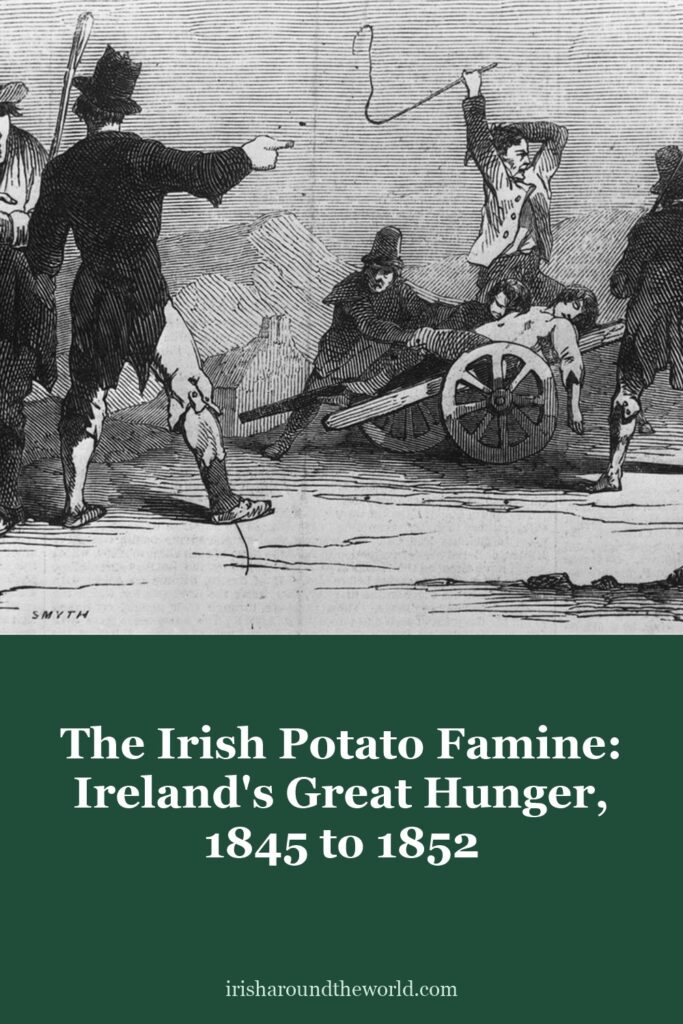
Featured image: Funeral at Skibbereen, from The Illustrated London News, 1847. Public domain, via Wikimedia Commons.