Annie Moore was the first immigrant processed at Ellis Island, on 1 January 1892. A 17-year-old from Cork, she sailed from Queenstown (now Cobh) on the steamship Nevada with her younger brothers, Anthony and Philip, to join their parents in New York, and was handed a ten-dollar gold piece. For years another woman’s life story was told as hers. In 2006 genealogists showed that the real Annie spent her life on Manhattan’s Lower East Side, where she died in 1924.
It’s New Year’s Day, 1892, in New York Harbor. A new immigration station, built of Georgia pine, is opening on a small island a short boat ride from the tip of Manhattan. Officials and reporters are waiting to see who will be the first person through its doors.
It turns out to be a girl from Cork. Her name is Annie Moore. Within days she is in newspapers across the country. Then she drops out of the news, and when people go looking for her decades later, they find the wrong woman.
I mentioned Annie briefly in my piece on the American wake, Ireland’s farewell night for emigrants. This is her full story: the voyage, the first day, the muddle over her age, the wrong Annie, and the life she really lived.
Jump to:
- Who was Annie Moore?
- From Queenstown on the Nevada
- New Year’s Day 1892 at Ellis Island
- How old was Annie Moore? 15, 13 or 17
- The wrong Annie Moore
- Annie’s real life on the Lower East Side
- How Annie Moore is remembered
- How to find your own Ellis Island ancestor
- Annie Moore FAQ
- More Irish emigration reading
Who was Annie Moore?
Annie Moore was an Irish teenager who became the first immigrant processed at Ellis Island when the federal station opened on 1 January 1892. The National Park Service, which runs the island today, describes her as a 17-year-old from County Cork.
Her family were Cork city people. Genealogist Megan Smolenyak, who has spent years on Annie’s story, traced her father, Matthew Moore, to Watergrasshill and her mother, Julia, to Glounthaune, both in Co. Cork, the Irish Times reported in 2016.
Matthew and Julia had gone ahead to New York. According to a 2023 CNN report, they had been living there for about four years when their children followed. Annie, the oldest of the three who sailed, made the crossing with her two younger brothers, Anthony and Philip.
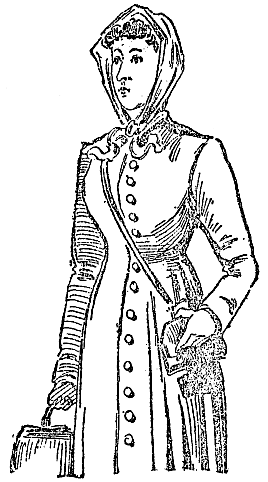
Annie Moore, from “The New Immigrant Depot”, Irish World and American Industrial Liberator, New York, 9 January 1892, p. 8, via Wikimedia Commons
From Queenstown on the Nevada
Annie, Anthony and Philip left Queenstown, now Cobh, in Cork Harbour, on 20 December 1891, aboard the steamship Nevada. That date is on the plaque beside their statue in Cobh. The ship had started from Liverpool and called at Queenstown to take on Irish passengers, as its own passenger list shows.
So the three spent Christmas at sea. CNN puts the crossing at 12 days. They travelled in steerage, the cheapest class, says History Ireland magazine.
Cobh was the last sight of Ireland for millions of emigrants, and there’s more on the town in my facts about Cork. In the countryside, a departure was often marked the night before with an American wake, a long night of music, food and, towards dawn, keening, because families didn’t expect to see the emigrant again.
New Year’s Day 1892 at Ellis Island
A new federal station
The station was part of a new federal system. The Immigration Act of 1891 had created a federal Office of the Superintendent of Immigration, and the government opened its station on the island on 1 January 1892, says the history office of US Citizenship and Immigration Services. The main building, the Park Service notes, was built of Georgia pine.
First through the doors
On the opening morning Annie was the first passenger off the boat and into the new building, where she was registered ahead of everyone else. The New York Times, in its report the next day, called her a “rosy-cheeked Irish girl”.
Colonel John B. Weber, the official in charge of the station, gave her a ten-dollar gold piece and a short speech of welcome. The Park Service calls Weber the first Commissioner of Immigration on Ellis Island. According to newspaper accounts summarised by CNN, a Catholic priest also blessed her. The Times added that it was the first American coin she had ever seen, and that she promised to keep it.
Then Annie and her brothers were taken to a waiting room to meet their parents.
Why Annie?
Nobody recorded exactly why Annie went first. History Ireland suggests officials may have picked an English-speaking Irish girl as a welcoming face for the waiting reporters, but admits that this is speculation. Treat any neat story about how she was chosen with caution.
The busy days that followed
Nearly 700 immigrants were processed that first day, according to the National Park Service, and more than 400,000 by the end of the station’s first fiscal year.
The building Annie walked into didn’t last. A fire destroyed the wooden buildings in June 1897, and a new fireproof main building opened in 1900. That’s the building that now houses the museum. Between 1892 and 1954, over 12 million future Americans came through Ellis Island, the Park Service says.
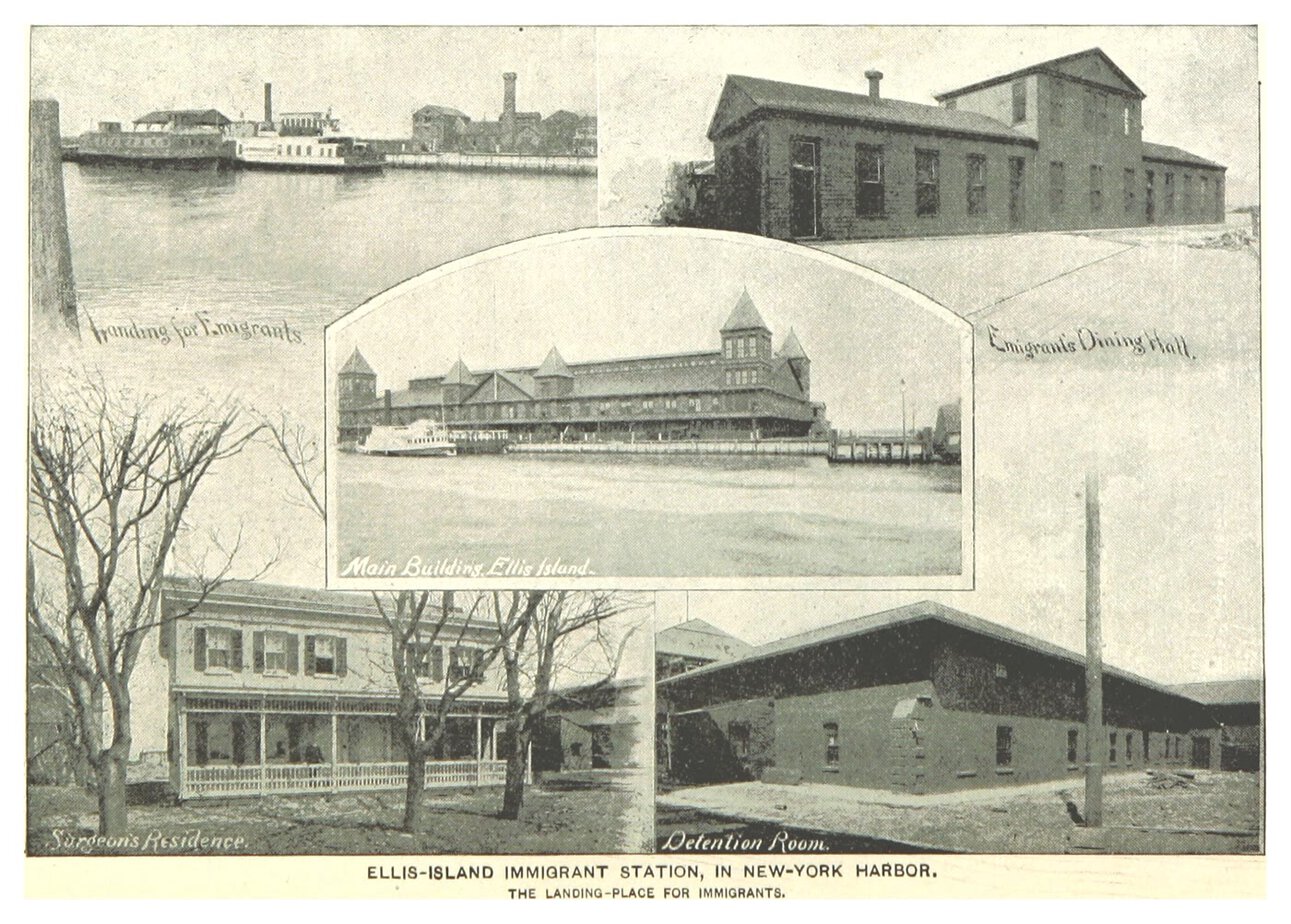
“Ellis-Island Immigrant Station, in New-York Harbor”, from Moses King, King’s Handbook of New York City (1893), p. 87. British Library, via Wikimedia Commons
How old was Annie Moore? 15, 13 or 17
Ask how old Annie was, and you’ll get three answers. Only one is right.
The 15th birthday myth
The best-known version says she landed on her 15th birthday. That’s a myth, and it began in the newspapers of 1892.
The Times called her fifteen. Megan Smolenyak traced the birthday story to a New York World report said to be based on an interview with her father, which claimed she was born on New Year’s Day 1877. The same papers gave her brothers the wrong names, Joe and Tom.
What the ship’s list says
The Nevada’s passenger list, now in the National Archives, gives a third age. It lists Annie on its second line as 13, with Anthony as 11 and Philip as 7. You can see the original on the National Archives’ DocsTeach site.
Passenger lists were drawn up abroad, starting when the ticket was bought, not on Ellis Island, the USCIS history office explains. So whatever went wrong with Annie’s age went wrong before she reached New York.
What the records show
In 2006 Cork genealogist Tim McCoy found Annie’s Irish records, and they show she was born in 1874. Smolenyak has written that her birthday was in May. The gravestone placed in 2008 gives 24 April 1874. Either way, Annie was 17 when she landed, which is the age the Park Service now uses.
Why would a list make her four years younger? Smolenyak told CNN the family probably understated her age to get a cheaper fare, which was a common practice. That’s a reasonable guess, but no document confirms it.
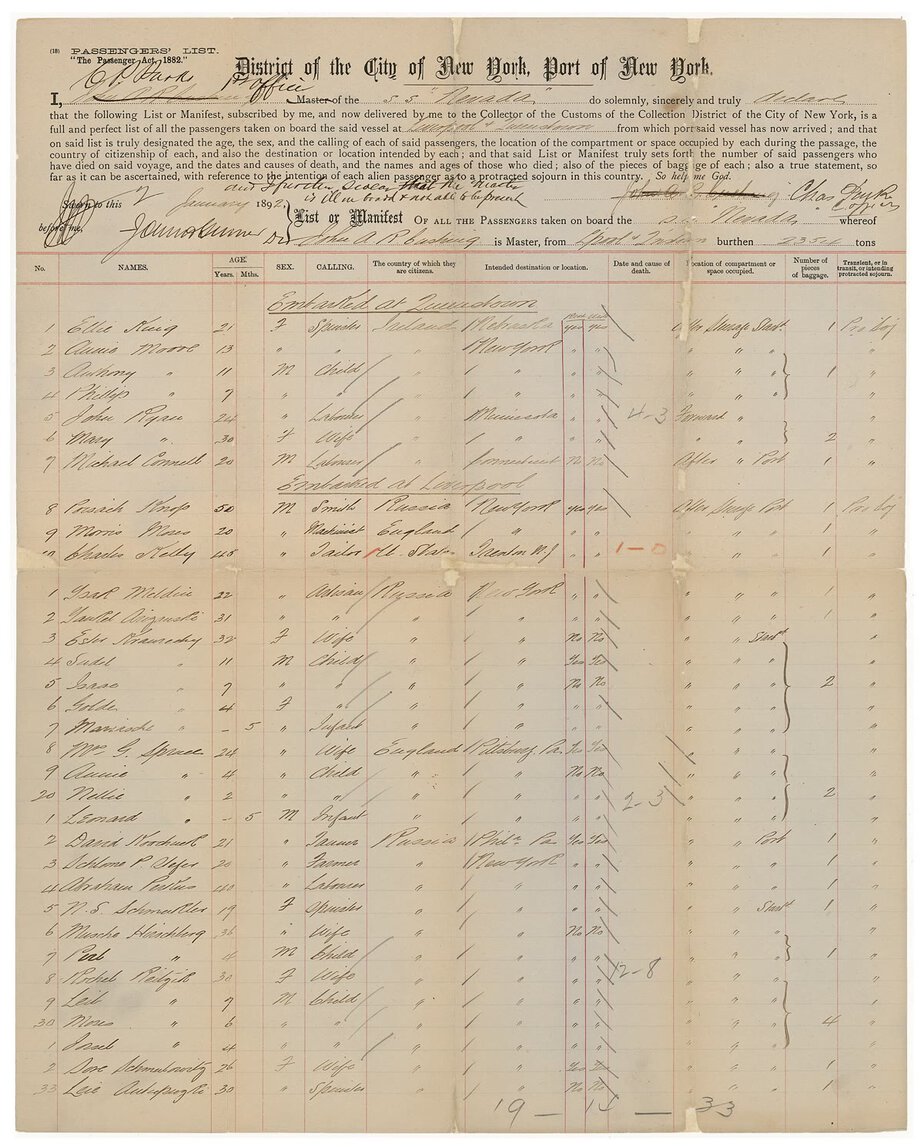
Passenger list of the SS Nevada, sworn 2 January 1892, with Annie Moore on line 2. U.S. Customs Service, National Archives (NAID 5753086), via Wikimedia Commons
The wrong Annie Moore
The story everyone told
After Annie’s moment of fame, the trail went cold. Interest came back when Ellis Island was restored and reopened as a museum in 1990, and people wanted to know what became of her.
The answer that took hold was a good story. Annie, it said, went to Indiana and then west to Texas, married a man said to descend from Daniel O’Connell, the Irish political leader, and was killed by a streetcar in 1923. History Ireland notes that this woman’s descendants attended commemorations at Ellis Island and in Ireland.
How a genealogist found the mistake
Megan Smolenyak began looking into Annie in 2002 for a TV documentary on immigration. When she pulled the Texas woman’s records, they kept saying the same thing: born in Illinois.
She published the evidence on her blog in 2006. Census returns from 1880, 1900, 1910 and 1920 all give Illinois as the birthplace. This Annie married Patrick O’Connell, who was born in Indiana, in Hill County, Texas, in 1905. The family later lived in Clovis, New Mexico, and her Texas death certificate dates to 1923.
Smolenyak called the western version “a classic go-West-young-woman tale riddled with tragedy”. It just wasn’t Annie’s.
She didn’t think anyone set out to deceive. Her reading of the evidence is that one of the Texas woman’s daughters came to believe, around the time of the 1976 Bicentennial, that her mother was the girl from Ellis Island, and the family accepted it in good faith.
The 2006 hunt
In July 2006 Smolenyak offered a $1,000 prize for proof of what really happened to the Ellis Island Annie. It took about six weeks. Volunteer genealogists working online, along with Brian G. Andersson, then New York City’s Commissioner of Records, pieced the story together.
Smolenyak announced the findings on 15 September 2006 at the New York Genealogical and Biographical Society, and invited descendants of Annie and of her brother Philip to join her.
Annie’s real life on the Lower East Side
The real Annie, Smolenyak told CNN, most likely never left the Lower East Side of Manhattan. The family lived in tenements and moved between several addresses in the same few streets.
Marriage and family
In 1895 Annie married Joseph Augustus Schayer, the son of German immigrants. The New York Times described him in 2006 as a bakery clerk, and later accounts say he worked for years at the Fulton Fish Market.
Annie had eleven children. Five did not live to see their third birthday. Smolenyak told the Irish Times that each died of something different, but that poverty lay behind every one of those deaths. Her gravestone today lists several of the children buried with her, including Edward Raymond, who lived for three days in March 1912.
Her death
Annie died of heart failure on 6 December 1924, aged 50. She was buried in Calvary Cemetery in Queens, in an unmarked grave.
It’s not the western adventure people wanted for her. It is the hard, ordinary life that many Irish emigrant women lived in American cities. If you want to know what they were up against, my piece on the “No Irish Need Apply” signs looks at what the old newspapers really show.
How Annie Moore is remembered
The statues in Cobh and on Ellis Island
Annie and her brothers stand in bronze on the quay at Cobh, outside the Cobh Heritage Centre. The plaque says the sculpture is the work of Jeanne Rynhart of Bantry, and that President Mary Robinson unveiled it on 9 February 1993. It was erected by Cóbh Heritage Trust, and the Irish American Cultural Institute started the commemoration on both sides of the Atlantic.
A second statue of Annie stands at Ellis Island, in what is now the Ellis Island National Museum of Immigration.
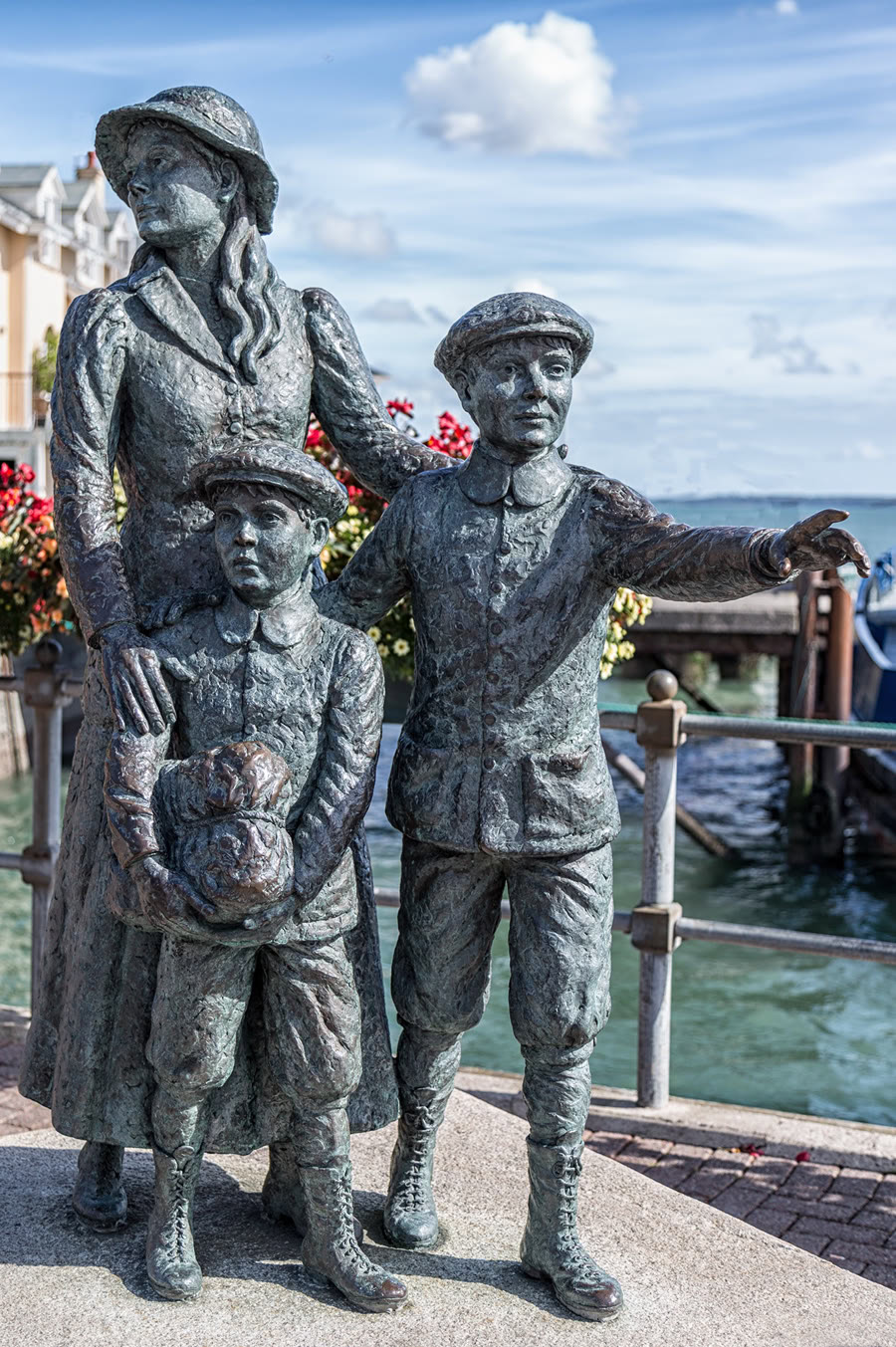
Annie Moore and her brothers, statue by Jeanne Rynhart at Cobh. Photo: David P Howard, CC BY-SA 2.0, via Wikimedia Commons
A headstone after 84 years
The 2006 search also turned up her unmarked grave. On 11 October 2008, three generations of her descendants gathered at Calvary Cemetery for the dedication of a Celtic cross on the grave, which had been unmarked for 84 years, the Irish Times reported. Donations raised through the Annie Moore Memorial Project paid for it.
The stone calls her Anna “Annie Moore” Schayer and adds four words: First Through Ellis Island.
Cousins in Ireland
In 2016 Smolenyak, with Tim McCoy’s help, found Annie’s living relatives back in Cork, among them Tom Long of Mayfield, the Irish Times reported.
Among the Irish relatives was Paul Linehan, a singer from Co. Kildare, who learned in 2016 that Annie was his first cousin three times removed, CNN reported. For years he had been singing Isle of Hope, Isle of Tears, Brendan Graham’s well-known song about her. That spring he met one of her American relatives, Michael Shulman, and sang the song at the Irish America Hall of Fame awards. The song keeps the old age of fifteen, but the history has moved on.
How to find your own Ellis Island ancestor
Annie’s story is a lesson in how records can mislead, and how they can be put right. If your Irish ancestors came through New York, here’s how to start.
- Gather what the family knows. The Park Service suggests starting with names, the rough date of arrival, the port they left from and their age, then hunting for old tickets, letters and naturalisation papers.
- Search the arrival records. The Statue of Liberty & Ellis Island Foundation’s passenger search is free and covers Ellis Island and the Port of New York.
- Allow for wrong ages and odd spellings. Annie’s list made her four years younger, and spellings shift from one record to the next. Try variants and a range of birth years.
- Read the whole page. Look at who travelled alongside your ancestor, where they were heading and who they were joining.
- Move to Irish records. A county or parish unlocks Irish civil, church and census records, and my guide to Ancestry DNA kits lists where to find them free. Many surnames cluster in particular counties, as my guide to Irish surnames shows.
- Think about citizenship. If a grandparent was born on the island of Ireland, you may be able to become an Irish citizen. See my guide to Irish citizenship by descent.
Annie Moore FAQ
Who was the first immigrant at Ellis Island?
Annie Moore, a teenager from Co. Cork, was the first immigrant processed when the Ellis Island station opened on 1 January 1892.
How old was Annie Moore when she arrived?
She was 17. The ship’s list said 13 and the 1892 newspapers said 15, but her Irish records show she was born in 1874.
Did Annie Moore arrive on her birthday?
No, that’s a myth from the 1892 press. Her birthday was in the spring, not on 1 January.
What happened to Annie Moore after Ellis Island?
She married Joseph Augustus Schayer in 1895, had eleven children and, as far as the records show, lived on the Lower East Side of Manhattan until her death in 1924. The story that she went west to Texas belongs to a different woman, born in Illinois.
Where is Annie Moore buried?
In Calvary Cemetery, Queens, New York. Her grave was unmarked until a Celtic cross was dedicated there in October 2008.
Were names changed at Ellis Island?
Not by inspectors, as a rule. The USCIS history office says passenger lists were drawn up abroad, and inspectors were not supposed to change a name unless the immigrant asked or the original was shown to be wrong. Most name changes happened later, as families settled in.
Love this? Save it to your Pinterest board for later.
A little bit of Ireland in your inbox every Friday ☘️
The free Weekly Dose of Irish: an Irish joke, a Celtic symbol, an Irish fact, a poem and the week’s best articles in one short email. Join 9,600+ readers.
Free. One short email every Friday. Unsubscribe any time.
More Irish emigration reading
- The American Wake: Ireland’s All-Night Farewell for Emigrants to America
- No Irish Need Apply: Were the Signs Real? What the Old Newspapers Show
- The Irish Diaspora: Influence and Impact on Modern America
- Irish Citizenship by Descent: How to Claim It Through a Grandparent
- How Do Ancestry DNA Kits Work? Accuracy, Privacy and Tracing Your Irish Roots
Featured image: Queenstown, Co. Cork, photochrom print, about 1890 to 1900. Library of Congress, public domain.