
Anam cara is Irish for “soul friend”: anam means soul and cara means friend. In standard Irish it’s a single word, anamchara (AN-um-khar-uh), and “my soul friend” is m’anamchara. In the early Irish church, your anamchara was the person who heard your confession and guided your spiritual life. John O’Donohue’s 1997 bestseller Anam Cara carried the phrase around the world, and today it’s used for a soulmate or a closest friend.
Most of us, if we’re lucky, have one person who knows the whole story. The one you ring first with good news, and the one you can tell the thing you’ve told nobody else.
Irish has a lovely old name for that person: anam cara, the soul friend. It sounds like something from a greeting card, but the word is well over a thousand years old, and it began as something far more demanding than friendship.
Here’s what it means, how to say and spell it, the saints behind it, the truth about St Brigid’s famous saying, and how to write it on a card or ring.
Jump to:
- What does anam cara mean?
- How to pronounce anam cara
- Anam cara, anamchara or anam chara? The right spelling
- The soul friend in the early Irish church
- St Brigid and the body without a head
- Was the soul friend a druid idea?
- John O’Donohue and the book that made it famous
- How anam cara is used today
- Irish words for friendship and love
- How to write anam cara on a card, ring or tattoo
- Anam cara FAQ
- More Irish words and love traditions
What does anam cara mean?
Anam (AN-um) is the Irish for soul. Cara (KAR-uh) means friend. Together they make soul friend, or friend of the soul.
The standard modern form is one word, anamchara. Ó Dónaill’s Irish-English Dictionary (1977), the standard reference, defines it simply as “spiritual adviser”. That’s the old church meaning.
The newer New English-Irish Dictionary goes further. Look up soulmate on focloir.ie and the first Irish word it offers is anamchara, alongside cara cléibh (bosom friend) and buanchara (constant friend). So the meaning has grown. Today your anam cara can be a spouse, a sister or the friend you’ve had since school.
Anam also means life and spirit, Ó Dónaill notes, and Dar m’anam! (dar MAN-um) is the Irish for upon my soul. At a funeral you’ll hear Ar dheis Dé go raibh a anam, may his soul be at God’s right hand; see my guide to Irish wake traditions. Anam cara also features in my list of Irish words with no English translation.
How to pronounce anam cara
Said as one Irish word, anamchara sounds roughly like AN-um-khar-uh, stressed on the first syllable. The ch is the throaty sound at the end of the Scottish word loch, not the ch in church.
Most English speakers say the two-word version as AN-um KAR-uh, with a hard k. That’s fine in English, and everyone will know what you mean.
- anamchara (AN-um-khar-uh): soul friend
- m’anamchara (MAN-um-khar-uh): my soul friend
- anamchairde (AN-um-khawr-juh, or AN-um-khar-juh in Ulster): soul friends
Ó Dónaill gives the plural as anamchairde, following cairde, friends.
Anam cara, anamchara or anam chara? The right spelling
You’ll see this phrase spelled half a dozen ways online. Here’s which ones hold up.
| Spelling | Verdict |
|---|---|
| anamchara | Standard Irish, one word. The safest choice. |
| anam cara | The popular two-word form, made famous by John O’Donohue’s book. Not standard Irish, but understood everywhere. |
| m’anamchara | My soul friend. Correct. |
| mo anam cara | Wrong. Before a vowel, mo (my) shortens to m’. |
| anam chara | Not standard. A halfway house between the two forms. |
| anamcara | A misspelling. As one word, it needs the h. |
Why the h? When two Irish words join into one, the second usually softens, and a softened c is written ch. Anam chara has the softening without the joining.
Here’s a twist. O’Donohue’s title is often printed Anam Ċara, with a dot over the C. That dot is the ponc séimhithe, the old lenition mark that modern spelling replaced with an h, so the title already pointed to the ch sound.
The word is far older than any of these spellings. The Electronic Dictionary of the Irish Language (eDIL), which covers Old and Middle Irish, lists it as anmcharae, built from the words for soul and friend, meaning soul-friend, confessor and spiritual director.
The soul friend in the early Irish church
Long before it meant a soulmate, the anamchara was a working role in Irish monasteries: the person who heard your confession and set your penance.
The word is already there in the Würzburg glosses, Irish notes written, probably in the 700s, into a copy of St Paul’s letters now in Würzburg, Germany. Where Paul lists the gifts God gave the church, among them teachers, an Irish scribe explained the Latin doctores with anamchairtea, soul-friends.
Irish penitentials, handbooks matching sins to penances (usually fasting), were written for these confessors, Garry J. Crites explains in Christian History magazine (2019). He traces the idea to the spiritual elders of the Egyptian desert monks, whose ways John Cassian’s writings carried to Irish monasteries.
Tallaght and the Céli Dé
The richest picture comes from Tallaght, now a Dublin suburb. There Máel Ruain (died 792) founded a monastery at the heart of a strict reform movement, the Céli Dé, or Culdees in English.
The Félire Óengusso, or Martyrology of Óengus, is a verse calendar of saints, one short verse for every day of the year, composed around 800 (some scholars place it a few decades later). One of its later prefaces tells how its author, Óengus the Culdee, set out to ask Máel Ruain of Tallaght to be his soul friend.
A record of Máel Ruain’s teachings and customs, written down by a monk of the community mostly between 831 and 840 according to its 1911 editors, E. J. Gwynn and W. J. Purton, shows how practical the role was. A monk living far from his soul friend should consult him once a year; nearer, he could go more often. A soul friend who went easy on a penitent was warned that he put his own soul in danger.
It also has a story you won’t forget. The abbess Samthann of Clonbroney (died 739) sent a travelling pedlar with a message for a young cleric: did he hear women’s confessions, and would he take her on? He blushed to his chest, knelt three times and stood silent for a long while. Then he sent word back: he would seek counsel from her instead.
Saints choosing soul friends
The prose notes that later scribes added to the Martyrology of Óengus are full of soul friends. In one, Colum Cille refuses to be soul friend to Donnán of Eigg, foreseeing that Donnán and his monks would die as martyrs. The Annals of Ulster record the burning of Donnán on Eigg, with 150 martyrs, in 617.
In another, Comgall of Bangor looks around his church and sees that nobody in it has a head. His soul friend has died, he explains, so he is headless, and so are they. He takes his young foster-son Molua as his new soul friend. Hold on to that headless image; it comes back with Brigid.
Chief soul friends and a king’s confessor
By the 11th century, the annals give some clerics the title prím-anmchara Érenn, chief soul friend of Ireland. Gormgal of Ardoileán (High Island, off the Galway coast), who died in 1018, is one. The Annals of the Four Masters, compiled in the 1630s, also name more than one anmchara of Clonmacnoise in the early 1000s.
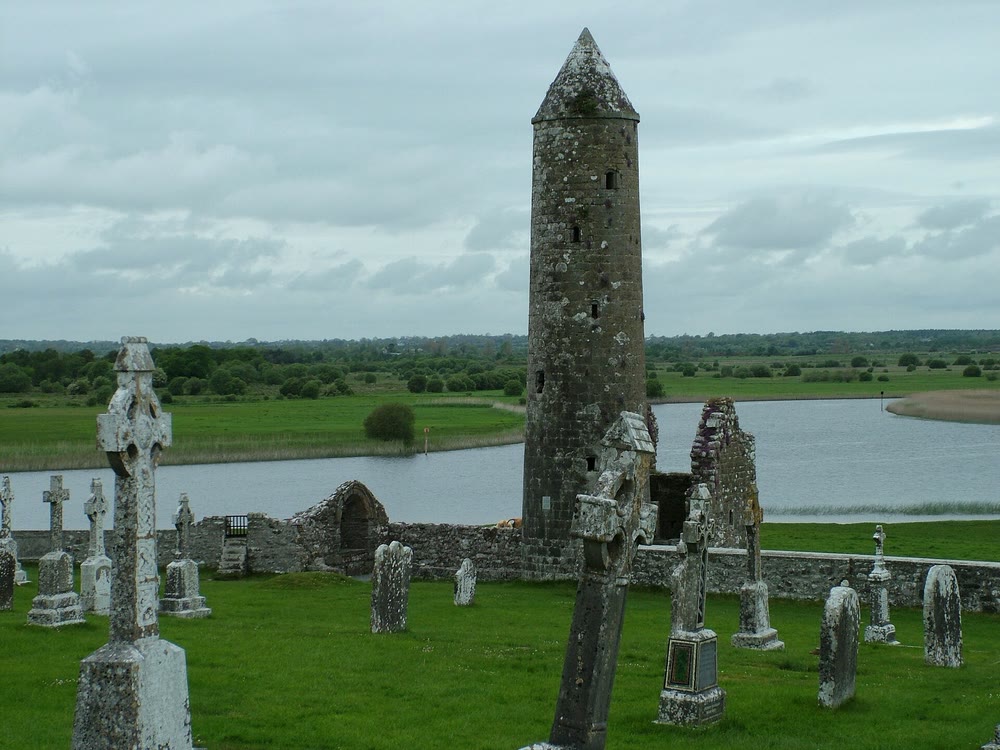
The round tower of Temple Finghin at Clonmacnoise, with the River Shannon behind. Photo: Clemensfranz, CC BY 2.5, via Wikimedia Commons (CC BY-SA 3.0)
Kings had them too. Among the dead of 1031, the Four Masters list Máel Suthain, anmchara of Brian son of Cennétig, better known as Brian Boru.
St Brigid and the body without a head
“A person without a soul friend is like a body without a head” is the best-known line about the anam cara, and it’s usually credited to St Brigid of Kildare. The source is real, but it’s later than most people think, and the wording has drifted.
A young cleric from Ferns, whom Brigid had fostered, used to visit her with gifts. One day, after communion, as he ate in her refectory, Brigid asked whether he had a soul friend. He had. Then they should sing a requiem for him, she said, because he had died.
She had been watching him eat, she explained. From halfway through his meal, his food had been going into a body with no head on it, because his soul friend was gone. He was to eat nothing more until he found another.
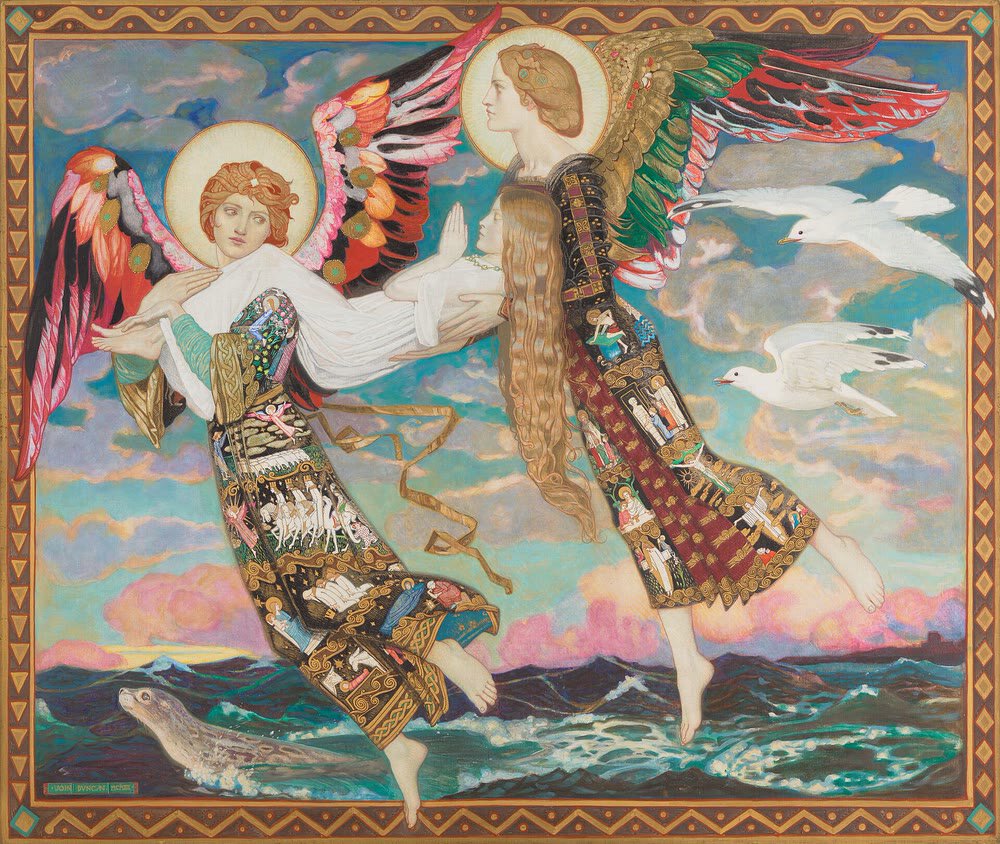
Saint Bride by the Scottish painter John Duncan, 1913, National Galleries of Scotland. Public domain, via Wikimedia Commons
In Whitley Stokes’s 1905 translation of the notes, Brigid’s verdict reads: “anyone without a soulfriend is a body without a head”. The Irish has no “like”.
The Book of Leinster, a 12th-century manuscript, centuries older than the surviving copies of the Martyrology, has a fuller version with a homely twist. There, Brigid adds that a person without a soul friend is like the water of a limy lake: no good for drinking and no good for washing.
Where the saying really comes from
- Not in Óengus’s poem. The Félire itself only gives Brigid a short verse on 1 February. The story is in the prose notes copied around the verses.
- Older in the Book of Leinster. Stokes printed that version in the addenda to his 1905 edition of the Martyrology of Óengus.
- Not only Brigid’s. The same notes give the same proverb to Comgall. It looks like a saying people already knew, lent to more than one saint.
- A story, not a record. Ferns was St Máedóc’s monastery, and the Annals of Ulster record his death in 625, about a century after Brigid’s. A young monk of Ferns visiting her doesn’t fit the dates.
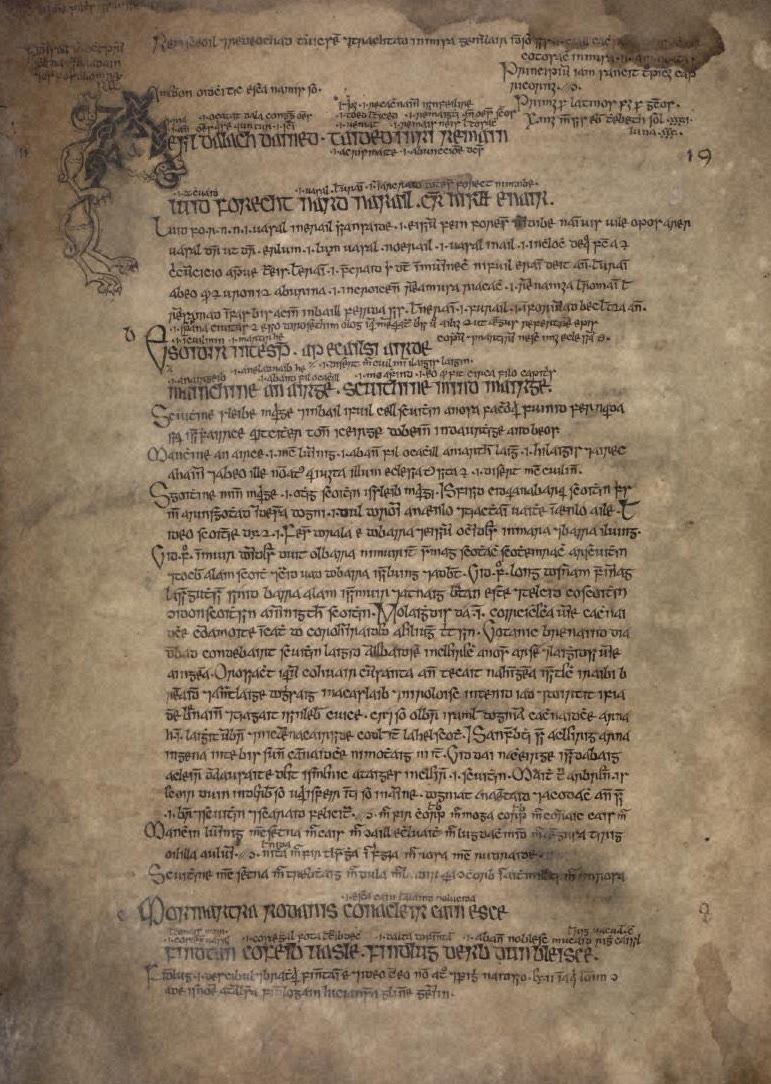
A page of the Martyrology of Óengus with its glosses and notes, in a 16th-century copy: National Library of Ireland MS G 10, p. 24. Public domain, via Wikimedia Commons
So it’s a genuine early Irish saying, linked to Brigid by the 1100s, and probably not her own words. It’s still a wise line. There’s more about the saint in my guide to St Brigid’s Day.
Ó Dónaill gives colainn gan cheann for a headless body, so in today’s Irish the line would run: Is colainn gan cheann duine gan anamchara (iss KOL-in gon HYAWN DIN-yuh gon AN-um-khar-uh). That’s a modern rendering, not a traditional saying, so ask an Irish speaker before you carve it in stone.
Was the soul friend a druid idea?
You’ll sometimes read that the soul friend was a druid tradition the church took over. No early Irish text says so. The nearest thing is the historian Geoffrey Keating’s remark, in the 1630s, that once Ireland’s kings became Christian, a church soul friend took the druid’s old place at court. That’s a 17th-century view, not proof of a pagan soul friend.
Be a little wary of “Celtic Christianity”, too. In Celtic Christianity: Making Myths and Chasing Dreams (1999), the historian Ian Bradley argues that much of the popular picture of the early church in these islands was built by later generations. The anamchara is well documented, but it was demanding: confession, fasting and obedience. The Würzburg glosses even urge obedience “to your teachers and to your soul-friends”, in Stokes and Strachan’s 1901 translation.
John O’Donohue and the book that made it famous
For centuries anamchara stayed a church word. Then came John O’Donohue.
He was born in 1956 into an Irish-speaking farming family in the Burren, Co. Clare, his official biography says. He became a Catholic priest, earned a doctorate in philosophical theology at the University of Tübingen in 1990 with a study of Hegel, and had written poetry since his student days.
In 1997 he published Anam Cara, subtitled A Book of Celtic Wisdom in the US. It’s a gathering of short reflective essays on friendship and love, solitude, work, ageing and death, threaded with Irish folklore and a deep feeling for landscape. It widens the old monastic idea: the soul friend becomes the person you trust most deeply, friend or partner. The book became an international bestseller, and it’s probably the main reason the phrase is known far beyond Ireland.
O’Donohue left public ministry as a priest in 2000 and lived in a cottage in Connemara, writing and speaking around the world. In one of his last interviews, with Krista Tippett of On Being, he was asked whether our generation is worse at love and commitment than earlier ones. He didn’t think so: we’re “more unpracticed at it, and therefore, more desperate for it.”
He died unexpectedly during a holiday in France in January 2008. His last book, Benedictus (2007), published in the US after his death as To Bless the Space Between Us, offers blessings for life’s thresholds, from births and weddings to grief; see also my Irish wedding blessings and Irish funeral blessings. A 25th-anniversary edition of Anam Cara appeared in 2022, with a foreword by President Michael D. Higgins.
How anam cara is used today
Today anam cara turns up wherever people want to say “you’re my person” with an Irish lilt:
- Friendship: cards and gifts for a best friend, a sister or a mother.
- Weddings: engraved inside rings and worked into vows. For readings, see my Irish love poems for weddings.
- Tattoos: often in a Celtic-style font, wrapped in a knot. Check the spelling twice.
- Jewellery and gifts: pendants, bracelets, mugs and blankets.
A word on the knots. No early Irish source ties any symbol to the anamchara. Designs sold as “the anam cara knot” are modern, built from genuine early medieval knotwork, much like the Celtic love knot. Nothing wrong with that, as long as nobody sells it as ancient.
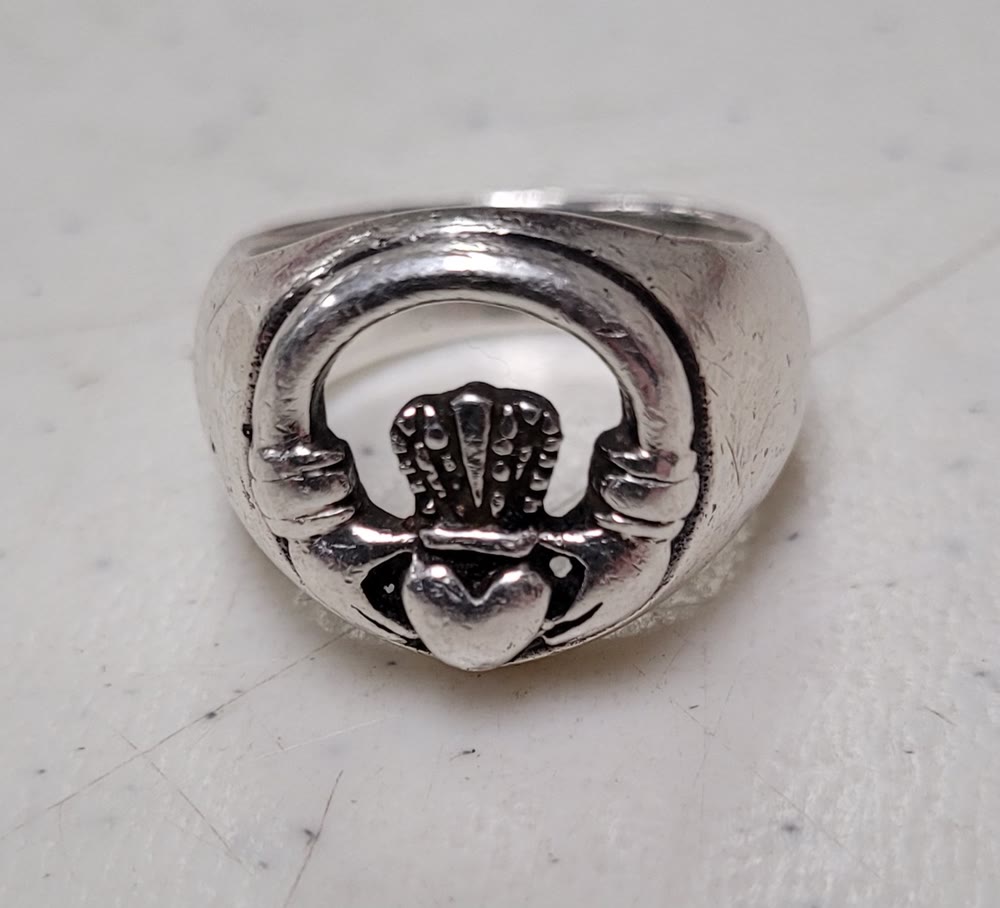
For an Irish love token with real history, the Claddagh ring goes back to around 1700, and its hands, heart and crown are read as friendship, love and loyalty.
Irish words for friendship and love
Anamchara has plenty of company. Each of these is checked against Ó Dónaill’s dictionary or focloir.ie.
| Irish | Say it | Meaning |
|---|---|---|
| a chara | uh KHAR-uh | friend, when speaking to someone. Also the polite opening of a letter, like “Dear Sir”. |
| mo chara | muh KHAR-uh | my friend |
| cairdeas | KAWR-jus (KAR-jus in Ulster) | friendship |
| cara cléibh | KAR-uh KLAYV | bosom friend. Cliabh means the chest. |
| cara rúin | KAR-uh ROON | confidant. Rún means a secret. |
| cara Críost | KAR-uh KREEST | godparent. Literally a “Christ friend”. |
| a chroí | uh KHREE | my dear. Croí means heart. |
| Mo chroí thú! | muh KHREE hoo | I love you dearly! Literally “my heart, you”. |
| M’anam ionat! | MAN-um UN-ut | My dearest! Word for word, “my soul in you”. |
And one proverb every anam cara should know: Ar scáth a chéile a mhaireann na daoine (er skaw a KAY-leh a WAR-un na DEE-neh), people live in each other’s shelter. It heads my list of Irish proverbs.
To say it to a partner, see how to say I love you in Irish, and for more phrases, my Irish sayings about love.
How to write anam cara on a card, ring or tattoo
- Pick one form and stick to it. Anamchara is standard Irish; Anam Cara is the famous popular form. Both are fine. Don’t write anam chara or anamcara.
- For “my soul friend”, write m’anamchara, not mo anam cara.
- For two or more, write anamchairde, soul friends.
- It works for anyone. Cara is used for women and men alike, so anamchara is the same word whoever your soul friend is.
- No fadas to lose. Anamchara has no accents. But if you add mo chroí, keep the fada, even in capitals: MO CHROÍ.
- Check anything permanent with an Irish speaker, or in the free dictionaries at teanglann.ie and focloir.ie.
A few short lines for a card:
- Is tú m’anamchara (iss TOO MAN-um-khar-uh): You are my soul friend.
- A chara dhílis (uh KHAR-uh YEE-lish): Dear friend. Dílis means loyal or dear.
- Anamchairde go deo (AN-um-khawr-juh guh JOH): Soul friends forever. Correct Irish, though it’s a modern phrase, not an old saying.
Anam cara FAQ
What does anam cara mean in Irish?
Soul friend. It first meant a spiritual guide or confessor, and now often means a soulmate or closest friend.
Is anam cara one word or two?
Standard Irish writes one word, anamchara. The two-word anam cara is the popular form from John O’Donohue’s book.
How do you pronounce anam cara?
The Irish anamchara is roughly AN-um-khar-uh, with a throaty ch as in loch. In English, AN-um KAR-uh is fine.
Is anam cara the same as soulmate?
It is now. Focloir.ie gives anamchara as the Irish for soulmate, though the older meaning was a spiritual adviser.
Did St Brigid say a person without a soul friend is like a body without a head?
Medieval texts put it in her mouth, without the “like”. The same notes give it to St Comgall too, so it was probably a proverb rather than her own words.
Who wrote the book Anam Cara?
John O’Donohue (1956 to 2008), a poet, philosopher and former priest from Co. Clare. It came out in 1997.
Is there an anam cara symbol?
No early one. Knots sold as anam cara symbols are modern designs. The Claddagh ring, from around 1700, is Ireland’s best-known love and friendship token.
Love this? Save it to your Pinterest board for later.
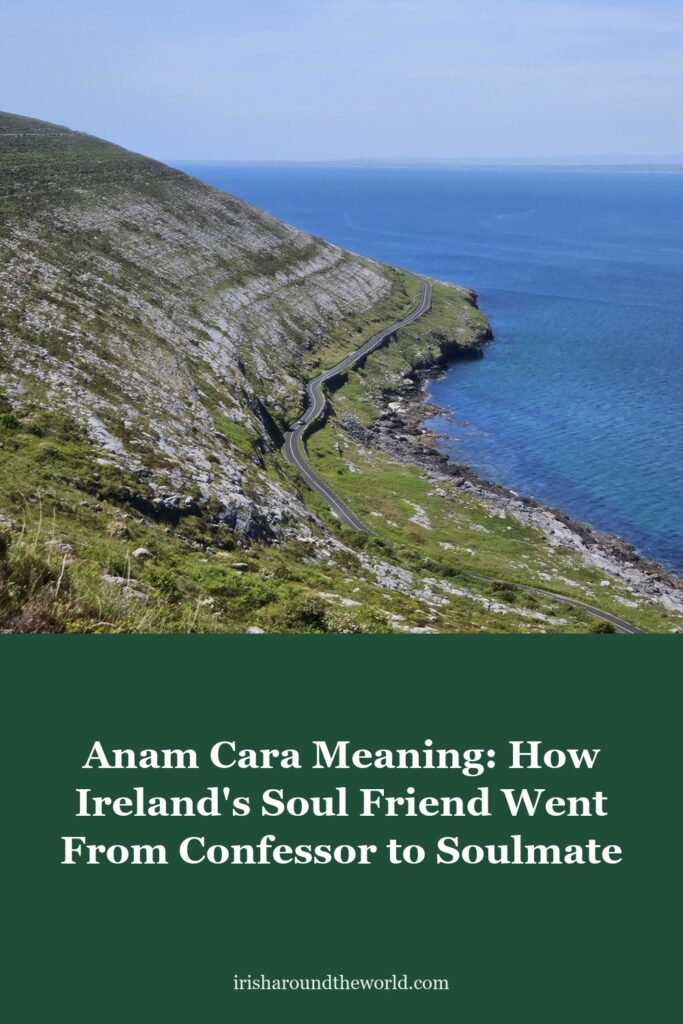
Pin image: The Burren near Fanore, Co. Clare. Photo: Molannaol, CC BY-SA 4.0, via Wikimedia Commons
A little bit of Ireland in your inbox every Friday ☘️
The free Weekly Dose of Irish: an Irish joke, a Celtic symbol, an Irish fact, a poem and the week’s best articles in one short email. Join 9,600+ readers.
Free. One short email every Friday. Unsubscribe any time.
More Irish words and love traditions
- Irish Sayings About Love: Phrases, Blessings and Quotes in Irish
- Irish Words With No English Translation: 20 Real Ones and the Viral Fakes
- Celtic Love Knot Meaning: The Real History Behind the Lovers’ Knot
- Claddagh Ring Meaning: Which Hand, Heart In or Out, and the Galway Legend Behind It
- St Brigid’s Day: Imbolc, the Goddess, the Saint and How Ireland Celebrates 1 February
- Irish Proverbs in Irish: 57 Seanfhocail With Meanings and How to Say Them
Featured image: The Burren near Fanore, Co. Clare, the limestone country where John O’Donohue grew up. Photo: Molannaol, CC BY-SA 4.0, via Wikimedia Commons.