A selkie is a seal that can take off its skin and walk on land as a human. The best-known story is the seal wife: a man hides her skin, marries her, and loses her the day she finds it. Selkie mythology is strongest in Orkney and Shetland. Irish versions run down the west coast, where the Conneely family were said to descend from seals.
Stand on a pier on the west coast long enough and a seal will pop its head up and look at you. Not past you, at you.
People around the North Atlantic have been telling stories about that look for centuries. Those stories are selkie mythology. Here’s what a selkie is, the Irish families said to have seal blood, and where to see seals today.
Jump to:
- What is a selkie?
- Where do selkie stories come from?
- Irish selkie legends
- The Great Silkie of Sule Skerry
- Selkie vs mermaid vs merrow
- What the stories are about
- Selkies on screen and in books
- Where to see seals in Ireland
- Selkie FAQ
What is a selkie?
A selkie is a seal that can shed its skin and become a human. Put the skin back on and it’s a seal again.
The word is plain Scots for a seal. The Dictionary of the Scots Language gives selch, selkie and silkie, from Old Scots and Old English words for the animal.
It also records a second meaning: sea people who look like seals but can take human shape. The dictionary calls this a common theme in Shetland and Orkney folklore. The word itself goes back a long way. An Orkney book from 1701 mentions shoes made from a sealskin “commonly called a Selch”.

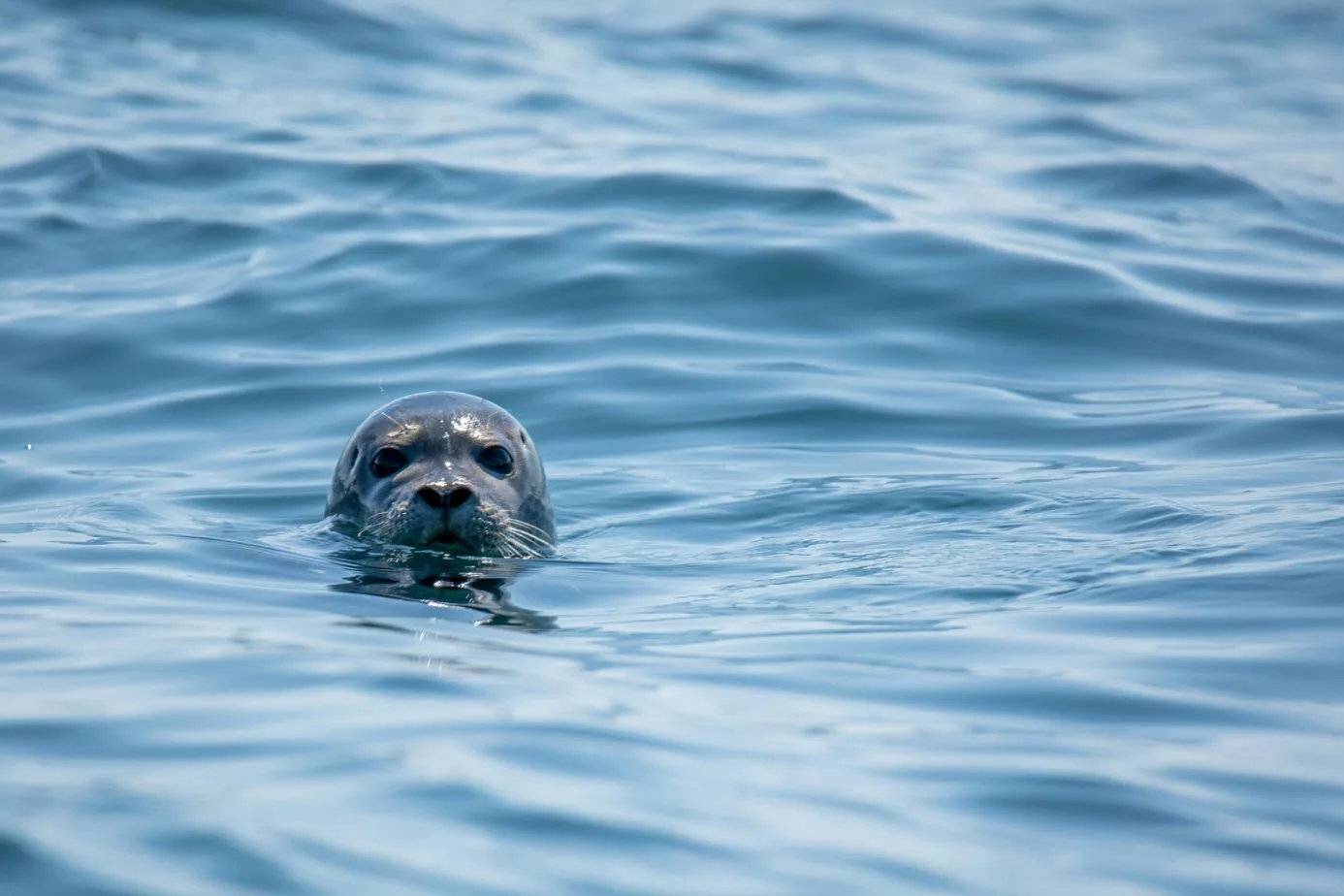
A seal watching from the water. Maybe it was the eyes?
The stolen skin and the seal wife
Most selkie stories follow the same pattern. A man on the shore sees seal women, their skins left on the rocks. He takes one skin and hides it.
Its owner can’t go back to the sea, so she stays, marries him and raises his children. She is a good wife but rarely a happy one. Years later she finds the skin, often with a child’s help, and goes straight back to the sea.
Folklorists call this a migratory legend. The same plot travels from coast to coast, with local names swapped in.
Selkie men
Selkies can be male too. In the Scottish tales, selkie men come ashore as handsome strangers and court lonely women. The ballad of the Great Silkie, below, is a selkie man’s story.
Where do selkie stories come from?
The heartland is Orkney and Shetland, off the north of Scotland. That’s where the word comes from, and where the most tales were written down.
But the idea is far wider. The National Folklore Collection at University College Dublin notes seal folklore across Celtic, Nordic and Baltic countries. It also points to seal stories in medieval Irish texts.
Seal lore in Ireland
In Irish, a seal is a rón, and seals are rónta. The Irish Folklore Commission collected seal stories around the coast between 1935 and 1970. UCD’s Seal Stories project maps them, and a few ideas keep coming up.
- Seals seem human. Tellers point to the big eyes, the whiskers and, above all, a cry like a person’s.
- Some seals are people under enchantment. They may speak, or take human form.
- Certain families descend from seals. UCD names Ó Conghaile (Conneely) and Ó Catháin.
- Seals were useful. Skins made waistcoats and shoes, and seal oil was used for pains in the bones, sprains and burns.
For a longer read, the classic book is The People of the Sea by David Thomson, first published in 1954. It follows seal stories along the coasts of Ireland and Scotland. Later editions carry an introduction by Seamus Heaney.
Irish selkie legends
Irish tellers rarely used the word selkie. They talked about seals, and sometimes mermaids, but the stories are the same family.
The Conneelys of Connemara
The most famous Irish seal family are the Conneelys, Mac Conghaile or Ó Conghaile in Irish, of west Galway.
In 1846 the Galway historian James Hardiman edited Roderic O’Flaherty’s 1684 account of West Connacht. In a footnote, he wrote that several of the Clan Coneelys had been turned into seals by “Art magick”.
Believers, he said, “would no more kill a seal, or eat of a slaughtered one, than they would of a human Coneely”. He added that, so the story went, some of the clan changed their name to Conolly. The 1846 edition is on the Internet Archive.
The belief outlived him. In 1939 Seán Mac Infhaola, aged 76, of Leitir Mucú told a collector of a man who fired at two seals. Lost, he came to a house on an island. The woman there showed him her baby with a broken thigh, and said her family were under enchantment.
The Conneelys aren’t the only ones. UCD also links the Ó Catháin name, Keane or Kane in English, with seals. My guide to Irish surnames has more on the old families.
The O’Dowds and the three stones
This one is from the Schools’ Collection on Dúchas, written down at Eanach Mór school, Co. Mayo, in the late 1930s. The teller says it all happened in Co. Sligo.
A man named O’Dowd catches a seal that turns into a woman. They marry and have three children. He hides the thing she swims with in a stack of oats.
She finds it and goes back to the sea. First she turns the children into three stones on the shore. When the stones disappear, she says, Ireland will be free. She later relented and sent a seal back, but a man killed it. So the O’Dowds never had luck.
The seal cloak and the green coat
Two stories collected in Kerry schools show how freely Irish tellers mixed seals and mermaids.
In one from Dromlegagh, an O’Sullivan man from Berehaven takes a seal cloak and cap from the strand. The sea woman follows him, and they marry and have three daughters. Years later, workmen knock the hidden cloak down from the loft. She takes it and runs for the ocean, leaving word of a buried crock of gold.
In another, from Blackwater Bridge, a fisherman’s hook catches a green coat. A girl arrives at his door that evening, and they have ten sons. The day he throws the old coat out into a field, she’s gone.
Peig Sayers and the mother seal
Peig Sayers, the storyteller of Dún Chaoin in west Kerry, told a seal story to a collector in 1943.
A man of the Ó Sé family goes into a cave to club a seal. The mother seal speaks, asking him to wait until she has fed her pup. He never hunted a seal again. Peig said seals were people under enchantment, and their cry is the most human sound there is.
The Great Silkie of Sule Skerry
The best-known selkie song is a ballad from Shetland. It’s number 113 in Francis James Child’s 19th-century collection of English and Scottish ballads.
A nurse sings to a baby whose father she doesn’t know. A stranger appears and tells her he is the father. In Child’s text he says:
I am a man, upo the lan,
An I am a silkie in the sea;
He gives her a purse of gold and takes the boy to teach him to swim. Then he tells her the end. She’ll marry a gunner, whose first shot will kill both the silkie and his son.
Captain F. W. L. Thomas published it in the 1850s, as he had it from an old woman in Shetland. Joan Baez recorded it in 1961. My page on the Great Silkie of Sule Skerry has the old text and the melody.
Selkie vs mermaid vs merrow
Selkies are not half fish. Plenty of articles call them Ireland’s mermaids, and that’s a common mix-up.
| Selkie | Mermaid | Merrow | |
|---|---|---|---|
| Where from | Orkney, Shetland, west of Ireland | All over Europe | Ireland |
| In the sea | A whole seal | Half woman, half fish | A sea woman who needs her cap to go home |
| The key object | The sealskin | None | A small enchanted cap |
| Famous story | The seal wife | Sailors lured onto rocks | The Lady of Gollerus |
The merrow is Ireland’s own sea woman. In Thomas Crofton Croker’s tale The Lady of Gollerus, from the 1820s, Dick Fitzgerald is on the shore of Smerwick Harbour in Kerry. He grabs a merrow’s “cohuleen driuth, or little enchanted cap”. Without it she can’t go home, so she marries him.
That’s the seal-wife plot with a cap instead of a skin. Luring sailors onto the rocks, by the way, is siren and mermaid lore, not selkie lore. For more, see my guide to Irish mythological creatures.
What the stories are about
Loss. Almost every selkie story ends with someone gone. The seal wife leaves her children.
The sea takes and gives. These were fishing communities. The sea fed them and drowned their men. A sea that hands you a wife and then takes her back would make sense to them.
Don’t kill a seal. The Irish stories keep warning against it. Peig Sayers’ hunter swears off it, the Conneelys’ neighbours wouldn’t eat seal meat, and the O’Dowds lose their luck.
To my mind that’s the most Irish thing about the selkie. People who lived off seals told stories that made them think twice.
Selkies on screen and in books
Before I researched this article, I didn’t even realise I had watched a 2009 film with Colin Farrell all about selkies. Okay, 2009 was some time ago, so you can forgive me for forgetting.
Ondine (2009)
The film is Ondine, directed by Neil Jordan. Colin Farrell plays Syracuse, a fisherman in Castletownbere in west Cork. A woman turns up alive in his net, and his daughter becomes convinced she’s a selkie.
I was sceptical about the film initially, but I really enjoyed it. It’s a great mix of folklore and storytelling. Here’s the trailer.
Song of the Sea (2014)
This animated film by Tomm Moore was made by Cartoon Saloon in Kilkenny. The studio says it takes its inspiration from the selkies of Irish folklore. A boy called Ben discovers his little sister Saoirse is a selkie. It was nominated for the Oscar for Best Animated Feature.
The Secret of Roan Inish (1994)
John Sayles wrote and directed this one, about a girl who learns her family may have seal blood. RTÉ’s archive has a 1993 report on the filming at Rossbeg, Co. Donegal. It’s based on Rosalie K. Fry’s novel Secret of the Ron Mor Skerry, which is reportedly set in Scotland.
Roan Inish most likely comes from Rón-inis, “seal island”. I haven’t watched the movie yet myself, but I will have to give it a go soon.
A book and a bad joke
For fiction, The Brides of Rollrock Island by Margo Lanagan is a dark novel about men on a remote island who take wives from the sea. Library catalogues file it under selkies.
This post contains an Amazon affiliate link. As an Amazon Associate I earn from qualifying purchases.
And let’s not forget Seal. The man is literally telling us he was once a seal. I’m joking.
Where to see seals in Ireland
Ireland has two kinds of seal, the grey seal and the common or harbour seal. The National Parks and Wildlife Service says both are protected under EU law.
- Dublin Bay. Dublin City Council lists grey and harbour seals on North Bull Island. They haul out and pup at the northern end, so keep your distance and keep dogs back.
- The Blasket Islands, Co. Kerry. The islands are a protected area for grey seals, which breed there. It’s Peig Sayers’ own coast. See my guide to the Great Blasket Island.
- Garinish Island, Co. Cork. It’s in Glengarriff Harbour in Bantry Bay. Heritage Ireland says the short ferry crossing usually includes a visit to the nearby seal colony.
- Seal Rescue Ireland, Co. Wexford. In Courtown, it rescues, rehabilitates and releases seal pups. Discover Ireland lists its visitor centre and guided tours.
Selkie FAQ
What is a selkie?
A creature from Scottish and Irish folklore. It lives as a seal in the sea but can take off its skin and become human on land.
Are selkies Irish or Scottish?
Both. The word is Scots, and Orkney and Shetland have the most tales. Ireland has its own seal stories, especially in Galway, Sligo and Kerry.
What is the difference between a selkie and a mermaid?
A mermaid is half woman, half fish. A selkie is a whole seal in the water and a whole human on land.
What happens if you steal a selkie’s skin?
In the stories, the selkie can’t return to the sea and stays with whoever has the skin. The moment she finds it, she leaves, even if she has children.
Can selkies be male?
Yes. Selkie men court women in the Scottish tales. The Great Silkie of Sule Skerry is about a selkie father.
Are selkies good or evil?
Neither, really. Most are gentle and sad rather than dangerous. In the Irish stories, the bad luck falls on people who harm seals.
More Irish folklore
- The Great Silkie of Sule Skerry
- Irish Mythological Creatures
- Changelings in Irish Folklore
- The Banshee
- The Great Blasket Island
- Irish Surnames
A little bit of Ireland in your inbox every Friday ☘️
The free Weekly Dose of Irish: an Irish joke, a Celtic symbol, an Irish fact, a poem and the week’s best articles in one short email. Join 9,600+ readers.
Free. One short email every Friday. Unsubscribe any time.