Celtic tattoos usually mean one of a dozen designs: knots, spirals, crosses and the Claddagh. Some are properly old. The triple spiral was carved at Newgrange over 5,000 years ago, centuries before the Great Pyramid. Others are new: the earliest mention of the Dara knot we could find online is from 2008. Old or new, a meaning you give a design is still a real meaning. Below are 12 designs, the honest history of each, where they sit best on the body, and free stencils drawn with true over and under.
If you’ve got Irish roots, there’s a fair chance you’ve thought about a Celtic tattoo. You’re in good company.
NPR reported in 2014 that Celtic knot tattoos took off in the United States in the 1970s and 1980s. A Dublin tattoo artist told them his Celtic knot customers were almost always American.
So this one’s for you.
Most tattoo sites will tell you every design is ancient and comes with one fixed meaning. A few are ancient. Several are younger than the people wearing them. That’s no reason not to get one.
For each design below you’ll get what it is, what people say it means, what we actually know, and where it sits best on the body. They run roughly from the oldest to the newest, with one we couldn’t date at all.
Jump to:
- About the pictures and stencils
- What makes a tattoo Celtic?
- The 12 designs at a glance
- 1. The triple spiral (triskele)
- 2. A knotwork armband
- 3. The triquetra (trinity knot)
- 4. The Celtic cross
- 5. St Brigid’s cross
- 6. The Claddagh
- 7. The Awen
- 8. The Celtic tree of life
- 9. The Celtic love knot
- 10. The shield knot
- 11. The Dara knot
- 12. The Celtic motherhood knot
- Celtic tattoos to avoid
- Before you get inked
- Get all 12 stencils free
- Celtic tattoo FAQ
About the pictures and stencils
Knotwork is easy to get wrong. In a proper knot, every band goes over, then under, then over again, all the way round. Cheap designs sometimes break the pattern, or let a strand just stop.
So we drew all 12 designs ourselves and checked every crossing. The pictures are mock-ups: our drawings placed on arms, legs, shoulders and backs, so you can judge size and placement. They’re not real tattoos, and nobody had to sit through a needle for them.
Every drawing is in a free stencil pack. Grab it here and show it to your artist.
What makes a tattoo Celtic?
Celtic is really a family of languages: Irish, Scottish Gaelic, Manx, Welsh, Cornish and Breton. These days, though, anything with a knot or a spiral gets called Celtic.
Here’s the twist. The Iron Age Celts didn’t do knots. Their art was spirals and swirls, like the carvings on the Turoe Stone in County Galway.
Knot patterns turn up in Roman floor mosaics in the 200s and 300s AD. Real knotwork reaches Ireland by the 600s, and the monks run with it, all the way to the Book of Kells around 800.
So the designs below come from Stone Age farmers, early Christian monks, Irish folk custom, a Galway goldsmith’s trade and modern jewellers. All of them are fair game on skin.
The 12 designs at a glance
| Design | What people say it means | Earliest date we can show | Good spot |
|---|---|---|---|
| Triple spiral (triskele) | Life, death and rebirth | Newgrange, about 3200 BC | Shoulder blade |
| Knotwork armband | No beginning and no end | Knotwork in Ireland by the 600s | Round the upper arm |
| Triquetra (trinity knot) | Holy Trinity; land, sea and sky | From the 600s | Inner wrist |
| Celtic cross | Faith, heritage, remembrance | Stone high crosses, from about the 700s or 800s | Inner forearm |
| St Brigid’s cross | Protection of the home | Written records from the 1600s | Outer upper arm |
| Claddagh | Friendship, love and loyalty | Oldest rings about 1700 | Inner forearm |
| Awen | An ancient Druid symbol | First seen in public in 1833 | Outer forearm |
| Celtic tree of life | Roots, family and growth | We couldn’t date the design | Shoulder blade |
| Love knot | Love | The name, in books: 1991 | Front of the shoulder |
| Shield knot | Protection | The name as a symbol: 1992 | Outer upper arm |
| Dara knot | Strength | Earliest mention online: 2008 | Top of the shoulder |
| Motherhood knot | A mother’s love, a dot for each child | Earliest dated example: 2012 | Outer forearm |
1. The triple spiral (triskele)
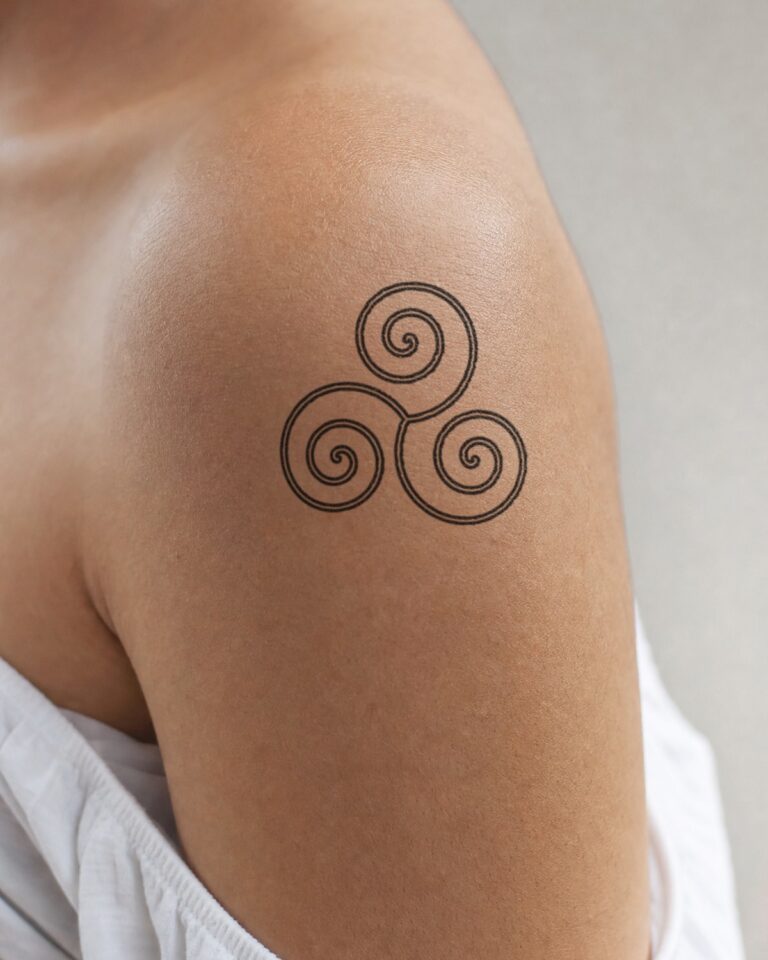
Mock-up: the Newgrange triple spiral on the outer shoulder.
Three spirals turning out of one centre, drawn as one continuous line. It’s the oldest design on this list by a few thousand years.
What people say: a Celtic symbol of life, death and rebirth.
What we know: it’s carved at Newgrange in County Meath, which was built around 3200 BC. The Great Pyramid is over 600 years younger. There’s a big one on the entrance stone and a small one inside, and as far as we know, no other Stone Age monument in Ireland has one.
The people who carved it were farmers, not Celts. Celtic art didn’t reach Ireland for nearly 3,000 years after that. So the oldest “Celtic” design isn’t Celtic. The builders left no writing, so nobody knows what it meant to them. Life, death and rebirth is a modern reading.
Where it suits: a round design wants a round space. The shoulder blade, the top of the shoulder or the outer calf all work. Keep it big enough that the gaps between the turns stay open as the years go by.
Two tips. The triple spiral says Newgrange; three running legs say Sicily or the Isle of Man. And the spirals can turn either way. Neither direction has a documented meaning, so pick the one you like. More in our guide to the triskele.
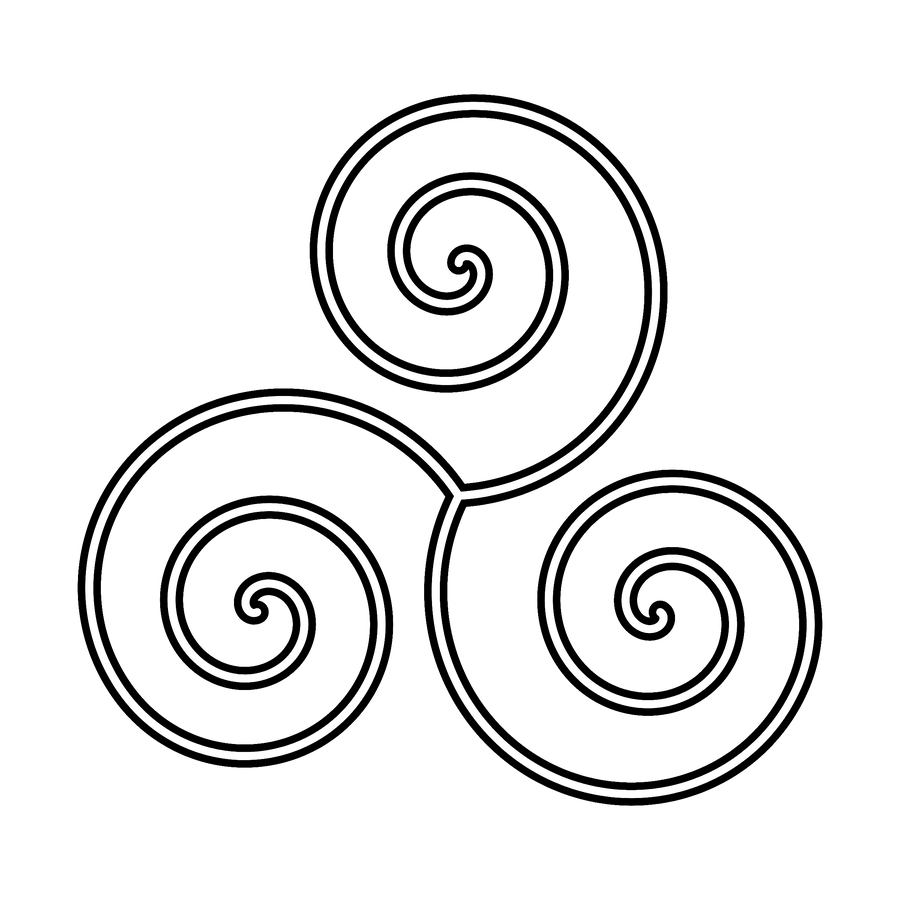
The triple spiral stencil. Click or tap to open it full size.
2. A knotwork armband
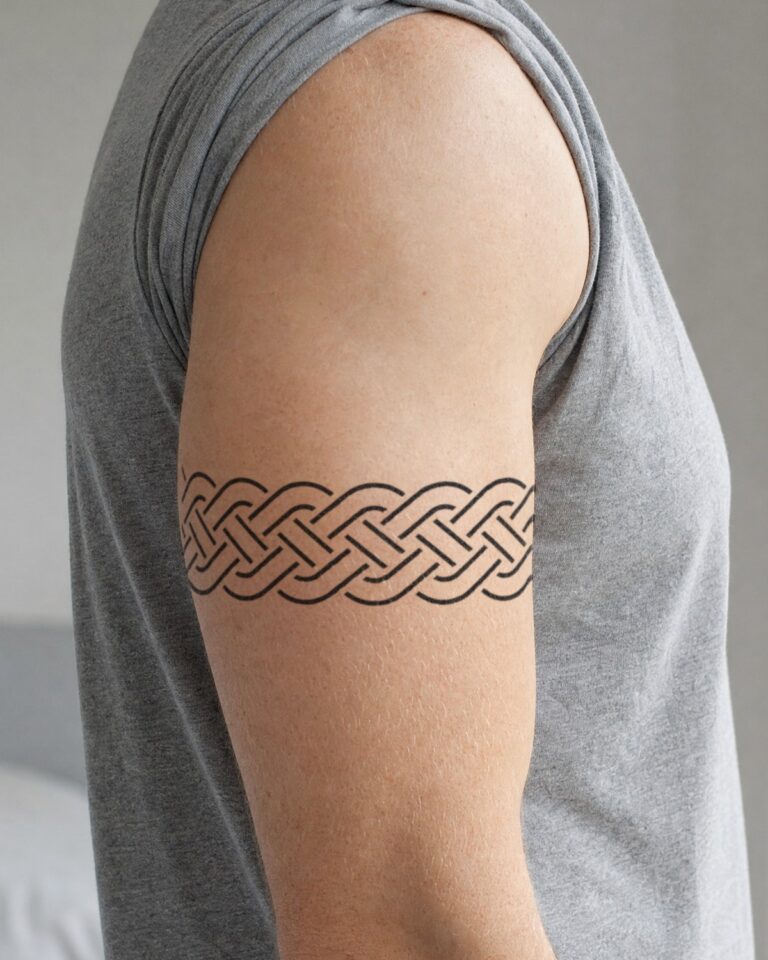
Mock-up: a plaited knotwork band round the upper arm.
The plain knotwork band. No symbol, no story, just over and under all the way round.
What people say: ancient Celtic art, with no beginning and no end.
What we know: the “no beginning and no end” part is true of a well-drawn knot. The “ancient Celtic” part is more complicated. Knot patterns turn up in Roman floor mosaics in the 200s and 300s AD. The best known, Solomon’s knot, is just two closed loops linked together.
Real knotwork reaches Ireland by the 600s, and the monks took it further than anyone. In the Book of Kells, made around 800, one old count found 158 interlacings in a single square inch. Most of us couldn’t sign our name in a square inch.
So Celtic knotwork is Irish and Anglo-Saxon, with a Roman grandparent. Don’t tell the lads in the pub. More on the different knots in our Celtic knot guide.
Where it suits: round the upper arm or the forearm. The hard part is the join. The pattern has to meet itself with no seam, so your artist will stretch or shrink the repeat to fit your arm. A band with fewer, bigger repeats keeps its gaps open longer than a fine, busy one.
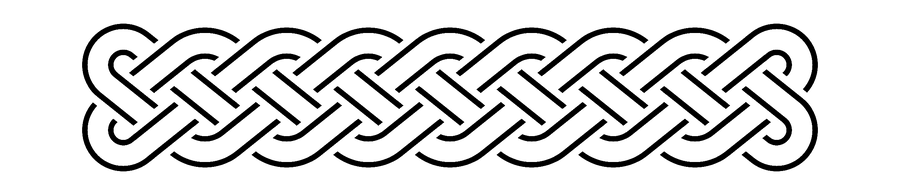
The stencil is a straight band with closed ends. For a full armband, your artist repeats the middle section to fit.
3. The triquetra (trinity knot)
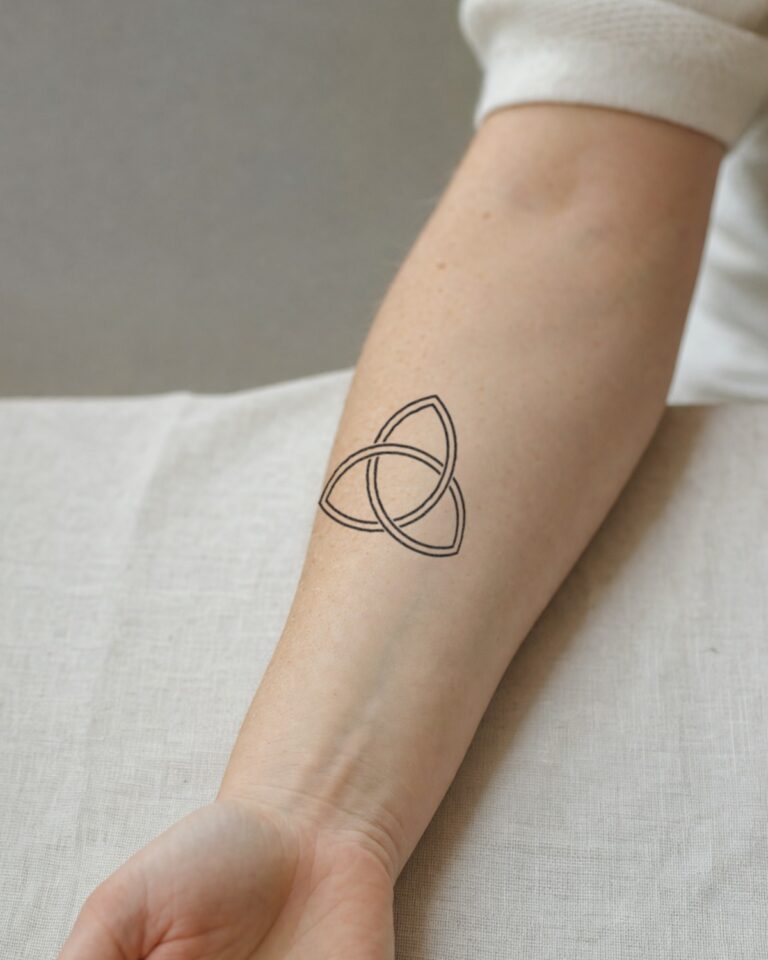
Mock-up: a woven triquetra on the inner forearm.
Three pointed loops, drawn with one line that never ends. If you watched Charmed, you know it from the Book of Shadows.
What people say: the Holy Trinity. Or land, sea and sky. Often with “5,000 years old” attached.
What we know: five thousand years is a different design (see number 1). The woven triquetra turns up in Irish and Anglo-Saxon art from the 600s, and it’s in the Book of Kells. Later the Vikings put it on coins and runestones.
Nobody knows what the people who first drew it meant. They didn’t write it down. The Trinity reading is in print by 1845. Linking it to land, sea and sky is modern.
It can still mean either to you. People pick it for faith, for a family of three, or for past, present and future. The full story is in our triquetra guide.
Where it suits: this is the one that works small. The plain version, with three clean loops, sits well on an inner wrist or the back of the neck. The woven version, with the loops passing over and under, needs a bit more room and an artist who knows knotwork. Add a circle round it and you have the Charmed look.
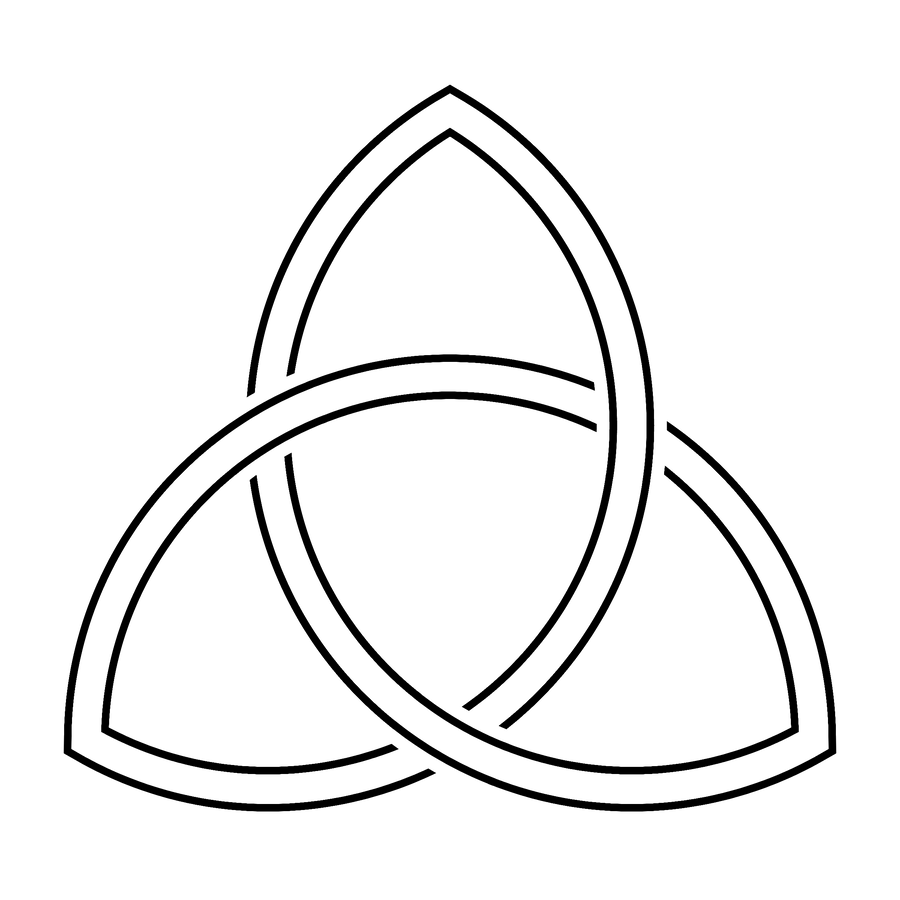
The triquetra stencil. Click or tap to open it full size.
4. The Celtic cross
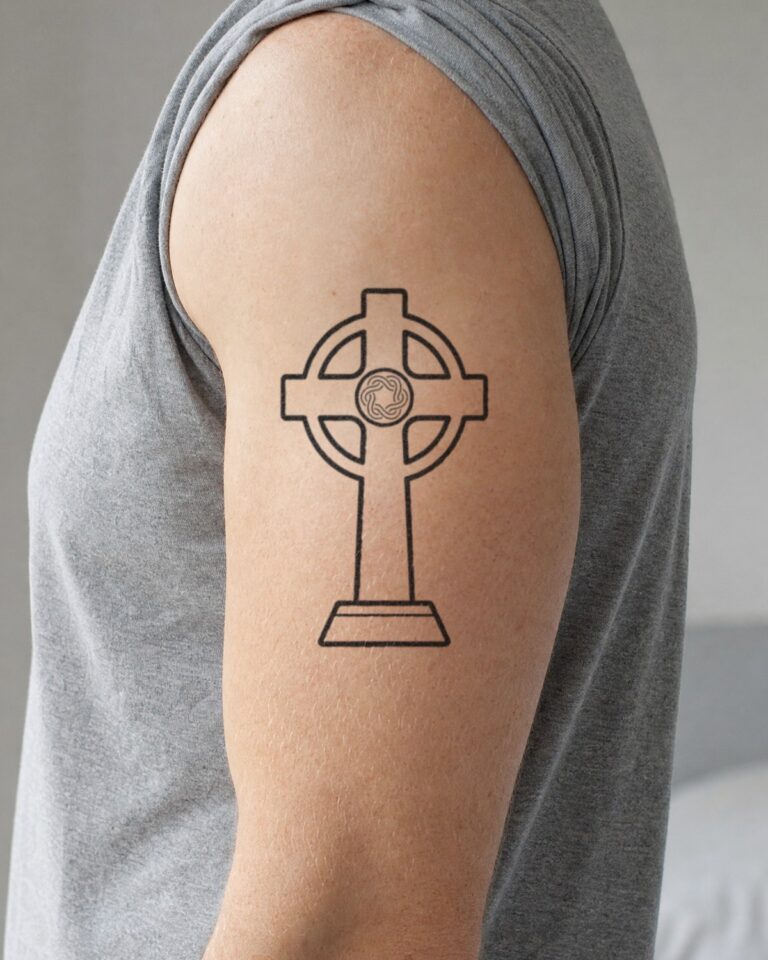
Mock-up: a long-shafted Celtic cross on the outer upper arm.
A cross with a ring around the middle.
What people say: St Patrick drew a cross through a pagan sun symbol.
What we know: it’s a lovely story, but the dates don’t work. Ireland’s stone high crosses come about 300 years after Patrick, from around the 700s or 800s into the 1100s. The big ones are covered in Bible scenes. Muiredach’s Cross at Monasterboice in County Louth is about five and a half metres of carved stone, probably from the early 900s.
Why the ring? Nobody’s sure. It probably helped hold the arms up. It might also be a halo, or the heavens, and the experts are still divided. The name “Celtic cross” seems to have caught on in the 1800s. Before that, they were high crosses.
Today people choose it for faith, for heritage and, because it stands on so many headstones, to remember a parent or grandparent. In the US, the Department of Veterans Affairs lists a Celtic Cross and a Catholic Celtic Cross among its emblems of belief for government headstones. More in our Celtic cross guide.
Where it suits: a tall design wants a long space, like the inner forearm, the upper arm or along the spine. Keep the long shaft. It’s what makes it a high cross, and it matters for a reason we’ll get to in the tattoos to avoid.
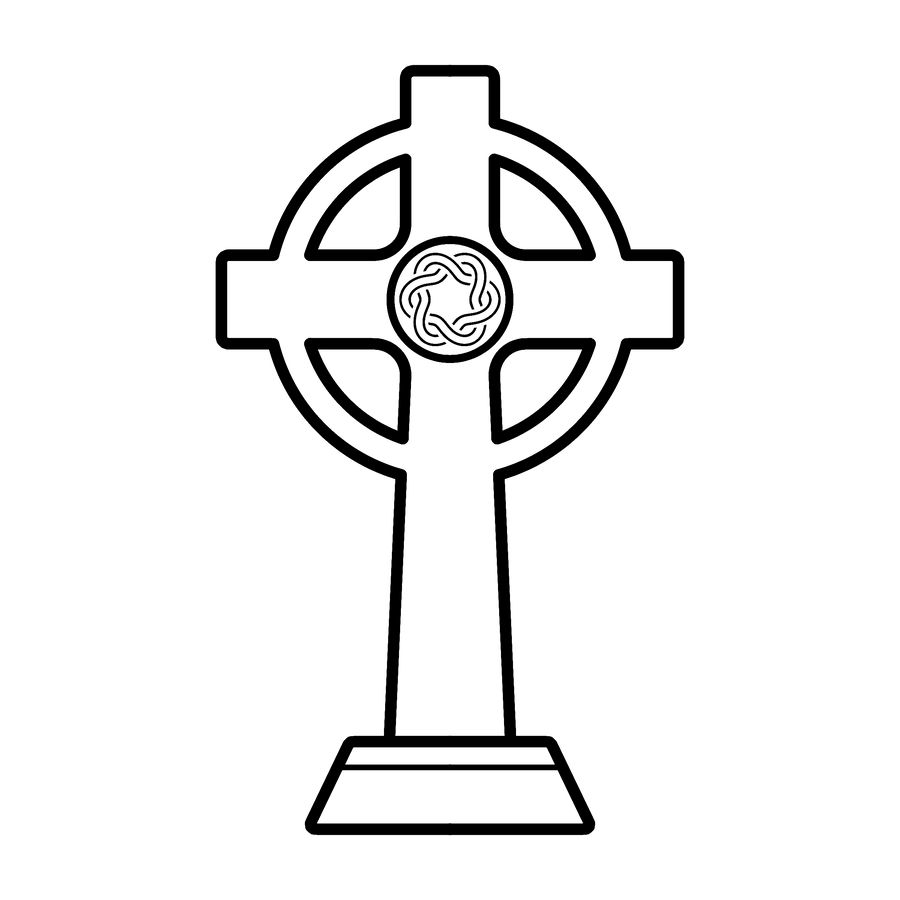
The Celtic cross stencil. Click or tap to open it full size.
5. St Brigid’s cross
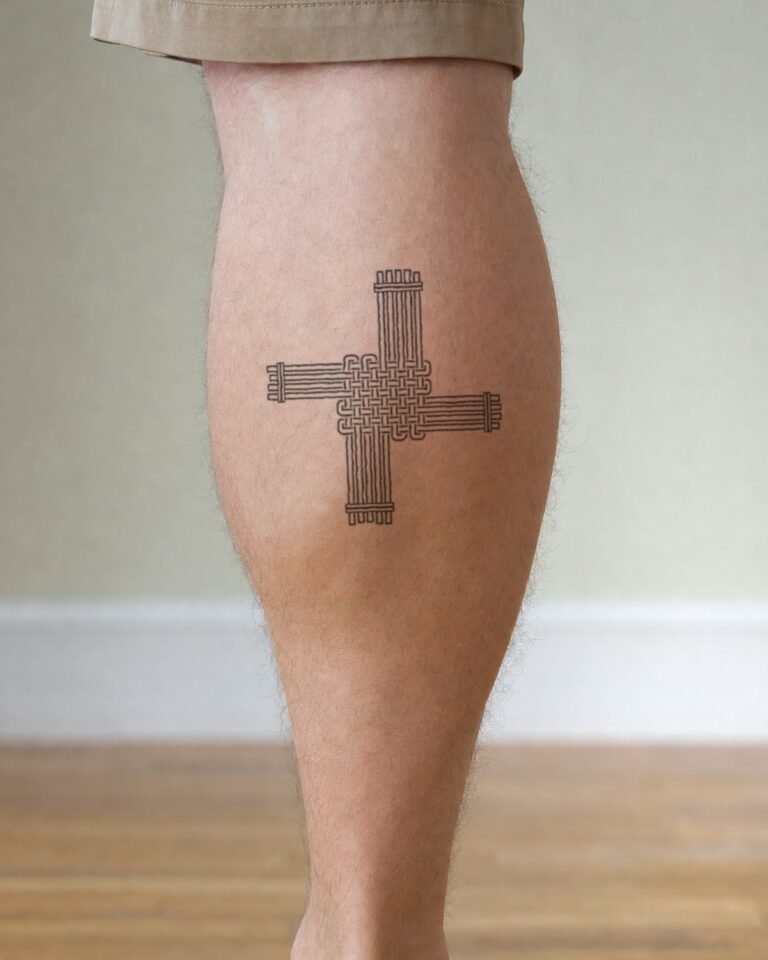
Mock-up: St Brigid’s cross on the calf.
Four arms and a woven square in the middle, traditionally made from rushes. You make it on the eve of St Brigid’s Day, 1 February, and hang it in the house to protect it for the year. From fire, mostly.
What people say: it’s older than Christianity, a sign of the goddess Brigid and the old spring festival.
What we know: it might be old. Customs like this often are. But the earliest written records of the crosses we could find are from the 1600s. That’s as far back as the paper goes, and anything older is a guess.
If you want an Irish symbol of protection with a real folk record behind it, this is the one. Ireland has had a St Brigid’s Day bank holiday since 2023, the first named after a woman. More in our guide to St Brigid’s cross.
Where it suits: it’s roughly square, so it suits the outer upper arm, the shoulder blade or the back of the neck. Ask for the rushes to look like rushes. The woven centre and the tied ends are what stop it looking like a plus sign, and that detail needs room.
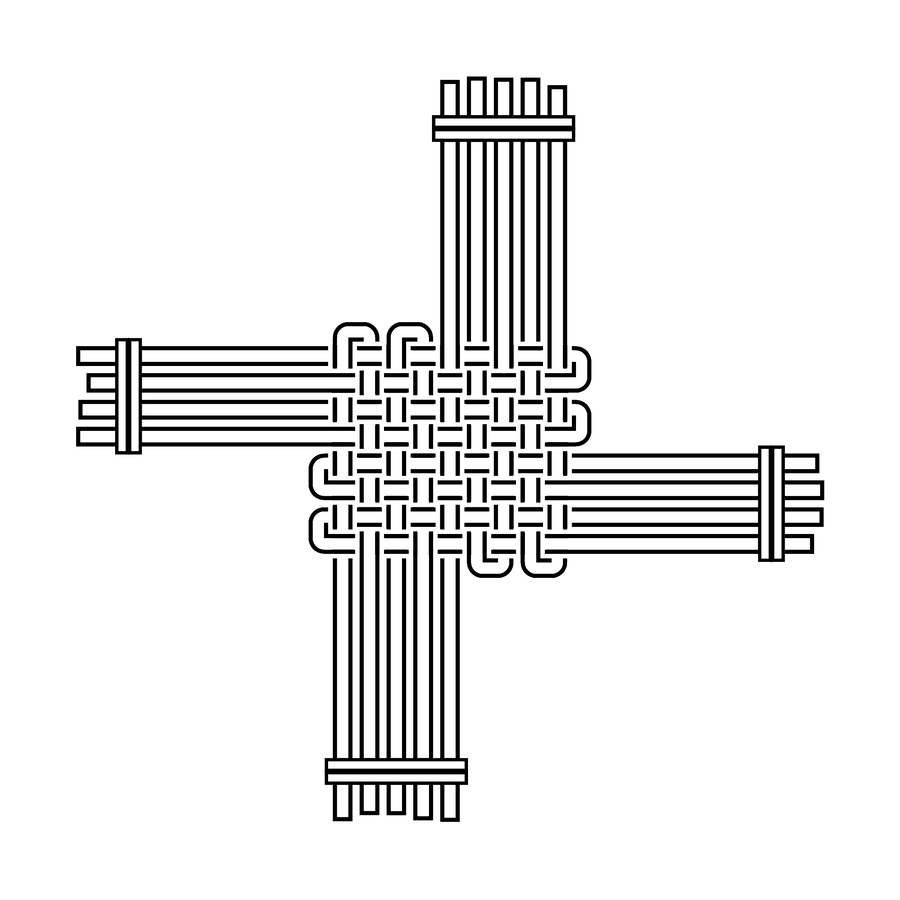
The St Brigid’s cross stencil. Click or tap to open it full size.
6. The Claddagh
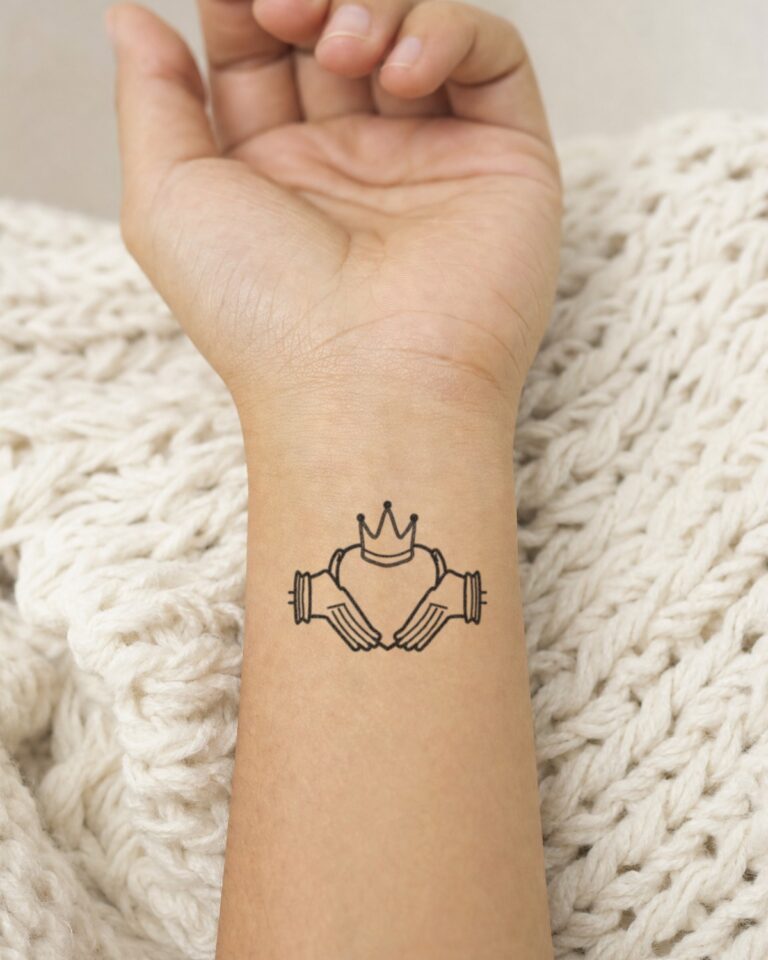
Mock-up: the Claddagh on the inner wrist.
Two hands holding a heart, with a crown on top. It comes from Galway.
What people say: a goldsmith captured by pirates made it for the girl waiting at home.
What we know: the National Museum of Ireland says it’s thought to stand for friendship, love and loyalty: the hands, the heart and the crown. The oldest Claddagh rings are from about 1700. The design is often credited to Richard Joyce, a Galway goldsmith whose marks run from 1691 to at least 1737.
The pirate part is half true. The first account of his life, from 1820, has him captured at sea, taken to Algiers and taught to be a goldsmith. It never mentions a ring. Or a girl.
The ways of wearing the ring are tradition too: right hand, heart out, you’re single; heart in, you’re taken; left hand for engaged or married. Even the National Museum says nobody’s sure where those customs came from. Read more about the Claddagh ring meaning.
Where it suits: there’s no knot to get wrong here, which is a mercy. But the fingers and the crown are fine detail, so give it room. The inner forearm suits it well. Decide which way the heart points before the stencil goes on, because someone will ask.
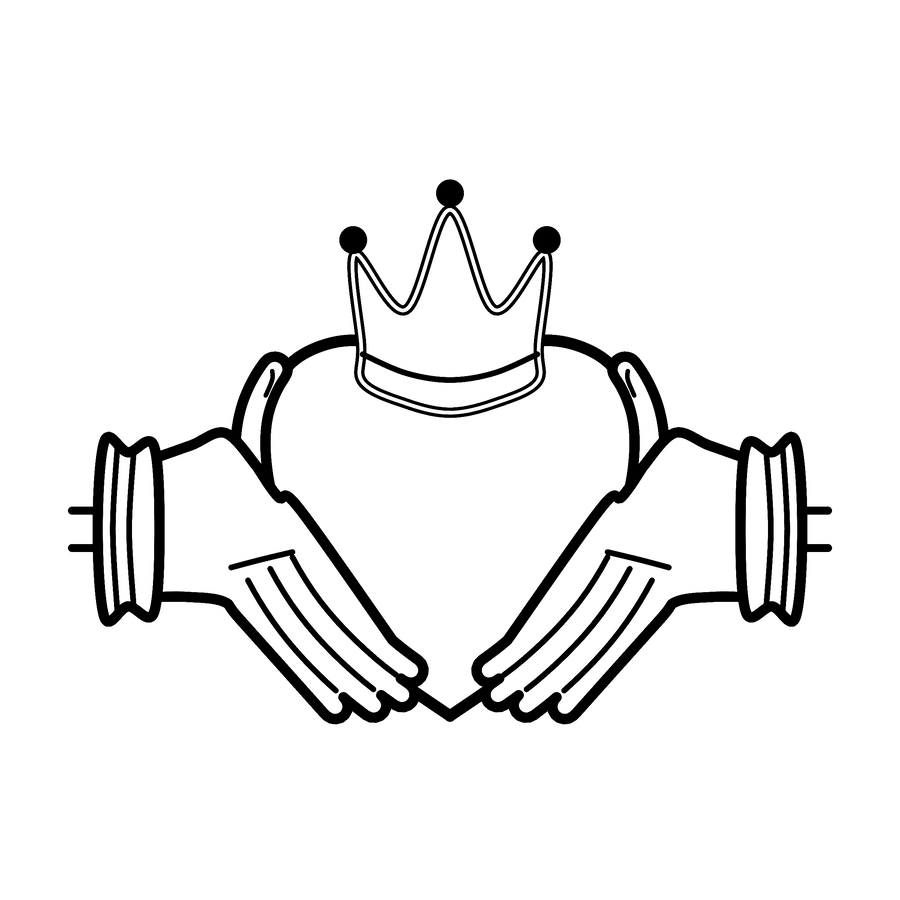
The Claddagh stencil. Click or tap to open it full size.
Liking these? All 12 drawings are in the free stencil pack. Get it here.
7. The Awen
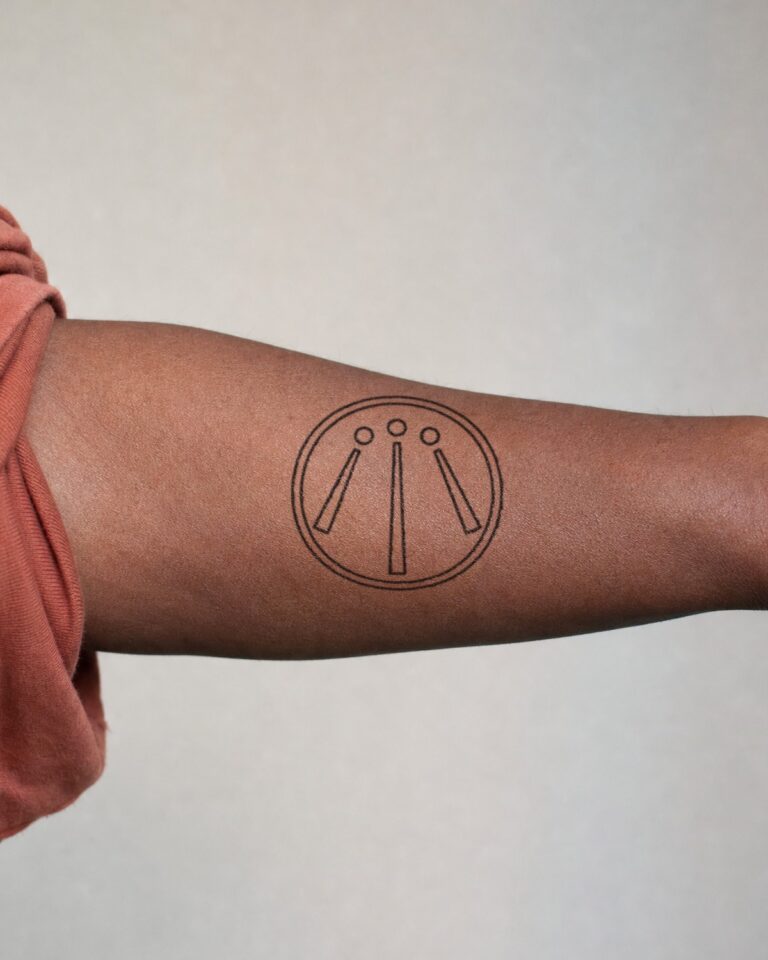
Mock-up: the Awen on the outer forearm.
Three dots over three rays of light, inside a circle. It’s Welsh, and the word is said OW-en.
What people say: an ancient Druid symbol.
What we know: the word is properly old. Awen means poetic inspiration, and it’s recorded from the 800s. The symbol isn’t. It was devised by Iolo Morganwg, a Welsh stonemason born Edward Williams, who died in 1826. It was first seen in public in 1833.
Iolo was also a forger, and a very good one. He passed off his own poems as medieval ones. He said the idea came from the ancient Druids. To him, the three rays stood for love, justice and truth.
Today it’s the emblem of the Welsh Gorsedd and of modern Druid groups, so it’s a real tradition, just a younger one than the label says. A good pick if your roots run to Wales as well as Ireland. More in our guides to the Awen and Druid symbols.
Where it suits: clean lines and plenty of open space mean it holds up well on the outer forearm or the inner wrist. Keep a little air between each dot and its ray. If they blur together, the design stops reading.
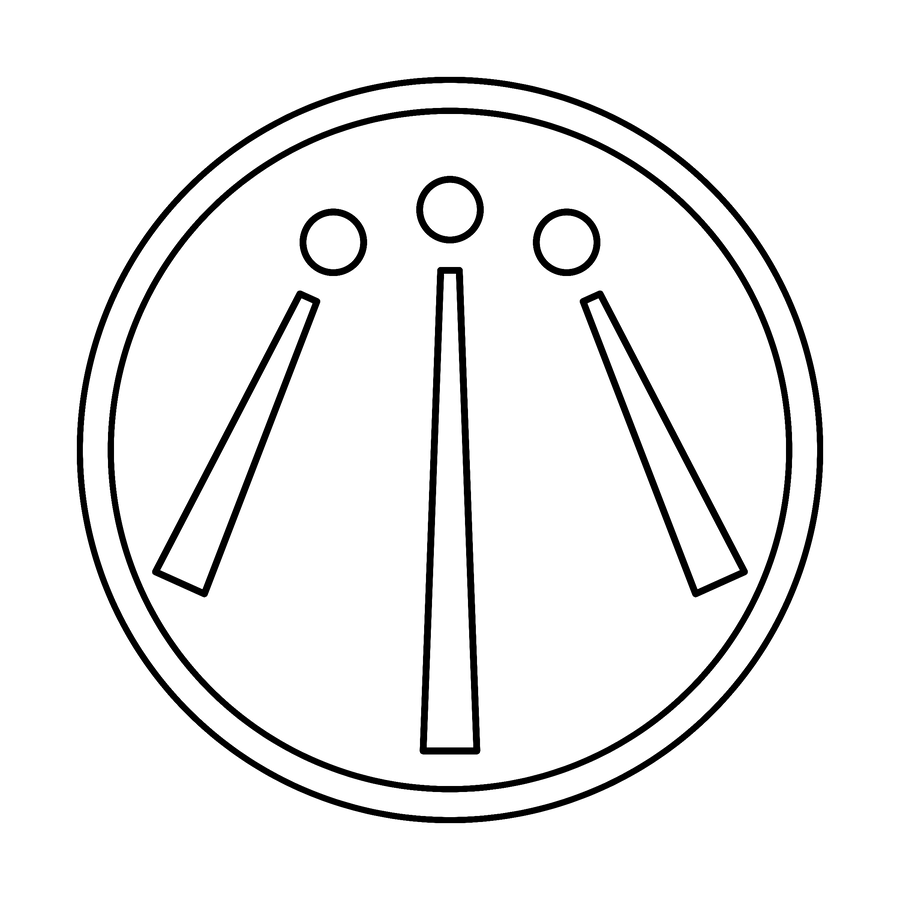
The Awen stencil. Click or tap to open it full size.
8. The Celtic tree of life
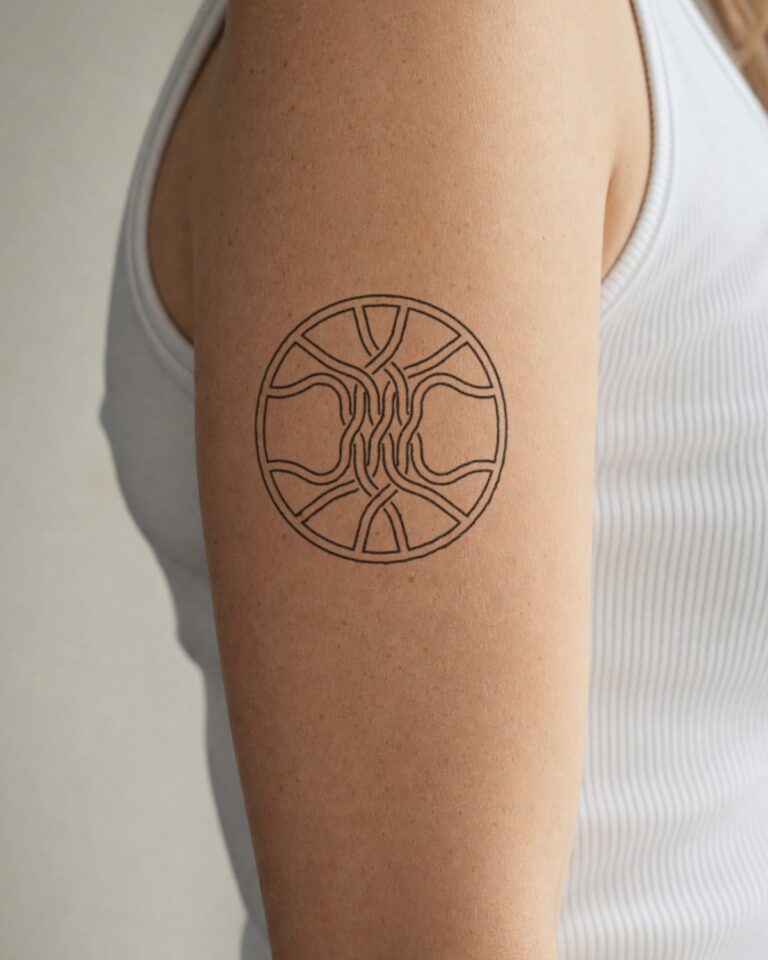
Mock-up: the Celtic tree of life on the upper arm.
A tree inside a circle, its roots and branches knotted together. In Irish, crann na beatha means tree of life.
What people say: an ancient Celtic symbol. Every village planted one in the middle.
What we know: this is the one we couldn’t date. The trees themselves are properly old. Early Ireland had sacred trees, and they were often linked to the places where kings were made. In 982, the annals say, a high king raided Brian Boru’s people and cut down the sacred tree of Magh Adhair.
But the knotted tree in a circle, the one on the pendants? We couldn’t find an early example anywhere. Or a source for the village story. So we’re not going to make up a date.
People choose it for family, roots and growth, and those meanings are as good as any. More on the Celtic tree of life.
Where it suits: this is the most detailed design on the list, so it needs the most room. A shoulder blade or the upper back gives the branches space to breathe. Shrink it onto a wrist and over the years it can blur into a dark circle.
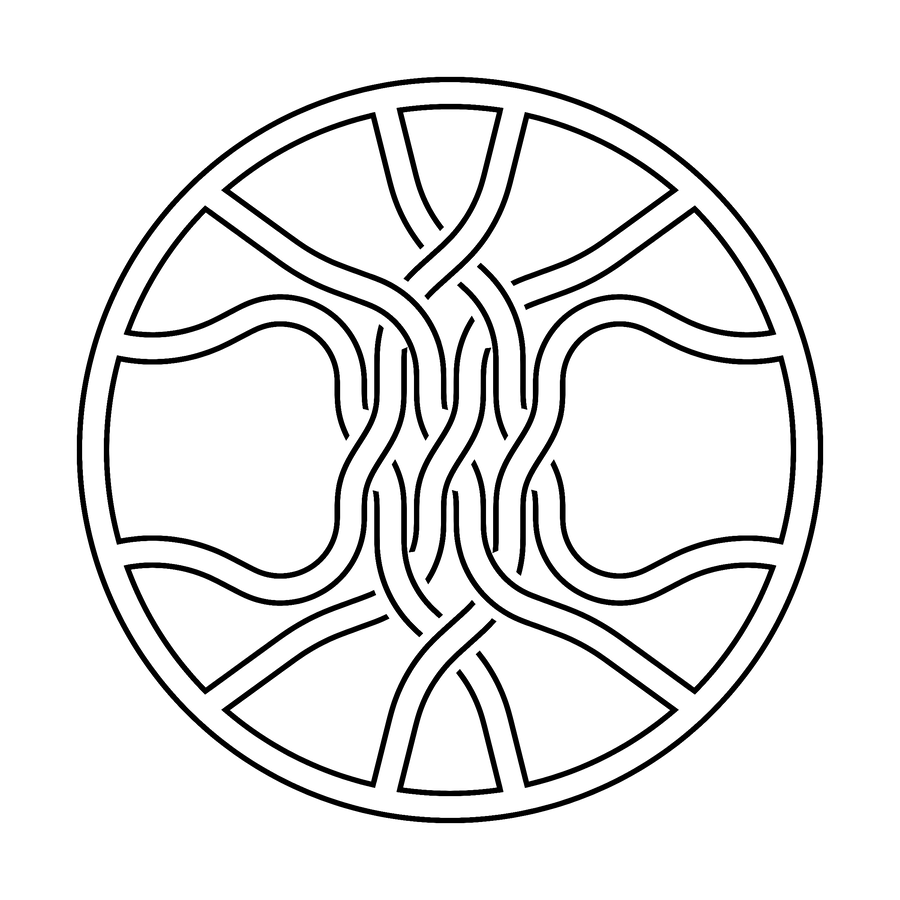
The tree of life stencil. Click or tap to open it full size.
9. The Celtic love knot
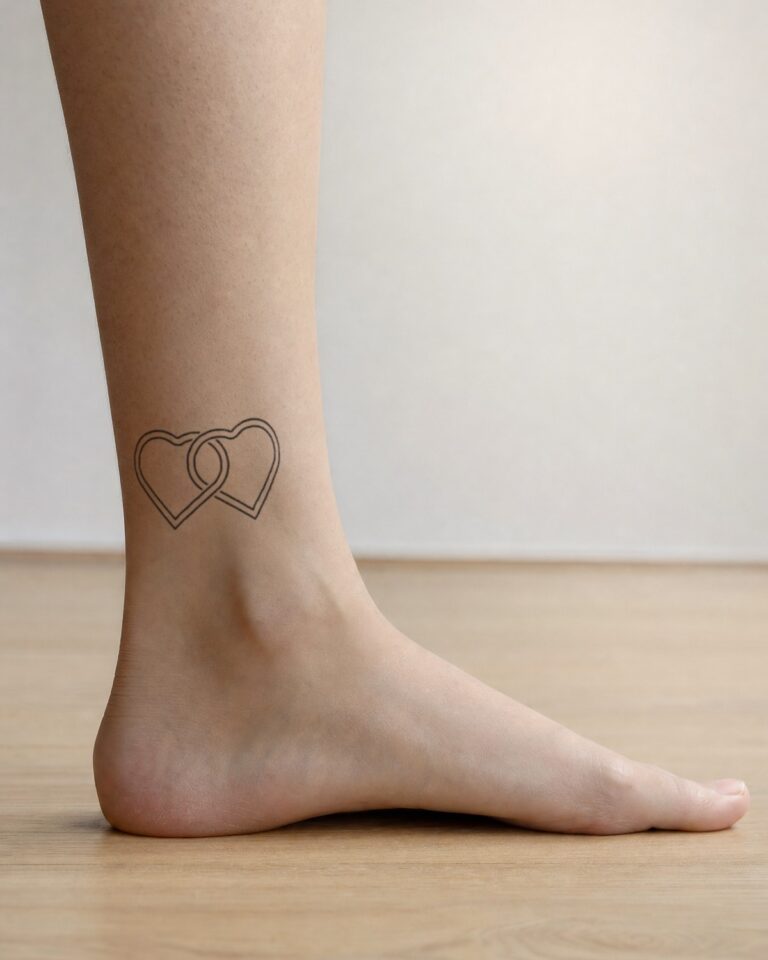
Mock-up: the love knot on the lower leg, just above the ankle.
Usually two hearts woven together, over and under. You’ll also see the Serch Bythol, two trinity knots joined by a circle, sold under a Welsh name meaning “everlasting love”.
What people say: the ancient Celts swapped love knots like wedding rings.
What we know: we went looking for those ancient Celts and couldn’t find them. The love heart is a medieval idea from mainland Europe, from around 1250, centuries after the Book of Kells. And the name “Celtic love knot” doesn’t show up in Google’s book data before 1991.
It’s a new design made with properly old knotwork. Ireland’s documented love symbol is the Claddagh (number 6). The whole story is in our guide to the Celtic love knot.
Where it suits: hearts sit nicely on the front of the shoulder, near the collarbone, or on the inner forearm. For a couple, the Serch Bythol splits neatly into two halves, so each of you gets one.
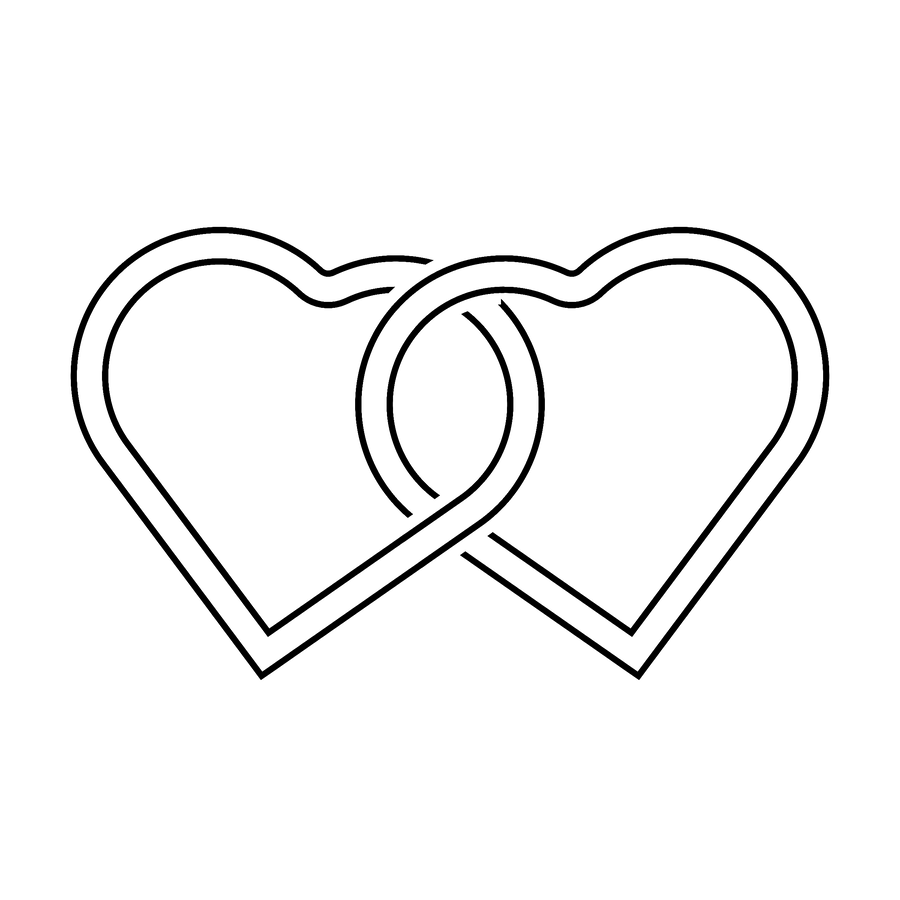
The love knot stencil. Click or tap to open it full size.
10. The shield knot
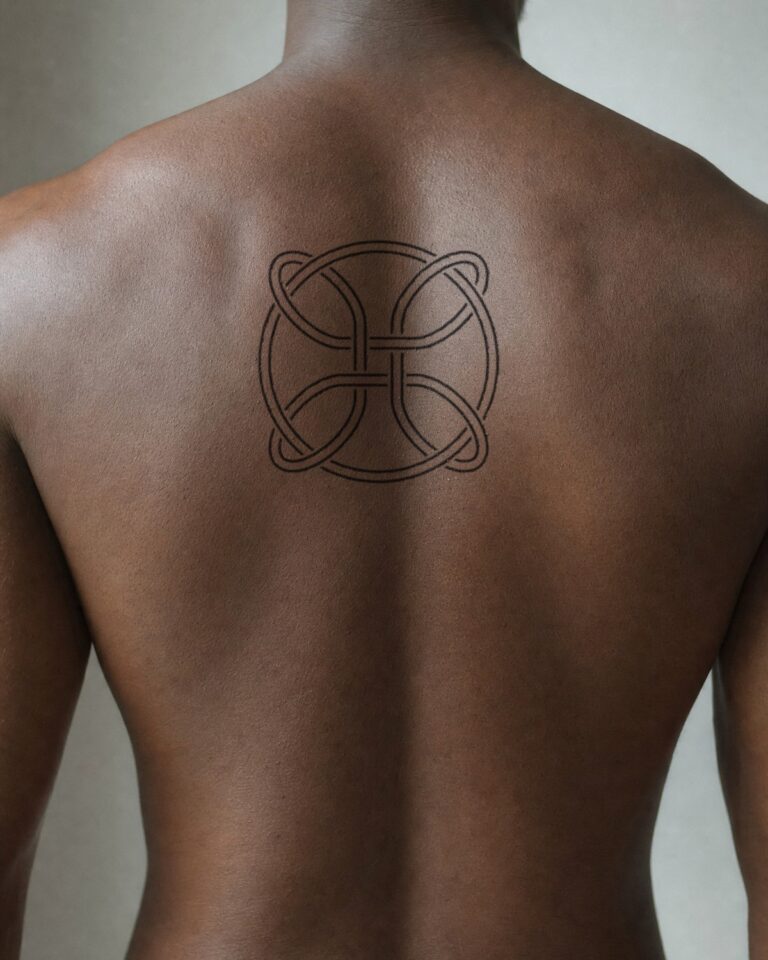
Mock-up: the shield knot on the upper back, between the shoulder blades.
Four corners, usually inside a circle.
What people say: Celtic warriors carried it into battle for protection.
What we know: we found no evidence for the battle part. The shape is real, though. Knots with four corners were carved on Irish and Welsh stones from roughly the 8th to the 11th century, at places like Clonmacnoise and Glendalough.
The name is another story. The earliest use of “shield knot” as a symbol we could find is from 1992, and the protection meaning shows up later that decade. Before that, a shield knot was a ready-tied necktie. “Shield Knot Ties” turn up in a 1908 newspaper advert and in Eaton’s catalogue of 1920 to 1921. Protection from tying your own tie.
More in our guide to the Celtic shield knot. If protection is the whole point, St Brigid’s cross (number 5) has the longer folk record.
Where it suits: the outer upper arm or the top of the shoulder. The circle version reads best at small sizes, but fine lines blur as a tattoo ages, so go a little bigger than you think.
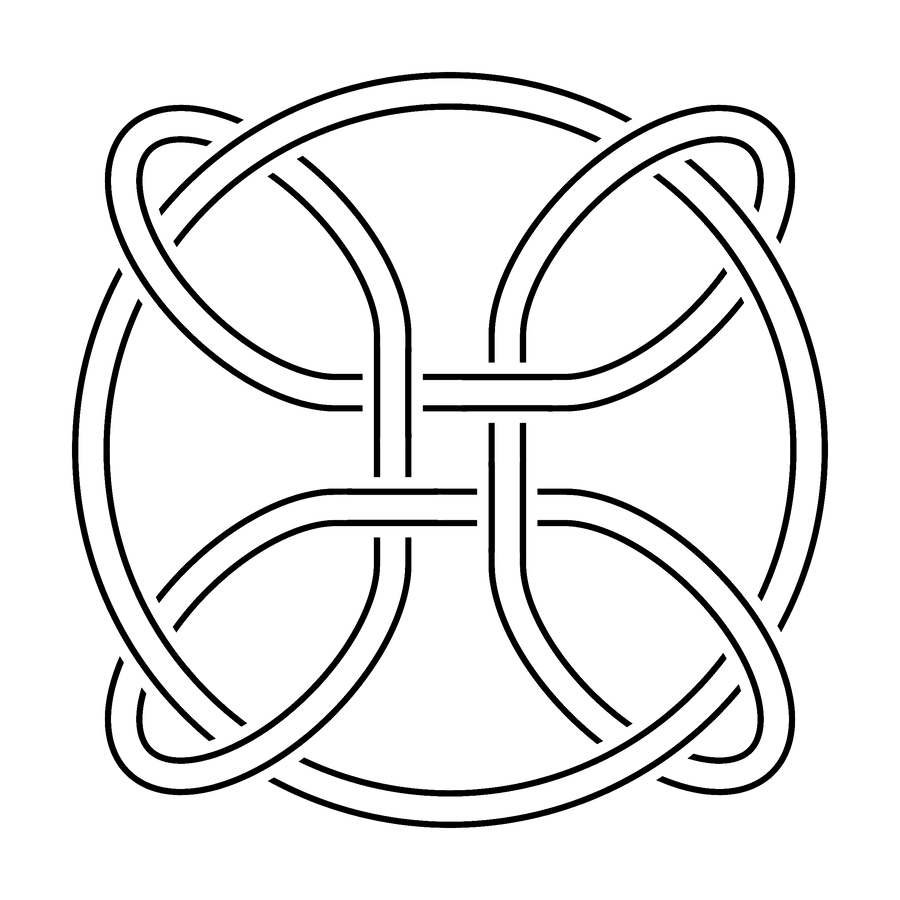
The shield knot stencil. Click or tap to open it full size.
11. The Dara knot
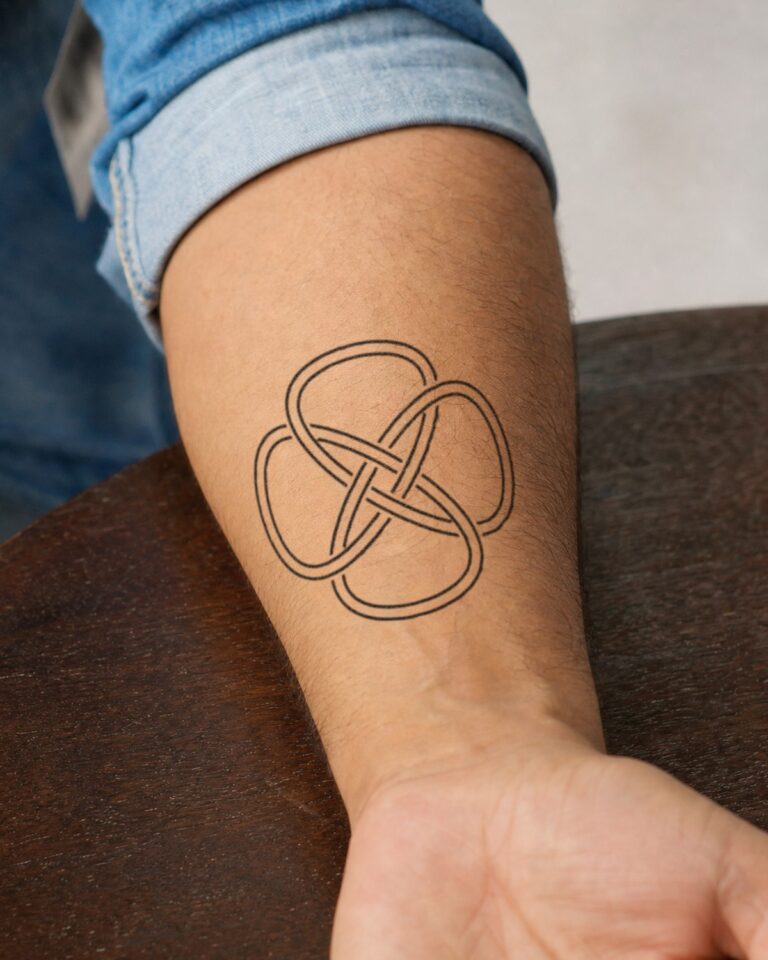
Mock-up: the Dara knot on the inner forearm.
A round knot with a woven, basket-like centre and four looped arms. Say it DAR-a. The name comes from dair, the Irish for an oak, as in Cill Dara, Kildare, “the church of the oak”. It’s sold as the Celtic symbol for strength.
What people say: oak trees, Druids, two thousand years.
What we know: the earliest mention we could find is from 2008, on a symbol website. And the picture on that page wasn’t even the round knot. It was a long, straight border. The first iPhone came out the year before, so the oldest trace we have is younger than the iPhone.
That doesn’t make it a fake. It’s a new design made with properly old knotwork, and nobody knows who drew it first. The oak, and what it stands for, is real. More on the Dara knot.
Where it suits: the woven centre is dense, so give it room. It suits a roomy spot: the top of the shoulder, the upper arm, the inner forearm, the calf or the back of the neck. There’s no fixed design, so adding an acorn or a date breaks no rule.
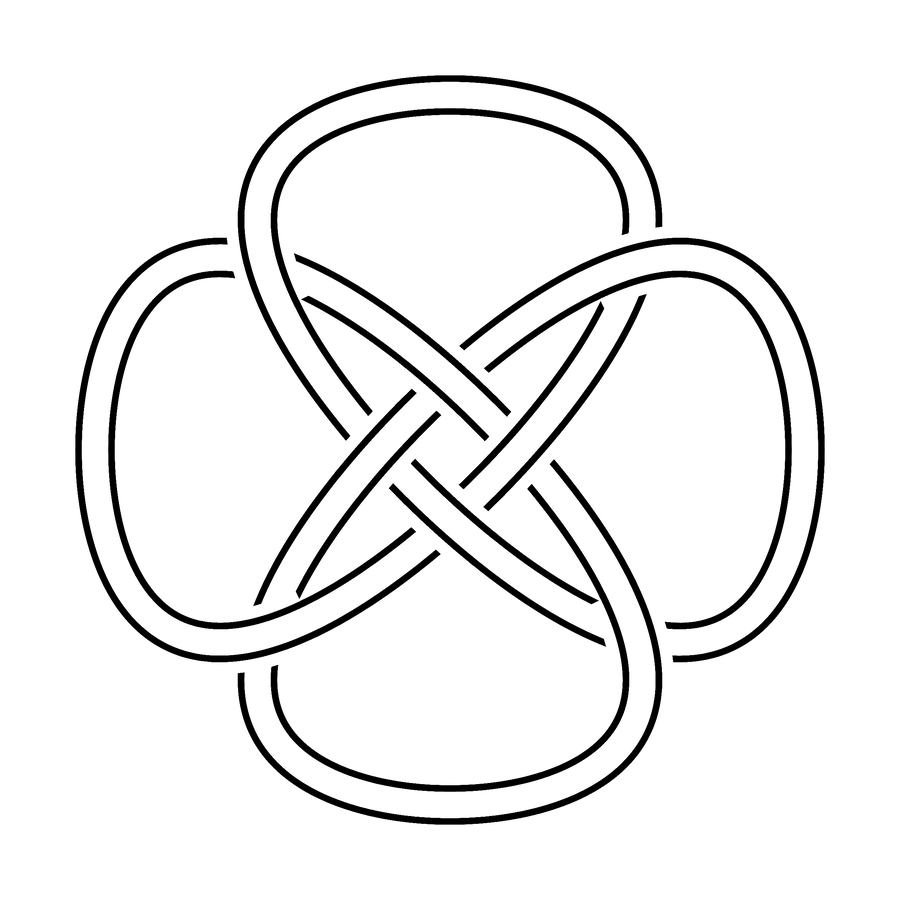
The Dara knot stencil. Click or tap to open it full size.
12. The Celtic motherhood knot
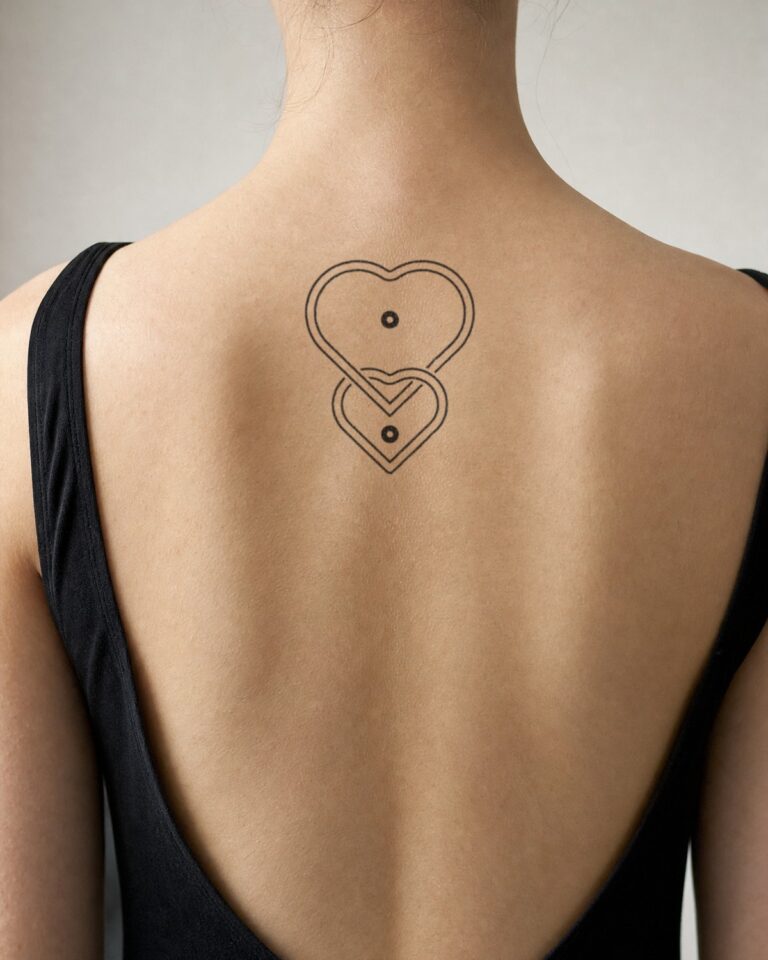
Mock-up: the motherhood knot on the upper back.
Two hearts woven together, one big and one small, with a dot for each child. You’ll know it from the Mother’s Day cards.
What people say: an ancient Celtic symbol of a mother’s love.
What we know: the earliest dated example we found is a shop listing from 2012, and that was a trinity-knot version, not the hearts. By 2017 a US jeweller was already calling it a popular tattoo design. The meaning came from jewellers, tattoo artists and wearers, not from any old text.
That’s grand. It means exactly what you want it to mean, and your mother won’t be asking for a source. More on the Celtic motherhood knot.
Where it suits: the outer forearm or the shoulder blade. Count the dots before the needle starts. Then count them again. If the family might grow, leave room for another dot. Nobody wants to explain why the youngest isn’t on Mam’s arm.
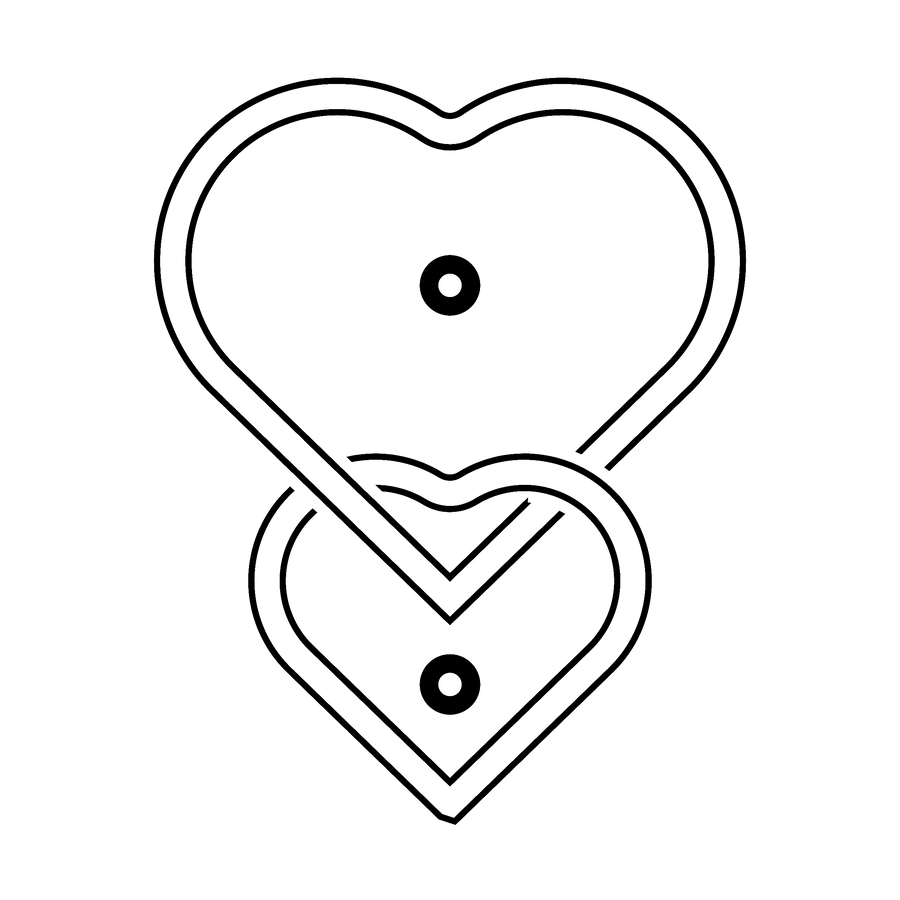
The motherhood knot stencil. Click or tap to open it full size.
Celtic tattoos to avoid (or at least think twice about)
None of the 12 designs above is a problem in itself. A few versions and habits are worth dodging.
The angular triskele. The Anti-Defamation League, the American anti-hate group, links one angular form, made of three sevens, to white supremacist groups. It says curved triskeles are used far more widely by ordinary people. Stick with the curved spiral.
The short, square cross in a circle. The ADL lists a version of the Celtic cross in its Hate Symbols database: a square cross interlocking with, or surrounded by, a circle. It calls the traditional Celtic cross a traditional Christian symbol, also used to show Irish pride, and says context decides. A long shaft avoids any confusion. Don’t let the creeps have it.
A knot that doesn’t knot. If a crossing goes over twice in a row, or a strand just stops, it isn’t knotwork. It’s spaghetti. Check the stencil before the needle comes out.
A Norse sign with a Celtic label. The Vegvísir, a compass-like Icelandic design, often turns up in collections of Celtic tattoos. It isn’t Celtic. Nothing wrong with it, just know what you’re getting.
Irish words nobody checked. If you add a word or name in Irish, get a fluent speaker to check it, accents and all. The accent, the fada, can change the meaning of a word.
Before you get inked
- Choose a licensed artist, and look at their healed work, not just fresh photos.
- Ask about knotwork. Has the artist drawn it before? Go round the stencil crossing by crossing: over, under, over.
- Go bigger than you think. Small knots blur over time, and fine interlace can fill in. If in doubt, go a bit bigger or a bit simpler.
- Pick the space, then the design. Round knots suit shoulders and shoulder blades, tall designs suit forearms, and bands suit the upper arm.
- Bring the meaning, not just the picture. Tell your artist why you want it. An initial, a date or an acorn can make it yours.
- Follow your artist’s aftercare advice. They’ll know their own work best.
Get all 12 stencils free
Every design in this guide, drawn by us with true over and under, as a printable PDF: one design per page, in clean black line art. Pop in your email and we’ll send it straight over.
You’ll also join the Irish Around The World email list, home of our Weekly Dose of Irish. Unsubscribe any time.
For personal use: print them, sketch on them, take them to your tattoo artist.
Celtic tattoo FAQ
What does a Celtic tattoo mean?
There’s no single meaning. Each design has its own, and many of those meanings are modern. The triquetra is read as the Holy Trinity, the shield knot as protection, the Dara knot as strength and the motherhood knot as a mother’s love. A meaning you give a design is still a real meaning.
What is the Celtic symbol for strength?
The Dara knot is the one sold for strength, after dair, the Irish for oak. The earliest mention of it we could find online is from 2008.
What is the Celtic symbol for family?
The motherhood knot, with a dot for each child, is the usual pick for a mother and her children. Many people choose the triquetra for a family of three, and the tree of life for roots and family. All three family meanings are modern.
What is the oldest Celtic tattoo design?
The triple spiral, carved at Newgrange around 3200 BC. The catch is that it isn’t Celtic. It was carved by Stone Age farmers, nearly 3,000 years before Celtic art reached Ireland.
Are Celtic tattoos offensive?
Traditional designs aren’t. The ADL flags two versions: an angular triskele made of three sevens, and a short, square cross in a circle. It says the traditional Celtic cross is a Christian symbol, also used for Irish pride. Choose curved spirals and long-shafted crosses and you’re fine.
Can I get a Celtic tattoo if I’m not Irish?
Of course. Knotwork has been borrowed and shared since Roman times: from Roman floors to Irish monks to Viking coins. If a design means something to you, that’s reason enough.
Where is the best place for a Celtic knot tattoo?
Round knots like the Dara and shield knots suit the shoulder, the shoulder blade and the upper arm. Bands go round the upper arm or forearm. Simple designs like a plain triquetra or the Awen can go on the wrist. Whatever you pick, go a bit bigger than you think.