Many Irish names carry a meaning you can still trace. Faolán means little wolf, Aodh means fire, Murchadh means sea-warrior, Niamh means brightness, and Criomhthann, by tradition St Columba’s first name, means fox. Early Irish names were built from everyday words for animals, colours and qualities, and the endings -án and -ín mean little. Plenty of meanings online are guesses, though, so each name below has its Irish spelling, a rough pronunciation and a meaning checked in Woulfe’s Irish Names and Surnames (1923) or the Royal Irish Academy’s Dictionary of the Irish Language.
Ireland’s most popular boys’ name in 2025 was Rían, and Fiadh was the No. 3 girls’ name, according to the Central Statistics Office. Look up what Rían means and you’ll be told “little king”. That might be right. It might not, and an old poetic word spelt the same way meant the sea.
That’s the trouble with Irish name meanings. Some are rock solid and well over a thousand years old. Others were dreamed up for baby-name websites and copied ever since.
So here are Irish names for boys and girls, sorted by the meanings people search for, from wolf and fire to the sea. I’ve checked each one against Rev. Patrick Woulfe’s Irish Names and Surnames (1923), eDIL (the online edition of the Royal Irish Academy’s dictionary of early Irish) and Ó Dónaill’s Irish-English dictionary, and I’ve flagged the shaky ones. For what parents are choosing right now, see my list of Ireland’s most popular baby names.
Jump to:
- How Irish names got their meanings
- Names meaning light and brightness
- Names meaning fire
- Names meaning moon or star
- Names meaning sea
- Names meaning wolf, fox and other animals
- Names meaning warrior and strength
- Names meaning red, dark or fair hair
- Names meaning king, queen and princess
- Names meaning love, hope and dreams
- Meanings to take with a pinch of salt
- The same meanings in Irish surnames
- Irish names meaning FAQ
- More Irish names reading
How Irish names got their meanings
Early Irish names were often made from ordinary words. Cú (koo) meant a hound, áed meant fire and muir meant the sea. There was more than one word for a wolf: fáel, or cú allaid, a “wild hound”, says eDIL. A deer was os allaid, literally a wild ox.
Pet endings do a lot of the work. The endings -án (awn) and -ín (een) mean little, so Rónán is little seal. For girls, -nait (nit) does the same job, so Fiadhnait is little deer. The same building blocks turn up all over the map, too, as my guide to Irish place names shows.
Two warnings before the lists. A word inside a name tells you its root, not what a mother in the year 700 had in mind. And Munster, Connacht and Ulster Irish say names differently, so the respellings below are rough guides, with the stressed syllable in capitals. Watch the fadas, the accents, too: plenty of websites print Oisin, Rian or Faolan, but the correct spellings are Oisín, Rían and Faolán, and the fada changes the sound. My guides to Irish girl names and Irish boy names include videos of the trickiest ones being said aloud.
Irish names meaning light and brightness
- Niamh (NEEV): brightness or lustre. Early Irish níam was a sheen or brilliance, often the gleam of gold (eDIL). In the legend, Niamh is the woman who carries Oisín away to Tír na nÓg (teer na NOHG).
- Áine (AWN-ya): the early Irish word áine meant brightness, glow or radiance (eDIL). Woulfe gave the name no meaning, only noting it had merged with Anne.
- Sorcha (SUR-ra-ha, or SUR-ka): “clear” or “bright”, says Woulfe. Sarah and Sally were stand-ins in English, not translations.
- Fionn (FYUN or FINN): white, fair or bright, from early Irish finn (eDIL). It’s the name of the hero Fionn mac Cumhaill (FYUN mok COOL), and Woulfe noted that the Norse borrowed it. He treats Fintan and Finnian as pet forms of the same word.
- Aoibheann (EE-vin): from Old Irish Aibfinn, which Woulfe explains as “fair form”. It was the name of St Enda’s mother.
What about the sun? No well-known traditional name means it. The Irish word is grian (GREE-un): lovely, but a modern choice as a name.
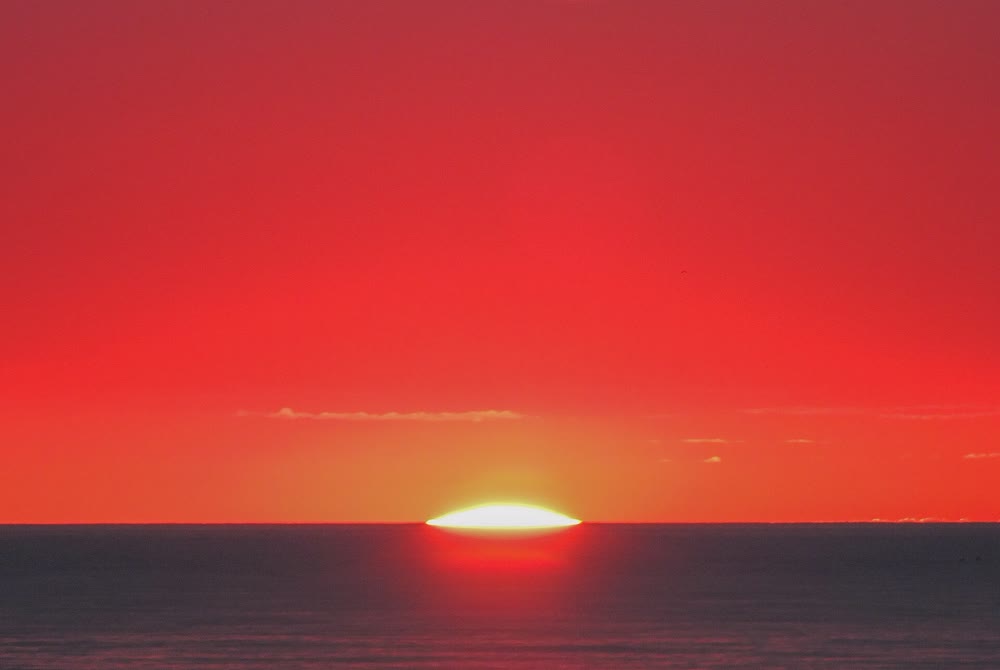
The sun rises over the Irish Sea, seen from the beach at Bray, Co. Wicklow. Photo: Photogoddle, CC BY-SA 4.0, via Wikimedia Commons
Irish names meaning fire
- Aodh (AY): fire. Woulfe describes it as ancient and very common, a favourite of the O’Neills and O’Donnells, and by his day it was always anglicised Hugh.
- Aodhán (AY-dawn): little fire, the source of Aidan. Woulfe lists 23 saints of the name.
- Aodhnait (AY-nit): the girls’ form, little fire, once anglicised Ena (Woulfe).
- Lasairfhíona (LAH-sa-REE-na): “flame of wine”, from lasair (LAH-sir), flame, and fíona (FEE-uh-na), of wine. Woulfe noted in 1923 that it lingered on in parts of Connacht.
Two names you’ll often see on fire lists don’t belong there. Eithne (EN-ya) means “a kernel”, according to Woulfe. And Bríd (BREED), or Brigid, probably comes from brígh (BREE), strength or power, he thought.
Brigid’s link to fire is real, just not in her name. A medieval glossary, Sanas Cormaic (SAN-us KOR-mik), explained the name as breo-shaigit, “a fiery arrow”; Whitley Stokes, its 1868 editor, called that absurd and tied the name to Brigantia, an ancient Celtic goddess. And in the 1180s Gerald of Wales described the fire her nuns kept alight at Kildare, nineteen nuns taking a night each and Brigid said to mind the twentieth. More in my St Brigid’s Day guide.
Irish names meaning moon or star
Here’s the honest answer: Woulfe’s 1923 list has no name meaning moon or star, and I haven’t found a traditional one anywhere else. Lists that say otherwise are guessing.
The moon is gealach (GYAL-ukh) in modern Irish. Early Irish called it ésca, and an old word lúan may also have meant the moon: Monday is Dé Luain (jay LOO-in), a match for the Latin dies lunae, the moon’s day (eDIL).
So if you’ve seen Luan (LOO-un) offered as a moon name, that’s half right. Early Irish also used lúan for a hound, a son and perhaps a warrior, and Woulfe read it as “hero” in the old name Anluan. The lúan láith, the hero’s light, was a glow said to rise from a warrior’s head in battle, most famously Cú Chulainn’s (eDIL). A moon is in its family tree, and that’s as far as anyone can honestly go.
A star is réalta (RAYL-tuh), a beautiful word but a modern idea as a name.
Irish names meaning sea
- Murchadh (MUR-uh-khuh): sea-warrior (Woulfe). It became Murrough, was often anglicised Morgan, and gave us the surname Murphy.
- Muirgheal (roughly MWIR-yal): sea-bright, or “fair one of the sea” in Woulfe’s words. Muriel in English.
- Muircheartach (MWIR-khyar-tukh): a skilled seafarer or navigator, Woulfe explains; Murtagh in English. It was also swapped for Mortimer, which has nothing to do with it.
- Rónán (ROH-nawn): little seal, the name of twelve saints (Woulfe). Seals have their own folklore too: meet the seal people.
- Muireann (MWIR-in): disputed. Many baby-name sites say “sea-white”, from muir (MWIR), sea, and fionn (FYUN), white. Woulfe gave “of the long hair” instead. Neither can be proved.
- Muirgen (roughly MWIR-ghen): sea-birth. The Annals of the Four Masters record a mermaid, Lí Ban (LEE-ban), caught in a fisherman’s net in 558, and a medieval tale says she was baptised Muirgen (Standish Hayes O’Grady’s 1892 translation).
- Mara (MAR-uh): a modern pick. It’s simply the Irish for “of the sea” (Ó Dónaill).
Two more need a footnote. Clíodhna (KLEE-na) doesn’t mean wave, but Tonn Chlíodhna (tun KHLEE-na), Clíodhna’s Wave, is one of “the three waves of all Erin” in the medieval Dindshenchas, the lore of places (Edward Gwynn’s translation). And Cuan (KOO-un) is usually given as harbour, which is what cuan means today. The saint’s name is older: early Irish cúán meant a small dog, and eDIL lists the man’s name Cuan under it.
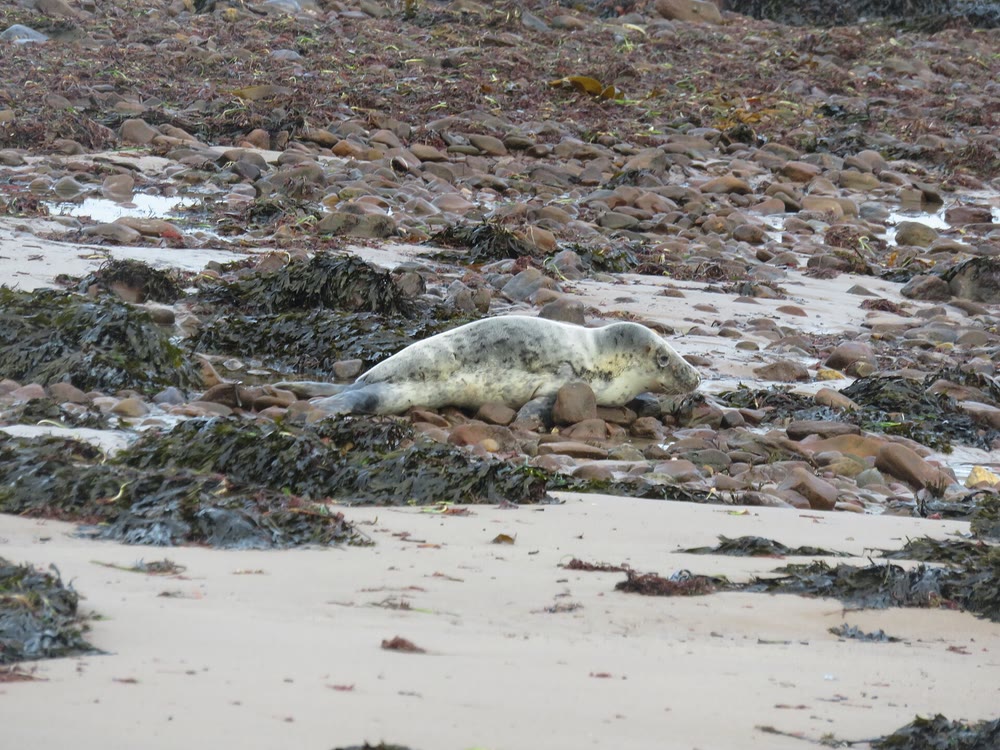
A young grey seal on Aughacasla Strand, Castlegregory, Co. Kerry. Rónán means little seal. Photo: Maoileann, CC BY-SA 4.0, via Wikimedia Commons
Irish names meaning wolf, fox and other animals
In everyday Irish today, a wolf is mac tíre (mok TEE-ruh), son of the countryside. The older faol (FAYL) survives in literature, and faolchú (FAYL-khoo) is a wild dog or wolf (Ó Dónaill). In the old names, hounds and wolves often blur together.
- Faolán (FAY-lawn; FEE-lawn in the west and north): little wolf. Woulfe counted fourteen saints of the name, among them a missionary killed in Flanders around 656. Phelan and Whelan come from it.
- Faoiltighearna (roughly FEEL-teer-na): wolf-lady, from faol and tighearna (TEER-na), lord, which Woulfe reads as lady in a woman’s name. Woulfe’s saint of this name was remembered on 17 March, St Patrick’s Day.
- Cú names: Cú Chulainn (koo KHUL-in), the hound of Culann, is the most famous. Later families used the same pattern: the Maguires liked Cúchonnacht (koo-KHUN-ukht), hound of Connacht (Woulfe).
- Conall (KUN-ul) and Conchobhar (KRU-khoor; Conor): often listed as “strong wolf” and “lover of hounds”. Woulfe gave “high-mighty” and “high will or desire” instead. Conchobhar’s second half does mean desiring (eDIL); the first halves are argued over. Conall joined Ireland’s top 100 boys’ names in 2025 (CSO).
- Criomhthann (roughly KRIV-hun): fox. Medieval glossaries explain crimthann as a fox (eDIL), and Woulfe records it as St Columba’s first name. The Blasket writer Tomás Ó Criomhthain (O’Crohan) carried the same old name in his surname.
- Mathghamhain (MAH-hoon): a bear. It was the name of Brian Boru’s brother (Woulfe). Art (ART) meant bear too, though poets used it for a hero (eDIL).
- Bran (BRAN): raven (Woulfe). In the Fionn stories, Bran is also one of Fionn’s two great hounds. Feichín (FEH-heen) means little raven and was the name of the saint of Fore (Woulfe).
- Oisín (UH-sheen or OSH-een): little deer (Woulfe). The word os probably first meant an ox or other cattle, and a wild os was a deer (eDIL). In T. W. Rolleston’s 1910 retelling of the Fionn stories, Oisín’s mother Sadhbh (SIVE) first appears as a fawn. More in my Irish mythology guide.
- Fiadh (FEE-a): wild, or deer. Early Irish fíad meant wild animals or game, especially deer (eDIL). Woulfe has only the old saint’s name Fiadhnait (FEE-a-nit), little deer; Fiadh is a modern favourite.
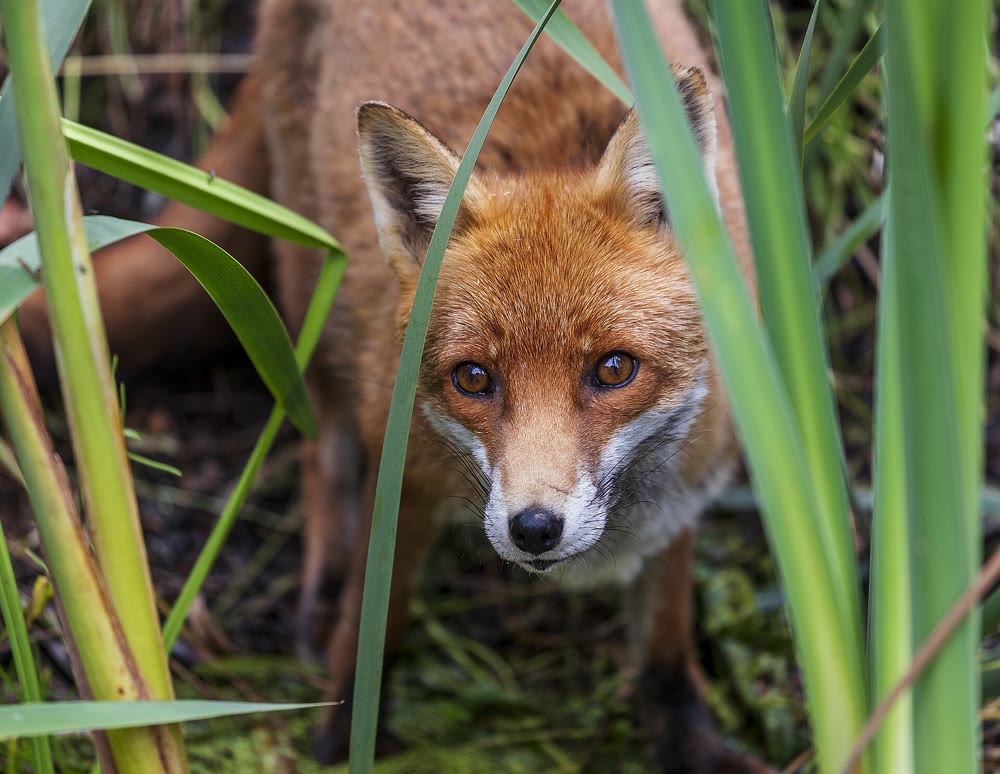
A red fox at Wild Ireland, a wildlife park near Burnfoot, Co. Donegal. Criomhthann, an old Irish name, means fox. Photo: Greg Clarke, CC BY 2.0, via Wikimedia Commons
Irish names meaning warrior and strength
- Cathal (KAH-hal): battle-mighty (Woulfe).
- Cathaoir (KA-heer): battle-man, or warrior; Cahir in English (Woulfe).
- Donnchadh (DUN-uh-khuh; Donncha, DUN-uh-ha): brown warrior, or strong warrior (Woulfe).
- Lorcán (LUR-kawn): little fierce one, and St Laurence O’Toole’s name in Irish (Woulfe). Even medieval scholars argued over lorc: their glossaries offer fierce, plundering and even mute (eDIL).
- Ardghal (ARD-ul): high valour; Ardal in English (Woulfe).
- Anluan (AN-loo-un): great champion, a rare O’Brien name (Woulfe).
- Ceallach (KYAL-ukh): war or strife, says Woulfe, who explains Cillian (KILL-ee-an) as its pet form. Kelly comes from it too.
- Oscar (OS-kar): son of Oisín. Name sites often say “deer lover”, from os, deer. Woulfe offered Norse Ásgeirr, “divine spear”, or the Irish word oscar, “champion”. But eDIL shows oscar first meant an outsider or even an enemy, and only a hero in late poetry, probably thanks to Oscar himself.
For girls:
- Treasa (TRASS-a): strength (Woulfe), and also used as Irish for Teresa.
- Bríd (BREED): probably from brígh, power or strength, as above.
- Méabh (MAYV): the queen of Connacht who leads the army in the Táin (toyn). eDIL lists an old adjective, medb, strong or intoxicating (of drink), and compares her name.
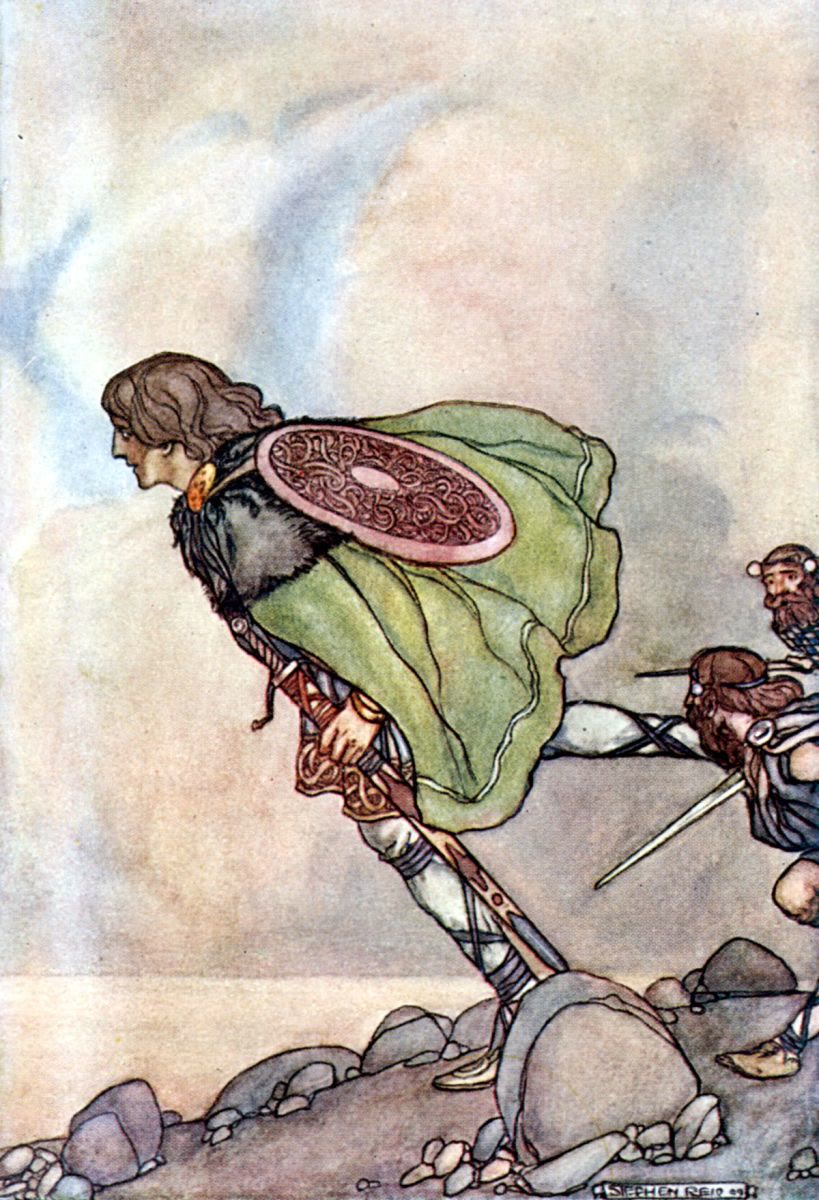
“They ran him by hill and plain”: the Fianna give chase, in Stephen Reid’s illustration for T. W. Rolleston’s The High Deeds of Finn (1910). Oscar, son of Oisín, was one of the four who outran the rest. Public domain, via Wikimedia Commons
Irish names meaning red, dark or fair hair
Colour names were everyday descriptions, though whether they described hair, skin or something else, nobody can now say.
- Ruadhán (ROO-awn): little red one, the name of the abbot of Lorrha; Rowan in English (Woulfe). Ruadh was a deep, brownish red (eDIL).
- Flann (FLAN; FLOWN in Munster): red, especially blood red (eDIL), or “ruddy”, says Woulfe. Flannán (FLAN-awn), the pet form, is the patron saint of Killaloe.
- Earcán (AR-kawn): little red, or speckled, one (Woulfe).
- Ruairí (ROO-ree): usually explained as “red king”, from ruadh (ROO-uh), red, and rí (REE), king. Woulfe disagreed and traced it to a Norse name, Rothrekr, “fame-ruler”. Both explanations are in print.
- Ciarán (KEER-awn): little dark one, from ciar (KEER), dark or black (Woulfe; eDIL). Woulfe lists fifteen saints of the name, among them Ciarán of Clonmacnoise.
- Dubhán (DOO-awn): little black one. Donnán (DUN-awn): little brown one. Crónán (KROH-nawn): from crón (KROHN), dark brown, borne by the abbot of Roscrea (Woulfe).
- Fionnuala (fin-OO-la): fair shoulder, often shortened to Nuala. Fionnbharr (FYUN-var; Finbarr): fair head, the patron saint of Cork. Caoilfhionn (KEE-lin): slender and fair; Keelin in English (all Woulfe).
Irish names meaning king, queen and princess
- Rían (REE-an): usually explained as “little king”, from rí (REE), king, plus -án. That’s plausible, but I couldn’t find it in a scholarly dictionary, and Woulfe gives the surname Ryan as descendant of Riaghan or Rian, with no meaning. Early Irish poets did have a word rían, meaning the sea, or a path (eDIL). Nobody has shown the name comes from either.
- Ríoghnach (REE-nukh): Woulfe paired it with Regina, Latin for queen, and it looks to be built on the early Irish word for a queen, rígain (eDIL). St Ríoghnach was St Finnian of Clonard’s sister.
- Órfhlaith (OR-la; Orla): “the golden lady”, says Woulfe. The flaith part meant sovereignty or a ruler (eDIL), which is why you’ll also see “golden princess”.
- Gormfhlaith (GORM-la): from gorm (GOR-um), blue, and flaith (FLAH), lady or ruler (Woulfe; eDIL). Early Irish gorm could also mean illustrious (eDIL).
- Tighearnach (TEER-nukh): lordly. Tighearnán (TEER-nawn): little lord, an O’Rourke favourite. They gave us Tierney and Tiernan (Woulfe).
- Domhnall (DOH-nal): world-mighty, Woulfe says; Donall, Daniel and Donald in English.
Irish names meaning love, hope and dreams
- Cárthach (KAWR-hukh): loving (Woulfe; eDIL). St Cárthach led the church at Lismore as abbot and bishop, and the MacCarthys take their name from a later Cárthach, a lord who died in 1045.
- Caoimhe (KWEE-va, or KEE-va in the north): gentleness, beauty and grace, says Woulfe. Its root, cáem, meant dear, precious or beloved (eDIL), and the same word is in Caoimhín (KEE-veen, or kwee-VEEN in Munster), Kevin, Woulfe’s “comely birth”.
- Dearbháil (roughly DER-vawl; Derval): true desire, from dearbh (DAR-uv), true, and áil (AWL), desire (Woulfe).
- Aisling (ASH-ling): a dream or vision. Ó Dónaill also gives it as the name for a vision poem. In 1923 Woulfe noted it in use as a girl’s name in Derry and Omeath.
- Saoirse (SEER-sha): freedom (Ó Dónaill). It isn’t in Woulfe’s 1923 list; it’s a modern name made from an old word.
- Sláine (SLAWN-ya): health, once common among the O’Briens. Sadhbh (SIVE): goodness (both Woulfe).
And hope? The Irish word is dóchas (DOH-khus), but no traditional name means it.
Meanings to take with a pinch of salt
- Eithne doesn’t mean fire. Woulfe’s meaning is a kernel.
- Gráinne (GRAWN-ya) doesn’t mean Grace. Grace was just the English name used in its place; Woulfe gives no meaning.
- Brigid doesn’t mean fiery arrow. That was a medieval glossary’s guess.
- Cuan didn’t start out meaning harbour; it meant little hound.
- Oscar didn’t start out meaning champion.
- Rían may mean little king, but nobody has proved it.
The same meanings in Irish surnames
Many Irish surnames grew from first names: Ó (oh) meant grandson or descendant, and Mac (mok) meant son (more in my Irish surnames guide). So plenty of families carry these meanings without knowing it. These are all from Woulfe:
- Murphy: descendant of Murchadh, sea-warrior. In the Registrar-General’s 1894 report on Irish surnames, Murphy came first and Kelly second.
- Kelly: descendant of Ceallach, war or strife.
- Phelan and Whelan: descendants of Faolán, little wolf.
- Hayes, Hughes and O’Hea: from Aodh, fire. Egan and Keegan: from Aodhagán, another little fire.
- Flynn: from Flann, red.
- MacMahon: son of Mathghamhain, the bear.
- McCarthy: son of Cárthach, loving.
- Doyle: from Dubhghall (DOO-al), the black or dark foreigner, a name the Irish gave the Danes.
- MacCrohan: son of Criomhthann, the fox, a Kerry branch of the O’Sullivans.
- Fox: in the Midlands, the head of the Ó Catharnaigh (oh KA-har-nee) family was called An Sionnach (un SHIN-ukh), the Fox, after an ancestor nicknamed the fox who was killed in 1084. Other Fox families were once Ó Sionnaigh (oh SHIN-ee) or Mac an tSionnaigh (mok un TIN-ee), both from sionnach, fox.
Irish names meaning FAQ
What Irish name means wolf?
Faolán (FAY-lawn), little wolf, for a boy, and Faoiltighearna, wolf-lady, for a girl. Phelan and Whelan come from Faolán.
What Irish name means fire?
Aodh (AY) means fire; Aodhán (AY-dawn), or Aidan, and Aodhnait (AY-nit) mean little fire; Lasairfhíona means flame of wine. Eithne and Brigid don’t mean fire.
What Irish name means warrior?
Cathaoir (battle-man), Murchadh (sea-warrior), Donnchadh (brown or strong warrior) and Cathal (battle-mighty). For a girl, Treasa means strength.
Is there an Irish name that means moon?
Not a traditional one. The modern word for moon is gealach, and an old word, lúan, which gave Monday its Irish name, may once have meant the moon.
What Irish name means light?
Niamh (NEEV), brightness, and Áine (AWN-ya), radiance, are the best fits. Sorcha means bright, and Fionn means fair or bright.
What does the Irish name Rían mean?
It’s usually said to mean little king, but that isn’t proven. An old poetic word, rían, meant the sea.
What Irish name means fox?
Criomhthann (roughly KRIV-hun), by tradition St Columba’s first name.
Love this? Save it to your Pinterest board for later.
Pin image: An Irish Wolfhound, a watercolour by Edwin Landseer. Yale Center for British Art, CC0, via Wikimedia Commons
A little bit of Ireland in your inbox every Friday ☘️
The free Weekly Dose of Irish: an Irish joke, a Celtic symbol, an Irish fact, a poem and the week’s best articles in one short email. Join 9,600+ readers.
Free. One short email every Friday. Unsubscribe any time.
More Irish names reading
- Irish Baby Names: Ireland’s Most Popular Names (Official List, Published 2026)
- How to Pronounce Irish Girl Names: Aoife, Caoimhe, Fiadh, Róisín and More
- How to Pronounce Irish Boy Names: Tadhg, Oisín, Eoghan and More
- Irish Surnames: Meanings, Origins and the Top 100 Names in Ireland
- Irish Names for Grandma and Grandpa: Mamó, Móraí, Daideo and More (With Pronunciation)
- Tír na nÓg: The Irish Legend of Oisín, Niamh and 300 Lost Years
- Anglicized Irish Names: Kathleen, Colleen, Maureen and 22 More
Featured image: An Irish Wolfhound, a watercolour by Edwin Landseer. Yale Center for British Art, CC0, via Wikimedia Commons.