Irish mythology is the body of stories about Ireland’s old gods, heroes and kings, written down by Christian scholars in medieval Ireland. Modern scholars group the tales into four cycles: the Mythological Cycle (the Tuatha Dé Danann), the Ulster Cycle (Cú Chulainn and the Táin), the Fenian Cycle (Fionn mac Cumhaill and the Fianna) and the Cycles of the Kings. The oldest surviving manuscript of literature in Irish was written before 1106, and many of the stories are free to read online.
A six-year-old boy kills a smith’s ferocious guard dog, then offers to guard the house himself until a new pup is grown. Four children spend 900 years as swans. A queen leads the armies of four provinces into Ulster because her husband owns a great bull and she has none to match it.
That’s Irish mythology: gods, warriors, lovers and kings, in stories copied by Irish scribes more than 900 years ago and still being retold today.
I’ve written about many of these tales, from the Children of Lir to the Táin. This page ties them together: the four cycles, 20 of the best stories, the books they survive in, and where to start.
Jump to:
- What is Irish mythology?
- The four cycles of Irish mythology
- Where the stories survive: the manuscripts
- The Book of Invasions
- The Mythological Cycle: the old gods
- The Ulster Cycle: Cú Chulainn and the Táin
- The Fenian Cycle: Fionn and the Fianna
- The Cycles of the Kings
- Beyond the cycles: voyages and folklore
- Where to start: free translations and good books
- Irish mythology for kids
- Irish mythology or “Celtic” mythology?
- Irish mythology FAQ
- More Irish mythology reading
What is Irish mythology?
In Irish, mythology is miotaseolaíocht (roughly MIT-uh-shoh-lee-ukht) and a story is a scéal (shkayl). Irish mythology means the stories of early Ireland: gods who become fairies, impossible heroes, doomed lovers, kings bound by strange taboos and voyages beyond the sea.
Nearly all of it reaches us through Christian hands, and the copyists didn’t always approve. Closing the Táin in the Book of Leinster, a scribe’s Latin note dismisses parts as demons’ trickery, parts as poets’ inventions and parts as made up “for the delectation of fools” (Joseph Dunn’s 1914 translation).
So scholars disagree about how much pre-Christian belief survives. Some see half-remembered pagan gods in the tales; others, like Kim McCone in Pagan Past and Christian Present (1990), stress how thoroughly Christian authors shaped them. The Celtic scholar John Carey notes that pagan ideas about origins survive only in indirect glimpses.
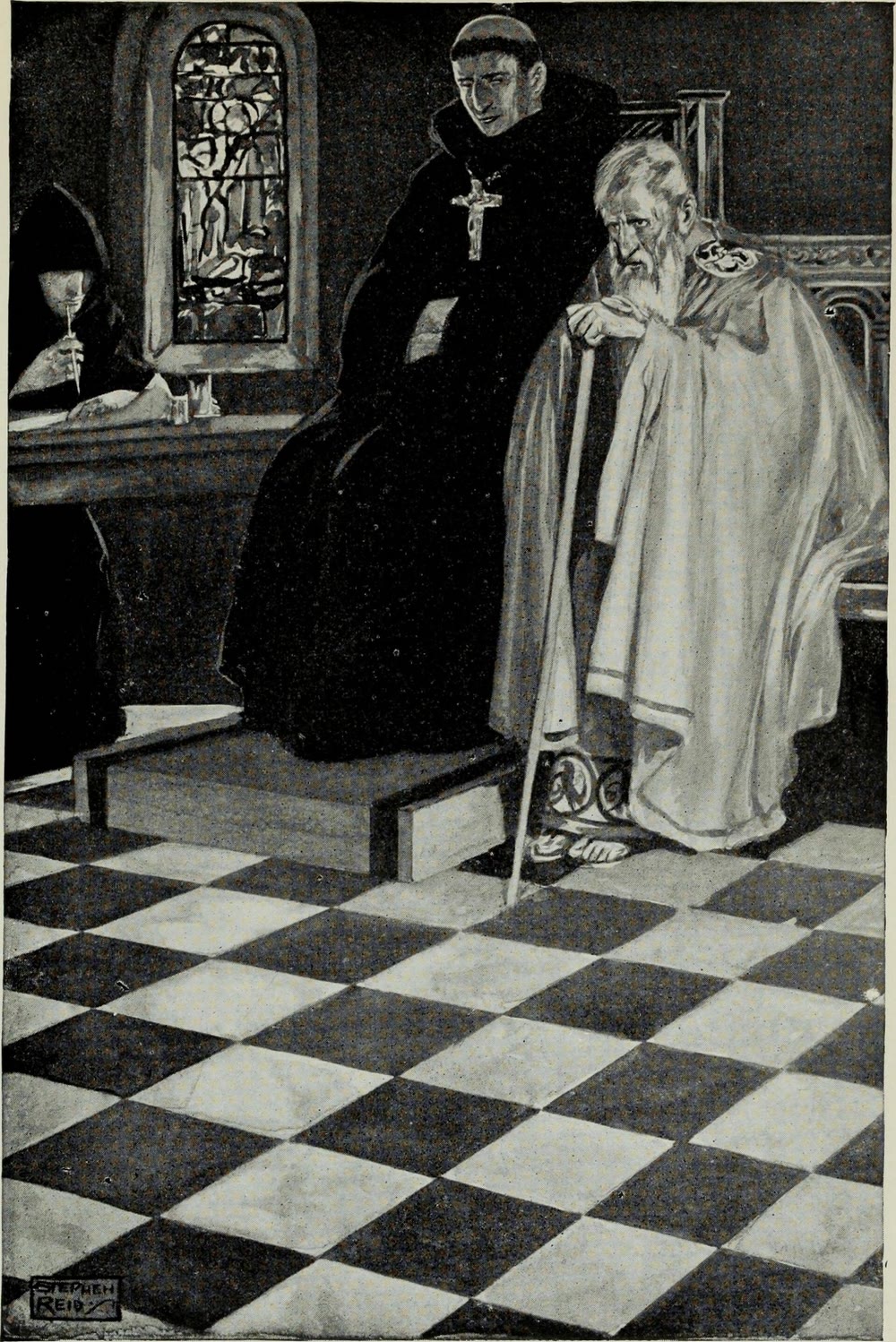
“Patrick bade his scribes write all carefully down”: St Patrick has an old Fenian warrior’s stories written down. Illustration by Stephen Reid for T. W. Rolleston, Myths and Legends of the Celtic Race (1911). Public domain, via Wikimedia Commons
The four cycles of Irish mythology
| Cycle | Main characters | Start with |
|---|---|---|
| Mythological Cycle | The Tuatha Dé Danann: the Dagda, Lugh, the Morrígan | The Children of Lir |
| Ulster Cycle (An Rúraíocht, roughly un ROO-ree-ukht) | Cú Chulainn, King Conchobar, Queen Medb | The Táin |
| Fenian Cycle (An Fhiannaíocht, roughly un EE-uh-nee-ukht) | Fionn mac Cumhaill, Oisín and the Fianna | The Salmon of Knowledge |
| Cycles of the Kings (or Historical Cycle) | Legendary and real kings | Niall and the hag at the well |
The cycles are a modern filing system. Medieval Irish poets sorted stories by type: a tale list in the Book of Leinster names 187 titles under headings such as destructions, cattle raids, wooings, battles, voyages and violent deaths.
Where the stories survive: the manuscripts
The oldest surviving manuscript of literature in Irish is Lebor na hUidre, the Book of the Dun Cow, made before 1106, most likely at the monastery of Clonmacnoise. The Royal Irish Academy, which keeps it in Dublin, says it is named after a relic, the hide of St Ciarán’s dun cow. Its 67 surviving leaves hold the oldest versions of the Táin and the Voyage of Bran. In 1359 the O’Donnells of Donegal even used it to ransom captured kinsmen, then won it back in a raid in 1470.
The Book of Leinster, in Trinity College Dublin, was written in the 12th century by the scribe Áed Ua Crimthainn and others. It holds the Book of Invasions, a fuller Táin and the story of Deirdre.
Some tales were copied from books now lost, such as Cín Dromma Snechtai, generally thought to date from the 8th century. Irish Script on Screen, run by the Dublin Institute for Advanced Studies, has free images of both great books.
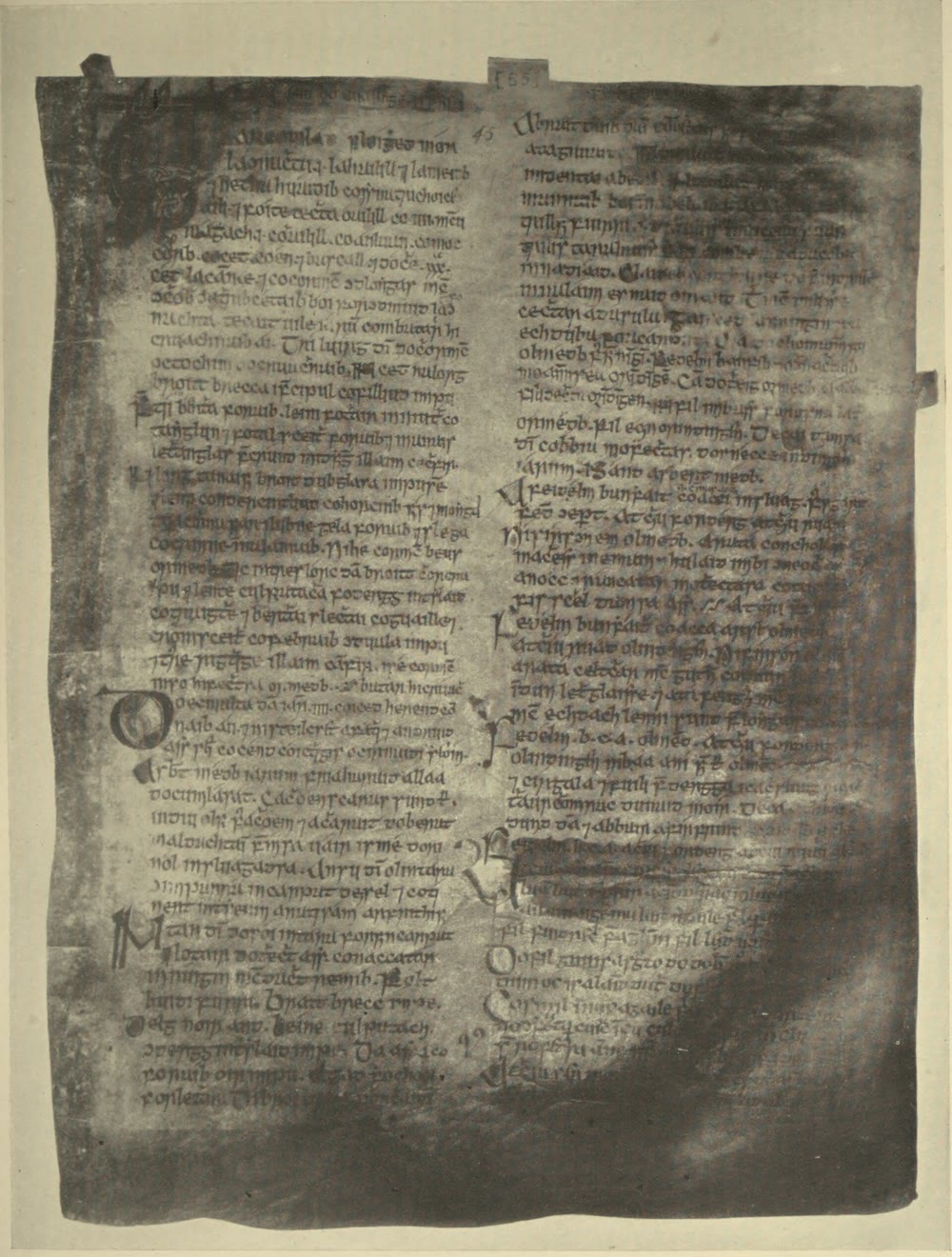
Page 55 of Lebor na hUidre, where its copy of the Táin begins, as reproduced in Joseph Dunn’s 1914 translation of the Táin. The manuscript is in the Royal Irish Academy. Public domain, via Wikimedia Commons
The Book of Invasions
Lebor Gabála Érenn (roughly LEV-or GAV-aw-luh AY-ren), the Book of the Taking of Ireland, was compiled in the 11th century. It tells Ireland’s story from the Creation onward, as a series of peoples who each take the island:
- Cessair leads a settlement before Noah’s Flood, and it does not survive.
- Partholón‘s people settle the land, then die of plague in a single week.
- Nemed‘s people fight the Fomorians, sinister raiders who haunt the whole book.
- The Fir Bolg arrive, in one tradition as refugees from Greece.
- The Tuatha Dé Danann (roughly TOO-uh day DAN-un) defeat the Fir Bolg and the Fomorians.
- The sons of Míl, ancestors of the Gaels, win Ireland, and the Tuatha Dé withdraw into the hills.
Scholars call this “synthetic history”, a term apparently coined by Eoin MacNeill in 1921: clerics stitching native legend onto the Bible and Latin chronicles. The Gaels’ ancestors wander from Scythia to Egypt to Spain, much as the Israelites wander towards the Promised Land. John Carey sees it as a national origin story that set Ireland beside Israel and Rome.
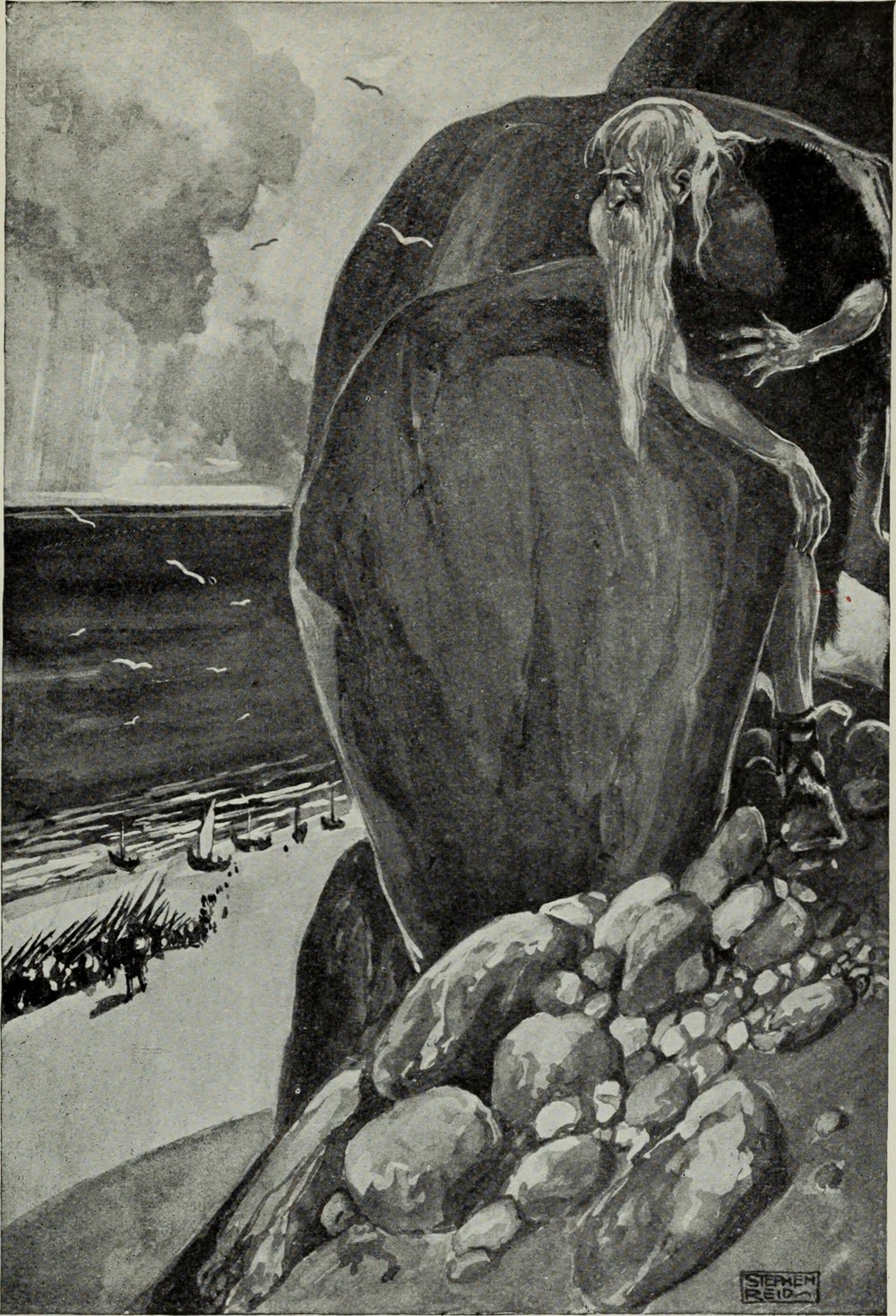
“Tuan watches Nemed”: Tuan mac Cairill, who in legend lived on through the ages in animal shapes, spies on Nemed’s people landing below. Illustration by Stephen Reid for T. W. Rolleston, Myths and Legends of the Celtic Race (1911). Public domain, via Wikimedia Commons
The Mythological Cycle: the old gods
These are the stories of the Tuatha Dé Danann, whom most scholars see as Ireland’s old gods recast as an ancient people with magic powers: the Dagda, Lugh (LOO), Brigid and the war goddess the Morrígan (MOR-ee-gun). My Celtic gods guide has them one by one.
1. The Second Battle of Mag Tuired
The gods’ great war with the Fomorians, set at Samhain (SOW-in). After King Nuada loses a hand, the stingy half-Fomorian Bres rules until Nuada gets a silver hand and his crown back. Then young Lugh arrives, master of every art, and kills his own grandfather, Balor (BAL-ur), with a sling stone through his deadly eye.
2. The Children of Lir
In this tale, probably late medieval, jealous Aoife (EE-fuh) turns her four stepchildren into swans for 900 years, on Lough Derravaragh, the Sea of Moyle and the sea off Erris in Co. Mayo. They keep their human voices, and when the spell lifts they are frail and ancient, baptised just before death.
3. The Fate of the Children of Tuireann
Three brothers kill Lugh’s father, so Lugh demands impossible treasures, from three magic apples to a cooking spit kept under the sea. They win them all but come home dying, and Lugh refuses them his healing pigskin. With Lir and Deirdre, it was later counted among the Three Sorrows of Storytelling.
4. The Wooing of Étaín
Midir’s jealous wife turns his love, Étaín, into a purple fly, which falls into a woman’s cup and is reborn as a girl, 1,012 years after Étaín’s first birth. When she is queen of Tara, Midir beats her husband, King Eochaid, at a board game, claims a kiss from her as his prize and carries her off, and the court sees two swans flying away.
5. The Dream of Aengus
Aengus Óg (AYN-gus OHG), son of the Dagda, falls sick with love for a girl he sees in dreams: Cáer, a swan every other year. At Samhain he finds her among 150 swans, becomes a swan himself, and they fly home to Brú na Bóinne (broo nuh BOH-nyuh), where their singing lulls the whole household asleep for three days and nights.
The Ulster Cycle: Cú Chulainn and the Táin
Ireland’s heroic sagas are set at the court of King Conchobar of Ulster at Emain Macha (roughly EV-in MAKH-uh), today’s Navan Fort near Armagh. The enemy is usually Connacht, ruled by Queen Medb (MAYV) and King Ailill from Cruachan, now Rathcroghan in Co. Roscommon.
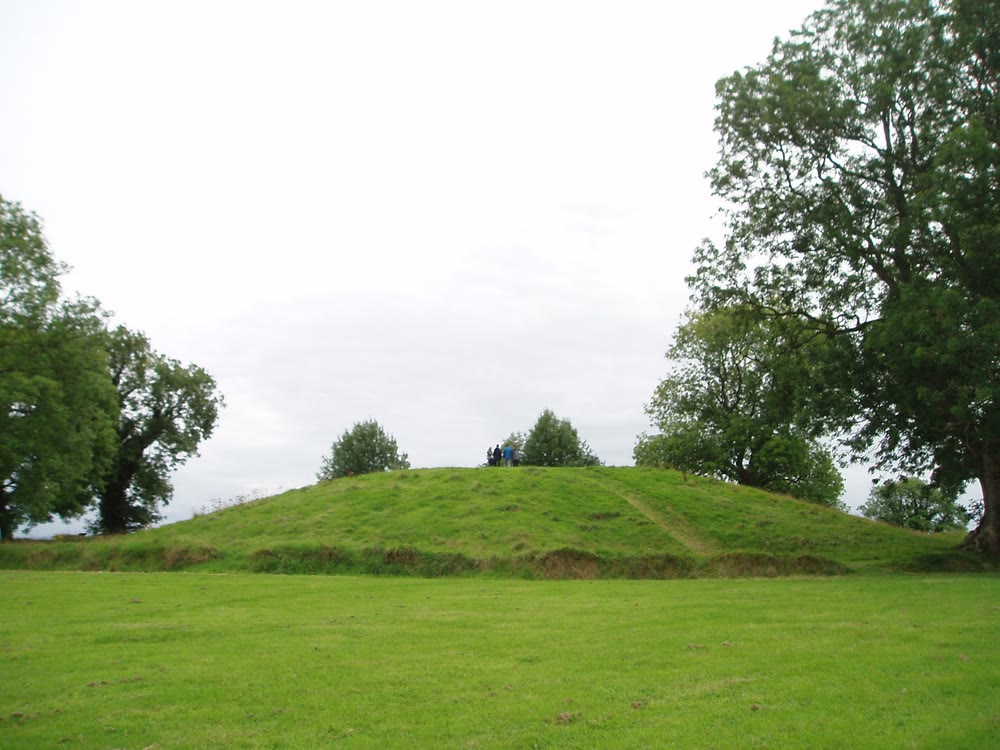
Navan Fort, Co. Armagh, the Emain Macha of the Ulster Cycle. Photo: Chris Andrews, CC BY-SA 2.0, via Wikimedia Commons
6. The Táin
In Táin Bó Cúailnge (roughly tawn boh KOOL-nyuh), the Cattle Raid of Cooley, Medb sends her armies into Ulster after the Brown Bull of Cooley. With the Ulstermen helpless under a curse, seventeen-year-old Cú Chulainn (koo KHULL-in; often run together online as Cuchulainn) holds the fords alone and kills his own foster-brother, Ferdiad.
7. How Cú Chulainn got his name
Arriving late at a feast, the boy Setanta kills the smith Culann’s huge guard dog with his ball. Seeing Culann’s grief, he offers to take the dog’s place until a pup is grown, and the druid Cathbad names him Cú Chulainn, the hound of Culann.
8. Deirdre and the Sons of Uisliu
A druid foretells that Deirdre (DEER-druh) will bring ruin. King Conchobar raises her to be his wife, but she elopes to Scotland with Noísiu, who is lured home and killed. In the Book of Leinster, she lives a year without smiling, then dashes her head against a rock. Later versions, including Lady Gregory’s, give her a different death.
9. Macha’s curse
A man boasts that his pregnant wife, Macha, can outrun the king’s horses. Forced to race, she wins, gives birth to twins at the finish, and curses Ulster’s men to be as weak as a woman in labour in their hour of need. Cú Chulainn escapes it. The tale also offers one explanation of the name Emain Macha, read as “the twins of Macha”.
10. Bricriu’s Feast
Bricriu Poison-Tongue throws a feast just to set three heroes and their wives fighting over the champion’s portion. A stranger then invites anyone to cut off his head, if they’ll take the return blow. Only Cú Chulainn keeps the bargain, and the axe falls blunt side first. Scholars have long compared it with Sir Gawain and the Green Knight.
11. The Death of Cú Chulainn
Tricked into breaking his geasa, his sacred taboos, the dying hero ties himself to a standing stone, and nobody dares approach until a bird settles on his shoulder. Since 1935, Oliver Sheppard’s bronze of the dying hero has stood in Dublin’s GPO as the memorial to the 1916 Rising.
The Fenian Cycle: Fionn and the Fianna
Fionn mac Cumhaill (FIN muh-KOOL; often misspelled Cumhail), Finn McCool in English, leads the Fianna (FEE-uh-nuh), roving bands of warrior-hunters based, in the stories, on the Hill of Allen, Co. Kildare. The tales stayed popular for centuries in Ireland and Gaelic Scotland, and from 1760 James Macpherson’s “Ossian” poems, loosely based on Gaelic ballads, made Fionn famous across Europe as Fingal.
12. The Salmon of Knowledge
The poet Finnéces waits seven years by the Boyne for a salmon that will give all knowledge to whoever eats it. His pupil, the boy Fionn, burns his thumb cooking it and sucks the burn, and ever after his thumb can show him what he needs to know.
13. Diarmuid and Gráinne
Promised to the ageing Fionn, Gráinne (GRAWN-yuh) drugs the guests at her betrothal feast and lays a geis, a binding obligation, on young Diarmuid (DEER-mid) to elope with her. Fionn pursues them for years. Peace comes, but a magic boar gores Diarmuid on Ben Bulben, and Fionn lets the healing water slip through his hands. Here’s the full love story.
14. Oisín in Tír na nÓg
Niamh (NEEV) of the Golden Head takes Fionn’s son Oisín (OSH-een; in Munster, uh-SHEEN) on her white horse to Tír na nÓg (teer nuh NOHG), the Land of Youth. Three centuries later he rides back for a visit, told never to set foot on the soil. He tumbles from the saddle, turns old and blind in an instant, and lives to recount it all to St Patrick. This much-loved version comes from a poem credited to Mícheál Coimín, about 1750.
15. The Colloquy of the Elders
Acallam na Senórach is the longest literary work left from 12th-century Ireland, say its translators. Two old Fenian warriors, Caílte (Caoilte in modern Irish, KEEL-chuh) and Oisín, outlive their world and meet St Patrick. Caílte tours Ireland with him, telling the stories behind each place, and Patrick has his scribes write them down.
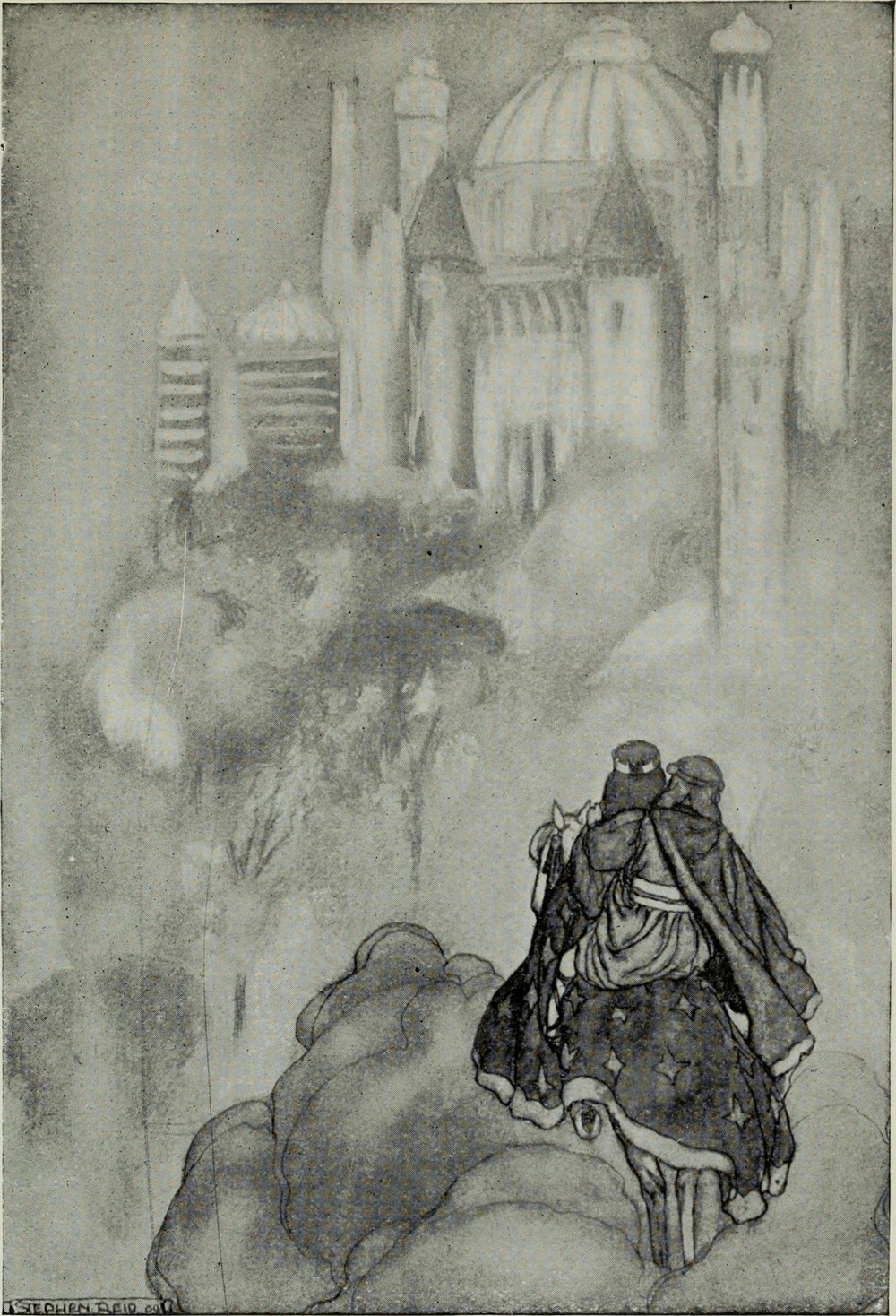
“Oisin and Niam”: Oisín and Niamh ride towards the palace of Tír na nÓg. Illustration by Stephen Reid for T. W. Rolleston, Myths and Legends of the Celtic Race (1911). Public domain, via Wikimedia Commons
The Cycles of the Kings
These tales follow kings, legendary and real, and their favourite theme is sovereignty: who deserves to rule.
16. Niall and the hag at the well
Five brothers out hunting go one by one to a well guarded by a hideous old woman, who wants a kiss in return for water. Only Niall kisses her, and she turns into a dazzling beauty: Sovereignty herself. He is Niall of the Nine Hostages, ancestor of the O’Neills.
17. The Destruction of Da Derga’s Hostel
Conaire Mór, son of a bird-man, becomes king of Tara by walking naked along a road at night carrying a sling and stone. His reign comes with a list of geasa, and one by one he breaks them. Raiders trap him in Da Derga’s hostel, and he dies of thirst while his champion searches for water.
18. Mad Sweeney
In Buile Suibhne, the Frenzy of Suibhne, a king of Dál nAraide in the north-east throws a saint’s psalter into a lake. Cursed by St Rónán, he goes mad at the battle of Mag Rath (Moira, Co. Down), dated to 637, and lives in the trees like a bird. Seamus Heaney’s version is Sweeney Astray.
Beyond the cycles: voyages and folklore
19. The Voyage of Bran
A woman with a silver apple branch sings to Bran of islands across the sea. He sails to the Land of Women, where a year is really many years. Coming home, one man leaps ashore and turns to ashes, and the people on the beach know Bran only from an ancient story.
20. The fairy folk and the seal people
In later folk tradition, much of it collected from the 19th century on, the people of the hollow hills are the aos sí (eess SHEE; in Munster, ays SHEE), the fairies, alongside the banshee, the púca and the selkies, seal people of Scottish island lore and Ireland’s west coast.
Where to start: free translations and good books
Start with a short story, such as the Children of Lir or the Salmon of Knowledge, then take on the Táin.
- Lady Gregory: Cuchulain of Muirthemne (1902) and Gods and Fighting Men (1904), dedicated to the Irish Literary Society of New York. W. B. Yeats called the first “the best that has come out of Ireland in my time”.
- Kuno Meyer (1858 to 1919), the German scholar who founded Dublin’s School of Irish Learning, translated the Voyage of Bran (1895) and many early poems.
- Joseph Dunn’s complete Táin (1914) is free on Project Gutenberg.
- CELT, University College Cork’s Corpus of Electronic Texts, has hundreds of Irish texts, many translated.
Good modern versions: Thomas Kinsella’s The Tain (1969), Ciaran Carson’s The Táin (2007), Jeffrey Gantz’s Early Irish Myths and Sagas (1981) and Ann Dooley and Harry Roe’s Tales of the Elders of Ireland.
Irish mythology for kids
Good first stories for children: how Setanta got his name, the Salmon of Knowledge, Oisín and the magic horse, and the folk tale of Fionn and the Giant’s Causeway, where the hero is disguised as a baby. The Children of Lir ends sadly, so read it first yourself, and save Deirdre for older readers.
Marie Heaney’s The Names Upon the Harp (Faber, 2000; Arthur A. Levine Books in the US), illustrated by P. J. Lynch, retells the big stories for children of eight and over. Cartoon Saloon’s film Song of the Sea draws on the selkie legends. And in the 1930s, Irish schoolchildren wrote down local legends, including dozens about Fionn, for the Schools’ Collection, free to read on dúchas.ie.
Irish mythology or “Celtic” mythology?
“Celtic” is really a language word, covering Irish, Scottish Gaelic and Manx on one branch and Welsh, Breton and Cornish on the other. Only Ireland and Wales kept large medieval collections of their own stories: Ireland’s sagas and the Welsh Mabinogi, whose earliest written version, the White Book of Rhydderch, was copied around 1350.
Ancient Gaul left no stories of its own, only inscriptions, carvings and Greek and Roman reports. That’s why Cernunnos, the antlered god of Gaul, appears in “Celtic mythology” books but not in Irish texts. Many “ancient Celtic” meanings sold online, such as named knots for love or protection, are modern.
Irish mythology FAQ
What are the four cycles of Irish mythology?
The Mythological Cycle, the Ulster Cycle, the Fenian Cycle and the Cycles of the Kings. The grouping is modern; medieval storytellers sorted tales by type.
Who is the most famous hero in Irish mythology?
Cú Chulainn and Fionn mac Cumhaill. Lady Gregory wrote in 1902 that people around Kiltartan, Co. Galway, still told stories of Fionn but remembered little of Cú Chulainn, who became a national symbol in the 20th century.
Who is the main god in Irish mythology?
There’s no single chief god. The Dagda is often called the father god, Lugh is master of every art, and the Morrígan is goddess of war and fate.
How old is Irish mythology?
The oldest manuscript of the tales was written before 1106, partly copied from older books now lost. How much reflects pre-Christian belief is debated.
Is Irish mythology the same as Celtic mythology?
Not quite. Irish myth is one branch of a wider Celtic world that includes the Welsh Mabinogi; “Celtic” books often mix them.
Love this? Save it to your Pinterest board for later.
Pin image: The Riders of the Sidhe (1911, detail) by John Duncan, McManus Art Gallery and Museum, Dundee. Public domain, via Wikimedia Commons
A little bit of Ireland in your inbox every Friday ☘️
The free Weekly Dose of Irish: an Irish joke, a Celtic symbol, an Irish fact, a poem and the week’s best articles in one short email. Join 9,600+ readers.
Free. One short email every Friday. Unsubscribe any time.
More Irish mythology reading
- The Táin: How a Royal Bedtime Row Over a Bull Started Ireland’s Greatest Epic
- Tuatha Dé Danann: How Ireland’s Old Gods Lost a War and Became the Fairy Folk
- The Children of Lir: The Irish Legend of Four Swans and 900 Years
- Tír na nÓg: The Irish Legend of Oisín, Niamh and 300 Lost Years
- The Morrígan: Ireland’s Phantom Queen of War, Crows and Fate
- Cú Chulainn: The Teenage Warrior Who Held Off an Entire Army Alone
Featured image: The Riders of the Sidhe (1911, detail) by John Duncan, McManus Art Gallery and Museum, Dundee. Public domain, via Wikimedia Commons.