
Irish wedding traditions mix genuinely old customs with newer ones borrowed from Britain and America. Documented Irish ones include marrying in Shrove before Lent, matchmakers and “the fortune” (the dowry), strawboys in straw disguises who gatecrashed the party, and cake broken over the bride’s head. The oldest known Claddagh ring dates from about 1700. The hand-tying “handfasting” ceremony is modern, and the “magic hanky” and make-up bell look modern too.
Picture a farmhouse wedding in Co. Mayo about a hundred years ago. Supper is over and the dancing is in full swing when someone bangs on the door with a stick. In march young men dressed in straw, faces hidden under tall straw hats, led by a “captain” and his “wife”, a small man in a dress. They want a dance with the bride.
That scene is pieced together from accounts Mayo schoolchildren wrote down in the 1930s. The visitors were strawboys, one of the real Irish wedding traditions. Plenty of the “ancient Irish customs” you’ll meet online are far younger, or came from England or America.
Here’s what’s documented, what’s borrowed and what’s brand new.
Jump to:
- Old, borrowed or new? At a glance
- Shrove: Ireland’s marrying season
- Lucky and unlucky months and days
- Matchmakers, the fortune and Lisdoonvarna
- An old Irish wedding day
- The strawboys
- The Claddagh ring
- Handfasting and tying the knot
- Horseshoes, bells, the magic hanky and the Child of Prague
- Something blue and Irish lace
- The wedding cake
- Pipes, fiddles and the céilí
- The modern Irish wedding
- How to add an Irish touch
- Irish wedding traditions FAQ
- More Irish love and wedding reading
Old, borrowed or new? Irish wedding traditions at a glance
| Tradition | Evidence | Verdict |
|---|---|---|
| Shrove weddings, Skellig lists | 1930s folklore collections | Irish |
| Matchmakers and the fortune | 1930s folklore; Lisdoonvarna | Irish, still going |
| Strawboys | National Museum of Ireland | Irish, still going in places |
| Cake broken over the bride | 1930s Galway and Mayo | Irish, now rare |
| Claddagh ring | Oldest known ring about 1700, Galway | Irish |
| Child of Prague for fine weather | Irish Catholic custom | Irish, age unclear |
| Something old, new, borrowed, blue | English and US print, 1870s | Borrowed |
| Fruit cake tier kept for later | English tradition | Shared with Britain |
| Bride’s lucky horseshoe | Irish horseshoe luck; British bridal charms | Partly borrowed |
| Hand-tying (handfasting) ceremony | Neo-pagan weddings, late 1960s on | Modern |
| Magic hanky, make-up bell | No older record found | Modern |
Shrove: Ireland’s marrying season
In 1563 the Council of Trent told Catholics to keep “the ancient prohibitions of solemn nuptials” from Advent to the Epiphany, and from Ash Wednesday until a week after Easter. In rural Ireland that made Shrove, the weeks from Twelfth Day (6 January) to Ash Wednesday, the marrying season.
In Irish, Shrovetide is Inid (roughly IN-ij) and Shrove Tuesday is Máirt Inide (MAWRCH IN-ih-juh). Ó Dónaill’s Irish-English dictionary even lists pósadh Inide (POE-suh IN-ih-juh), a Shrovetide marriage. Shrove Tuesday was the most popular wedding day, writes the folklorist Shane Lehane of University College Cork, and one priest might marry five or six couples that day.
A Tipperary pupil offered a cheeky explanation: in Shrove, snow often hid the fields, so a poor farm could pass for a good one when the other family came to size it up. In parts of Mayo, a ring went into the Shrove Tuesday pancakes, and whoever found it would marry.
Skellig lists and Skellig Night
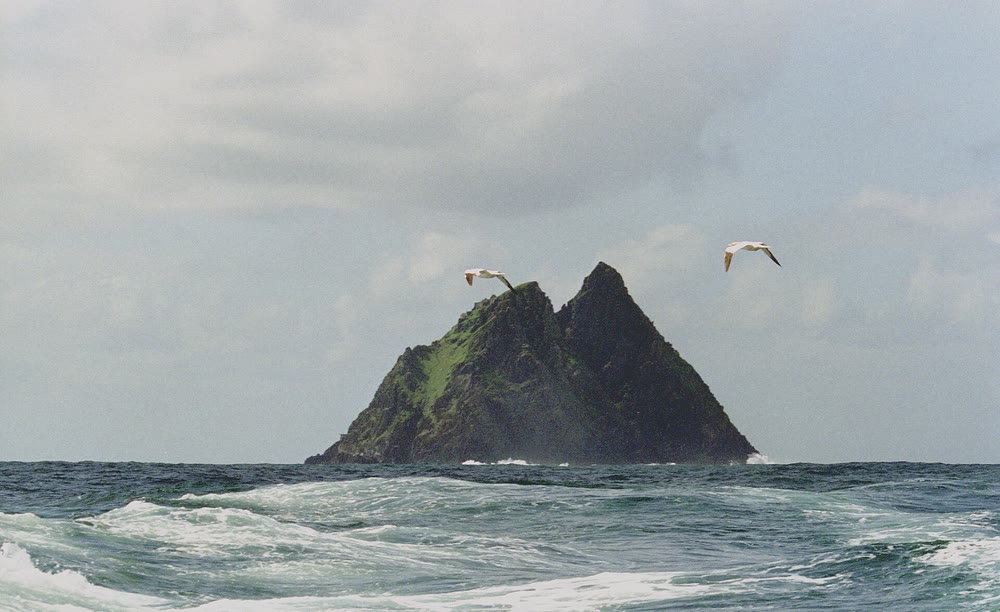
Anyone still single when Lent began was fair game. In Kerry and Cork, people joked that Lent didn’t apply on Skellig Michael, the island monastery off the Kerry coast, so latecomers could still sail out and marry.
The real punishment stayed at home. Local wits wrote Skellig lists, comic verses pairing off the parish’s single men and women, and Lehane says they were sold as anonymous broadsheets. A Castleisland pupil noted that being left off the list meant you were beyond reproach. On Shrove Tuesday evening, lads circled the unmarried with a rope to haul them off to the Skelligs, a game Midleton, Co. Cork, called Skellig Night.
Then came Chalk Sunday, the first Sunday of Lent, when pranksters in Co. Cork chalked the backs of bachelors’ coats. In Co. Sligo it was Pus Sunday, from the Irish pus (roughly PUSS), a sulky pout, for the girls who hadn’t married.
Lucky and unlucky months and days
Pupils in Mayo, Sligo, Cavan and Tipperary recorded the same rhyme in the 1930s. This version is from a school near Lough Mask, Co. Mayo:
Monday for health,
Tuesday for wealth,
Wednesday the best day of all.
Thursday for crosses,
Friday for losses,
Saturday no luck at all.
May got the worst press. “Marry in May, you will rue the day,” ran the warning in Westmeath and Cavan. A Sligo school added February, October and November. In 1902 the antiquarian W. G. Wood-Martin recorded another fear: marry in autumn, at “binding” time, and you’d be unbound afterwards.
Oddly, in the early Irish law tracts, May Day was when new contracts were made, marriage included, says the historian Donnchadh Ó Corráin.
Matchmakers, the fortune and Lisdoonvarna
Love matches happened, but after the Great Famine, with land scarce, marriage became “a business transaction”, the history content creator Ann Marie Duffin told RTÉ.
A match is cleamhnas (roughly KLOW-nus), a matchmaker a babhdóir (BOW-dore, with bow rhyming with now), and a dowry spré (SHPRAY), called “the fortune” in Irish English. Ó Dónaill gives a lovely saying, tá a spré i gclár a héadain (taw uh SHPRAY ih GLAWR uh HAY-din): her face is her fortune.
Near Shrule, on the Mayo and Galway border, a 1930s pupil wrote, a man wanting a wife sent a friend with a bottle of whiskey to ask the girl’s father. Runaway marriages had once outnumbered matches, the pupil added, until the parish priest of Annaghdown made eloping couples walk up the aisle wrapped in a sheet.
Runaways have a long pedigree: in the Fenian tale of Diarmuid and Gráinne (DEER-mid and GRAWN-yuh), the bride-to-be flees her own betrothal feast. For gentler courtship, try the old Halloween spells for seeing your future spouse.
Matchmaking still has a home in Lisdoonvarna, Co. Clare, where a festival runs through September. RTÉ News marked its 150th year back in 1991.
The most famous Irish match of all
Gerald of Wales says Diarmait Mac Murchada (Dermot MacMurrough), the ousted king of Leinster, promised his eldest daughter to the Norman earl Richard de Clare, better known as Strongbow, “with the succession to his kingdom”, in return for help. They married at Waterford in 1170. She was Aoife (EE-fuh), whom Gerald calls Eva. Daniel Maclise’s huge painting of the wedding belongs to the National Gallery of Ireland, and it’s this page’s featured image.
An old Irish wedding day
Before hotels, the party was at home. After the Famine, Duffin says, weddings often followed morning Mass, and since guests had fasted, the meal became the wedding breakfast.
- The race for the bottle: in Co. Sligo, the best riders galloped from the chapel to the bride’s house, where a bottle of whiskey waited for the winner to share with the wedding party.
- Cake on the bride’s head: in Moylough, Co. Galway, the woman of the house broke the wedding cake over the newlyweds’ heads as they came in. In Castlehackett, also in Galway, a friend broke it on the bride’s head. Near Lough Mask, it was cut over the kneeling couple so they’d always have plenty. Ancient Romans broke bread over a bride’s head for luck, notes the Royal Collection Trust.
- Shoes and coins: Mayo families threw an old shoe, or even the fire tongs, after the couple for luck, and some brides wore a two-shilling coin in each shoe.
- The barn dance: in Co. Roscommon, bonfires blazed by the road as side cars carried guests to the bride’s home for boiled bacon and cabbage, and everyone danced in the barn until morning to a piper or fiddler.
- Cake in a sock: a slice was wrapped in a sock and thrown over the bride’s shoulder for single women to catch, Duffin says. A crumb under your pillow might bring a dream of your future husband.
- The hauling home: in Mayo, a day or two later, the groom’s friends escorted the bride to her new house, racing on horseback with girls riding behind.
The strawboys: wedding crashers in straw
Big weddings meant someone was left off the list. In parts of the west, uninvited young men came anyway, disguised in straw. A Mayo pupil described them gathering in a barn at nightfall, binding straw around their arms and legs, weaving tall hats and masking their faces. They chose a captain, and a small man dressed as a woman to play his wife.
In another Mayo account, they arrived around midnight, after supper, and the captain and his “wife” danced with the newlyweds. A third says they knocked with sticks and asked if the barrel was tapped; if the beer ran short, they might let the cows out. The National Museum of Ireland says a well-treated crew burned their hats on the way home. Snub them, and the costumes went up into the trees so the whole village knew how mean the couple had been.
Turning them away was very bad luck, RTÉ notes. The Irish word is cleamaire (roughly KLAM-uh-ruh), plural cleamairí (KLAM-uh-ree), strawboy or mummer in Ó Dónaill. Names varied, the National Museum notes: Bandbeggars in the midlands and north-west, Grannies in Cavan, Monaghan and north Leinster, and Bacachs in west Clare and Cork.
The museum says strawboys still turn up at weddings in parts of Sligo, Mayo and Clare. Wren boys wore the same straw hats on St Stephen’s Day.
The Claddagh ring
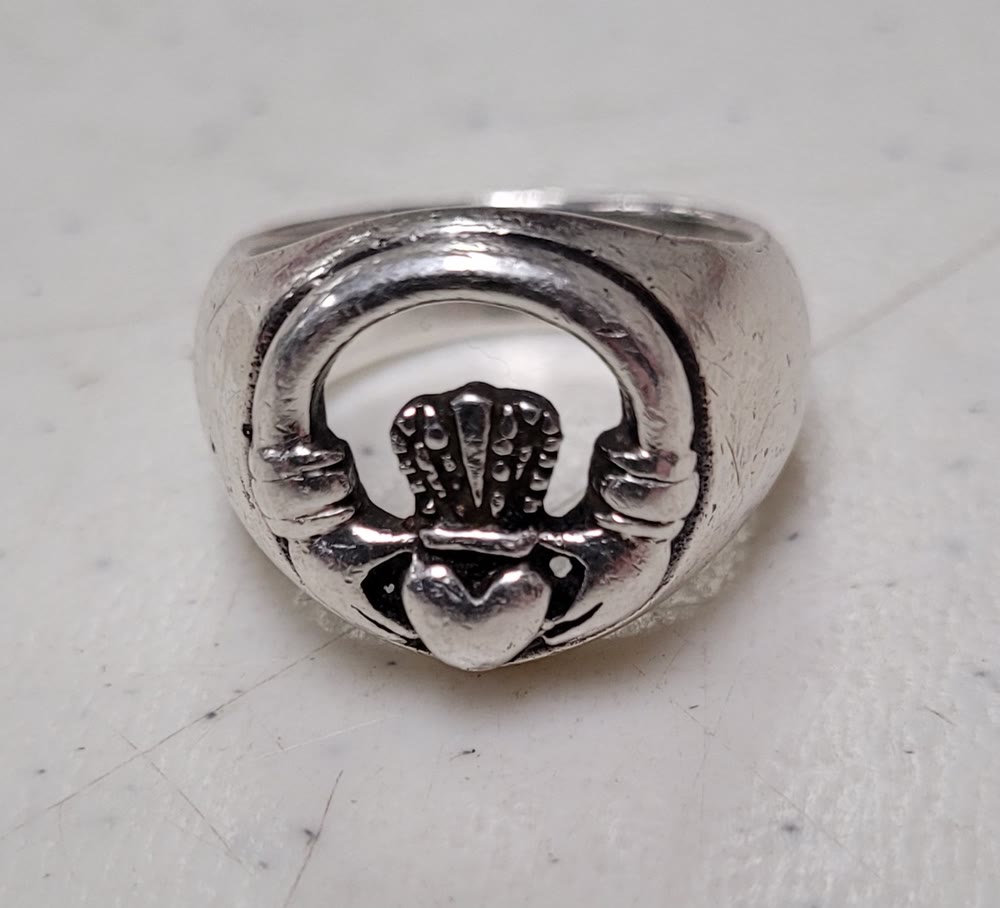
If you want one Irish wedding symbol with real history, it’s the Claddagh: two hands holding a crowned heart. The oldest known Claddagh ring, made around 1700 by the Galway goldsmith Richard Joyce, is in Galway City Museum, and the design served as a betrothal and wedding ring. A wedding ring in Irish is fáinne pósta (FAWN-yuh POE-stuh). My Claddagh ring guide covers the legend and how to wear it.
Handfasting and tying the knot: what’s documented
Handfasting, with the couple’s hands tied together with a cord or ribbon, is often sold as an ancient Celtic rite. There’s no record of it from early Ireland. In England and Scotland, handfasting meant a betrothal, as my Celtic love knot page explains. Neo-pagans took up the word for their own weddings from the late 1960s, and the hand-tying ceremony is a modern addition.
What early Ireland did have was law. The Old Irish tract Cáin Lánamna, “the law of couples”, sorted unions by the property each partner brought. The groom paid a bride-price, the coibche, and divorce was allowed by consent or on grounds from impotence to wife-beating, Ó Corráin shows. Most of these lawyers were clerics, and the tracts date mainly from 650 to 850, so this is Christian Ireland, not a pagan past.
Wood-Martin recorded the “Teltown marriage”, a Co. Meath phrase for an irregular match: a couple unhappy after a year could stand back to back in the old fort at Teltown and walk away, free to remarry. That’s local tradition, not proof of an ancient trial marriage. He also noted ill-wishers knotting a string at every word of the service to keep the couple childless.
Horseshoes, bells, the magic hanky and the Child of Prague
- The horseshoe: a horseshoe found on the road was lucky, a 1930s Donegal pupil wrote, so you carried it home and hung it on the wall (points up, as I explain in the luck of the Irish). British brides got horseshoe charms too: Museum Wales has a foil-covered cardboard one from a 1950 wedding.
- Bells and the magic hanky: church bells were blessed against storms and “phantoms”, and rung for marriages, says the Catholic Encyclopedia (1907). The Irish “make-up bell”, rung to end a row, and the “magic hanky”, a bride’s handkerchief later stitched into a christening bonnet, are another matter: neither seems to appear in the Schools’ Collection or older folklore books.
- The Child of Prague: an Irish favourite. A Child of Prague statue put out in the garden the night before is meant to keep the rain off, notes RTÉ.
Something blue and Irish lace
“Something old, something new, something borrowed, something blue” isn’t Irish in origin. The Phrase Finder traces the rhyme in print to the early 1870s, in London and Pennsylvania, but by the 1930s pupils in Mayo, Galway and Cavan were recording it as local custom.
A Howth pupil recorded a colour rhyme: white and blue brought happiness, while green, red and black spelled trouble. That pupil said brides usually chose white or blue, but there’s no good evidence blue was ever the standard Irish bridal colour, as you’ll sometimes read. White is often credited to Queen Victoria’s 1840 wedding, the Irish Times notes.
Lace has a real Irish pedigree. Samuel Goldenberg’s Lace: Its Origin and History (1904) names Limerick lace, embroidered on net, and Carrickmacross appliqué from Co. Monaghan, most often in rose and shamrock patterns. Antique Carrickmacross lace that had belonged to Queen Mary went into the bodice of Diana, Princess of Wales’s wedding dress in 1981, says Historic Royal Palaces.
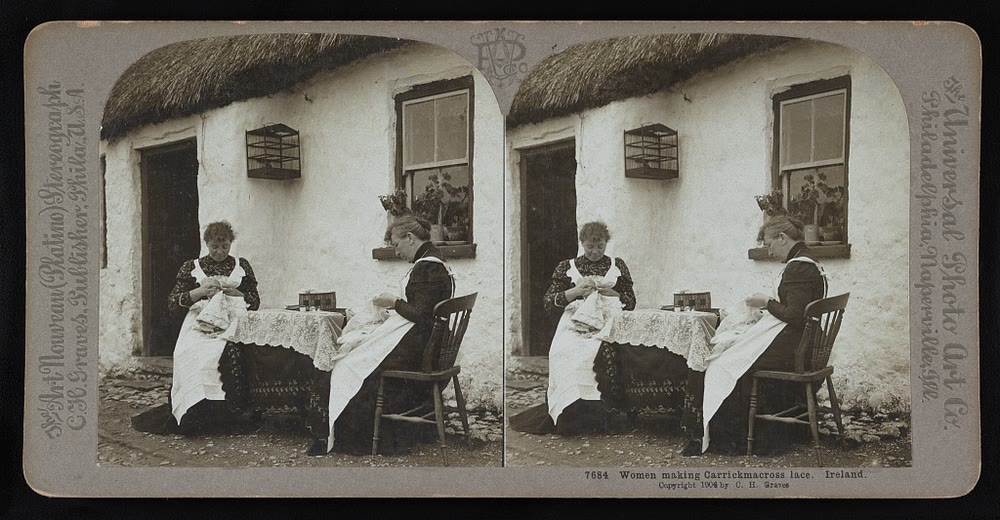
Women making Carrickmacross lace, Ireland. Stereograph by C. H. Graves, 1904. Library of Congress. Public domain, via Wikimedia Commons
The wedding cake: fruit, whiskey and the christening tier
The tall white tiered cake is fairly new. Older Irish weddings had a barmbrack, a fruit loaf, a wheaten bannock or a “tipsy cake” soaked in whatever drink was to hand, RTÉ notes.
Irish couples still love a fruit cake base, the food writer Aoife McElwain reckoned in the Irish Times in 2019. The Royal Collection Trust notes an English habit of saving a tier for the first baby’s christening. Today, RTÉ says, many couples freeze the top tier for their first anniversary instead.
Irish recipes tend to feed the cake with Irish whiskey where British classics use brandy. My Irish Christmas cake recipe is that kind of cake, and it makes a fine keeping tier.
Pipes, fiddles and the céilí
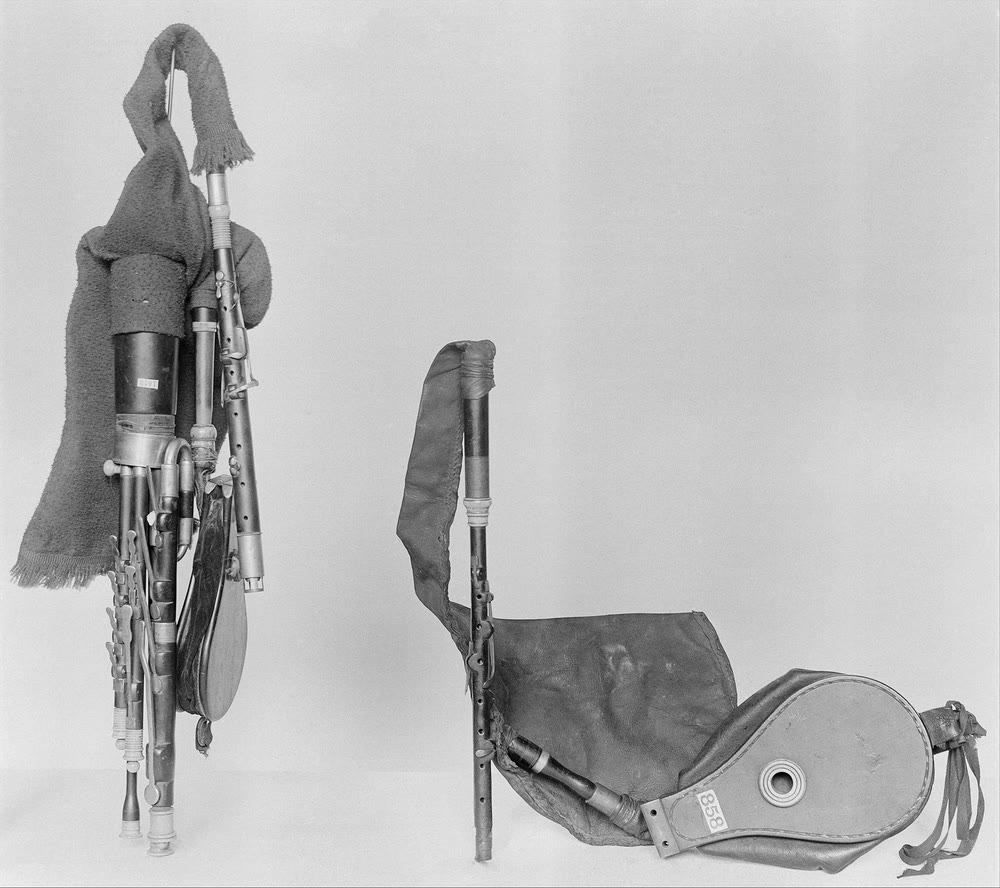
If you’re booking a piper, know which pipes you’re getting. A piper playing standing at the church door, blowing into the bag, usually has Highland-style bagpipes. Ireland’s own indoor instrument is the uilleann pipes, píb uilleann in Irish (peeb ILL-un), played seated with a bellows under the arm. Uilleann comes from uillinn, elbow. Watch the spelling: “uillean” is a common slip.
Terry Moylan, archivist of Na Píobairí Uilleann, writes in History Ireland that the earliest certain Irish date for bellows-blown pipes is 1743. In 2017 UNESCO listed uilleann piping as intangible cultural heritage, noting its part in marriages and funerals.
For the reception, a céilí (KAY-lee) band with a caller gets three generations dancing. In Ó Dónaill, céilí means a visit, a social evening and an Irish dancing session; a good wedding manages all three.
The modern Irish wedding: church, speeches and the afters
In 2024, CSO figures show, Catholic ceremonies made up about a third of Ireland’s opposite-sex weddings, level with civil ones. Friday was the most popular day and August the busiest month, so the old rhyme’s “Friday for losses” is roundly ignored.
After the meal come the speeches, ending with a toast and a chorus of “Sláinte” (SLAWN-cha), health; my Irish toasts include wedding-friendly ones. Later, more guests arrive for “the afters”, the evening party. RTÉ counts chicken and chips by the dancefloor around 10pm, and money in the card, among today’s rituals.
How to add an Irish touch to your wedding
- Rings: Claddagh wedding bands.
- Date: marry in Shrove. In 2027, Shrove Tuesday falls on 9 February.
- Music: an uilleann piper for the ceremony, a céilí band for the reception.
- Words: read one of the Irish wedding blessings, and learn to say I love you in Irish.
- Cake: a whiskey-fed fruit tier for a christening or your first anniversary.
- Strawboys: if friends turn up in straw, let them in and pour them a drink.
- Handfasting: if you love the ribbon ceremony, go ahead. Just call it modern.
Irish wedding traditions FAQ
What are some old Irish wedding traditions?
Shrove weddings, matchmaking and the fortune, strawboys, the race for the bottle, cake broken over the bride’s head and the Claddagh ring are all documented.
What are strawboys at an Irish wedding?
Uninvited young men in straw disguises who called to the wedding, danced with the bride and expected a drink. They still appear in parts of Sligo, Mayo and Clare.
What is the Irish word for wedding?
Bainis (BAN-ish) is a wedding or wedding feast, and pósadh (POE-suh) is marriage. A wedding cake is cáca bainise (KAW-kuh BAN-ish-uh).
Is handfasting an Irish tradition?
Not in any documented sense. The word meant a betrothal in England and Scotland, and the hand-tying ceremony is a modern neo-pagan custom.
What is the luckiest day to get married in Ireland?
The old rhyme says Wednesday, “the best day of all”, and folklore warned against May. Today Friday is Ireland’s most popular wedding day.
Is the magic hanky an old Irish tradition?
There’s no evidence it is. It appears to be a modern gift custom.
Love this? Save it to your Pinterest board for later.
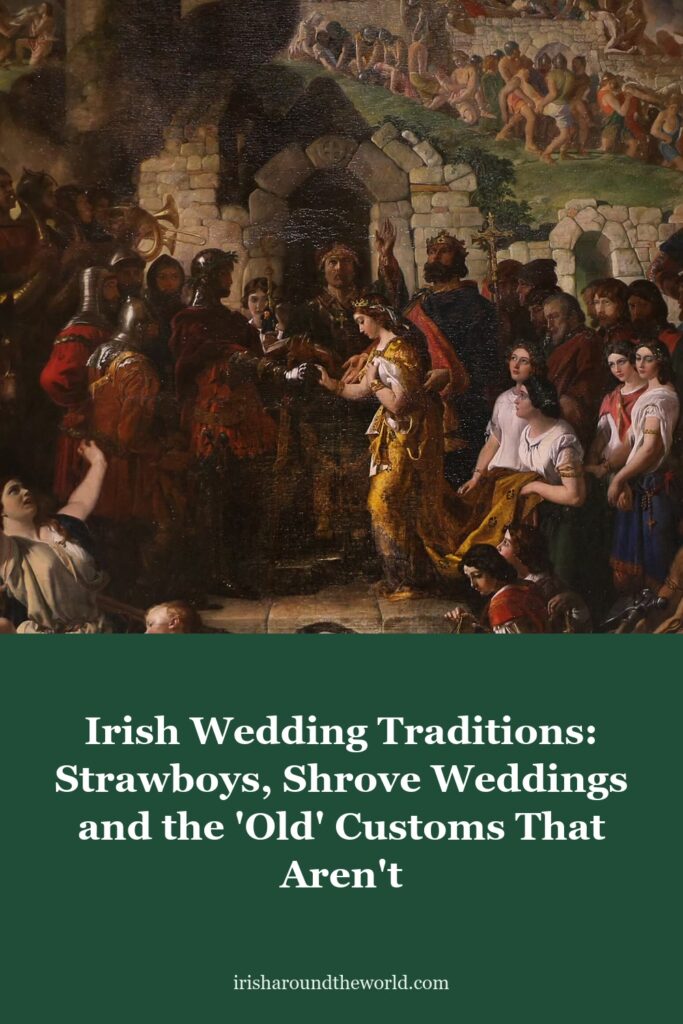
Pin image: Detail of The Marriage of Strongbow and Aoife by Daniel Maclise (about 1854), National Gallery of Ireland. Photo: Sailko, CC BY 3.0, via Wikimedia Commons
A little bit of Ireland in your inbox every Friday ☘️
The free Weekly Dose of Irish: an Irish joke, a Celtic symbol, an Irish fact, a poem and the week’s best articles in one short email. Join 9,600+ readers.
Free. One short email every Friday. Unsubscribe any time.
More Irish love and wedding reading
- Claddagh Ring Meaning: Which Hand, Heart In or Out, and the Galway Legend Behind It
- Celtic Love Knot Meaning: The Real History Behind the Lovers’ Knot
- Diarmuid and Gráinne: Ireland’s Great Runaway Love Story
- Irish Halloween Games: Snap Apple, Burning Nuts and the Old Spells to See Your Future Spouse
- Wren Day: The Irish Tradition of Straw Suits, Wren Boys and the King of All Birds
- 63 Irish Toasts for Every Occasion, and Which Ones Are Really Irish
Featured image: Detail of The Marriage of Strongbow and Aoife by Daniel Maclise (about 1854), National Gallery of Ireland. Photo: Sailko, CC BY 3.0, via Wikimedia Commons.