W.B. Yeats is on Leaving Cert English Higher Level for June 2027 and June 2028, with the same 13 poems in both years: The Lake Isle of Innisfree, September 1913, The Wild Swans at Coole, An Irish Airman Foresees his Death, Easter 1916, The Second Coming, Sailing to Byzantium, The Stare’s Nest by My Window, In Memory of Eva Gore-Booth and Con Markiewicz, Swift’s Epitaph, An Acre of Grass, Under Ben Bulben (sections V and VI) and Politics. Ordinary Level has three of them: Innisfree, The Wild Swans at Coole and An Irish Airman Foresees his Death. The official lists are in circulars 0021/2025 and 0024/2026.
If you’re sitting Leaving Cert English in 2027 or 2028, this guide to the Yeats Leaving Cert poems has the official list, our page on every poem, his life, the themes and how to study them. It’s an independent guide, not an official source, so check anything important with your teacher and the circulars.
Jump to:
- Yeats on the course in 2027 and 2028
- All 13 prescribed Yeats poems, with our guides
- Yeats’s life, in the order of the poems
- The big themes, and which poems show them
- How to study Yeats for the exam
- Our Yeats poems that are not on the course
- Yeats Leaving Cert FAQ
- More Irish poetry reading
Yeats on the course in 2027 and 2028
The poems are set by a circular for each exam year: Circular 0021/2025 from the Department of Education for June 2027, and Circular 0024/2026 from the renamed Department of Education and Youth for June 2028.
- Higher Level: 13 Yeats poems, and the Yeats list is identical in both years.
- Ordinary Level: the same three Yeats poems in both years.
- The Higher Level rule: poems by eight poets are prescribed, and the circulars say students are expected to have studied at least six poems by each poet.
- The Ordinary Level rule: 36 poems by a range of poets are prescribed in total.
Emily Dickinson, John Donne and Paula Meehan join Yeats on the Higher Level list in both years. The other four poets change: Elizabeth Bishop, Patrick Kavanagh, Derek Mahon and Adrienne Rich in 2027, then Seamus Heaney, Gerard Manley Hopkins, Eiléan Ní Chuilleanáin and Sylvia Plath in 2028.
All 13 prescribed Yeats poems, with our guides
They’re in the circular’s order, which is roughly the order of publication.
| Poem | Level | Exam years | Collection | Our guide |
|---|---|---|---|---|
| The Lake Isle of Innisfree | Higher and Ordinary | 2027 and 2028 | The Rose (1893) | Innisfree |
| September 1913 | Higher | 2027 and 2028 | Responsibilities (1914) | September 1913 |
| The Wild Swans at Coole | Higher and Ordinary | 2027 and 2028 | The Wild Swans at Coole (1919) | The Wild Swans at Coole |
| An Irish Airman Foresees his Death | Higher and Ordinary | 2027 and 2028 | The Wild Swans at Coole (1919) | An Irish Airman |
| Easter 1916 | Higher | 2027 and 2028 | Michael Robartes and the Dancer (1921) | Easter, 1916 |
| The Second Coming | Higher | 2027 and 2028 | Michael Robartes and the Dancer (1921) | The Second Coming |
| Sailing to Byzantium | Higher | 2027 and 2028 | The Tower (1928) | Sailing to Byzantium |
| The Stare’s Nest by My Window (section VI of Meditations in Time of Civil War) | Higher | 2027 and 2028 | The Tower (1928) | The Stare’s Nest |
| In Memory of Eva Gore-Booth and Con Markiewicz | Higher | 2027 and 2028 | The Winding Stair and Other Poems (1933) | Eva Gore-Booth and Con Markiewicz |
| Swift’s Epitaph | Higher | 2027 and 2028 | The Winding Stair and Other Poems (1933) | Swift’s Epitaph |
| An Acre of Grass | Higher | 2027 and 2028 | New Poems (1938) | An Acre of Grass |
| Under Ben Bulben (sections V and VI only) | Higher | 2027 and 2028 | Last Poems and Two Plays (1939) | Under Ben Bulben |
| Politics | Higher | 2027 and 2028 | Last Poems and Two Plays (1939) | Politics |
Two are extracts: you only need part VI of Meditations in Time of Civil War, a seven-part sequence, and sections V and VI of Under Ben Bulben, which end with his epitaph. Don’t confuse the book The Tower, which contains The Stare’s Nest and Sailing to Byzantium, with the separate poem called The Tower, which is not on the course.
For the first ten poems, the collection names and years are the section headings in Yeats’s Collected Poems (1933). Under Ben Bulben first appeared in print days after his death, and both it and Politics were gathered in Last Poems and Two Plays (Cuala Press, July 1939).
Yeats’s life, in the order of the poems
Knowing when each poem was written makes them easier to understand and compare.
Dublin, London and Sligo
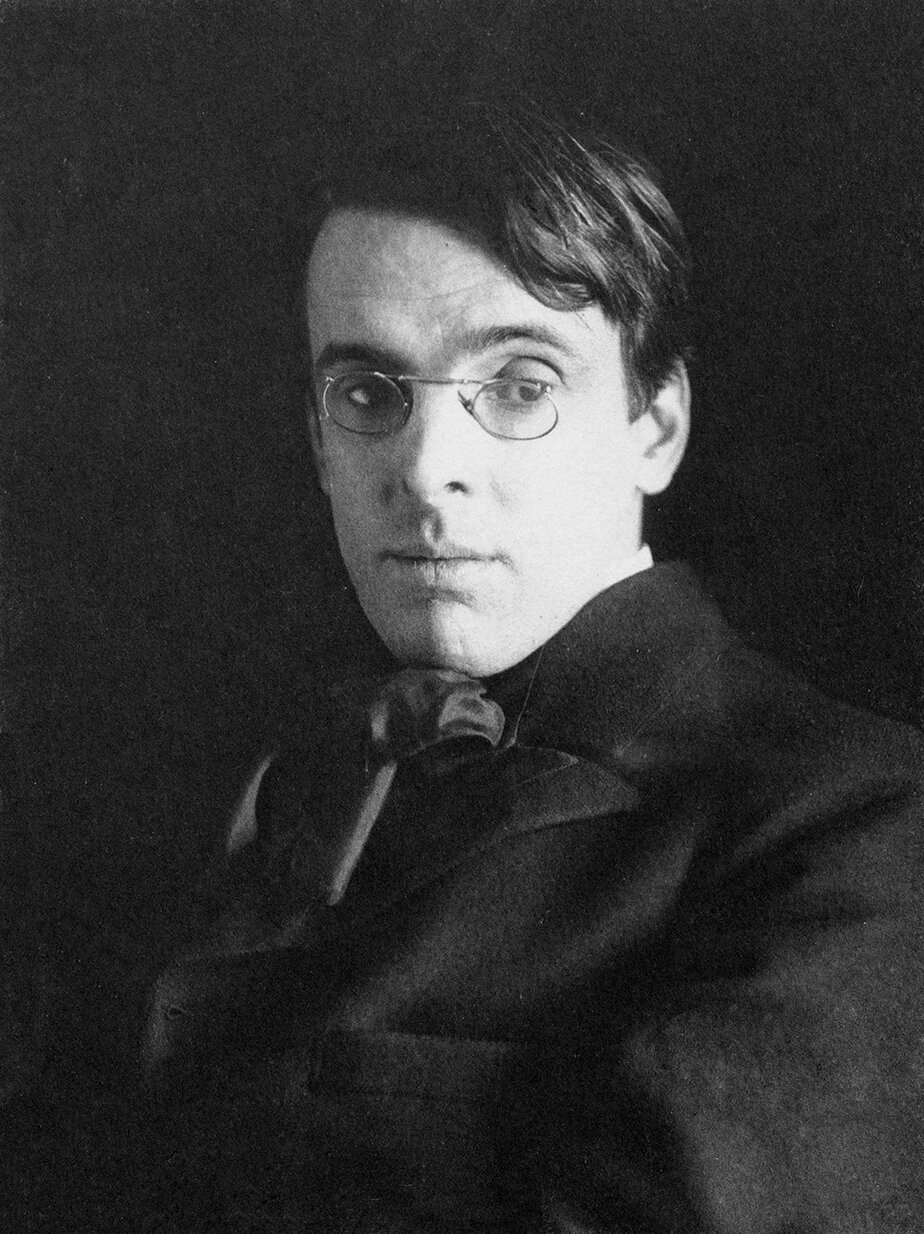
William Butler Yeats was born in Dublin on 13 June 1865, the son of the painter John Butler Yeats. He went to school in London and in Dublin, and spent childhood summers with his grandparents in Sligo.
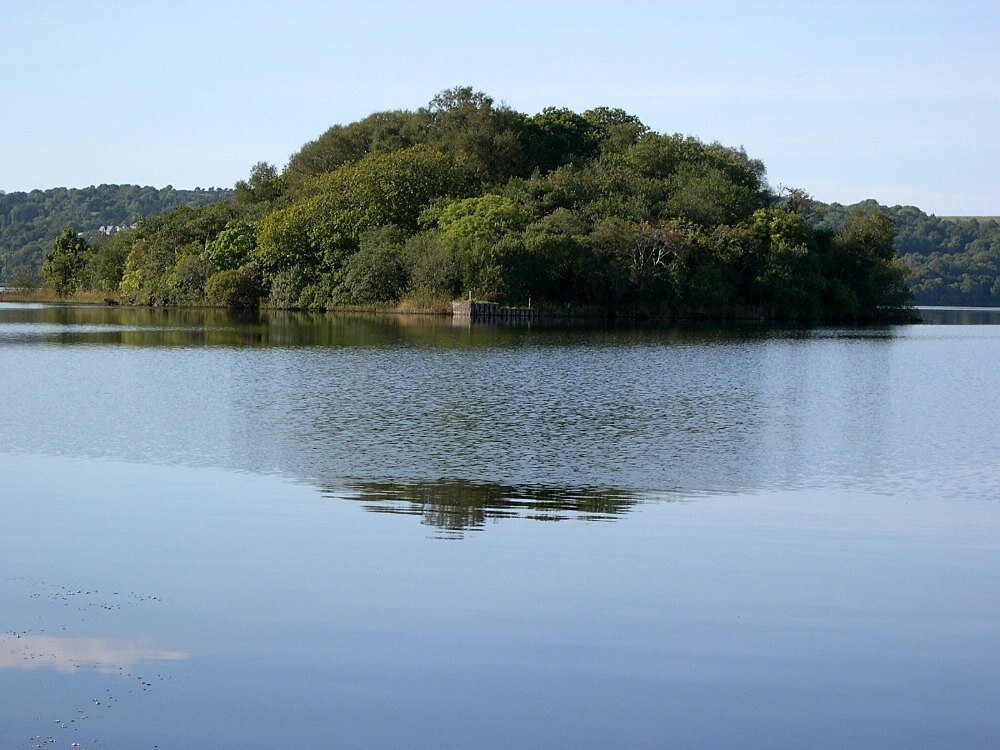
Years later, homesick in London, he was walking down Fleet Street when he heard a little fountain splashing in a shop window. It brought back a dream from his teens of living like Thoreau on Innisfree, a small island in Lough Gill, near Sligo. That sudden memory, he wrote in his memoir The Trembling of the Veil (1922), gave him The Lake Isle of Innisfree.
Maud Gonne and the Abbey Theatre
On 30 January 1889, in London, Yeats met Maud Gonne, the nationalist campaigner whose beauty overwhelmed him. RTÉ notes that he wrote more than fifty poems about her. None of the 13 course poems is addressed to her, but our guides to When You Are Old and Broken Dreams cover two poems usually linked to her.
With Lady Gregory, Yeats founded the Abbey Theatre in Dublin, which, says the Abbey’s own history, opened on 27 December 1904, staging new plays by both of them. Lady Gregory’s house at Coole Park in south Galway was a gathering place for writers of the Irish literary revival, Yeats among them.
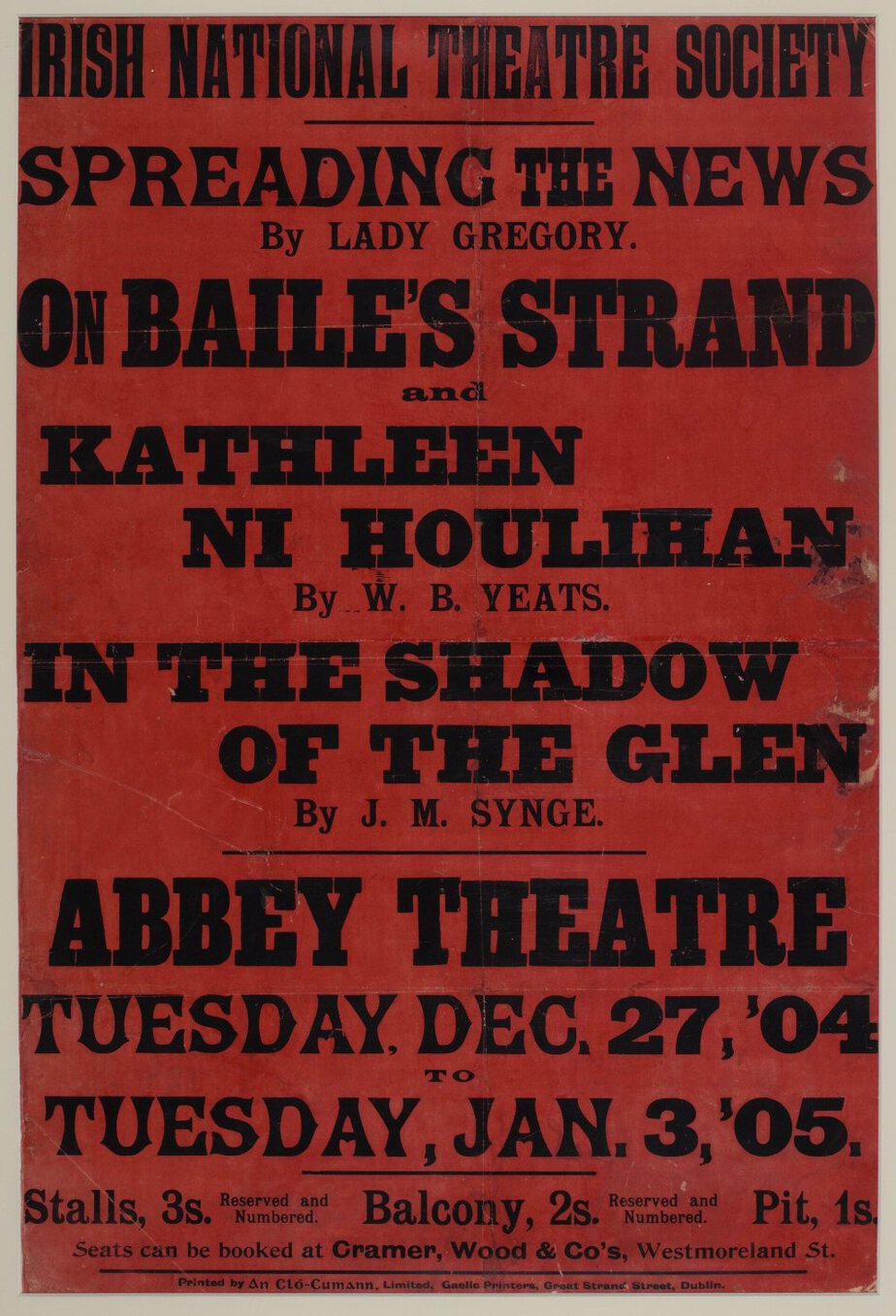
Poster for the Abbey Theatre’s opening nights, December 1904. National Library of Ireland, public domain, via Wikimedia Commons
Bitterness and war: 1913 to 1919
September 1913 is angry. Yeats contrasts the penny-pinching, pious Dublin of his day with the self-sacrificing patriots of the past, summed up in the Fenian John O’Leary.
The Wild Swans at Coole is set on the lake at Coole Park. The speaker counts the swans in the nineteenth autumn since he first did so, and feels how much he has aged while they seem unchanged.
An Irish Airman Foresees his Death is spoken by an airman in the First World War. The same 1919 book contains Yeats’s elegy In Memory of Major Robert Gregory, for Lady Gregory’s son, and the airman is generally taken to be Robert Gregory.
1916, a tower and a marriage
After the Easter Rising, Yeats wrote Easter 1916, dated 25 September 1916 at the foot of the poem. Some of the rebels he had once mocked are now, he says, changed utterly.
In March 1917, according to the Dictionary of Irish Biography, he bought a run-down Hiberno-Norman tower house near Coole. The Yeats Thoor Ballylee Society, which dates the purchase to 1916, says it cost £35 from the Congested Districts Board. He renamed it Thoor Ballylee, from túr (TOOR), the Irish for a tower. On 20 October 1917, aged 52, he married Georgie Hyde-Lees, known as George, who was 25.
The Second Coming, with its vision of order collapsing and a “rough beast” coming, appeared alongside Easter 1916 in Michael Robartes and the Dancer.
Civil War, the Senate and the Nobel Prize
Yeats’s own notes say Meditations in Time of Civil War was written at Thoor Ballylee in 1922, during the Civil War, and that before the poems were finished Republicans blew up the bridge beside the tower. A stare, he explains, is the west of Ireland word for a starling, and one nested in the wall by his bedroom window. That’s The Stare’s Nest by My Window.
Yeats sat in Seanad Éireann, the Irish Free State Senate, from 1922 to 1928 as an independent. In 1923 he won the Nobel Prize in Literature “for his always inspired poetry”, in the citation’s words. The Nobel site notes that much of his greatest work came later.
Old age: 1927 to 1939
Sailing to Byzantium opens The Tower (1928). An old man turns away from a world of young lovers and longs to become a work of art, beyond decay.
In Memory of Eva Gore-Booth and Con Markiewicz, dated October 1927, remembers two sisters he knew as young women at Lissadell House in Co. Sligo. Con is the revolutionary Constance Markievicz (Yeats spells it Markiewicz). Swift’s Epitaph is a six-line English version of the Latin epitaph Jonathan Swift wrote for himself, in St Patrick’s Cathedral, Dublin, where Swift was dean.
In July 1932 Yeats moved to Riversdale in Rathfarnham, Co. Dublin, his last home. An Acre of Grass, from New Poems (1938), pictures an old man left with his pictures, books and an acre of grass, asking for an old man’s frenzy.
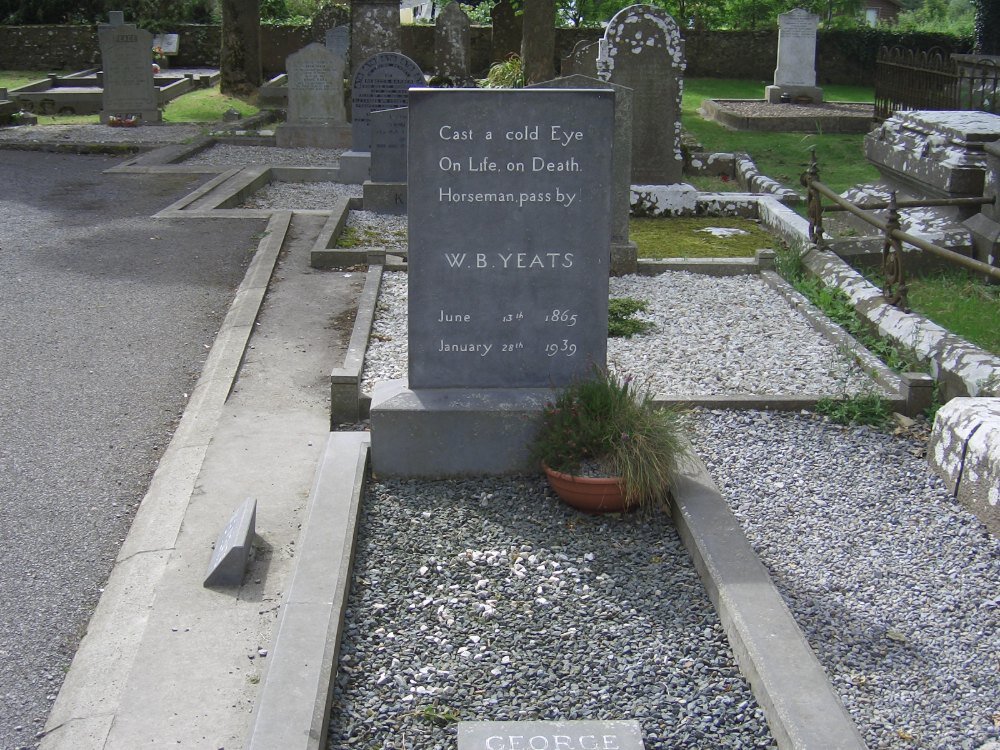
Under Ben Bulben is dated 4 September 1938. Its last section imagines his own grave at Drumcliff and gives the words for his headstone. Politics answers a Thomas Mann quotation about politics with a wish to be young again.
Death and Drumcliff
Yeats died on 28 January 1939 at Roquebrune-Cap-Martin in the south of France, where he had gone for his health, and was buried there. In September 1948 the government corvette Macha brought his remains home. They were landed at Galway on 17 September and taken in procession to Sligo for burial in Drumcliff churchyard, where his great-grandfather had been rector, as Dublin City Libraries recounts.
The big themes, and which poems show them
Higher Level questions ask about his poetry as a whole, so learn the threads that link the poems.
Ireland and politics
September 1913, Easter 1916, The Stare’s Nest, In Memory of Eva Gore-Booth and Con Markiewicz, Under Ben Bulben and Politics. Watch how his attitude shifts: contempt in 1913, awe and doubt in 1916, horror at civil war in 1922, then in Politics an old man who would rather think about a girl than about Rome, Russia or Spain.
Ageing, death and art
The Wild Swans at Coole, Sailing to Byzantium, An Acre of Grass and Under Ben Bulben. His answers change: escape into art in Byzantium, a “frenzy” of energy in An Acre of Grass and a cool, defiant epitaph at Drumcliff.
Love, loss and memory
The Wild Swans at Coole, In Memory of Eva Gore-Booth and Con Markiewicz, Easter 1916 and Politics. The swans stay paired while the speaker is alone. The Gore-Booth sisters are remembered as beautiful girls and as withered old women. Easter 1916 names its dead while asking whether their deaths were needed.
Nature and permanence
The Lake Isle of Innisfree, The Wild Swans at Coole and The Stare’s Nest. Nature offers peace in Innisfree, a painful contrast with human ageing at Coole, and new life amid war in The Stare’s Nest.
The tower and the big house
The Wild Swans at Coole, The Stare’s Nest, In Memory of Eva Gore-Booth and Con Markiewicz, Swift’s Epitaph and Under Ben Bulben. Coole, Lissadell and his tower at Ballylee stand for an Anglo-Irish world he valued and saw passing. Swift belongs to the same tradition, and section V of Under Ben Bulben tells Irish poets to sing the “Hard-riding country gentlemen” as well as the peasantry.
How to study Yeats for the exam
Pair the poems
Pairs give you ready-made links for an essay:
- September 1913 and Easter 1916: the same Dublin, and how his view of the revolutionaries changes in three years.
- Easter 1916 and In Memory of Eva Gore-Booth and Con Markiewicz: Con Markiewicz is usually identified as the woman described in Easter 1916, so she appears twice.
- The Wild Swans at Coole and Sailing to Byzantium: two old men facing creatures or a world that seems to stay young.
- An Acre of Grass and Politics: two late poems that refuse to let age make him quiet.
- The Stare’s Nest and The Second Coming: violence and collapse, one up close at his own window, one as a vision of the whole world.
- Swift’s Epitaph and Under Ben Bulben: one epitaph for a writer he admired, one for himself.
- Innisfree and Under Ben Bulben: Sligo at the start and the end of his life.
A quote bank of short lines
Short quotes are easier to learn and use. Each line was checked against an early printing of Yeats’s books; if your anthology’s punctuation differs, learn your book’s version.
- The Lake Isle of Innisfree: “I hear it in the deep heart’s core.”
- September 1913: “Romantic Ireland’s dead and gone, / It’s with O’Leary in the grave.”
- The Wild Swans at Coole: “Their hearts have not grown old;”
- An Irish Airman Foresees his Death: “A lonely impulse of delight”
- Easter 1916: “A terrible beauty is born.” and “Too long a sacrifice / Can make a stone of the heart.”
- The Second Coming: “Things fall apart; the centre cannot hold;”
- Sailing to Byzantium: “An aged man is but a paltry thing,”
- The Stare’s Nest by My Window: “We had fed the heart on fantasies,”
- In Memory of Eva Gore-Booth and Con Markiewicz: “Two girls in silk kimonos, both / Beautiful, one a gazelle.”
- Swift’s Epitaph: “Swift has sailed into his rest;”
- An Acre of Grass: “Grant me an old man’s frenzy,”
- Under Ben Bulben: “Cast a cold eye / On life, on death. / Horseman, pass by!”
- Politics: “But O that I were young again / And held her in my arms!”
Sources: Collected Poems (Macmillan, 1933) and The Wild Swans at Coole (Macmillan, 1919) for the first ten; Last Poems and Plays (Macmillan, 1940) for the last three.
What the exam questions look like
Prescribed poetry is in Section III of Paper 2. On the 2025 papers from the State Examinations Commission (SEC), it worked like this:
- Higher Level: prescribed poetry was worth 50 marks and the unseen poem 20. Five of the eight prescribed poets had a question, and you answered on one. Most questions gave a statement about the poet’s style and themes and asked you to discuss it, “developing your response with reference to” the poems on your course. One asked instead “to what extent” hearing the poems read aloud would add to an audience’s appreciation.
- Ordinary Level: the paper printed six of the prescribed poems and you answered on one: two 15-mark questions on the poem itself, then one 20-mark task from a short choice.
So at Higher Level, learn the poems as a body of work: a few key themes, how his style changes from the musical early poems to the harsher late ones, and quotes from at least six poems. Answer the question on the paper, not an essay you learned off.
Past papers and marking schemes are free in the SEC’s exam material archive at examinations.ie, and they’re the best practice you’ll get. If you also take Irish, our guide to the Leaving Cert Irish poems for 2027 and 2028 covers that course.
Our Yeats poems that are not on the course
We have guides to these Yeats poems too, but they are not prescribed for 2027 or 2028.
Early poems of love, folklore and Sligo:
- When You Are Old
- He Wishes for the Cloths of Heaven
- Ephemera
- Down by the Salley Gardens
- The Stolen Child
- The Song of Wandering Aengus
- The Host of the Air
- The Fiddler of Dooney
- The Ballad of Father Gilligan
- The Rose of Battle
- Red Hanrahan’s Song About Ireland
Middle and later poems:
- To a Child Dancing in the Wind
- Broken Dreams
- The Fisherman
- A Prayer for My Daughter
- Leda and the Swan
- The Tower (the poem, not the book)
- Among School Children
- The Circus Animals’ Desertion
Yeats Leaving Cert FAQ
Is Yeats on the Leaving Cert 2027?
Yes. Circular 0021/2025 lists 13 Yeats poems for Higher Level English in June 2027, and three of them for Ordinary Level.
Is Yeats on the Leaving Cert 2028?
Yes. Circular 0024/2026 has exactly the same 13 Yeats poems for Higher Level in June 2028, and the same three for Ordinary Level.
How many Yeats poems do you need to know?
The circulars say Higher Level students are expected to have studied at least six poems by each poet. Thirteen are prescribed, so knowing more than six well gives you more choice in the exam. At Ordinary Level there are only three Yeats poems, and the paper prints the poem you answer on.
Which Yeats poems are on Ordinary Level?
The Lake Isle of Innisfree, The Wild Swans at Coole and An Irish Airman Foresees his Death, in both 2027 and 2028.
Is Yeats likely to come up?
Nobody outside the SEC knows, and anyone who says they do is guessing. In 2025, five of the eight Higher Level poets had a question and students answered on one, so no single poet is ever guaranteed. The safe approach is to prepare more than one poet, as your teacher advises.
Can I find the full text of Yeats’s poems free online?
Yes. Yeats died in 1939, so his poems are out of copyright in Ireland and the EU, and each of our guides to the prescribed poems includes the poem. Use your class anthology for the exact layout.
Love this? Save it to your Pinterest board for later.
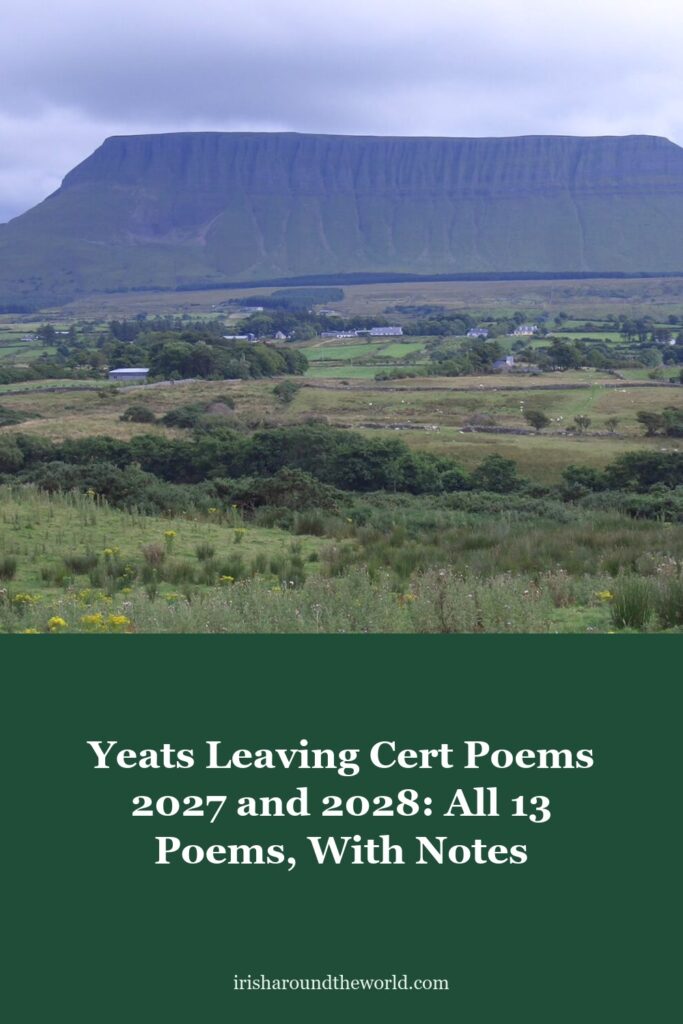
Pin image: Ben Bulben from just north of Drumcliff, Co. Sligo. Photo: Joebater, CC BY-SA 3.0, via Wikimedia Commons
A little bit of Ireland in your inbox every Friday ☘️
The free Weekly Dose of Irish: an Irish joke, a Celtic symbol, an Irish fact, a poem and the week’s best articles in one short email. Join 9,600+ readers.
Free. One short email every Friday. Unsubscribe any time.
More Irish poetry reading
- Famous Irish Poets: The Greatest of All Time, in Order
- Top 100 Irish Poems Ranked, With an Analysis of Each Poem
- Under Ben Bulben by W.B. Yeats: The Poem That Wrote His Own Epitaph
- The Lake Isle of Innisfree by W.B. Yeats: Ireland’s Favourite Poem
Featured image: Ben Bulben from just north of Drumcliff, Co. Sligo. Photo: Joebater, CC BY-SA 3.0, via Wikimedia Commons.