
Irish potato stuffing is floury mashed potato mixed with onion softened in butter, fresh sage, thyme and parsley, and often a handful of breadcrumbs. It was a traditional stuffing for the Irish Christmas goose, and it works just as well with a turkey. This recipe serves 8 as a side and takes about 1 hour 20 minutes. Bake it in a dish, or cook it in the bird as long as the centre of the stuffing reaches 75°C (167°F).
Potatoes inside the bird as well as beside it? In Ireland, that’s no mistake. When goose was the Christmas dinner, the stuffing could be as simple as mashed potato, onion, butter, salt and pepper.
Here’s the recipe in metric and US measures, with the right potatoes, variations, how to stuff a bird safely and a little history, from the 1930s Schools’ Collection to James Joyce. It’s just as good beside a Thanksgiving turkey, and for the blessing before the first forkful, see my guide to Irish grace before meals.
Jump to:
- Irish potato stuffing recipe
- Which potatoes to use in Ireland and the US
- Variations: sausage meat, bacon and stuffing for goose
- In the bird or in a dish? Cooking stuffing safely
- Making it ahead, freezing and leftovers
- Potato stuffing and the Irish Christmas goose
- Irish potato stuffing FAQ
- More Irish Christmas food and traditions
Irish potato stuffing recipe
This is the classic version: potato, onion, butter and herbs, with breadcrumbs for a lighter texture. Leave the breadcrumbs out for the older, all-potato style.
Prep: 20 minutes | Cook: 1 hour | Serves: 8 as a side (about 1.4 litres, 6 US cups)
Ingredients
- 1kg (2¼ lb) floury potatoes, such as Kerr’s Pink, Golden Wonder or Rooster in Ireland, or russets (Idaho potatoes) in the US
- 100g (7 US tbsp, just under a stick) butter, plus extra for the dish
- 2 medium onions (about 300g, 10½ oz), finely chopped
- 2 tbsp finely chopped fresh sage (about 12 leaves), or 2 tsp dried sage
- 1 tbsp fresh thyme leaves, or 1 tsp dried thyme
- 4 tbsp (¼ US cup) chopped fresh parsley
- 75g (about 1½ US cups) fresh white breadcrumbs, from 2 or 3 slices of day-old bread (optional)
- 1 tsp salt and ½ tsp black or white pepper, plus more to taste
- Up to 100ml (a scant ½ US cup) hot milk or chicken stock, if needed
Method
- Peel the potatoes and halve or quarter them so all the pieces are roughly egg-sized. Cover with cold salted water, bring to the boil, then simmer gently until tender right through, 15 to 20 minutes.
- While they cook, melt the butter in a frying pan over a medium-low heat. Add the onions and a pinch of salt and cook gently for 10 to 12 minutes, stirring now and then, until soft and sweet but not browned. Stir in the sage and thyme for the last minute.
- Drain the potatoes well and leave them in the hot pan for a minute or two to steam dry. Mash until smooth with a potato masher or ricer; a food processor makes it gluey.
- Scrape the onions and all their butter into the mash. Add the parsley, breadcrumbs, salt and pepper and mix well. Taste and season again. If it’s very stiff, loosen it with a little hot milk or stock: it should be soft but hold its shape on a spoon.
- To bake it in a dish, heat the oven to 190°C (170°C fan, 375°F, gas mark 5). Spoon the stuffing into a buttered 2-litre (2-quart) baking dish, rough up the top with a fork and dot with a little butter.
- Bake for 30 to 35 minutes, until golden on top and piping hot in the centre: at least 75°C (167°F) on a food thermometer. Serve hot.
- To stuff a turkey or goose instead, mix the stuffing just before you stuff the bird, spoon it in loosely while still warm, and roast straight away. Read the safety section below first.
Tips
Dry, floury potatoes. Waxy potatoes turn gluey; a dry, floury mash soaks up the butter. Ó Dónaill’s Irish-English dictionary even has a phrase for the kind you want: práta plúrach (PRAW-tuh PLOO-rukh), a floury potato.
Good butter. It’s the main flavour after the potato. There’s a reason Irish butter is so yellow.
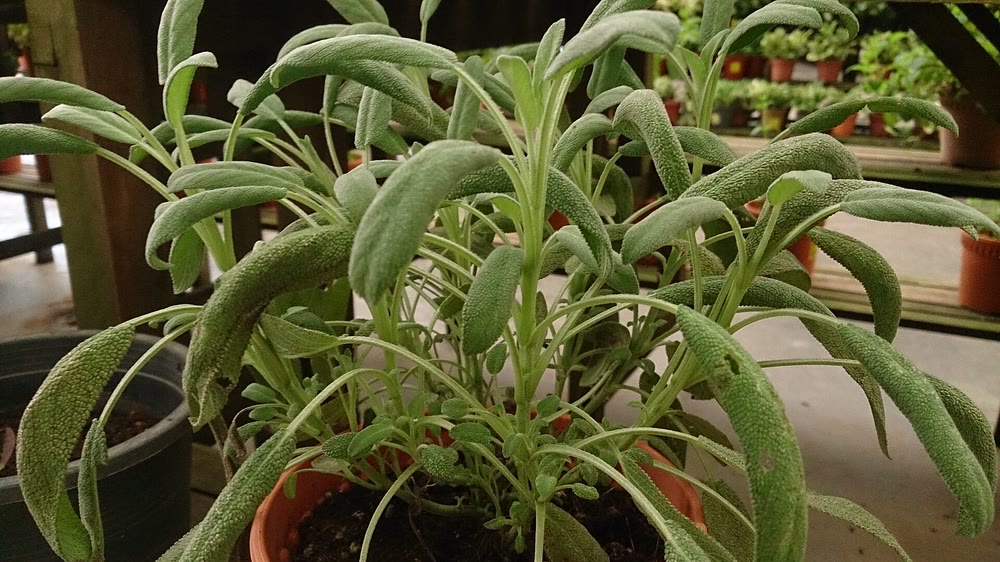
Sage, thyme and parsley. Sage leads. In Irish it’s sáiste (SAWSH-teh). Fresh herbs taste best, but dried work: use about a third as much.
Save stale bread. Safefood suggests drying it out for stuffing crumbs, which keep for months in the freezer.
Which potatoes to use in Ireland and the US
In Ireland, Rooster is everywhere. Bred at Teagasc’s Oak Park research centre in Carlow and released in 1991, it’s now Ireland’s most popular variety, according to Teagasc. It has red skin and yellow flesh, and Teagasc classes it as medium dry.
For the fluffiest stuffing, look for Kerr’s Pink, which Teagasc rates as floury, with white flesh and plenty of dry matter, or Golden Wonder, which it calls very floury.
In the US, use russets, the kind often sold as Idaho potatoes. Potatoes USA, the marketing board for America’s potato growers, recommends russets for light and fluffy mash. Yellow potatoes such as Yukon Gold make a smoother, denser stuffing. Skip red potatoes: they’re waxy and stay firm when cooked.
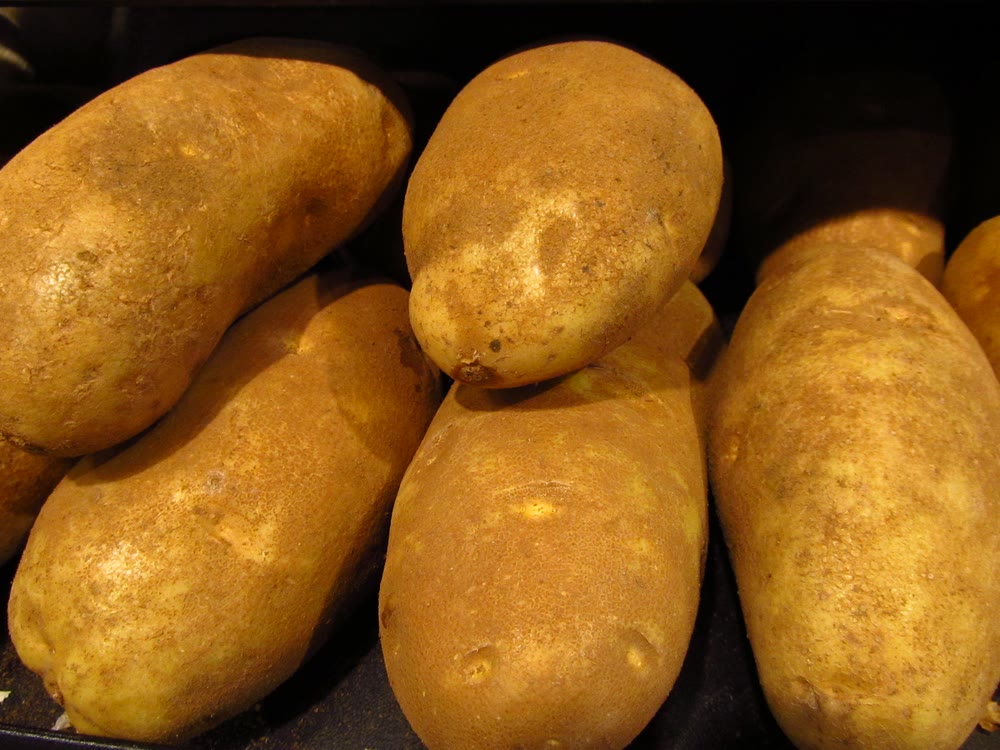
Russet potatoes, the floury American potato to use for this recipe. Photo: Willis Lam, CC BY-SA 2.0, via Wikimedia Commons
Variations: sausage meat, bacon and stuffing for goose
With sausage meat
Crumble 250g (9 oz) pork sausage meat, or the meat squeezed from 4 good sausages, into a hot pan and fry until browned and cooked through. Fold it in with the onions. The USDA says raw meat should always be cooked before it goes into a stuffing.
With bacon
Fry 150g (5 oz) chopped streaky rashers (ordinary American bacon) until crisp, then soften the onions in the bacon fat with half the butter. It suits a table with ham or Irish spiced beef on it.
Potato and apple stuffing for goose
Goose is rich and fatty, so potato with something sharp suits it well. Cook 2 peeled, chopped cooking apples (Bramleys in Ireland, Granny Smiths in the US) with the onions until soft, and add an extra tablespoon of sage. Darina Allen’s version adds parsnip, orange and lemon balm. JP McMahon’s, in The Irish Times, is simply onion, cooking apples, rosemary and thyme folded into mash.
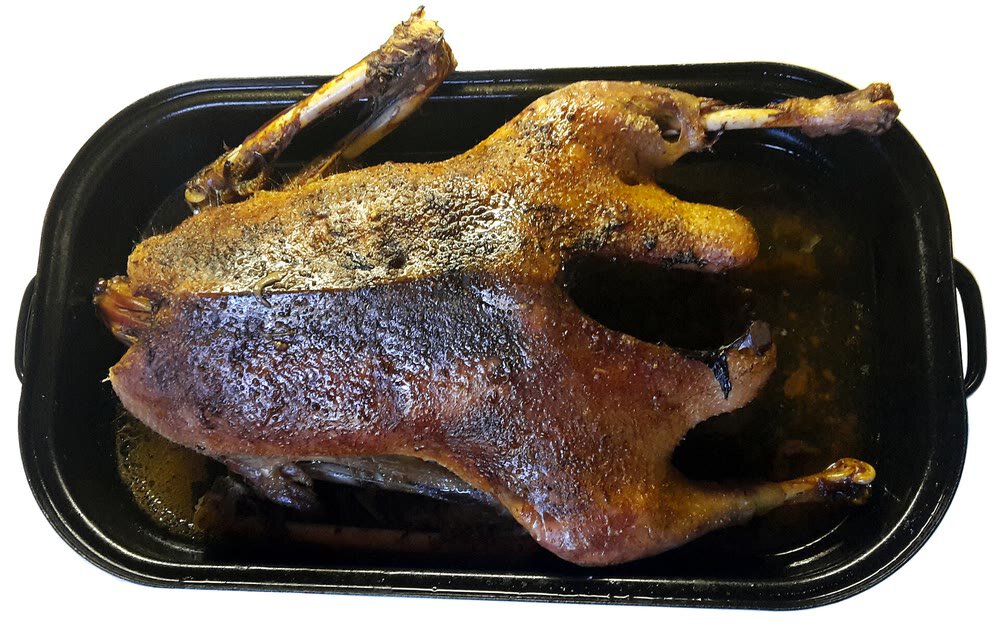
A young goose of 8 to 12 lb (3.6 to 5.4kg) takes 2½ to 3 hours to roast, says the USDA, plus 15 to 30 minutes if stuffed. Prick the skin all over so the fat can run out, and allow 1 to 1½ lb (about 450 to 700g) of raw goose per person. Keep the fat for roast potatoes, as Darina Allen advises.
In the bird or in a dish? Cooking stuffing safely
Both safefood, the all-island public body for food safety and healthy eating, and the US Department of Agriculture recommend cooking stuffing in a separate dish. You can check both the bird and the stuffing properly, and safefood points out that the turkey cooks faster too.
If you do stuff the bird:
- Mix it just before stuffing. The USDA says not to mix stuffing ahead and chill it, and to roast the bird as soon as it’s stuffed. Some Irish goose recipes let the potato stuffing go cold before it goes in; the USDA says don’t cool it.
- Stuff loosely, in the neck end or the body cavity. Safefood says use no more than 10% of the bird’s weight: 500g (about 1 lb) of stuffing for a 5kg (11 lb) turkey. The USDA allows about ¾ US cup per pound. Under the Irish rule, this recipe makes far more than most birds can take, so bake the rest in a dish.
- Use a thermometer. The centre of the stuffing must reach 75°C (167°F) by safefood’s advice, or at least 165°F (74°C) by the USDA’s, even when the meat is done. If it isn’t there yet, keep roasting: undercooked stuffing scooped out early can contaminate the cooked meat.
- Allow extra time, then rest it. Safefood’s calculator times stuffed turkeys for electric fan ovens only; with other ovens, it says, bake the stuffing separately. Rest the bird 20 minutes before the stuffing comes out, says the USDA, or at least 30 minutes, says safefood.
- Never stuff a turkey you plan to deep-fry, smoke, grill or microwave, the USDA adds.
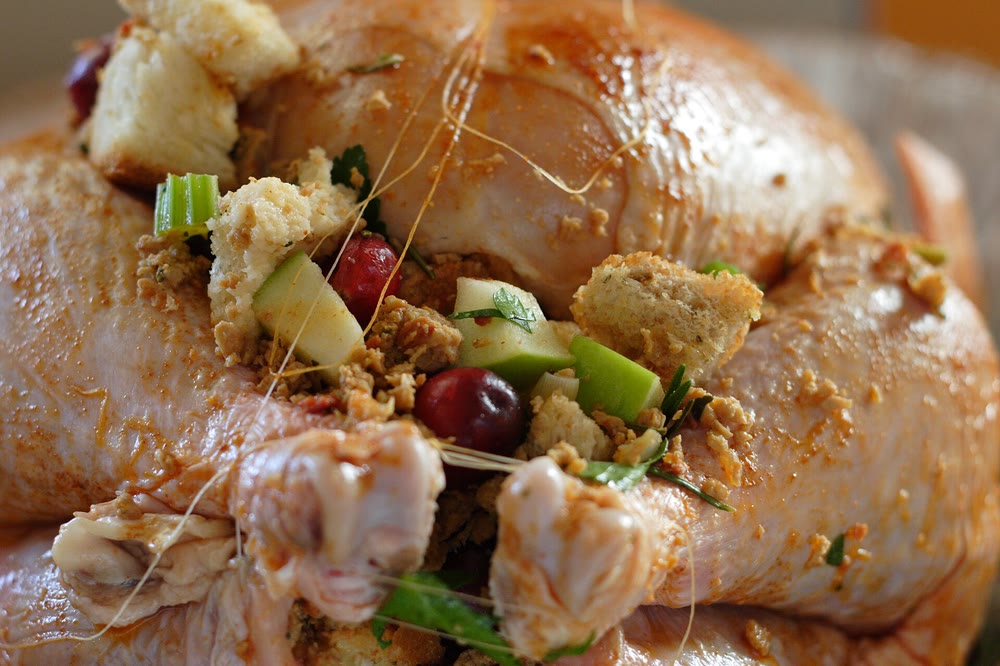
A turkey stuffed through the cavity and trussed with string, ready to roast. This one has a bread stuffing. Photo: Brian Teutsch, CC BY 2.0, via Wikimedia Commons
Making it ahead, freezing and leftovers
The day before: chop the onions and herbs and make the breadcrumbs, keeping them separate in the fridge. The USDA says to combine stuffing ingredients only just before cooking.
Bake ahead: bake it in its dish, cool it quickly in a shallow container and get it into the fridge within 2 hours. Reheat it once, covered, until piping hot right to the centre. Safefood says to eat leftovers within three days; the USDA says 3 to 4 days.
Freeze it: safefood suggests making the Christmas stuffing ahead and freezing it. The USDA says uncooked stuffing can be frozen as soon as it’s mixed, in a shallow container, then baked from frozen, without thawing, to 165°F. Potato can turn a little watery in the freezer, and Penn State Extension says frozen mashed potato is best eaten within 2 to 4 weeks. So for Christmas, freeze it in December.
Leftovers: get them into the fridge within 2 hours, and never put leftover cooked stuffing into a raw bird. Shape cold stuffing into small cakes, flour them lightly and fry them in butter for St Stephen’s Day (26 December), or pile it into a turkey sandwich.
Potato stuffing and the Irish Christmas goose
For generations, the Christmas bird in many Irish homes was a goose, and sources differ on when turkey took over. Chef JP McMahon, in The Irish Times, says turkey has been the usual Christmas bird since the early 20th century, though eaten here since the 1600s (citing Bríd Mahon’s food history Land of Milk and Honey, 1991). Food writer Ross Golden-Bannon told Newstalk in 2020 that goose held on in many areas into the 1950s or 1960s.
Before most homes had ovens, McMahon adds, the goose was cooked in a big pot over the turf fire. The Schools’ Collection, the folklore gathered through Irish schools in 1937 to 1939, shows the goose still going strong, often with potato inside:
- Bodyke, Co. Clare: the goose was the usual bird for Christmas Day, stuffed with mashed potatoes, onions, butter, salt and pepper, all mashed together. Many people had a turkey, the account notes, but goose was still the commonest dinner.
- Kilmore, Co. Leitrim: the goose was always stuffed, usually with mashed potato, flour, salt, pepper and onion, and sometimes with breadcrumbs instead.
- Cortubber (Cortober), Co. Roscommon: goose was the usual Christmas dinner, cooked in a pot with coals under and over it.
Bread stuffing had its place too. In Grangegeeth, Co. Meath, where the bird was trussed and stuffed on Christmas Eve (not advised today), bread stuffing was the usual kind. One Ballyhurst, Co. Tipperary, account fills the goose with breadcrumbs, onions, melted butter, milk, pepper and salt; another from the same school remembers an older mix of potatoes, onions, breadcrumbs and currants. Darina Allen of Ballymaloe Cookery School summed up the goose in the Irish Examiner in 2010: “traditionally a potato stuffing was used”.
The rest of the day, from the candle in the window to the leftovers, is in my guide to Irish Christmas traditions. And leave room for the Christmas pudding.
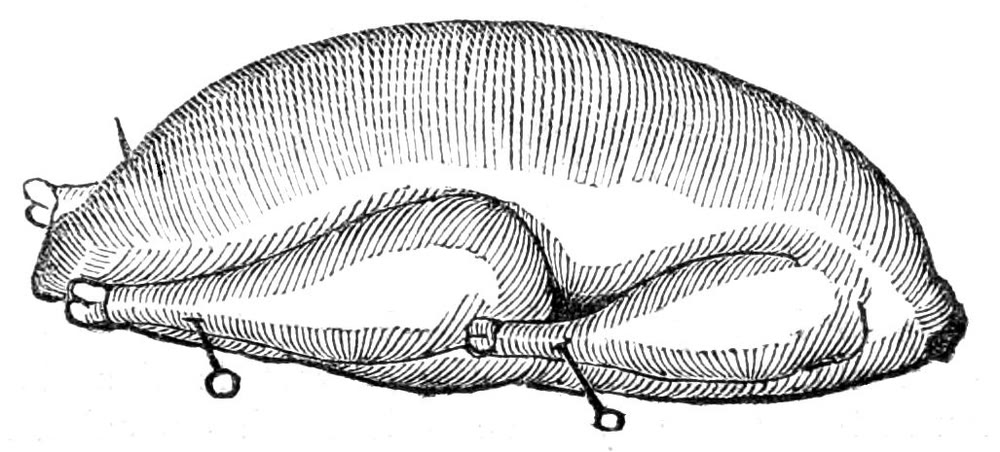
A goose trussed with skewers, an engraving from Anne Cobbett’s The English Housekeeper (sixth edition, 1851). Public domain, via Wikimedia Commons
The Michaelmas goose
Michaelmas, the feast of St Michael on 29 September, was the goose’s other big day. In Irish it’s Lá Fhéile Michíl (roughly law AY-leh MIH-heel; Munster speakers stress the last syllable, mih-HEEL).
Writing for RTÉ Brainstorm, Marion McGarry explains that spring-hatched geese were turned out on the stubble after the harvest. By Michaelmas they were fat, so the day was also called the Goose Harvest, and a Michaelmas goose was roasted. Some families gave geese to friends or to the poor.
James Joyce’s Christmas goose
Probably the most famous Irish goose dinner is fictional. In “The Dead”, the last story in Joyce’s Dubliners (1914), the Misses Morkan’s annual dance, held at Christmastime, has “a fat brown goose” at one end of the table, a ham and a round of spiced beef at the other, and hot floury potatoes carried round in a napkin. Once everyone is served, Gabriel Conroy offers more of “what vulgar people call stuffing”.
Say it in Irish
- búiste (BOOSH-teh): stuffing, in Ó Dónaill’s dictionary and on teanglann.ie
- práta, prátaí (PRAW-tuh, PRAW-tee): potato, potatoes
- gé (GAY, with a hard g): goose
- turcaí (TUR-kee): turkey
Potato stuffing isn’t a dictionary entry, but following the pattern of Ó Dónaill’s arán prátaí (potato cake), it would be búiste prátaí (BOOSH-teh PRAW-tee). There are more festive words in my guide to Merry Christmas in Irish.
Irish potato stuffing FAQ
What is Irish potato stuffing made of?
Floury mashed potatoes, onion softened in butter, herbs (usually sage, thyme and parsley), salt and pepper, and often fresh breadcrumbs. Some versions add sausage meat, bacon or apple.
Can you stuff a turkey with potato stuffing?
Yes, if you stuff it loosely just before roasting and the centre of the stuffing reaches 75°C (167°F). Food safety agencies in Ireland and the US still recommend baking it in a separate dish.
Do you put breadcrumbs in potato stuffing?
It’s up to you. In the 1930s accounts, some families used potato alone, some added flour, and one Tipperary school recalled potato with breadcrumbs and currants. Breadcrumbs make it lighter. Leave them out for a denser stuffing that’s gluten-free, as long as your stock is.
Can you make potato stuffing the day before?
Yes, if you keep the parts separate and mix just before cooking, or bake it fully and reheat it once until piping hot. Don’t mix it and leave it raw in the fridge.
Is potato stuffing the same as colcannon?
No. Colcannon is mash with kale or cabbage, served as a side. Potato stuffing is flavoured with onion and herbs and baked, in a dish or inside the bird. For another Irish potato classic, try boxty, the potato pancake.
Love this? Save it to your Pinterest board for later.
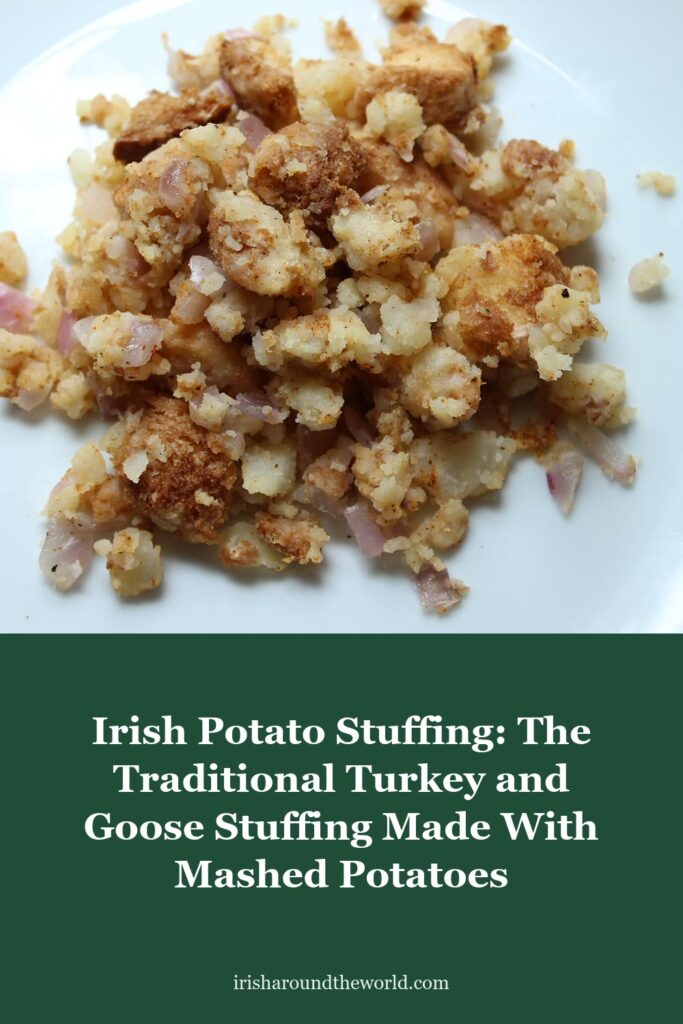
Pin image: A plate of potato stuffing made with potatoes, white bread, red onion and butter. Photo: Roundhere44, CC0, via Wikimedia Commons
A little bit of Ireland in your inbox every Friday ☘️
The free Weekly Dose of Irish: an Irish joke, a Celtic symbol, an Irish fact, a poem and the week’s best articles in one short email. Join 9,600+ readers.
Free. One short email every Friday. Unsubscribe any time.
More Irish Christmas food and traditions
- 18 Irish Christmas Traditions, From the Candle in the Window to the 12 Pubs
- Irish Christmas Pudding Recipe: The Guinness Pud With a Coin Inside (Make It on Stir-Up Sunday)
- Irish Spiced Beef: The Cork Christmas Classic (and How to Cure Your Own)
- Colcannon Recipe: The Irish Halloween Mash That Hides Your Fortune
- Boxty Recipe: The Irish Potato Pancake That Came With a Marriage Warning
- Irish Grace Before Meals: Table Blessings in Irish and English, and Where They Really Come From
- The Irish 12 Days of Christmas: Frank Kelly’s Christmas Countdown
- Christmas Markets in Ireland 2026: Dates and Where to Go
- Irish Trifle: The Christmas Sherry Trifle
Featured image: A plate of potato stuffing made with potatoes, white bread, red onion and butter. Photo: Roundhere44, CC0, via Wikimedia Commons.